If you've ever chopped a jalapeño without gloves and felt that sudden, searing burn on your fingertips—or worse, accidentally touched your eye—you know capsaicin is no joke. The active compound in chili peppers, capsaicin, binds to pain receptors in the skin and mucous membranes, triggering a burning sensation that can last for hours. Unlike acid or heat burns, this isn’t a chemical reaction in the traditional sense—it’s a neurological illusion of fire. But the discomfort is very real. Understanding how to neutralize jalapeño juice burn quickly and effectively isn't just about comfort; it's essential kitchen safety. Whether you're a home cook experimenting with spicy salsas or a professional chef handling large batches of peppers, knowing the right remedies—and which common myths to avoid—can make all the difference.
Understanding Jalapeño Heat: What Causes the Burn?
Jalapeños (Capsicum annuum) are medium-heat chili peppers originating from Mexico, where they’ve been cultivated for thousands of years. They range from 2,500 to 8,000 Scoville Heat Units (SHU), placing them in the mid-tier of spiciness—hotter than poblanos but milder than habaneros. Their flavor is bright, grassy, and slightly vegetal when fresh, with a subtle fruitiness that intensifies when roasted or smoked (in which case they’re known as *chipotles*).
The burn comes not from acidity, as many assume, but from **capsaicin**, a fat-soluble alkaloid primarily concentrated in the pepper’s white pith (also called the placenta) and seeds. When capsaicin contacts skin or mucous membranes, it activates TRPV1 receptors—neurological sensors designed to detect actual heat and physical damage. Your brain interprets this signal as a thermal burn, even though no tissue damage has occurred. This explains why water doesn’t help—and may worsen the sensation by spreading the oil.
Key Characteristics of Jalapeño Peppers
| Characteristic | Detail |
|---|---|
| Heat Level (Scoville) | 2,500–8,000 SHU |
| Capsaicin Concentration | High in placenta and seeds; lower in flesh |
| Flavor Profile | Fresh: green, grassy, slightly sweet; Smoked: smoky, earthy (chipotle) |
| Color & Form | Green (unripe), red (ripe); typically 2–4 inches long |
| Culinary Function | Adds heat, depth, and brightness to salsas, sauces, marinades, and fillings |
| Shelf Life (Fresh) | Up to 2 weeks refrigerated in crisper drawer |
Why Water Doesn’t Work—and What Does
One of the most widespread misconceptions is that rinsing with water will wash away jalapeño burn. In reality, **water spreads capsaicin rather than dissolving it**. Since capsaicin is hydrophobic (repels water) and lipophilic (attracted to fats), water merely pushes the oil around the skin, potentially worsening the affected area. You might feel momentary cooling, but the burn returns almost immediately.
The key to neutralizing the burn lies in chemistry: use substances that either dissolve capsaicin, denature it, or block its receptor binding. The most effective solutions fall into three categories:
- Dairy products – contain casein, which helps break down capsaicin.
- Oils and fats – dissolve the oil-based irritant through solubility.
- Alcohol – partially dissolves capsaicin due to its solvent properties.
Proven Methods to Neutralize Jalapeño Juice Burn
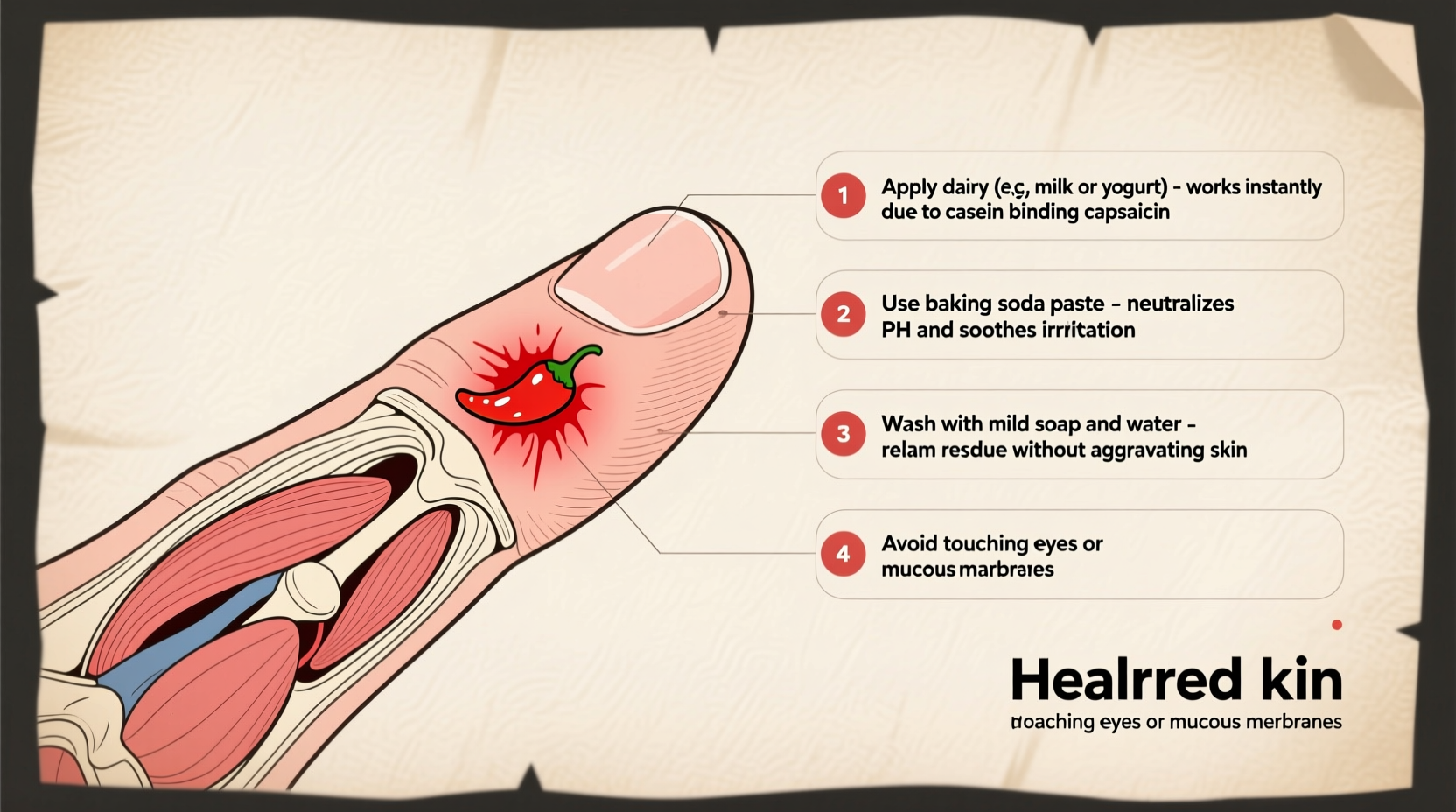
1. Use Full-Fat Dairy (Best for Skin and Mouth)
Milk, sour cream, yogurt, or even heavy cream are among the fastest and most accessible remedies. Casein, a protein in milk, acts like a detergent for capsaicin, helping to strip it from nerve receptors. For hand exposure, soak fingers in cold whole milk for 10–15 minutes. For mouth burn, drink a full glass of milk or eat a spoonful of plain yogurt.
“Casein has a molecular structure that binds to capsaicin and helps wash it away from pain receptors. It’s one of the few scientifically supported antidotes for chili burn.”
— Dr. Paul Bosland, Director, Chile Pepper Institute
2. Apply Vegetable Oil or Cooking Oil
Since capsaicin dissolves in fat, applying a small amount of olive, coconut, or canola oil can pull the compound out of the skin. Soak a cotton ball in oil and gently wipe the affected area. Repeat as needed. Follow with soap and water once the burn subsides to remove residual oil.
TIP: Avoid petroleum jelly (Vaseline) for immediate treatment—while it creates a barrier, it doesn’t actively remove capsaicin and may trap it against the skin longer.
3. Use Rubbing Alcohol or High-Proof Alcohol
Isopropyl (rubbing) alcohol or high-proof spirits like vodka (at least 80 proof) can partially dissolve capsaicin. Soak a cloth or cotton pad and dab—do not rub vigorously—to avoid irritation. Let it air dry. This method works best on hands or other non-sensitive skin areas. Not recommended for eyes or broken skin.
4. Wash with Dish Soap and Warm Water (After Initial Treatment)
Once you’ve used a solvent (oil, alcohol, or milk), wash thoroughly with dish soap like Dawn or Palmolive. These soaps are formulated to cut through grease, making them highly effective at removing residual capsaicin. Use warm—not hot—water to avoid opening pores and increasing sensitivity.
5. Baking Soda Paste (For Persistent Skin Burn)
Mix two parts baking soda with one part water to form a thick paste. Apply to the affected area and let sit for 10–15 minutes before rinsing. Baking soda helps neutralize surface irritants and provides mild soothing relief. While not a direct solvent for capsaicin, it can reduce inflammation and discomfort.
6. Cold Compress (Symptom Relief Only)
Apply an ice pack wrapped in a thin cloth for 10-minute intervals. Cold numbs nerve endings temporarily, offering relief—but does not remove capsaicin. Do not apply ice directly to skin to prevent frostbite.
What NOT to Do When Exposed to Jalapeño Juice
- Don’t use water alone – spreads the oil and prolongs burning.
- Avoid touching face, eyes, or sensitive areas – capsaicin can cause severe irritation or temporary corneal inflammation.
- Don’t use vinegar as a primary remedy – despite popular belief, acetic acid doesn’t dissolve capsaicin and may sting broken skin.
- Never use bleach or harsh chemicals – dangerous and ineffective.
EMERGENCY NOTE: If jalapeño juice gets into your eyes, rinse immediately with saline solution or clean water for 15 minutes and seek medical attention. Do not delay care for ocular exposure.
Variants and Forms of Jalapeños Affecting Burn Severity
Jalapeños come in various forms, each influencing capsaicin exposure risk:
| Form | Capsaicin Risk | Handling Tips |
|---|---|---|
| Fresh Green Jalapeño | Moderate | Wear gloves if sensitive; remove seeds and pith to reduce heat. |
| Ripe Red Jalapeño | Moderate to High | Slightly hotter than green; same precautions apply. |
| Pickled Jalapeño (e.g., canned) | Lower (but still present) | Liquid contains diluted capsaicin; still wear gloves if handling frequently. |
| Dried Jalapeño / Chipotle Powder | High (concentrated) | Use mask and gloves; powder becomes airborne and can be inhaled. |
| Infused Oils or Hot Sauces | Variable (oil carries capsaicin efficiently) | Extreme caution—oily mediums increase skin absorption. |
Note: Stress factors like drought or poor soil can increase capsaicin levels in any jalapeño, making even mild-looking peppers unexpectedly hot.
Comparison: Jalapeño vs. Other Common Chilies
Understanding how jalapeños compare to similar peppers helps contextualize their burn intensity and appropriate response:
| Pepper | Scoville Range | Capsaicin Concentration | Neutralization Method |
|---|---|---|---|
| Jalapeño | 2,500–8,000 | Moderate (placenta-heavy) | Dairy, oil, alcohol |
| Serrano | 10,000–23,000 | Higher (smaller size = more heat per bite) | Same, but faster action needed |
| Habanero | 100,000–350,000 | Very high (volatile oils) | Immediate dairy/oil; consider medical help for eye contact |
| Poblano | 1,000–2,000 | Low | Soap and water often sufficient |
| Bell Pepper | 0 | None (no capsaicin) | N/A |
The higher the Scoville rating, the more aggressive your response should be. Habanero or ghost pepper exposure demands immediate and thorough treatment.
Practical Tips & FAQs
Q: Can I build tolerance to jalapeño burn?
A: Yes—repeated exposure desensitizes TRPV1 receptors over time. Chefs who handle chilies daily often report reduced skin sensitivity. However, this does not eliminate risk, especially with high-heat varieties.
Q: Are latex gloves effective?
A: Only if intact and properly fitted. Capsaicin can seep through micro-tears or absorb into porous materials. Nitrile gloves offer better protection and are less likely to degrade.
Q: How do I protect my hands while prepping multiple jalapeños?
Always wear food-safe gloves (nitrile preferred). Prep on a dedicated cutting board, and clean knives and surfaces with soapy water afterward. Never touch your face during prep.
Q: Can I use hand sanitizer?
Partially. Most contain alcohol (60–95%), which can dissolve some capsaicin. However, they also include water and fragrances that may irritate skin further. Better than nothing, but not ideal.
Q: Does cooking destroy capsaicin?
No. Capsaicin is heat-stable and remains active even after boiling, frying, or roasting. Cooking redistributes it throughout the dish but doesn’t neutralize it.
Q: How long does the burn last?
On skin: 30 minutes to several hours, depending on exposure. In the mouth: 10–30 minutes with proper treatment. Without treatment, sensations may persist up to 2 hours.
Q: Can I substitute jalapeños safely?
For lower heat, use poblano or Anaheim peppers. For similar flavor with more control, try canned green chiles. Always taste-test when substituting.
PRO KITCHEN HACK: After dicing jalapeños, place used tools and cutting boards in a basin of hot, soapy water immediately. Let soak for 10 minutes before scrubbing to ensure full capsaicin removal.
Expert-Backed Prevention Strategies
Prevention is always better than cure. Seasoned chefs and culinary instructors recommend these protocols:
- Wear gloves every time—even if you’ve handled peppers before. Buildup over time increases risk.
- Use a dedicated knife and cutting board for spicy ingredients to avoid cross-contamination.
- Label containers holding chopped chilies, especially in shared kitchens.
- Wash hands thoroughly post-glove removal—residue can transfer during removal.
- Keep a “pepper emergency kit” in your kitchen: milk, nitrile gloves, rubbing alcohol, dish soap, and cotton pads.
“In professional kitchens, we treat capsaicin like any other hazardous agent. Consistent glove use and sanitation protocols prevent 99% of incidents.”
— Chef Maria Lopez, Executive Chef, La Fuego Taqueria
Summary & Key Takeaways
Jalapeño juice burn is a common but preventable kitchen issue rooted in the biochemistry of capsaicin. Understanding that this burn is neurological—not thermal—shifts the approach from cooling to chemical neutralization. Water offers no real relief; instead, rely on fat-soluble agents like dairy, oils, and alcohol to break down and remove the irritant. Immediate action significantly reduces discomfort and duration.
Key strategies include:
- Use milk or yogurt for fast relief on skin and in the mouth.
- Apply vegetable oil or alcohol to dissolve capsaicin from hands.
- Always wash with dish soap after initial treatment.
- Wear nitrile gloves when handling fresh or dried chilies.
- Avoid touching eyes, nose, or sensitive skin during prep.
- Store a simple first-aid kit for quick access.
Whether you're making homemade salsa or experimenting with fermented hot sauces, respecting the power of the humble jalapeño ensures safer, more enjoyable cooking. With the right knowledge and habits, you can harness their vibrant heat without paying the fiery price.
Take Action Today: Next time you cook with jalapeños, keep a carton of whole milk and a pair of nitrile gloves within reach. One small preparation step can prevent hours of discomfort.