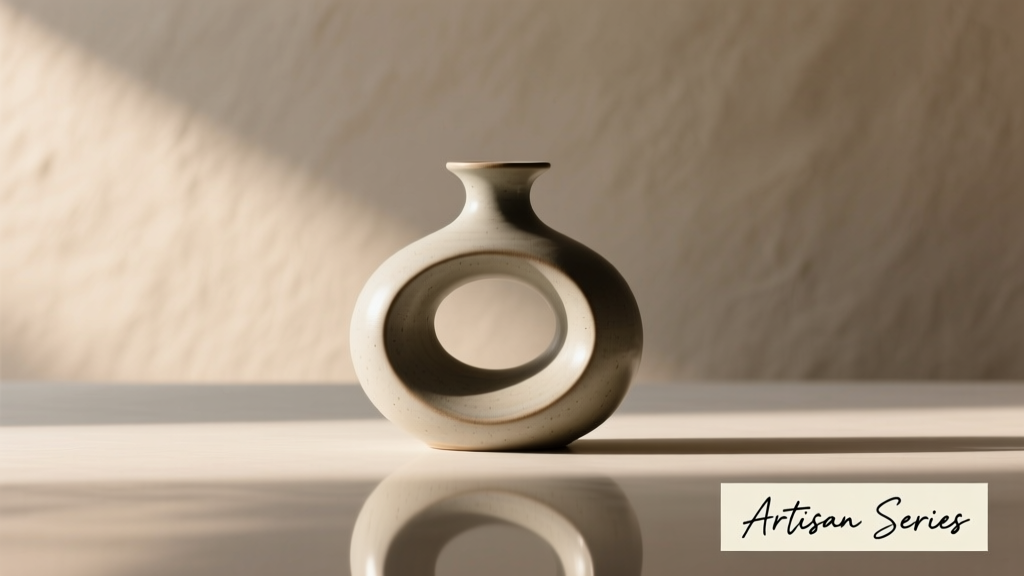
Artificial flowers have evolved far beyond the stiff, plasticky bouquets of decades past. Today’s premium silk and polyethylene arrangements rival real blooms in texture, dimension, and even subtle light-reflection—without wilting, watering, or seasonal limitations. Yet with thousands of options flooding online marketplaces and boutique stores, selecting an arrangement that feels intentional, not incidental, remains a challenge. This guide cuts through marketing hype and aesthetic noise. It draws on floral design principles, material science insights, and real-world interior applications to help you choose arrangements that elevate space, endure time, and reflect thoughtful curation—not compromise.
Why Realism Alone Isn’t Enough
Many shoppers begin their search by asking, “Does it look real?” That’s a natural starting point—but it’s incomplete. A hyper-realistic peony stem may photograph beautifully on a white marble countertop but feel jarringly out of place beside weathered oak beams and linen textiles. Equally, an arrangement with flawless petal detail might collapse under its own weight after six months if internal wiring or foam base construction is subpar. True quality rests at the intersection of three pillars: visual authenticity, structural integrity, and contextual harmony.
Visual authenticity includes nuanced color gradients (not flat monochrome), irregular petal edges, subtle veining on leaves, and varied bloom maturity within a single arrangement. Structural integrity involves reinforced stems (often with flexible yet rigid copper or aluminum wire cores), secure anchoring in the foam or vase, and materials that resist yellowing, cracking, or dust adhesion over time. Contextual harmony refers to scale, proportion, color temperature, and style alignment—whether your space leans modern minimalist, rustic farmhouse, or opulent traditional.
Tip: Before purchasing, ask yourself: “Would this arrangement still feel appropriate in this space two years from now?” If the answer hinges on a passing trend rather than enduring design logic, reconsider.Material Matters: Beyond “Silk” and “Plastic”
The term “silk flowers” is largely a misnomer today. Few high-end arrangements use actual silk; instead, they rely on advanced synthetics engineered for lifelike performance. Understanding these materials helps predict longevity and tactile appeal.
| Material | Key Characteristics | Best For | Lifespan (Indoor, Normal Conditions) |
|---|---|---|---|
| Polyethylene (PE) & Polypropylene (PP) | Soft, pliable, excellent UV resistance; mimics delicate petals like hydrangeas or cherry blossoms. Often heat-set for natural curl. | Large statement pieces, outdoor-adjacent spaces (covered patios), high-humidity rooms (bathrooms with ventilation). | 8–12 years |
| High-Density Foam-Core Stems + Polyester Petals | Sturdy, weight-balanced stems; polyester holds rich, fade-resistant dyes. Petals retain shape without stiffness. | Centerpieces, mantels, reception tables—anywhere stability and consistent appearance matter. | 6–10 years |
| Latex-Coated Fabric | Exceptional texture depth; slightly matte finish ideal for vintage or botanical aesthetics. More labor-intensive to produce. | Curated shelves, studio offices, editorial-style interiors where tactility is part of the narrative. | 5–8 years |
| Low-Grade PVC/Injection-Molded Plastic | Bright, uniform colors; rigid, shiny surface; prone to brittleness and yellowing near windows. | Budget decor for short-term use (e.g., event rentals, dorm rooms). Avoid for permanent displays. | 1–3 years |
Material choice also affects maintenance. PE and PP arrangements repel dust more effectively than porous polyester, while latex-coated fabric benefits from occasional gentle brushing with a soft makeup brush—not compressed air, which can damage delicate coatings.
A Step-by-Step Selection Framework
Follow this five-step process to eliminate subjective guesswork and build confidence in every purchase:
- Measure Your Space First: Note exact dimensions of the surface or wall area where the arrangement will reside. For tabletops, allow 2–4 inches of clearance around the base. For wall-mounted or shelf displays, ensure vertical height doesn’t overwhelm adjacent objects (a good rule: arrangement height should be ≤1.5× the width of its supporting surface).
- Define the Role: Is this arrangement meant to anchor a room (e.g., a large floor vase beside a sofa), soften architecture (e.g., trailing ivy along a bookshelf), or serve as a focal point (e.g., a sculptural orchid cluster above a dining table)? Function dictates scale, density, and line direction.
- Assess Lighting Conditions: North-facing rooms benefit from warmer-toned blooms (creams, peach, terracotta) to counter cool light. South-facing spaces handle cooler tones (lavender, eucalyptus grey, slate blue) without appearing washed out. Avoid arrangements with glossy finishes in direct sunlight—they’ll glare and accelerate material degradation.
- Match to Existing Texture Palette: Count the dominant textures in the space (wood grain, woven rattan, smooth ceramic, nubby wool, polished metal). Your arrangement should echo at least one—e.g., feathery pampas grass complements linen upholstery; structured ranunculus suits lacquered furniture.
- Verify Construction Details: Read product descriptions for specifics—not just “realistic,” but “hand-wired stems,” “dense oasis foam base,” “individually painted stamens,” or “UV-stabilized petals.” If those details are absent, contact the seller before ordering.
Real-World Application: The Library Nook Transformation
Consider Elena, an architect who renovated her home library with reclaimed walnut shelves, brass reading lamps, and deep emerald velvet armchairs. She initially ordered a large, photogenic “garden rose” arrangement online—lush, pink, and undeniably vibrant. Within three weeks, it looked alien: the saturated fuchsia clashed with the warm wood tones, the stiff stems refused to bend naturally into the curved shelf edge, and dust clung visibly to its glossy petals. She returned it and applied the framework above.
She measured the 36-inch shelf span, defined the role as “textural bridge between wood and fabric,” noted the room’s balanced north-south light, and matched the velvet’s nubbed surface with a dried-flower hybrid arrangement featuring preserved lavender, bleached wheat stalks, and matte-finish cream scabiosa. The result? A quiet, cohesive presence that aged gracefully—its muted palette deepening subtly over time, its organic lines echoing the hand-rubbed wood grain. “It doesn’t shout,” she says. “It settles in. Like it belongs.”
Expert Insight: What Designers Look For
Interior designers prioritize intentionality over imitation. They treat artificial arrangements not as substitutes, but as permanent design elements with distinct advantages: zero seasonal turnover, precise color control, and freedom from water-related constraints. Their criteria go beyond beauty to include longevity engineering and spatial intelligence.
“Clients often think ‘realistic’ means ‘identical to fresh flowers.’ But the best artificial arrangements succeed because they’re designed, not copied. A master florist considers how light falls across layered petals at 4 p.m., how wind would move stems in a breeze—even if there’s no breeze. That intention shows up in asymmetry, thoughtful negative space, and variation in bloom size and orientation. That’s what makes it feel alive.” — Maya Chen, Principal Designer, Botanica Studio & Author of *Permanent Bloom: Designing with Artificial Flowers*
What to Do (and Not Do) When Shopping Online
Online shopping offers breadth but obscures critical tactile and dimensional cues. Use this checklist to protect your investment:
- ✅ DO zoom in on all available photos—especially side and top-down views—to assess stem density and base construction.
- ✅ DO check if the seller provides material composition (not just “silk”) and care instructions. Reputable brands list UV resistance, flame retardancy (for commercial use), and cleaning methods.
- ✅ DO read reviews mentioning long-term use (“18 months later…” or “still looks new after moving”). Ignore generic praise like “beautiful!” without context.
- ❌ DON’T rely solely on lifestyle photos—these are professionally lit and styled. Request unedited, in-context images from the seller if possible.
- ❌ DON’T assume “handmade” means higher quality. Some mass-produced items are labeled “hand-assembled” despite minimal human input. Look for evidence of craftsmanship: visible wire wrapping, unique petal layering, or custom-dyed foliage.
- ❌ DON’T overlook shipping method. Fragile arrangements should ship in rigid boxes with internal bracing—not folded into flat-rate mailers.
Frequently Asked Questions
Can artificial flowers trigger allergies?
No—high-quality synthetic arrangements contain no pollen, mold spores, or volatile organic compounds (VOCs) found in some floral preservatives or fresh-flower water. In fact, they’re often recommended for allergy-prone individuals and healthcare environments. Just avoid low-grade plastics that may off-gas when new; ventilate upon unboxing for 24 hours if concerned.
How do I clean artificial flowers without damaging them?
Dust weekly with a soft, dry microfiber cloth or a handheld battery-powered blower set to low. For deeper cleaning, use a lint roller gently on petals—or mix 1 tsp mild dish soap with 1 quart lukewarm water, dip a soft-bristle brush (like a clean makeup brush), lightly agitate, then blot dry immediately with a lint-free towel. Never soak stems or immerse foam bases.
Are expensive arrangements worth the cost difference?
Yes—if you value longevity and design coherence. A $45 arrangement may last 12–18 months before showing wear; a $220 artisan piece, built with UV-stabilized PE, hand-painted stamens, and a weighted ceramic base, can remain indistinguishable from day one for 8+ years. Calculate cost per year: $45 ÷ 1.5 = $30/year vs. $220 ÷ 8 = $27.50/year—with superior aesthetics and zero replacement labor.
Final Considerations: Sustainability and Ethical Sourcing
Artificial flowers carry an environmental paradox: they avoid agricultural water use and pesticide runoff but rely on petrochemicals. The most responsible choice isn’t necessarily “natural”—it’s durability. A long-lasting arrangement displaces dozens of short-lived fresh bouquets over its lifetime. Look for brands that disclose material origins, use recycled-content packaging, and offer take-back programs for end-of-life recycling (some PE can be reprocessed into park benches or decking). Also consider local artisans: handcrafted arrangements often use less energy-intensive production methods and support regional craft economies.
Conclusion
Choosing the best artificial flower arrangement isn’t about finding something that deceives the eye—it’s about selecting something that resonates with your space, supports your lifestyle, and honors your values. It’s the difference between a decorative afterthought and a considered design element that quietly elevates daily life. You don’t need perfection. You need intention: measuring before clicking “add to cart,” prioritizing structure alongside beauty, trusting material science over marketing buzzwords, and allowing your space to speak its own visual language.
Start small. Choose one arrangement using this guide—not for instant impact, but as a test of your evolving eye. Notice how light changes its presence at different times of day. See how it interacts with textures nearby. Let it teach you what harmony feels like in three dimensions. Then expand. Build a collection not of flowers, but of moments—carefully composed, thoughtfully placed, and designed to last.
💬 Your experience matters. Share which step surprised you most—or what arrangement finally “clicked” in your space. Comment below and help others navigate the art of permanent bloom with confidence.