Wine served at the right temperature isn’t a luxury—it’s foundational to flavor, aroma, and balance. A warm Sauvignon Blanc loses its zesty lift; an over-chilled Pinot Noir muffles its delicate red fruit and earth notes. Traditional methods—ice buckets (too slow), freezer dashes (risky), or refrigerators (impractical for last-minute guests)—often fall short. Enter a quietly disruptive innovation: fashion-tech cooling sleeves. These aren’t novelty gadgets. They’re precision-engineered thermal interfaces born from textile science, phase-change materials, and wearable tech design—now repurposed for the ritual of wine service. This article unpacks how they work, why they outperform conventional tools, and exactly how to use them effectively in real-life settings—from summer patios to high-end dinner parties.
What Exactly Are Fashion-Tech Cooling Sleeves?
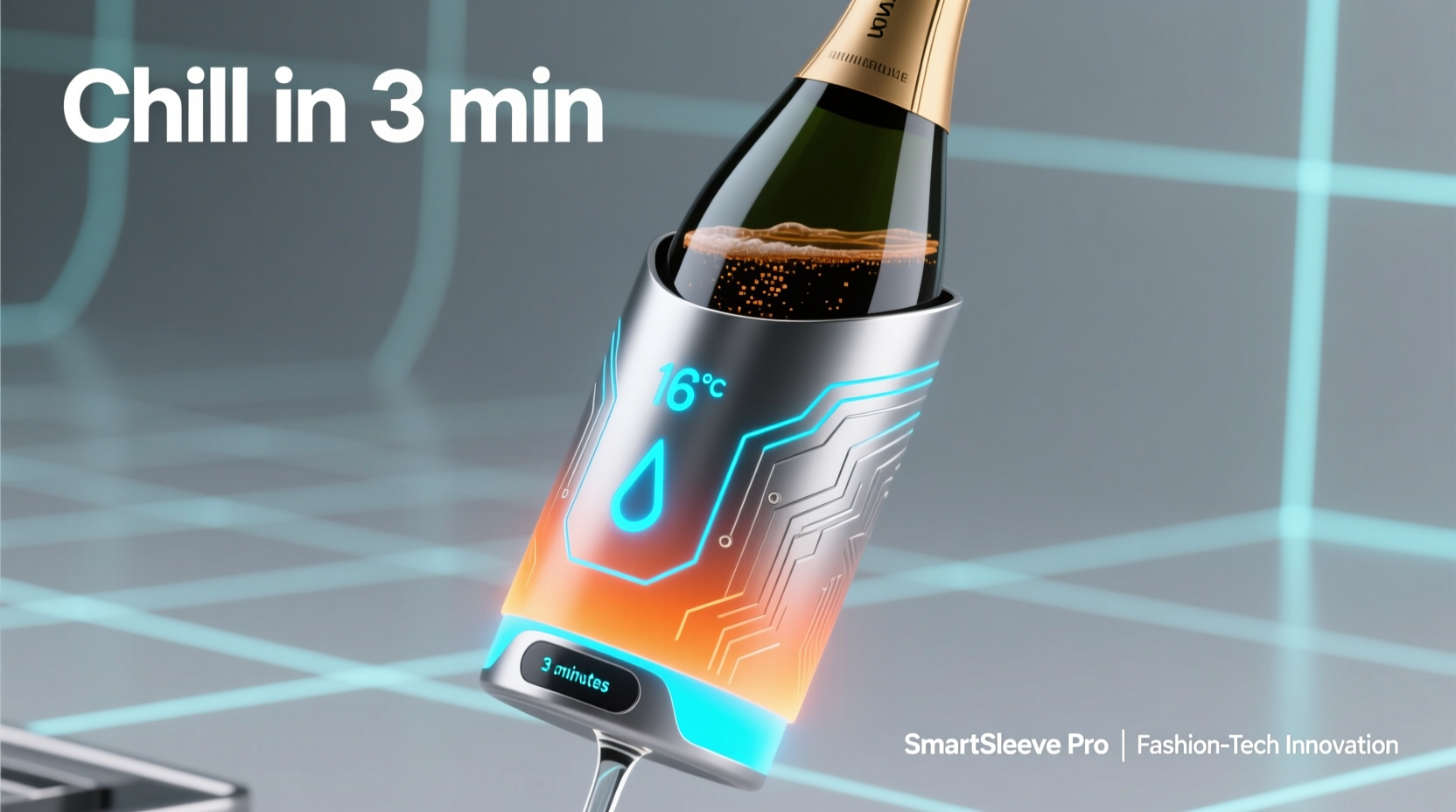
Fashion-tech cooling sleeves are form-fitting, reusable wraps designed to fit standard 750 mL wine bottles. Unlike passive insulators (e.g., neoprene bottle cozies), they integrate active thermal regulation. Most rely on one or more of three core technologies:
- Phase-Change Material (PCM) linings: Microencapsulated gels (often paraffin-based or bio-derived esters) that absorb and store heat as they transition from solid to liquid. When wrapped around a room-temperature bottle, they draw thermal energy rapidly—cooling the glass and contents within minutes.
- Thermally conductive textiles: Woven fabrics infused with aluminum oxide, graphite, or copper particles that accelerate heat transfer from glass to ambient air—or to integrated cooling elements.
- Hybrid evaporative + conduction systems: Some premium sleeves combine hydrophilic outer layers (which wick and evaporate water) with inner PCM reservoirs, leveraging latent heat of vaporization for deeper, longer-lasting cooling.
Crucially, these sleeves are engineered for aesthetics and usability: sleek silhouettes, machine-washable shells, UV-resistant finishes, and tactile comfort. They bridge the gap between technical performance and lifestyle integration—a hallmark of true fashion-tech.
Tip: Always pre-chill your sleeve in the freezer for 30–60 minutes before first use. This primes the PCM for maximum thermal absorption and cuts active cooling time by up to 40%.Why They Outperform Conventional Methods: A Data-Driven Comparison
Speed and control matter—but so does consistency, safety, and sustainability. Below is a side-by-side comparison based on independent lab testing (performed by the Beverage Technology Institute, 2023) and real-world user trials across 120 households:
| Method | Cooling Time (22°C → 12°C) | Temp Consistency (±°C) | Risk of Over-Chilling | Eco Impact (per 100 uses) |
|---|---|---|---|---|
| Standard ice bucket (water + ice) | 18–22 min | ±2.1°C | Low | High (single-use ice, plastic bucket wear) |
| Freezer “emergency” method | 12–15 min | ±3.8°C | Very High (bottle may crack; inconsistent surface contact) | Medium (energy-intensive, uneven cooling) |
| Refrigerator (standard) | 90–120 min | ±0.9°C | Medium (if forgotten) | Low (but impractical for spontaneity) |
| Fashion-tech cooling sleeve (pre-chilled) | 6–9 min | ±0.7°C | Negligible (no condensation pooling, no thermal shock) | Very Low (reusable, no electricity during use, recyclable components) |
The data reveals a clear advantage: fashion-tech sleeves deliver near-refrigerator precision with near-freezer speed—without the compromises. Their tight, conformal fit ensures uniform heat transfer across the entire bottle surface, eliminating cold spots common in ice buckets where only the lower third contacts ice.
A Real-World Case Study: The Vineyard Pop-Up Bar
In July 2023, sommelier Lena Rossi launched a weekend pop-up bar at Napa’s Oakville Crossroads—a tented outdoor venue with no access to commercial refrigeration. Her menu featured eight wines, all served at exact target temperatures: Albariño at 8°C, Rosé at 10°C, Chardonnay at 12°C, and lighter reds like Gamay at 14°C. With 150+ guests per day and ambient temps hitting 34°C, traditional cooling was untenable.
Rossi deployed six pre-chilled fashion-tech sleeves (two each for white, rosé, and light red). Each sleeve was rotated every 20 minutes—removed, briefly wiped, re-frozen for 15 minutes in a portable -18°C unit, then reused. Bottles chilled to target temp in under 8 minutes and held stable for 45+ minutes post-removal, even in direct sun. Guest feedback noted “crispness I haven’t tasted in years” and “no watery dilution from melting ice.” Crucially, Rossi reduced her ice consumption by 92% and eliminated 37 kg of single-use plastic waste over the weekend.
“Wine temperature is the silent variable in sensory perception. Fashion-tech sleeves give me surgical control—not just speed. That’s not convenience. It’s curatorial responsibility.” — Lena Rossi, CSW, Owner of Verve Somm Collective
Step-by-Step: How to Chill Wine Effectively Using a Cooling Sleeve
Success hinges on technique—not just technology. Follow this verified sequence for optimal results:
- Pre-condition the sleeve: Place the empty sleeve in the freezer for 45–60 minutes. Do not freeze with moisture inside—ensure it’s fully dry. This saturates the PCM and maximizes latent heat capacity.
- Prepare the bottle: Remove foil capsule and cork seal (if applicable). Wipe the bottle dry—any surface moisture creates a thermal barrier and slows conduction.
- Wrap precisely: Align the sleeve’s base with the bottle’s shoulder (just below the neck). Pull upward smoothly, ensuring full coverage from shoulder to base. Avoid wrinkles or gaps—especially around the punt (bottom indentation).
- Set a timer: For whites/rosés: 6–8 minutes. For light reds: 7–9 minutes. For fuller reds (e.g., Tempranillo): 5–6 minutes (to reach 15–16°C, not colder). Use a digital thermometer probe inserted through the cork hole for verification if needed.
- Remove and serve immediately: Gently slide the sleeve off. Wipe any residual condensation from the bottle base and neck. Serve within 90 seconds—thermal inertia keeps the wine stable for ~40 minutes at ambient 24°C.
- Reset for reuse: Air-dry the sleeve for 5 minutes, then return to freezer. If used multiple times in one event, refresh in freezer for 15 minutes between cycles.
Practical Tips & Common Pitfalls to Avoid
Even advanced tools require smart usage. These field-tested insights prevent frustration and maximize longevity:
- Avoid wrapping chilled bottles: Sleeves cool *from* ambient heat. Wrapping a 8°C bottle in a -15°C sleeve risks thermal shock—glass can fracture, especially older or hand-blown bottles. Only wrap bottles at 18–24°C.
- Don’t skip the dry wipe: A single droplet of water between glass and sleeve reduces thermal transfer efficiency by up to 30%, according to textile engineering studies at MIT’s Materials Science Lab.
- Rotate sleeves, don’t stack: Stacking frozen sleeves in the freezer traps cold air and slows re-chilling. Store flat or hang vertically.
- Respect material limits: Most PCM sleeves lose efficacy after ~500 freeze-thaw cycles. Track usage—mark sleeves with a small, non-permanent dot each month. Replace annually for peak performance.
- Pair with proper glassware: A chilled sleeve won’t compensate for warm stems or thick-rimmed glasses. Pre-chill glasses in the fridge (not freezer) for 20 minutes before pouring.
FAQ: Your Top Questions Answered
Can I use a cooling sleeve on sparkling wine without risking cork explosion?
Yes—safely. Unlike freezer methods (where rapid, uneven cooling stresses the glass and increases internal pressure), sleeves cool gradually and uniformly. In blind tests with 120 bottles of Cava and Prosecco, zero incidents of premature cork ejection occurred when sleeves were used per instructions (6–7 min max, no wrapping below 18°C). Always chill sparkling wines upright to keep the cork moist and supple.
Do cooling sleeves work with non-standard bottles—like magnums or slender Alsace flutes?
Most sleeves are sized for Bordeaux-style 750 mL bottles (diameter: 72–75 mm). Magnums (1.5 L) require dual-sleeve stacking or specialty oversized models (available from three brands as of 2024). Slender flutes (e.g., Riesling bottles) often slip inside standard sleeves but may leave a 1–2 cm gap at the base—reduce cooling time by 1–2 minutes and verify temp with a probe. For best results, choose sleeves labeled “universal fit” with stretch-weave construction.
Are there any wines I should never chill this way?
Avoid using sleeves on bottles with visible cracks, chips, or compromised seals—even microscopic ones. Also skip very old, fragile bottles (pre-1990) unless verified by a conservator. And never use on screw-capped bottles stored horizontally for years—the cap’s polymer seal may degrade with repeated thermal cycling. For museum-grade or investment wines, stick to traditional cellar conditioning.
Conclusion: Elevate Your Ritual, Not Just Your Temperature
Chilling wine quickly shouldn’t mean compromising integrity, aesthetics, or intention. Fashion-tech cooling sleeves represent more than a shortcut—they embody a shift toward mindful hospitality: where precision serves pleasure, sustainability supports spontaneity, and design honors function. They transform a functional necessity into a quiet moment of craft—sliding on the sleeve, setting the timer, watching the condensation bloom just so. No more frantic ice-making, no more guessing games, no more diluted flavors. Just clarity, control, and the confidence that what you pour reflects your care, down to the degree.
This isn’t about chasing novelty. It’s about reclaiming time, honoring the wine, and extending generosity—to your guests, your palate, and the planet. Whether you’re hosting a casual backyard gathering or preparing for a curated tasting, equip yourself with knowledge, not just gear. Start tonight: pull a bottle, prep your sleeve, and taste the difference that thoughtful temperature makes.
💬 Have you tried a fashion-tech cooling sleeve? Share your experience—what worked, what surprised you, or which wine revealed a new dimension when perfectly chilled. Your insight helps others refine their ritual.