Barrel aging is synonymous with depth: vanilla, toasted coconut, dried fig, cedar, tannic grip, and a lingering umami warmth. For decades, those qualities were reserved for spirits, wine, or vinegar—products that undergo enzymatic and microbial transformation in wood over months or years. But today’s non-alcoholic beverage movement demands the same sophistication without fermentation or alcohol. The result? A quiet revolution in functional, nuanced, zero-proof tonics—ginger-lavender bitters aged on French oak chips, cold-brewed rooibos infused with charred cherry wood, or citrus-forward shrubs matured in used bourbon barrels. Achieving this isn’t magic. It’s chemistry, patience, and precise intentionality. This article distills proven methods from craft mixologists, food scientists, and small-batch tonic producers who’ve moved beyond “flavoring” into true *maturation*—without distillation, fermentation, or heat-driven extraction.
The Science Behind Non-Alcoholic Aging (and Why Alcohol Isn’t Required)
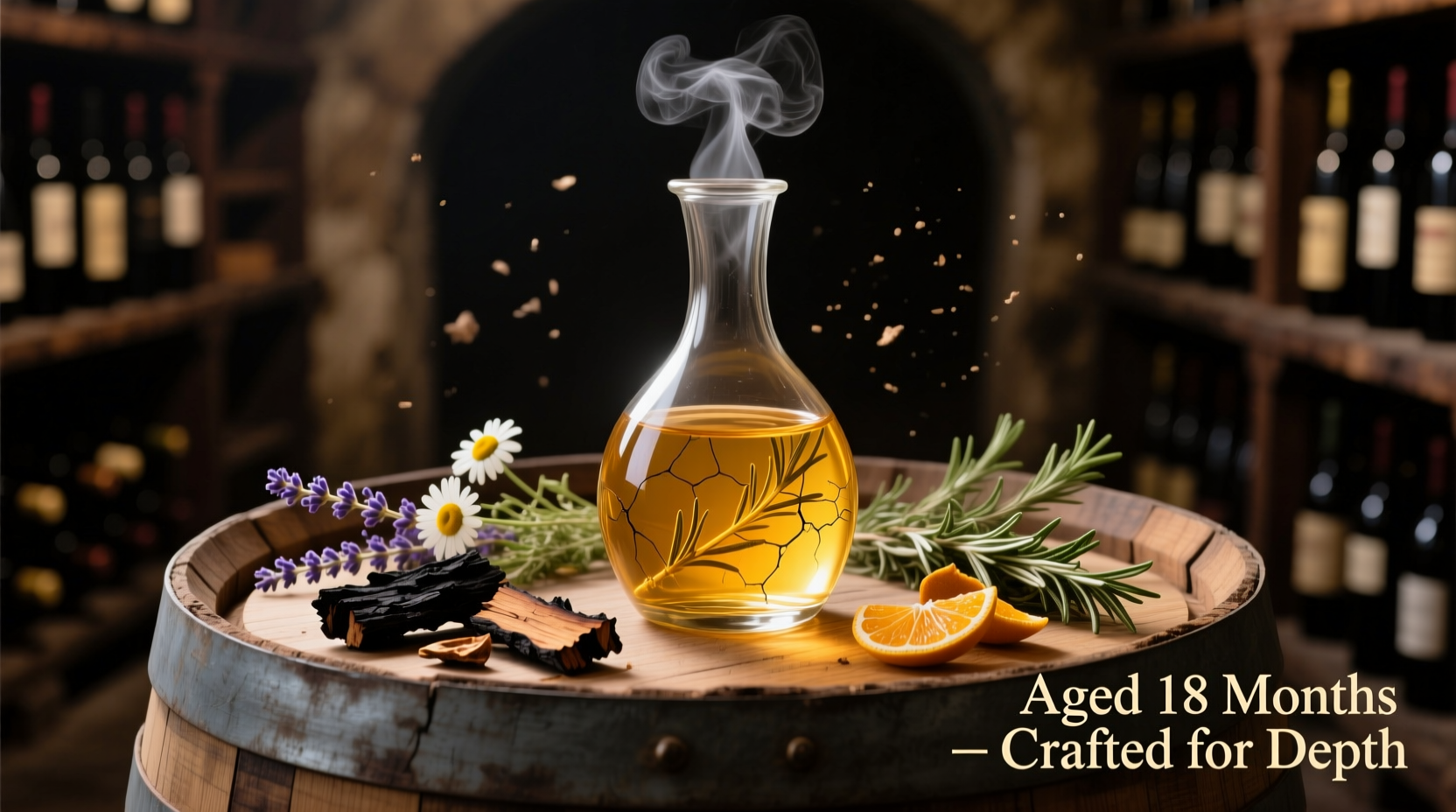
Alcohol acts as a solvent and catalyst—it pulls out lignin-derived vanillins, hemicellulose sugars, and tannins from oak more readily than water alone. But it’s not indispensable. Water-based systems can achieve comparable complexity through three parallel mechanisms: controlled oxidation, hydrolytic breakdown of wood polymers, and time-mediated esterification of botanical acids and alcohols. When botanicals like rosemary, gentian root, or dried orange peel steep alongside oak, their organic acids (citric, malic, rosmarinic) interact with wood lignins under mild oxygen exposure, forming new aromatic compounds—think ethyl vanillin, gamma-nonalactone (coconut), or eugenol derivatives (spiced clove). Crucially, this requires *deliberate oxygen management*, not exclusion. Unlike wine (which ages under near-anaerobic conditions), non-alcoholic tonics benefit from micro-oxygenation—0.5–2 mg/L/month—to drive gentle polymerization without spoilage.
Temperature also governs reaction speed: every 10°C increase doubles hydrolysis rates. That means aging at 18–22°C yields measurable complexity in 4–6 weeks; at 12°C, it may take 12–16 weeks. And unlike spirits, where ethanol protects against microbes, non-alcoholic tonics require pH control (ideally 3.0–3.8) and preservative synergy (e.g., potassium sorbate + citric acid buffer) to prevent lactic acid bacteria blooms that produce off-flavors like buttery diacetyl or sour butyric notes.
Tip: Never skip pH testing. A $20 digital pH meter pays for itself after one batch saved from microbial haze or acetic spoilage.Choosing Your Wood: Beyond “Oak Chips”
Not all wood is equal—and not all “barrel-aged” claims reflect meaningful interaction. True complexity arises from wood species, toast level, grain density, and prior use. Here’s how to match wood to your botanical profile:
| Wood Type | Toast Level | Best For | Key Compounds Released |
|---|---|---|---|
| American White Oak (Quercus alba) | Medium-plus (20 min, 200°C) | Citrus-forward tonics, ginger-based bitters | Vanillin, syringaldehyde, lactones (coconut, peach) |
| French Oak (Quercus robur & petraea) | Light-to-medium (15 min, 180°C) | Floral/herbal tonics (lavender, chamomile, elderflower) | Eugenol, guaiacol, subtle tannins |
| Cherry (Prunus serotina) | Light (12 min, 170°C) | Berry-infused shrubs, rhubarb-ginger blends | Benzaldehyde (almond), coumarin (sweet hay) |
| Used Bourbon Barrel Staves | N/A (pre-toasted, pre-charred) | Root-based tonics (dandelion, burdock, sarsaparilla) | Residual whiskey lactones, caramelized sugars, toasted oak phenolics |
Avoid sawdust or overly fine shavings—they extract too quickly, yielding harsh tannins and astringency within days. Opt instead for 3–5 mm cubes or 1–2 mm thick stave fragments. These offer high surface-area-to-volume ratio without runaway extraction. Toast level matters critically: light toast emphasizes wood sugars and floral notes; medium-plus introduces spice and smoke; heavy toast adds charcoal filtration benefits but risks bitterness. For first-time experiments, start with medium-toast American oak cubes—neutral enough to support, not dominate, your botanicals.
A Step-by-Step Maturation Protocol (4–12 Weeks)
This protocol prioritizes repeatability, safety, and sensory development—not guesswork. It assumes a base tonic already formulated (e.g., 70% water, 25% botanical infusion, 5% acid/sugar balance). Do not add wood to raw, unbalanced liquids.
- Stabilize & Adjust pH: Bring finished tonic to pH 3.4 ± 0.1 using food-grade citric acid. Verify with calibrated meter—not litmus strips.
- Sanitize Wood: Rinse oak cubes in boiling water for 90 seconds (not longer—excessive heat degrades volatile compounds). Drain thoroughly on stainless steel mesh. Never use bleach or alcohol rinses—they leave residues.
- Load Ratio: Add 12–15 g of toasted oak per liter of tonic. Use glass carboys or stainless steel tanks with airlocks—not plastic jugs, which leach plasticizers over time.
- Oxygen Management: Seal vessel with an airlock filled with 70% ethanol (to inhibit airborne microbes) OR use a silicone bung with 0.5 µm pore size for passive O₂ diffusion. Avoid full airtight seals.
- Aging Timeline:
- Weeks 1–2: Daily gentle inversion (10 sec) to encourage even contact. Taste daily—early notes are green, woody, slightly bitter.
- Weeks 3–6: Reduce agitation to twice weekly. Vanillin peaks around Day 28–35. Tannins soften via polymerization.
- Weeks 7–12: Optional “rest phase”: decant off solids, then age clarified liquid in fresh oak at half dose (6 g/L) for oxidative rounding.
- Termination & Filtration: At desired profile (see tasting checklist below), remove wood. Cold-crash at 4°C for 48 hours, then filter through 1.0 µm pleated cellulose—never paper coffee filters. Stabilize with 0.03% potassium sorbate + 0.01% sodium benzoate if shelf life exceeds 4 weeks.
Tasting & Evaluation Checklist
Subjective descriptors aren’t enough. Track objective markers to avoid over-extraction or inconsistency. Use this checklist weekly during active aging:
- ✅ Vanilla intensity: Should rise steadily until Week 5, then plateau. Sharp, artificial “candy” vanilla = over-extraction or low-quality wood.
- ✅ Tannin balance: Initial astringency should mellow by Week 4. Lingering dryness on the sides of the tongue >10 seconds = excessive oak or insufficient acid buffering.
- ✅ Oxidative notes: Look for desirable nuttiness (walnut skin), dried fruit (fig, raisin), or toasted almond—not cardboard, wet newspaper, or sherry-like acetaldehyde (sign of uncontrolled oxidation).
- ✅ Botanical integration: Original herbal/citrus notes shouldn’t vanish. Instead, they should deepen—e.g., lemon zest becomes preserved lemon rind; rosemary shifts from piney to camphorous-woody.
- ✅ Mouthfeel shift: Increased viscosity or “oiliness” indicates polysaccharide release from hemicellulose—desirable up to a point. Slime or film = microbial contamination.
Mini Case Study: The “Hawthorn & Smoke” Tonic (Portland, OR)
In early 2023, Portland-based apothecary Veridian Botanica launched a non-alcoholic digestif aimed at restaurant sommeliers. Their base was hawthorn berry, black pepper, and roasted dandelion root—bold, tannic, and earthy. Initial infusions tasted aggressively vegetal and thin. They trialed three aging methods: cold maceration (2 weeks, no wood), oak chip infusion (1 week, 20 g/L), and the step-by-step protocol above. Only the protocol batch achieved the target profile: a layered mid-palate where hawthorn’s tartness softened into quince paste, black pepper gained smoky warmth, and dandelion’s bitterness resolved into roasted chicory bitterness—rounded, not sharp. Shelf stability exceeded 9 months refrigerated, with zero haze or off-notes. Their key insight? “We weren’t adding ‘wood flavor.’ We were letting the hawthorn’s natural malic acid react with oak lignins over time. The wood was a catalyst—not an ingredient.”
“True non-alcoholic aging isn’t about copying spirits. It’s about leveraging water’s unique chemistry—hydrolysis, slow ester formation, and controlled oxidation—to build layers no distillation could create.” — Dr. Lena Torres, Food Chemist & Lead Developer, ZeroProof Labs
Common Pitfalls & How to Avoid Them
Even experienced makers stumble here. These errors derail complexity before it begins:
- Using untested wood: Sourcing oak from furniture suppliers or firewood vendors introduces pesticides, mold spores, or unknown toast levels. Always source from cooperage-certified suppliers (e.g., Seguin Moreau, Oak Solutions Group) who provide spec sheets.
- Skipping cold stabilization: Unfiltered tannins and pectins will precipitate as haze within days of bottling—especially in citrus-heavy tonics. Cold-crashing isn’t optional.
- Ignoring container material: Glass is ideal. Stainless works if passivated. Never use aluminum (reacts with acids) or reactive plastics (PET degrades above 30°C; HDPE leaches).
- Over-aging in primary vessel: Leaving tonics on oak beyond 8 weeks often yields diminishing returns—then decline. The “rest phase” in secondary vessel is where refinement happens.
- Tasting only by aroma: Volatiles mislead. Always evaluate mouthfeel, finish length, and retronasal perception. A “perfect” nose can mask harsh tannins or flat acidity.
FAQ
Can I reuse oak cubes or staves?
Yes—but with diminishing returns. After first use, cubes retain ~40% of extractable vanillin and ~25% of lactones. For second use, double the aging time and halve the dose. Discard after third use or if visual mold appears (rare, but possible in humid environments). Sterilize between uses with boiling water only—no vinegar or alcohol rinses.
Do I need a temperature-controlled space?
Ideally, yes. Fluctuations >±3°C/day accelerate inconsistent reactions and promote microbial growth. A basement corner (16–19°C stable) or wine fridge (set to 18°C) outperforms ambient kitchen storage. If unavailable, insulate carboys with wool blankets and monitor weekly with a min/max thermometer.
What’s the fastest way to test if my aging is working?
Conduct a “micro-trial”: Split 500 mL of stabilized tonic into three 100 mL jars. Add 1.2 g, 2.4 g, and 3.6 g of oak to each. Taste blind every 3 days. The dose that hits peak complexity first reveals your optimal gram-per-liter ratio—scalable to larger batches.
Conclusion
Aging non-alcoholic botanical tonics isn’t nostalgia—it’s necessity. As consumers grow discerning about what “zero-proof” truly means, superficial flavorings won’t suffice. Complexity must be earned: through time, thoughtful material selection, and respect for biochemical nuance. You don’t need a copper still or a century-old cellar. You need calibrated attention—measuring pH, tracking oxygen ingress, tasting with intention, and understanding that vanillin isn’t added, it’s coaxed. Every bottle you age this way is a quiet act of resistance against the idea that depth requires intoxication. Start small: one liter, one oak type, one botanical. Record everything. Taste daily. Trust the process—not the promise. In six weeks, you’ll pull a sample that tastes less like tea and more like memory: warm, woody, faintly sweet, deeply familiar, and wholly new.
💬 Your turn. Try the step-by-step protocol this month—and share your tasting notes, challenges, or breakthroughs in the comments. Let’s build the first open-source library of non-alcoholic aging data, together.