Gin is not distilled spirit—it’s a botanical conversation. Unlike vodka or whiskey, which rely on grain character or barrel influence, gin’s identity emerges entirely from what’s added before, during, or after distillation. Yet most drinkers know only that “juniper must be present” (a legal requirement in EU and UK gin regulations) and perhaps recognize a hint of citrus or spice. Few understand *how* angelica root binds volatile oils, why orris root acts as a silent amplifier, or how cassia bark introduces warmth without heat. This isn’t trivia—it’s sensory literacy. When you taste gin deliberately—not just for pleasure but for pattern recognition—you begin to decode intentionality in every bottle. That understanding transforms casual sipping into confident selection, informed mixing, and even thoughtful home experimentation.
The Core Triad: Juniper, Coriander, and Angelica Root
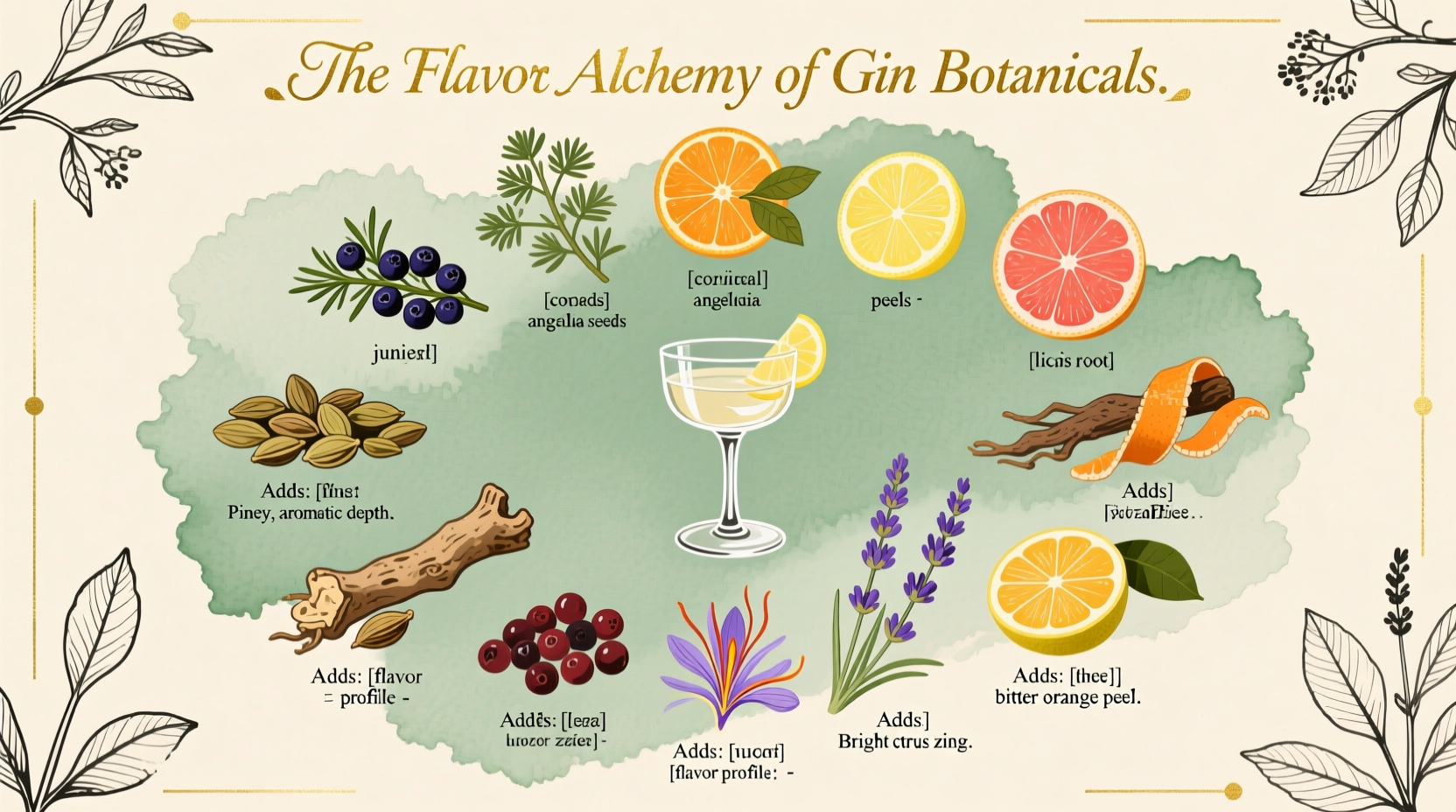
Every traditional London Dry gin rests on three foundational botanicals—often called the “holy trinity” by master distillers. Their roles are structural, not decorative.
Juniper berries provide the unmistakable piney, resinous backbone. But quality matters profoundly: ripe, hand-harvested berries from Macedonia or Bulgaria offer bright, crisp green notes with subtle blueberry undertones; overripe or poorly stored berries yield flat, woody, or turpentine-like harshness. Juniper’s essential oil—mainly alpha-pinene and myrcene—evaporates early in distillation, so it must be co-distilled with heavier botanicals to anchor its volatility. Without juniper, it’s not gin—it’s flavored neutral spirit.
Coriander seed is the most widely used supporting botanical after juniper—and for good reason. Its warm, citrusy, slightly floral aroma (from linalool and limonene) bridges juniper’s sharpness and citrus peels’ brightness. Crucially, coriander contributes body: its fatty oils lend viscosity and mouthfeel, softening the high-proof bite of new-make spirit. Ground too finely, it releases bitter tannins; lightly cracked, it yields balanced complexity. As master distiller Katie Dobbins of The London Distillery Company explains:
“Coriander is the diplomat of the still. It doesn’t shout—but without it, juniper can feel abrasive, and citrus can taste thin. It’s the reason a well-balanced gin feels complete in the mouth, not just interesting on the nose.” — Katie Dobbins, Master Distiller & Gin Educator
Angelica root plays the quietest but most indispensable role: it’s the fixative. A dried, fibrous rhizome rich in coumarin and volatile sesquiterpenes, angelica slows the evaporation of lighter top-notes (like limonene from lemon peel) while binding heavier compounds (like orris’s ionones). Think of it as the binder in a perfume formula—without it, gin’s aromatic profile would collapse within weeks. It also contributes subtle earthy, musky, and celery-like nuances that deepen the mid-palate. Most distillers use both root and seed, though the root dominates for stability.
Citrus Peels: Beyond Brightness—Texture and Timing
Lemon, orange, grapefruit, and lime peels are ubiquitous—but their impact goes far beyond “zesty.” Each peel brings distinct terpenes, esters, and oils that behave differently under heat and alcohol.
- Lemon peel: High in limonene (fresh, sharp citrus), but also contains citral—responsible for the characteristic “lemon verbena” lift. Best added late in distillation or as a cold compound, as heat degrades citral rapidly.
- Orange peel: Richer in valencene and nootkatone, lending marmalade depth, honeyed sweetness, and a waxy, rounded mouthfeel. Its oils are more heat-stable, making it ideal for pot distillation.
- Grapefruit peel: Contains high levels of nootkatone and bergamottin—bitter, resinous, and complex. Used sparingly, it adds sophistication and prevents cloying sweetness. Overuse creates medicinal harshness.
- Lime peel: Delicate and highly volatile. Almost never distilled—it’s almost always added post-distillation as a cold infusion to preserve its fragile, green, tropical top-notes.
Orris Root, Liquorice, and the Art of Amplification
These are the “silent architects” of gin—rarely tasted outright, yet essential to harmony.
Orris root (dried iris rhizome) is aged for 3+ years to develop ionones—molecules that smell like violets, raspberries, and clean linen. Its true function? To enhance perception. Ionones bind to olfactory receptors more readily in the presence of alcohol, making other aromas seem louder and longer-lasting. It also contributes a faint, starchy sweetness that rounds out bitterness from roots or barks. Because it’s nearly odorless when raw, it’s often overlooked—but remove it from a classic recipe, and the gin tastes thinner, shorter, less resonant.
Liquorice root serves dual purposes: it adds subtle aniseed sweetness (from glycyrrhizin) and, more importantly, provides natural saponins—compounds that create micro-bubbles in the spirit, enhancing mouth-coating texture and releasing volatile aromas more efficiently on the palate. It’s rarely dominant, but its absence leaves gin feeling “lean” or “sharp” where it should feel “generous.”
Cardamom, though often grouped with spices, functions similarly: its eucalyptol and limonene content lifts floral notes and adds a cooling, almost minty lift that cleanses the palate between sips. Green cardamom pods (not seeds alone) deliver the most nuanced effect—roasting them lightly before distillation deepens their caramelized warmth without losing freshness.
A Comparative Guide: Botanical Functions at a Glance
| Botanical | Primary Flavor/Aroma Contribution | Structural Role | Distillation Timing Tip |
|---|---|---|---|
| Juniper berries | Pine, resin, fresh-cut evergreen, blueberry skin | Legal & aromatic foundation; defines category | Always co-distilled; never added post-distillation |
| Coriander seed | Citrus peel, floral, warm spice, slight nuttiness | Body builder; bridges top/mid notes | Lightly cracked; add with juniper for synergy |
| Orris root | Violet, raspberry, clean linen, faint starch | Aromatic amplifier; longevity enhancer | Add early—needs time to release ionones |
| Lemon peel | Sharp citrus, lemon verbena, green zest | Top-note brightness; acidity illusion | Add late or post-distillation to preserve citral |
| Angelica root | Earthy, musky, celery, damp forest floor | Fixative; binds volatile oils; stabilizes shelf life | Add with base botanicals; benefits from extended maceration |
| Cassia bark | Warm cinnamon, clove, baked apple, subtle heat | Mouthfeel enhancer; adds perceived sweetness | Add mid-distillation; avoid over-extraction (bitterness) |
Real-World Tasting: How Botanical Ratios Shape Character
In 2022, the small-batch distillery Hebridean Spirit Co. released two gins side-by-side using identical base spirit and process—only the botanical ratios differed. Both contained juniper, coriander, orange peel, and orris. But “Coastal Reserve” used 30% more orris root and replaced cassia with star anise; “Peat & Pine” doubled the juniper and added smoked heather tips.
Tasters consistently described “Coastal Reserve” as “elegant, lingering, violet-tinged”—with citrus notes seeming brighter and longer. In contrast, “Peat & Pine” was “assertive, resinous, grounded,” with orange peel receding behind juniper’s pine intensity and a dry, smoky finish. Neither was “better”—but the difference underscored how minor ratio shifts alter perception: more orris didn’t make the gin taste “of violets,” but made every note resonate more clearly. Less juniper didn’t weaken the gin—it simply shifted emphasis from structure to nuance.
This isn’t theoretical. At home, you can test it: take two identical gin-and-tonics. Add one drop of pure orange oil to one; one drop of orris tincture (available from apothecary suppliers) to the other. The orange oil will scream citrus—but fade fast. The orris tincture won’t announce itself. Instead, the juniper will seem crisper, the tonic’s quinine more integrated, the overall drink more cohesive. That’s amplification in action.
Your Practical Botanical Tasting Checklist
Developing botanical literacy takes repetition—not memorization. Use this checklist to build consistent observation habits:
- Nose first, neat: Swirl gently, then inhale deeply—not through the nose alone, but with mouth slightly open (retronasal olfaction captures more nuance).
- Identify the “anchor”: Is there a dominant note (pine? citrus? spice?)—or does the aroma shift across multiple layers?
- Assess texture: Does it feel light and volatile (evaporates fast) or viscous and clinging? This signals coriander, liquorice, or orris presence.
- Pinpoint bitterness: Is it sharp and green (grapefruit pith, gentian) or warm and drying (cassia, black pepper)? Bitterness balances sweetness and alcohol heat.
- Track the finish: Does the flavor vanish, linger cleanly, or leave a warming sensation? Long, floral finishes suggest orris; warm, spicy ones point to cassia or cubeb.
Frequently Asked Questions
Can I identify individual botanicals in a finished gin?
Yes—with practice. Start with single-botanical infusions: steep juniper berries in vodka for 24 hours, then taste. Repeat with coriander, lemon peel, or orris. Note how each smells and feels. Then compare those impressions against complex gins. You’ll begin recognizing signatures—not as isolated notes, but as familiar voices in a chorus.
Why do some gins taste “soapy” or “perfumey”?
Often due to overuse of orris root or improper aging of the root. Fresh orris is nearly scentless; aged orris develops ionones, but if aged too long or stored poorly, it can produce harsh, waxy, or detergent-like off-notes. It can also signal poor distillation control—where heavy fusel oils weren’t properly separated from the heart cut.
Does cold-compounding (adding botanicals post-distillation) produce inferior gin?
Not inherently—but it changes the result. Cold-compounded gins retain vivid, volatile top-notes (like fresh lime or cucumber) but lack the integration and textural depth of co-distilled botanicals. They’re excellent for specific profiles (e.g., ultra-fresh citrus gins), but rarely achieve the layered complexity of traditional methods. Legally, they’re still gin—if juniper is predominant.
Conclusion: Taste With Intention, Not Just Habit
Understanding botanicals isn’t about memorizing Latin names or chasing rare ingredients—it’s about reclaiming attention. In a world of algorithmic recommendations and influencer-led trends, choosing a gin based on what you *know* it contains—rather than what the label promises—is an act of sensory sovereignty. When you recognize how angelica root holds a flavor in place, or how orris makes a whisper audible, you stop drinking gin as background noise and start experiencing it as architecture: deliberate, balanced, human-made. That awareness transforms every G&T into a moment of clarity—a pause where you notice not just what you’re tasting, but *how* you’re tasting. So next time you pour, skip the garnish for a moment. Nose it. Sip slowly. Ask: What’s holding this together? What’s lifting it up? What’s grounding it? Your palate will remember—not the brand, but the craft.
💬 Try it tonight: Pick one gin from your shelf, taste it using the 5-step checklist above, and share one observation in the comments—what surprised you? What held the flavor together? Let’s build a smarter, more intentional gin community—together.