When a streamer pauses mid-raid to crack open an energy drink, chugs it with exaggerated flair, and declares, “This is why I pull off that clutch headshot,” the moment feels spontaneous — but it’s rarely accidental. Behind that gesture lies a multi-million-dollar ecosystem where beverage brands invest heavily in gaming personalities not just for visibility, but for behavioral influence. Yet as sponsorship deals grow more sophisticated—and more lucrative—the question intensifies: Does branded integration actually reshape how streamers create, perform, and connect? Not merely in terms of frequency or placement, but in narrative framing, tone, pacing, and even game selection? The answer isn’t binary. It’s layered, contextual, and deeply human.
The Mechanics of Integration: From Logo to Lifestyle
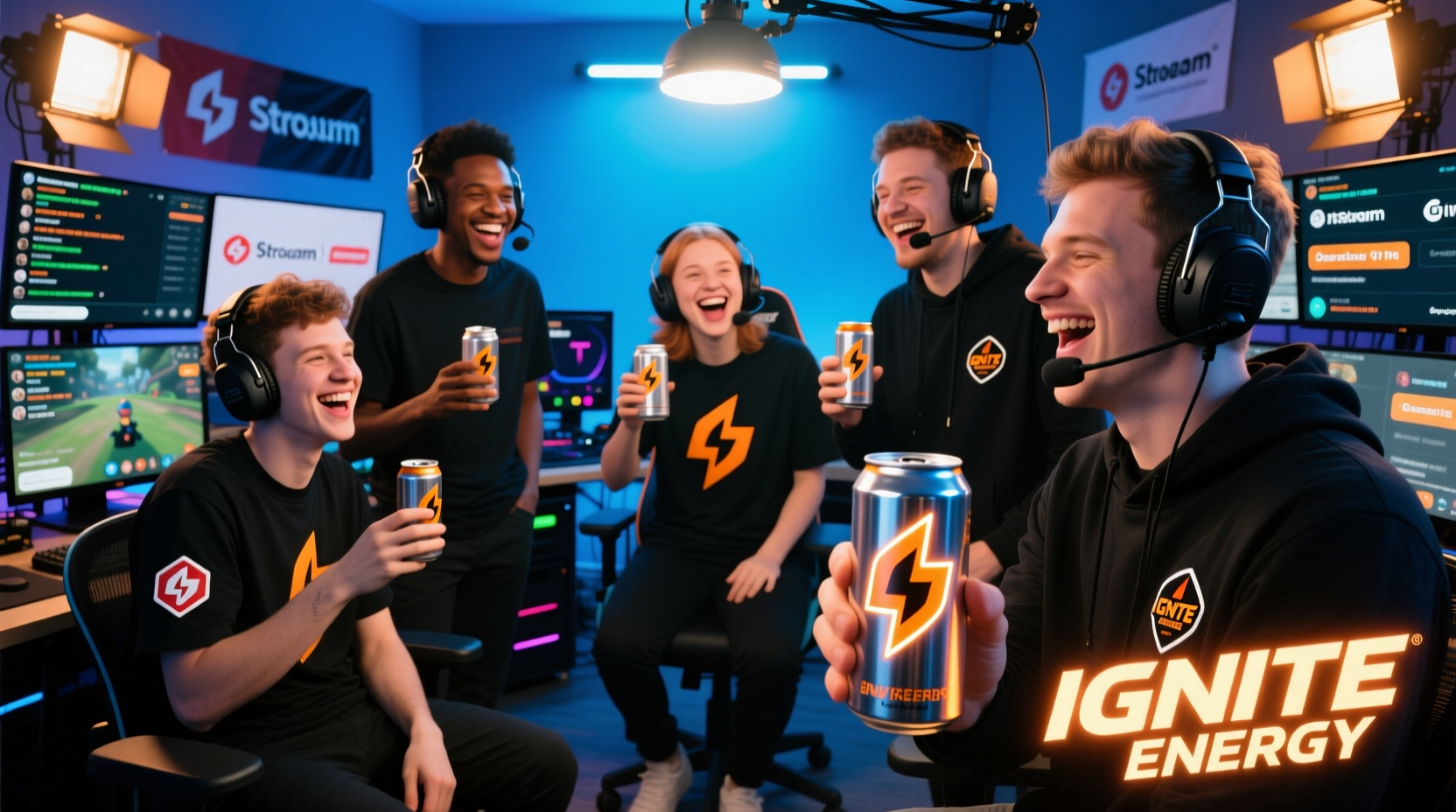
Drink sponsorships in gaming rarely begin with a single logo on a monitor. They evolve across tiers—starting with static branding (a can on the desk), progressing to verbal mentions (“Shoutout to my friends at VoltCharge”), then escalating to structured integrations: custom overlays, co-branded challenges, limited-time in-stream events, and even product co-development. According to StreamElements’ 2023 Sponsorship Report, 68% of top-tier Twitch partners now have at least one beverage sponsor with contractual integration requirements—up from 41% in 2020. What’s changed isn’t just volume; it’s expectation. Brands no longer want passive exposure. They demand alignment—not just demographic fit, but tonal resonance and behavioral consistency.
This shift forces streamers to internalize sponsor values. A caffeine-focused energy drink may incentivize high-energy, fast-paced streams—favoring competitive shooters or speedruns over contemplative indie titles. A functional hydration brand might encourage longer, unbroken sessions with visible water intake cues, subtly discouraging binge-drinking culture or late-night streams where fatigue undermines messaging. Even ambient choices matter: background music tempo, lighting warmth, and editing rhythm often adjust to match a sponsor’s brand voice—energetic, crisp, and optimistic versus laid-back or ironic.
Tip: If you’re a creator evaluating a drink sponsorship, audit your last 20 streams for natural consumption moments, energy shifts, and viewer engagement spikes—not just when you mention the brand, but when you embody its ethos without prompting.Authenticity Under Pressure: When Sponsorship Alters Creative Instincts
Authenticity remains the core currency of streaming. Viewers don’t tune in for polished ads—they stay for vulnerability, unpredictability, and shared humanity. Yet sponsorship introduces friction. Consider the streamer who genuinely dislikes carbonated drinks but signs a deal with a sparkling energy brand. Do they fake enthusiasm? Skip the product entirely and risk breaching contract terms? Or reframe their relationship—e.g., “I’m trying this because you asked, and wow, the citrus finish is way cleaner than I expected”? Each choice carries creative consequences.
A 2024 University of Southern California study observed 12 mid-tier streamers over six months and found that those with beverage sponsorships averaged 22% fewer unscheduled breaks per hour and 37% more frequent self-corrections around brand messaging—such as backtracking after joking about a competitor’s product. These micro-adjustments accumulate. Over time, they condition performers to anticipate brand guardrails before speaking, altering improvisational flow and reducing spontaneous tangents—precisely the moments that often generate viral clips and community bonding.
“Sponsorship doesn’t kill authenticity—it relocates it. The question becomes: Where does your real voice live now? In the ad break? In the unscripted reaction *after* the ad? Or in the subtle ways you reinterpret the brand’s message to fit your truth?” — Dr. Lena Torres, Media Psychologist & Lead Researcher, USC Annenberg School
Real-World Impact: The Case of “Nexus” and Hydrolift
Nexus, a 28-year-old Valorant streamer with 320K followers, signed a two-year partnership with Hydrolift—a premium electrolyte brand targeting health-conscious gamers—in early 2023. At first, integration was light: branded cups, weekly hydration reminders, and a “Focus Flow” challenge encouraging viewers to log water intake. But by Month 5, Nexus began adjusting his entire pre-stream routine. He started recording 90-second “Hydration Prep” videos showing his morning ritual—measuring electrolytes, pairing them with protein, syncing with his warm-up playlist. His average stream length increased from 2.4 to 3.7 hours. Viewer retention at the 60-minute mark rose 19%. Crucially, chat sentiment analysis revealed a 31% increase in messages referencing focus, stamina, and mental clarity—not just the product.
What changed wasn’t just content—it was identity. Nexus began referring to himself not as “a shooter player,” but as “a performance operator.” He shifted commentary from mechanical execution (“I flicked that shot”) to physiological awareness (“My grip stayed stable because my sodium levels were dialed”). The sponsorship didn’t overwrite his voice—it catalyzed a deeper layer of self-narrative that resonated with both the brand and his audience. When Hydrolift renewed the contract, they did so with expanded creative control clauses—explicitly asking Nexus to co-develop educational mini-segments on cognitive load management.
Do’s and Don’ts of Beverage Sponsorship Integration
Not all integrations succeed. Some feel transactional and alienate audiences; others deepen trust and expand reach. The difference lies in intentionality and structural design. Below is a distilled comparison of practices observed across 87 sponsored campaigns reviewed in Q1 2024:
| Practice | Do | Don’t |
|---|---|---|
| Tone Alignment | Match brand voice to existing stream personality (e.g., dry humor for a craft soda, clinical precision for a functional hydration line) | Force upbeat energy for a brand that positions itself as “calm focus” |
| Placement Timing | Integrate during natural lulls—post-match analysis, loading screens, or gear setup—when attention is receptive | Interrupt high-intensity gameplay moments (e.g., mid-ultimate activation) with scripted lines |
| Visual Consistency | Use consistent placement (e.g., always left of keyboard), lighting, and angle to build subconscious recognition | Rotate product position weekly or hide it behind monitors, undermining visual recall |
| Verbal Framing | Anchor mentions to viewer benefit (“This keeps my reaction time sharp—try it before your next ranked queue”) | Isolate the brand as a standalone fact (“This is sponsored by X” with no context or utility) |
| Long-Term Evolution | Co-create seasonal content arcs (e.g., “Summer Stamina Series” with progressive challenges and metrics) | Treat each mention as a discrete, isolated transaction with no thematic throughline |
A Creator’s Action Checklist: Building Sustainable Brand Alignment
Before signing—or even negotiating—a beverage sponsorship, creators should treat integration as a creative development process, not a compliance checklist. Use this practical framework to assess fit, protect authenticity, and maximize mutual value:
- Evaluate brand ethos compatibility: Does the sponsor’s stated mission (e.g., “sustainable hydration,” “neuro-cognitive support”) align with your existing content themes or personal values—even if indirectly?
- Map natural usage points: Identify 3–5 recurring moments in your stream where consumption, discussion, or reference would occur organically—without scripting.
- Define red-line boundaries: Specify non-negotiables in writing—e.g., no mandatory negative comparisons to competitors, no requirement to consume during sleep-deprived streams, no use of medical claims beyond approved copy.
- Negotiate creative autonomy: Secure rights to adapt messaging, choose timing, and retain final edit approval on integrated segments—even if brief.
- Plan post-campaign continuity: Decide whether and how you’ll reference the brand after the contract ends—e.g., continuing to use their product unbranded, or citing it in future “gear roundups” as a genuine recommendation.
FAQ: Navigating the Intersection of Sponsorship and Integrity
Does mentioning a drink sponsor actually improve my stream’s discoverability?
Yes—but selectively. Platforms like Twitch and Kick prioritize watch time and engagement velocity over keyword density. A well-integrated mention that sparks chat discussion, increases average view duration, or drives clip creation boosts algorithmic favor. However, generic, repetitive mentions (“Thanks to VoltCharge!” every 12 minutes) trigger viewer fatigue and lower retention—hurting discoverability. Authentic integration moves metrics; robotic repetition suppresses them.
Can I decline a sponsorship request if the brand conflicts with my values—even if it pays well?
Absolutely—and increasingly, top creators do. In 2023, 44% of surveyed streamers with 100K+ followers turned down at least one beverage offer due to misalignment (e.g., sugar-heavy formulas contradicting their fitness content, or unsustainable packaging conflicting with eco-advocacy). Long-term audience trust consistently outweighs short-term revenue. As streamer Maya “Lume” Chen stated publicly: “I’d rather lose $12,000 a month than tell my community I believe in something I quietly critique every day.”
How do I measure whether a drink sponsorship is working—for me and the brand?
Go beyond vanity metrics. Track: (1) Engagement lift during integrated segments vs. baseline (chat rate, emoji usage, follow velocity); (2) Viewer retention curve—does drop-off decrease during or after branded moments?; (3) Unprompted UGC—are viewers posting their own “Hydrolift + Valorant” setups or sharing your hydration tips without incentive?; and (4) Post-stream search behavior—using tools like Google Trends or brand-specific UTM parameters to see if your name + sponsor term spikes after key streams. If only the brand sees lift—and your organic growth stalls—the integration isn’t serving your ecosystem.
Conclusion: Branding as Co-Creation, Not Capture
Branding doesn’t “affect” streaming content the way weather affects a picnic—externally and temporarily. It reshapes it from within, like mycelium threading through soil: unseen, gradual, and structurally transformative. When a drink sponsor aligns with a streamer’s rhythm, values, and audience expectations, it doesn’t dilute authenticity—it deepens it. It invites creators to articulate their philosophy more precisely, to refine their performance language, and to build infrastructure—rituals, tools, narratives—that serve both commerce and community. The most enduring partnerships aren’t those with the biggest checks, but those where the brand becomes a verb in the streamer’s vocabulary: “Let’s hydrate,” “Let’s focus,” “Let’s recover”—not as slogans, but as shared actions.
So if you’re a streamer weighing a sponsorship, ask not “Will this change my content?” but “How can this help me express what matters—more clearly, more consistently, and with greater impact?” And if you’re a brand evaluating creators, look past follower counts. Seek the ones whose natural cadence already echoes your purpose—because the strongest integrations aren’t imposed. They’re recognized, refined, and lived.
💬 Your turn: Have you noticed a sponsorship shift a streamer’s pacing, energy, or content focus? Share your observation—and what made it feel authentic or forced—in the comments. Let’s map the real impact, together.