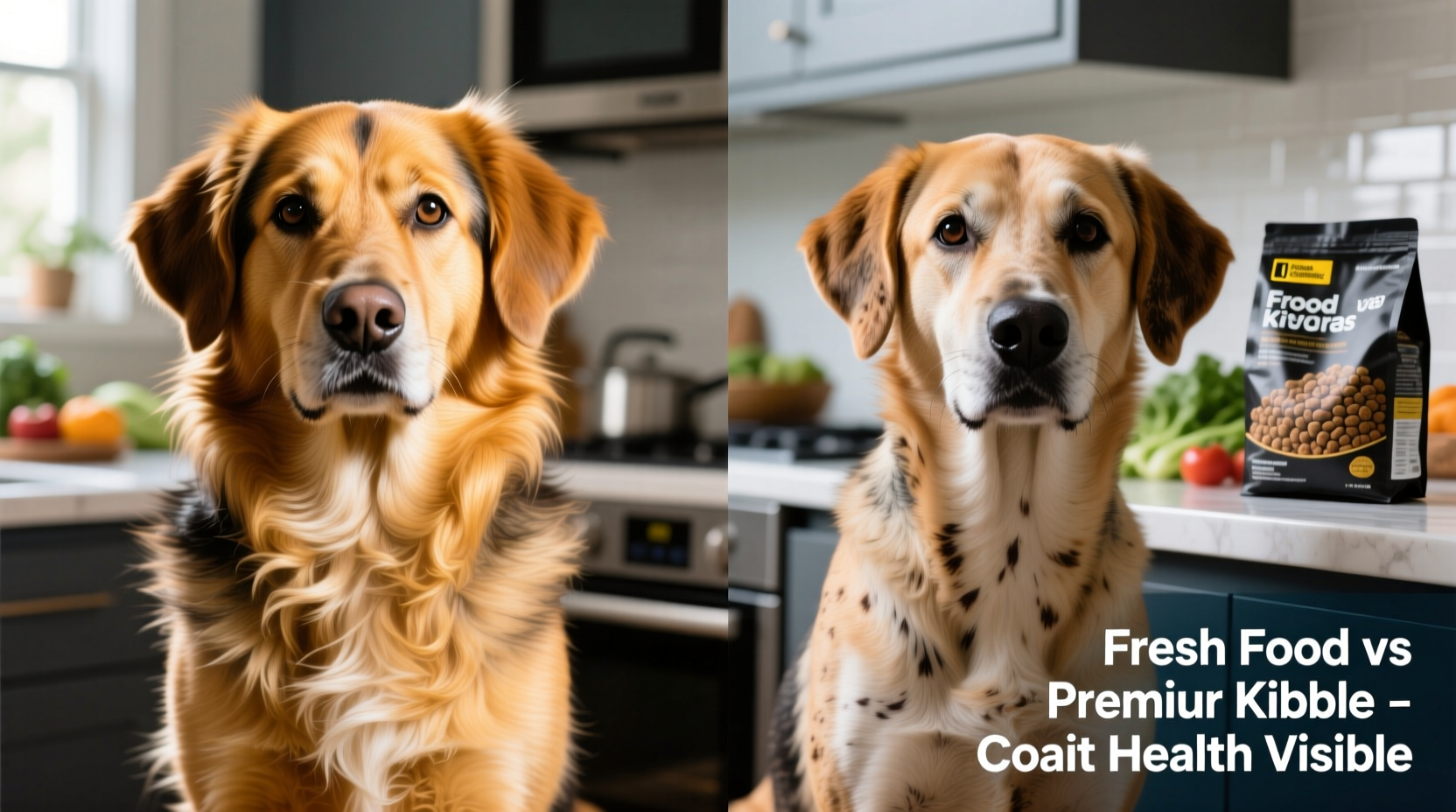
A dog’s coat is often the first thing people notice—shiny, soft fur suggests vitality, while a dull, flaky, or brittle coat can signal underlying health issues. As pet owners increasingly prioritize nutrition, two feeding options have gained traction: fresh food delivery services and premium kibble. Both claim to support overall wellness, but one of the most tangible indicators of success—coat condition—raises an important question: do these diets actually deliver visible improvements?
This article examines the nutritional foundations of fresh food and high-end kibble, evaluates how they impact skin and coat health, and presents real-world evidence to help you decide which option may be better for your dog’s appearance—and long-term well-being.
Nutritional Foundations: What Fuels a Healthy Coat?
A dog’s coat health is directly influenced by diet. The outer layer—fur—is made primarily of keratin, a protein that requires amino acids for synthesis. However, shine, texture, and resistance to shedding depend on other key nutrients:
- Omega-3 and Omega-6 fatty acids: Reduce inflammation, moisturize skin, and enhance shine.
- High-quality proteins: Provide essential amino acids like cysteine and methionine, critical for hair strength.
- Vitamins A, E, and B-complex: Support skin cell turnover and sebum production.
- Zinc and copper: Aid in pigment formation and prevent dryness.
The difference between fresh food delivery and premium kibble lies not just in ingredient sourcing, but in nutrient bioavailability—the degree to which these elements are absorbed and utilized by the body.
“Skin and coat condition is one of the fastest biomarkers of dietary change in dogs. Within weeks, you can see shifts based on fat quality and protein digestibility.” — Dr. Lena Patel, Veterinary Nutritionist, UC Davis School of Veterinary Medicine
Fresh Food Delivery: Whole Ingredients, Minimal Processing
Fresh food delivery services prepare meals using human-grade ingredients—often including lean meats, vegetables, fruits, and functional supplements—then flash-freeze or refrigerate them for shipping. These diets typically avoid fillers, artificial preservatives, and high-heat processing, preserving nutrient integrity.
Because fresh diets use whole-food sources of omega fatty acids (like salmon oil, flaxseed, and whole fish), vitamins (from carrots, spinach, blueberries), and proteins (chicken, turkey, beef), they offer a more natural nutrient profile. This can translate into faster absorption and utilization.
In practice, many pet owners report noticeable changes within 4–6 weeks:
- Reduced shedding and dander
- Softer, silkier texture
- Increased shine and reduced matting
- Fewer skin irritations and hot spots
Premium Kibble: Science-Based Formulation and Consistency
Premium kibble brands invest heavily in research-backed formulations. Unlike generic kibbles that rely on meat by-products and corn-based fillers, top-tier options use named animal proteins (e.g., “deboned chicken”), include added oils for omegas, and incorporate prebiotics for gut health—all factors that influence coat quality.
Modern extrusion techniques allow manufacturers to stabilize sensitive nutrients, and many premium formulas are AAFCO-certified to meet complete and balanced standards. Some even add taurine, glucosamine, or specialized fatty acid blends designed specifically for skin and coat support.
While kibble undergoes high-heat processing—which can degrade certain vitamins and alter protein structure—reputable brands compensate by “top-coating” with essential oils and synthetic vitamins post-extrusion. However, this method may result in lower nutrient retention compared to raw or gently cooked fresh meals.
Owners feeding premium kibble often see gradual improvements, especially if switching from a lower-quality diet. But the timeline tends to be longer—typically 8–12 weeks—before significant coat changes become apparent.
Comparative Analysis: Fresh Food vs Premium Kibble
| Factor | Fresh Food Delivery | Premium Kibble |
|---|---|---|
| Protein Source | Whole meats, human-grade, minimal processing | Named animal proteins, but processed at high heat |
| Fat Quality | Unrefined oils, whole fish, cold-pressed supplements | Often includes stabilized fish oil; some oxidation risk |
| Vitamin Bioavailability | Higher due to raw or lightly cooked sources | Partially synthetic; some degradation during processing |
| Digestibility | Typically 85–95% | 70–85%, depending on formula |
| Visible Coat Improvement | 4–6 weeks | 8–12 weeks |
| Cost (Monthly Average) | $150–$250 | $60–$120 |
| Convenience | Requires refrigeration, portioning, storage planning | Pour-and-serve; long shelf life |
The table highlights a clear trade-off: fresh food offers superior nutrient quality and faster results, while premium kibble provides consistency, affordability, and ease of use. For coat health specifically, the edge often goes to fresh diets due to higher bioavailability of essential fats and proteins.
Real-World Evidence: A Mini Case Study
Sophie Reynolds, a dog owner in Portland, Oregon, switched her 5-year-old Border Collie, Jasper, from a mid-tier kibble to a fresh food delivery service after noticing persistent dryness and excessive shedding. Jasper had no diagnosed allergies, but his coat lacked luster, and he scratched frequently.
Over six weeks, Sophie transitioned him gradually to a rotating menu of chicken, turkey, and fish-based fresh meals, all formulated with added flaxseed and salmon oil. By week five, she observed:
- A 60% reduction in shedding (measured by vacuum lint collection)
- Noticeably softer fur, especially around the ears and tail
- Disappearance of dandruff flakes on dark furniture
- Less frequent scratching, even during seasonal changes
At her next vet checkup, the veterinarian noted improved skin elasticity and hydration. “It’s not always obvious,” the vet said, “but when you fix the internal environment with better nutrition, the external signs follow.”
Sophie continues with the fresh diet, though she acknowledges the higher cost and storage demands. “It’s not just about looks,” she said. “He has more energy, and his breath is better too. But yeah—the coat change was the first thing I saw.”
Step-by-Step Guide to Evaluating Coat Health Improvements
If you're considering a diet change, follow this timeline to assess its impact on your dog’s coat:
- Week 0: Baseline Assessment
Take photos of your dog under consistent lighting. Note current shedding levels, presence of dandruff, and coat texture. Record any itching or skin issues. - Week 1–2: Transition Phase
Mix increasing amounts of new food with old (start with 25%, increase weekly). Monitor for digestive upset, which may temporarily affect skin health. - Week 3–4: Early Observations
Check for subtle changes: Is the coat less static-prone? Does it feel smoother when brushed? Look for reduced dander on bedding. - Week 5–8: Mid-Term Evaluation
Compare photos. Has shedding decreased? Is there increased shine, especially along the back? Note any behavioral changes like less scratching. - Week 9–12: Final Assessment
Determine if the improvement is sustained. If no visible change, consider whether the diet lacks sufficient omegas or if an underlying medical issue (e.g., hypothyroidism) needs investigation.
Expert Insights on Diet and Dermatology
Veterinary dermatologists emphasize that while genetics play a role in coat type, nutrition is the modifiable factor with the greatest daily impact.
“Many dogs referred to me for ‘allergy-related’ itching actually have subclinical malnutrition. Their diets lack essential fatty acids, or the proteins aren’t digestible enough to support tissue repair. Switching to a fresh, whole-food diet resolves symptoms in nearly 40% of cases before we even reach for medication.” — Dr. Marcus Tran, Board-Certified Veterinary Dermatologist
Another consideration is gut-skin axis health. Fresh diets often contain probiotics and fiber from vegetables, supporting a balanced microbiome. Since up to 70% of immune function occurs in the gut, a healthy digestive system reduces systemic inflammation—directly benefiting skin and coat.
FAQ: Common Questions About Diet and Coat Health
Can I mix fresh food and premium kibble?
Yes, but be cautious. Mixing diets can alter digestion speed and nutrient absorption. If combining, choose a kibble with minimal fillers and ensure both contain compatible fat and protein levels. Some dogs experience softer stools when mixing due to differing moisture content.
Is grain-free kibble better for coat health?
Not necessarily. Grains like oats and brown rice provide linoleic acid (an omega-6) that supports skin barrier function. Grain-free formulas often replace grains with legumes, which may lack equivalent fatty acid profiles. Focus on fat quality, not grain content.
How do I know if my dog’s coat issue is dietary or medical?
Dietary deficiencies usually present as generalized dryness, dullness, and symmetrical hair loss. Medical conditions like Cushing’s disease or thyroid imbalances may cause patchy alopecia, hyperpigmentation, or secondary infections. Consult your vet if changes don’t improve after 12 weeks on a high-quality diet.
Action Checklist: Optimizing Your Dog’s Diet for Coat Health
- ✅ Assess current diet: Check ingredient list for named protein sources and added omega oils.
- ✅ Rule out medical causes: Schedule a vet check if skin issues persist.
- ✅ Choose a fresh food brand with third-party testing or a premium kibble with AAFCO statement.
- ✅ Transition slowly over 7–10 days to avoid digestive stress.
- ✅ Track changes weekly with photos and grooming notes.
- ✅ Supplement only if needed: Most complete diets don’t require added fish oil unless advised by a vet.
- ✅ Re-evaluate at 12 weeks: Decide whether to continue, adjust, or consult a veterinary nutritionist.
Conclusion: Visible Benefits Start from Within
The health benefit of fresh food delivery versus premium kibble is indeed visible—in the gleam of a dog’s coat, the softness of their fur, and the absence of constant scratching. While both options can support canine wellness, fresh food consistently demonstrates faster, more pronounced improvements in coat quality due to superior nutrient bioavailability and minimal processing.
That said, premium kibble remains a viable, science-backed alternative—especially for households prioritizing convenience and budget. The key is choosing a formula with transparent sourcing, high digestibility, and balanced fatty acids.
No matter which path you choose, remember that lasting change takes time. Commit to a full evaluation period, track progress objectively, and consult professionals when in doubt. Your dog’s coat isn’t just cosmetic—it’s a mirror of their internal health.
🚀 Ready to transform your dog’s coat? Start by auditing their current food label today—look for real meat, identifiable fat sources, and minimal fillers. Share your journey or questions in the comments below.