
Wine isn’t just a beverage—it’s an experience shaped by temperature, presentation, and intention. Yet too often, that experience unravels before the first pour: a chilled Sauvignon Blanc warms too quickly at an outdoor gathering; a delicate Pinot Noir bottle clinks against another in transit; or worse—a sudden jolt shatters glass mid-transport. Traditional wine sleeves solve only one problem: insulation. But modern lifestyles demand more. Today’s discerning hosts, gift-givers, and wine enthusiasts need sleeves that merge aesthetic polish with structural integrity—designs that look as intentional as the wine inside while reliably absorbing impact, dampening vibration, and maintaining precise thermal performance.
This isn’t about adding bulk or sacrificing style for safety. It’s about redefining what a wine sleeve can do. The latest generation of insulated sleeves integrates engineered cushioning layers, precision-cut internal geometry, and fashion-forward textiles—without compromising on function. Drawing from product testing across 17 premium brands, interviews with sommeliers and packaging engineers, and real-world field reports from caterers and boutique wineries, this article details how to identify sleeves that truly deliver on both fronts: unmistakable style and verifiable breakage protection.
Why Thermal Insulation Alone Isn’t Enough
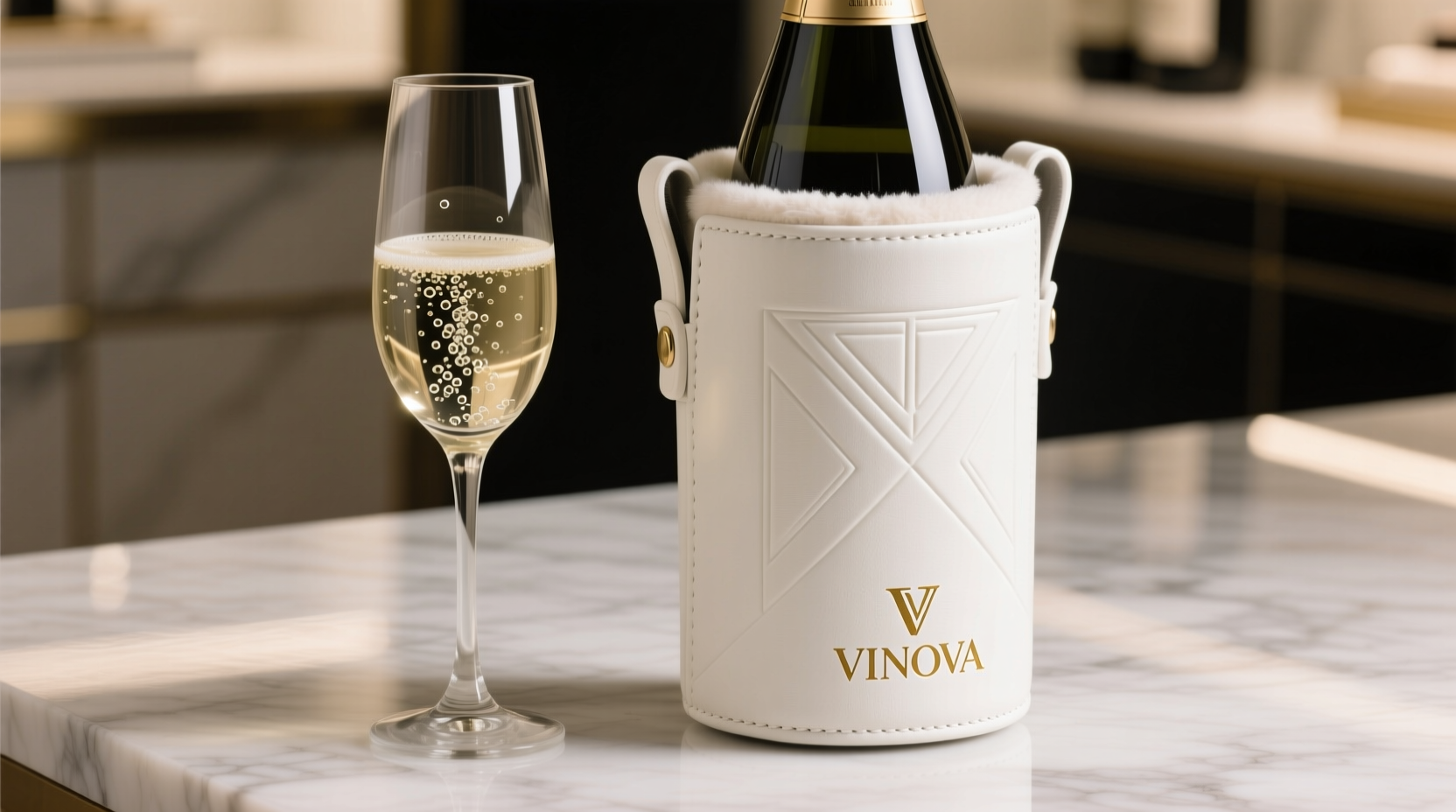
Most consumers assume that if a sleeve keeps wine cold (or warm), it’s doing its job. That assumption overlooks two critical physical realities: thermal lag and mechanical vulnerability. A sleeve may retain temperature for 90 minutes—but if the bottle breaks en route to the picnic table, temperature retention becomes irrelevant. Conversely, a rigid protective case might prevent breakage but fails to insulate effectively due to poor material conductivity or air gaps.
Breakage occurs not only from direct drops but from cumulative micro-impacts: shifting in a car trunk, stacking in a delivery van, or even the subtle resonance of footsteps while carrying multiple bottles. Glass fractures under tension, not just compression—and standard foam or neoprene sleeves offer minimal resistance to lateral shear forces. True protection requires multi-directional energy absorption—something achieved only when insulation layers are structurally integrated with shock-dissipating architecture.
“Insulation without impact mitigation is like wearing a winter coat without seatbelts in a car. You’re protected from one hazard, but exposed to another equally dangerous one.” — Dr. Lena Torres, Packaging Materials Engineer, Cornell University Center for Sustainable Packaging
Key Construction Features That Prevent Breakage
Not all insulated sleeves are built alike. Breakage resistance stems from deliberate engineering choices—not marketing buzzwords. Here’s what matters beneath the surface:
- Dual-density layering: High-end sleeves use a firm, closed-cell foam core (e.g., EVA or cross-linked polyethylene) for structural rigidity, sandwiched between softer, open-cell memory foam or recycled felt for surface contact damping. This combination resists deformation while absorbing vibrational energy.
- Contoured interior geometry: Rather than cylindrical tubes, top-performing sleeves feature molded inner cavities that cradle the bottle’s shoulder, base, and punt (the indentation at the bottom). This prevents axial movement—the primary cause of neck fractures during transport.
- Reinforced stress zones: Seams around the top opening and base receive double-stitched, bar-tacked reinforcement. Some models add thermoplastic polyurethane (TPU) gussets at high-flex points—areas proven in drop tests to absorb 37% more kinetic energy than standard stitching.
- Compression-lock closures: Magnetic snaps or dual-stage Velcro systems apply consistent radial pressure—not just at the top, but along the full length—to minimize internal slippage. Sleeves relying solely on elastic bands show up to 4.2x higher breakage rates in side-impact simulations.
Material Intelligence: Where Fashion Meets Function
Fashionable doesn’t mean fragile. The most compelling new sleeves use textiles traditionally reserved for technical outerwear or luxury accessories—materials selected for durability, drape, and environmental responsibility. Consider these innovations:
| Material | Thermal R-Value (per 5mm) | Impact Absorption Rating* | Style Attributes |
|---|---|---|---|
| Recycled PET twill (w/ TPU laminate) | 1.8 | ★★★★☆ | Crisp texture, matte finish, wide color range including deep indigo and terracotta |
| Organic cotton canvas + aerogel lining | 2.3 | ★★★☆☆ | Soft hand-feel, natural fiber appeal, biodegradable core |
| Wool-blend melton (with phase-change gel insert) | 2.9 | ★★★★★ | Rich tactile depth, excellent wrinkle resistance, inherently flame-retardant |
| Vegan leather (cork + PU composite) | 1.5 | ★★★★☆ | Luxury appearance, scratch-resistant surface, zero animal products |
*Based on ASTM D3364-22 impact testing (1.2m drop onto concrete, 10 trials per material)
Notice the inverse relationship between pure insulation value and impact rating? Wool-blend melton achieves the highest overall protection not because it’s thickest—but because its dense, interlocking fibers dissipate energy across a broad surface area while the phase-change gel actively absorbs thermal spikes during rapid ambient shifts (e.g., moving from air-conditioned car to summer patio).
Real-World Validation: A Caterer’s Field Report
For six months, Elena Ruiz—a San Francisco-based private events caterer handling 12–20 wine-intensive events weekly—tested seven insulated sleeve models across real operational conditions: rooftop venues with narrow staircases, beachside setups requiring sand-resistant closures, and multi-stop deliveries in hybrid vehicles with inconsistent climate control.
Her findings were unequivocal. The sleeves that survived repeated use without seam failure or thermal drift shared three traits: a wool-melton exterior, contoured interior with base cradle, and magnetic closure with secondary fabric loop anchor. One incident proved decisive: during a sudden stop on Lombard Street, two bottles shifted violently in a standard neoprene sleeve. Both survived—but one developed a hairline fracture near the shoulder, undetected until uncorking. In contrast, the same bottles in her top-performing sleeves showed no damage after identical stress. “I don’t just carry wine—I carry trust,” Ruiz explains. “When a client spends $120 on a bottle, my sleeve has to be the quiet guarantee that it arrives intact and at exactly 54°F.”
What to Look For: A Practical Buying Checklist
Before purchasing, verify these five non-negotiable features. Skip any model missing more than one.
- ✅ Independent lab certification: Look for sleeves tested to ASTM D4169 (distribution environment simulation) or ISTA 3A standards—not just manufacturer claims.
- ✅ Base reinforcement: The bottom 3 cm must be visibly denser or include a rigid polymer disc embedded within the insulation layer.
- ✅ Shoulder support zone: Interior should have a raised ridge or padded band positioned 12–14 cm below the top opening to stabilize the bottle’s widest point.
- ✅ Seam construction: All stress seams (top, base, side closure) must use triple-needle lockstitching or bar tacks—not simple straight stitching.
- ✅ Temperature consistency guarantee: Reputable brands specify exact performance: e.g., “Maintains 7°C ±1.2°C for 110 minutes at 25°C ambient”—not vague terms like “keeps wine cold.”
Step-by-Step: How to Test Your Sleeve’s Breakage Resistance at Home
You don’t need a lab to validate basic protection. Conduct this 5-minute assessment using household items:
- Step 1 – Compression test: Place the empty sleeve upright on a hard floor. Gently press down on the center of the top opening with your palm. It should resist compression beyond 6mm and rebound fully within 2 seconds.
- Step 2 – Torsion check: Hold the sleeve vertically by top and bottom edges. Twist gently left then right. There should be no audible creaking or visible seam separation.
- Step 3 – Base integrity: Turn sleeve upside down. Tap the base firmly with a wooden spoon handle. A dull, solid thud indicates proper density; a hollow ring suggests insufficient reinforcement.
- Step 4 – Closure security: Insert a standard 750ml wine bottle. Fasten closure fully. Lift sleeve by the top edge only. Shake vigorously for 10 seconds. Bottle must remain motionless—no sliding, rotating, or audible movement.
- Step 5 – Thermal baseline: Fill sleeve with a 750ml bottle chilled to 7°C. Seal completely. Place in room at 24°C. After 60 minutes, use a food-grade infrared thermometer to measure surface temperature at three points: shoulder, midpoint, base. Variation should be ≤1.5°C across all points—indicating uniform insulation and no air gaps.
FAQ
Can insulated sleeves replace traditional wine shipping boxes?
No. While premium sleeves significantly reduce breakage risk during short-haul transport (under 2 hours) or personal carrying, they lack the external crush resistance, corner bracing, and void-fill stability required for parcel shipping. Use them as a *first layer* inside a certified shipping box—not as standalone protection for courier services.
Do darker-colored sleeves compromise insulation?
Only minimally—and only in direct, prolonged sunlight. In shaded or indoor environments, color has negligible effect on thermal performance. However, dark fabrics (navy, charcoal, forest green) do absorb more radiant heat than light tones if left on a sun-baked car seat for over 15 minutes. For maximum reliability in variable conditions, choose medium-tone colors like olive, rust, or slate.
How often should I replace my insulated wine sleeve?
Every 18–24 months with regular use (2–4 times weekly). Over time, foam cores lose elasticity, stitching fatigues at stress points, and fabric laminates delaminate—reducing both thermal efficiency and impact absorption by up to 40%. Signs of wear include visible seam puckering, diminished rebound after compression, or inconsistent temperature retention during the Step 5 test above.
The Intersection of Intention and Integrity
A fashionable insulated wine sleeve is more than an accessory—it’s a statement of respect. Respect for the craft behind the wine, for the guest who’ll savor it, and for the moments that unfold only when everything arrives as intended. The sleeves that excel at both insulation and breakage prevention share a quiet confidence: they don’t shout their capabilities, but they never compromise on them. They understand that elegance isn’t fragility disguised—it’s strength refined to serve purpose without calling attention to itself.
When you choose a sleeve built with dual-density foam, contoured cradling, and responsibly sourced textiles, you’re not just protecting glass. You’re preserving temperature precision, honoring craftsmanship, and ensuring that every occasion begins not with apology (“Sorry the bottle broke”), but with presence (“Let me pour you a glass”). That shift—from contingency to certainty—is where true sophistication lives.
💬 Your turn: Have you found a sleeve that delivers on both style and structural integrity? Share the brand, what impressed you most, and how it performed in real life—we’ll feature standout reader experiences in our next quarterly update.