
Anaheim peppers are a staple in American Southwestern and Mexican-inspired kitchens, prized for their mild heat, earthy sweetness, and versatility. Whether roasted and stuffed, diced into salsas, or grilled alongside carne asada, these long green chiles bring depth without overwhelming the palate. For home cooks navigating the world of fresh chiles, understanding the nuances of Anaheim peppers—how they taste, when to use them, and how they differ from similar varieties—is essential. They bridge the gap between bold spice and subtle seasoning, making them ideal for families, weeknight meals, and dishes where heat should enhance, not dominate.
Definition & Overview
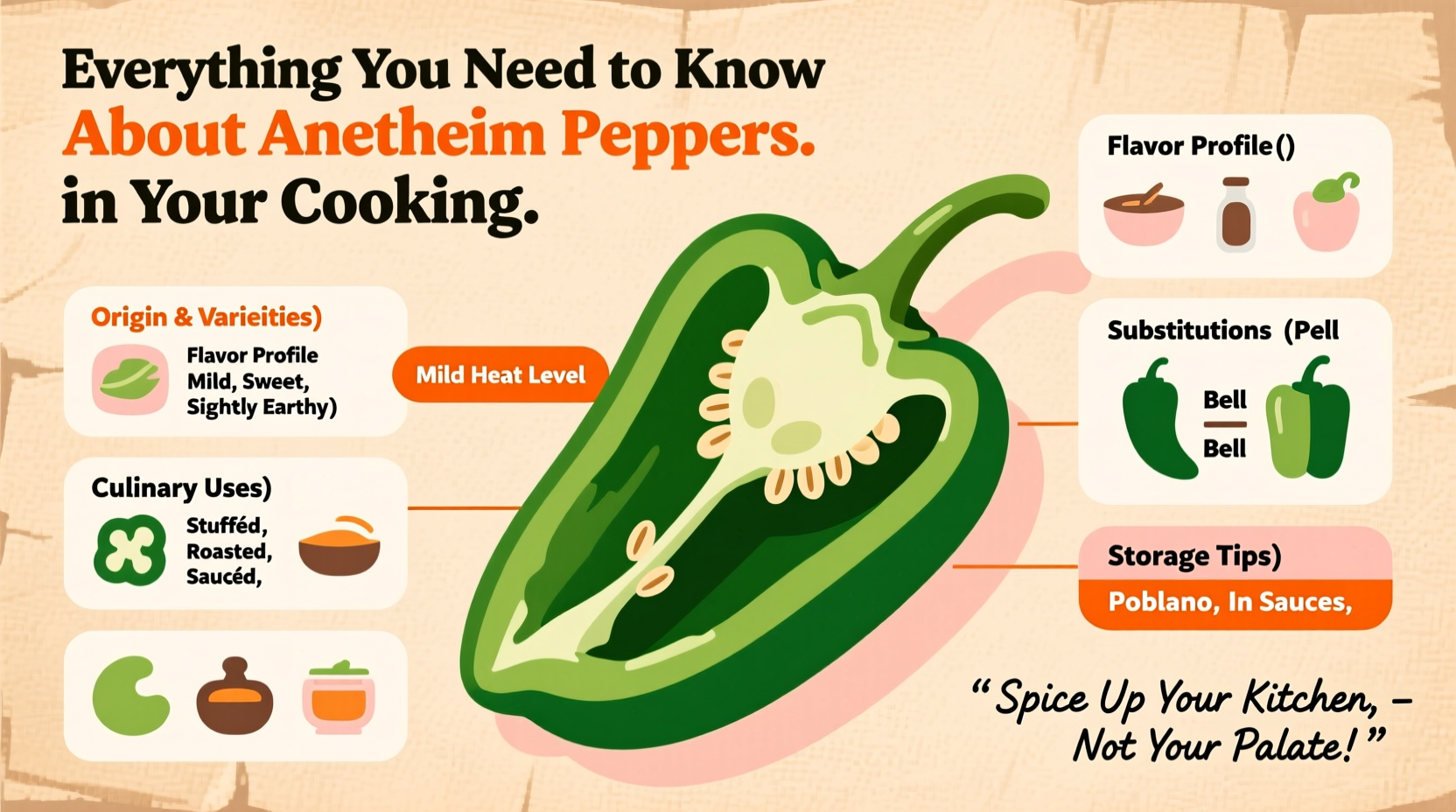
Anaheim peppers (Capsicum annuum) are long, tapered chili peppers originally developed in New Mexico but popularized in California, particularly around Anaheim—hence the name. Also known as California chiles when dried, they are typically harvested while green and used fresh, though they can ripen to a deep red or even orange hue. Mild in heat and rich in vegetal, slightly tangy flavor, they occupy a unique space in the chili pepper hierarchy: more aromatic than bell peppers but far less fiery than jalapeños.
Breeder Clarence H. Haase developed the variety in the early 20th century by selecting milder strains of the New Mexico No. 9 pepper. The result was a chile that could be used generously in stews, casseroles, and sauces without intimidating diners. Today, Anaheims are widely grown in California and Arizona and are available year-round in grocery stores across the U.S., often near other fresh produce or in the international foods section.
Key Characteristics
Anaheim peppers stand out due to their balanced profile and adaptability. Here’s a detailed breakdown:
| Attribute | Description |
|---|---|
| Size & Shape | 6–10 inches long, 1.5–2 inches wide; slender, slightly curved with a pointed tip. |
| Color (Fresh) | Typically bright to dark green; matures to red or orange-red if left on the plant. |
| Heat Level (Scoville Scale) | 500–2,500 SHU – mild, comparable to a poblano but sometimes spicier. |
| Flavor Profile | Earthy, slightly sweet, with grassy and tangy notes; roasted versions develop smoky complexity. |
| Texture | Firm flesh when raw; softens significantly when cooked. Skin blisters easily when roasted. |
| Shelf Life (Raw) | 7–10 days in the refrigerator crisper drawer. |
| Culinary Function | Adds mild heat, vegetal depth, and body to sauces, salsas, fillings, and roasts. |
Their moderate capsaicin content means most people can enjoy them without discomfort, though heat can vary significantly between individual peppers. A single Anaheim may be nearly bell pepper-like, while another from the same batch might deliver a noticeable kick—always taste a small piece before committing to a recipe.
Practical Usage: How to Cook with Anaheim Peppers
Anaheim peppers shine in applications where flavor integration matters more than intense heat. Their thin walls and high moisture content make them excellent candidates for roasting, which unlocks their natural sugars and imparts a gentle smokiness.
Roasting Fresh Anaheims
Roasting transforms Anaheim peppers, deepening their flavor and loosening the skin for easy removal—a technique essential for smooth sauces and refined textures.
- Place whole peppers directly over a gas flame, under a broiler, or on a grill set to high.
- Turn frequently until the skin is uniformly blistered and blackened (about 8–12 minutes).
- Transfer to a bowl and cover with plastic wrap or a plate; let steam for 10 minutes.
- Peel away the charred skin using your fingers or a paring knife. Remove stem and seeds.
- Use immediately or store in oil or freezer for later.
Rosada peppers are commonly roasted for chile verde, a New Mexican stew made with pork, tomatoes, and herbs. They also form the backbone of many green enchilada sauces when blended with garlic, onion, and broth.
Everyday Applications
- Stuffed Peppers: Fill roasted Anaheims with cheese, beans, rice, or ground meat, then bake until golden.
- Salsas & Relishes: Diced raw or roasted, they add texture and mild heat to pico de gallo or roasted salsa verde.
- Omelets & Frittatas: Add pre-roasted strips for savory depth without overpowering eggs.
- Grilled Vegetables: Slice lengthwise, brush with olive oil, and grill alongside zucchini and onions.
- Chili & Stews: Dice and simmer in slow-cooked dishes for background warmth and body.
Pro Tip: When roasting multiple peppers, do them all at once and freeze extras in vacuum-sealed bags or submerged in olive oil. They’ll keep for up to 6 months and thaw quickly for future use.
Professional Kitchen Techniques
In restaurant settings, chefs often incorporate roasted Anaheim purée into emulsified sauces, soups, and marinades. A common application is blending roasted Anaheims with tomatillos and cilantro for a base sauce that can be diluted for soups or reduced for glazes. Some upscale Southwestern kitchens use them in foam garnishes or infused oils to add subtle chile aroma without visible pieces.
For consistency, professional kitchens may peel, seed, and purée large batches, then freeze in ice cube trays—each cube representing a standardized amount of chile flavor ready to drop into dishes during service.
Variants & Types
Anaheim peppers come in several forms, each suited to different cooking needs:
- Fresh Green Anaheims: Most common form. Used raw or cooked. Best for roasting, stuffing, and salsas.
- Red-Ripened Anaheims: Sweeter and slightly hotter than green. Can be eaten fresh or dried.
- Dried Anaheim (California Chile): When fully ripened and dried, they’re labeled “California chiles.” Rehydrate for sauces or grind into flakes or powder.
- Canned Roasted Anaheims: Convenient option found in Latin markets. Often packed in brine or water. Use straight from the can in casseroles or dips.
- Ground Anaheim Powder: Made from dried peppers. Adds mild chile flavor to rubs, spice blends, and soups without altering texture.
When substituting dried for fresh, use a 1:3 rehydration ratio (1 dried pepper yields about 3 tablespoons rehydrated). Always taste test ground versions, as drying concentrates both flavor and heat.
Storage Tip: Store fresh Anaheims unwashed in a paper bag inside the crisper drawer. Avoid plastic bags, which trap moisture and accelerate spoilage. For long-term storage, roast, peel, and freeze in single layers before transferring to containers.
Comparison with Similar Ingredients
Anaheim peppers are often confused with other mild-to-medium chiles. Understanding the differences ensures proper usage and avoids unexpected heat levels.
| Pepper Type | Heat (SHU) | Flavor | Best Use | Substitution Notes |
|---|---|---|---|---|
| Anaheim | 500–2,500 | Earthy, tangy, mildly sweet | Roasting, stuffing, salsas | Can substitute for poblano or jalapeño in low-heat applications |
| Poblano | 1,000–2,000 | Rich, earthy, slightly fruity | Chiles rellenos, mole, rajas | Thicker wall; less juicy. Use 1:1 for stuffing |
| Jalapeño | 2,500–8,000 | Sharp, grassy, bright | Raw salsas, pickled, infused oils | Hotter; use half the amount when replacing Anaheims |
| Bell Pepper | 0 | Sweet, crisp, vegetal | Salads, stir-fries, roasting | No heat. Use when only texture and color matter |
| Cubanelle | 0–1,000 | Mild, sweet, delicate | Sautéing, frying, sandwiches | Even milder; good for sensitive palates |
\"Anaheims are the workhorse chile of the American Southwest kitchen. They're reliable, flavorful, and forgiving—perfect for teaching new cooks how to balance heat and depth.\" — Chef Elena Ruiz, Culinary Instructor, Santa Fe School of Cooking
Practical Tips & FAQs
Are Anaheim peppers always mild?
Generally, yes—but there's variability. Stress factors like drought or temperature swings can cause individual peppers to develop higher capsaicin levels. Always taste a small piece before adding to a dish. If one is unexpectedly hot, reserve it for a recipe where you want more fire.
Can I eat Anaheim peppers raw?
Absolutely. Raw Anaheims have a crisp texture and clean, green flavor similar to a bell pepper with a hint of bite. They’re excellent in salads, sandwiches, or as crudité with dip. However, roasting enhances their sweetness and complexity, so consider it for cooked applications.
What’s the best way to reduce heat in an Anaheim pepper?
To minimize heat, remove the white ribs and seeds—the primary sources of capsaicin. Soaking sliced peppers in salted water for 15–20 minutes can also draw out some spice compounds. Pairing with dairy (like sour cream or cheese) neutralizes residual heat on the palate.
How do I substitute for Anaheim peppers?
Depending on availability and desired outcome:
- Poblano: Closest match in flavor and heat. Use 1:1 in roasted or stuffed dishes.
- Green Bell Pepper + Pinch of Cayenne: Mimics texture and adds slight heat.
- Jalapeño (½ amount): Use cautiously—reduce quantity by half due to higher heat.
- Cubanelle: Milder and sweeter, ideal for delicate dishes.
Can I grow Anaheim peppers at home?
Yes. They thrive in warm climates with full sun and well-drained soil. Start seeds indoors 8–10 weeks before the last frost. Plants reach 2–3 feet tall and produce abundant fruit over summer. Harvest when deep green for traditional use, or allow to ripen to red for sweeter, hotter pods.
Are Anaheim peppers healthy?
Like all chili peppers, Anaheims are rich in vitamin C, antioxidants, and capsaicin—which has been linked to improved metabolism and anti-inflammatory effects. One medium pepper provides about 120% of the daily recommended vitamin C and only 15 calories.
Quick Checklist: Using Anaheims Like a Pro
- Always taste-test before cooking—heat varies.
- Roast for deeper flavor and easier peeling.
- Remove seeds and ribs to reduce heat.
- Freeze roasted peppers for up to 6 months.
- Use dried versions in spice blends or rehydrated sauces.
- Pair with cheese, avocado, or lime to balance flavors.
Summary & Key Takeaways
Anaheim peppers are a cornerstone of accessible, flavorful cooking. With their mild heat, earthy-sweet profile, and remarkable versatility, they serve as a gateway chile for those exploring spicy ingredients without intimidation. Whether roasted for a smoky stew, stuffed with cheese and baked, or diced into a fresh salsa, they enhance dishes with depth rather than dominance.
Understanding their characteristics—size, heat range, texture, and forms—allows for smarter substitutions and better meal planning. Compared to similar chiles like poblanos or jalapeños, Anaheims offer a middle ground: more flavor than a bell pepper, less fire than a jalapeño. Their ability to transform under heat makes them indispensable in both home and professional kitchens.
By mastering simple techniques like roasting, peeling, and storing, cooks can keep Anaheims on hand year-round. Whether grown in a backyard garden or picked up at the supermarket, they remain one of the most practical and rewarding ingredients for building layered, satisfying dishes.
Ready to Experiment? Try this: Roast four Anaheims, peel and slice them into strips. Sauté with onions and garlic, fold into scrambled eggs with Monterey Jack, and serve with warm tortillas. It’s a classic breakfast taco filling that showcases their flavor perfectly.