It’s a quiet but powerful phenomenon: the same glass of iced tea tastes noticeably sweeter than its room-temperature counterpart—even when sugar content is identical. This isn’t imagination or expectation bias. It’s neurophysiology meeting chemistry—and it affects everything from coffee service to wine pairing, cocktail crafting, and soft drink formulation. Beverage scientists, sommeliers, and food chemists have documented this effect for decades, yet it remains underappreciated outside specialized circles. Understanding how temperature modulates sweetness perception empowers baristas to calibrate extraction, winemakers to fine-tune residual sugar balance, and home drinkers to serve beverages in ways that honor their intended flavor profile—not just tradition.
Why Temperature Alters Sweetness Perception: The Science Behind the Sensation
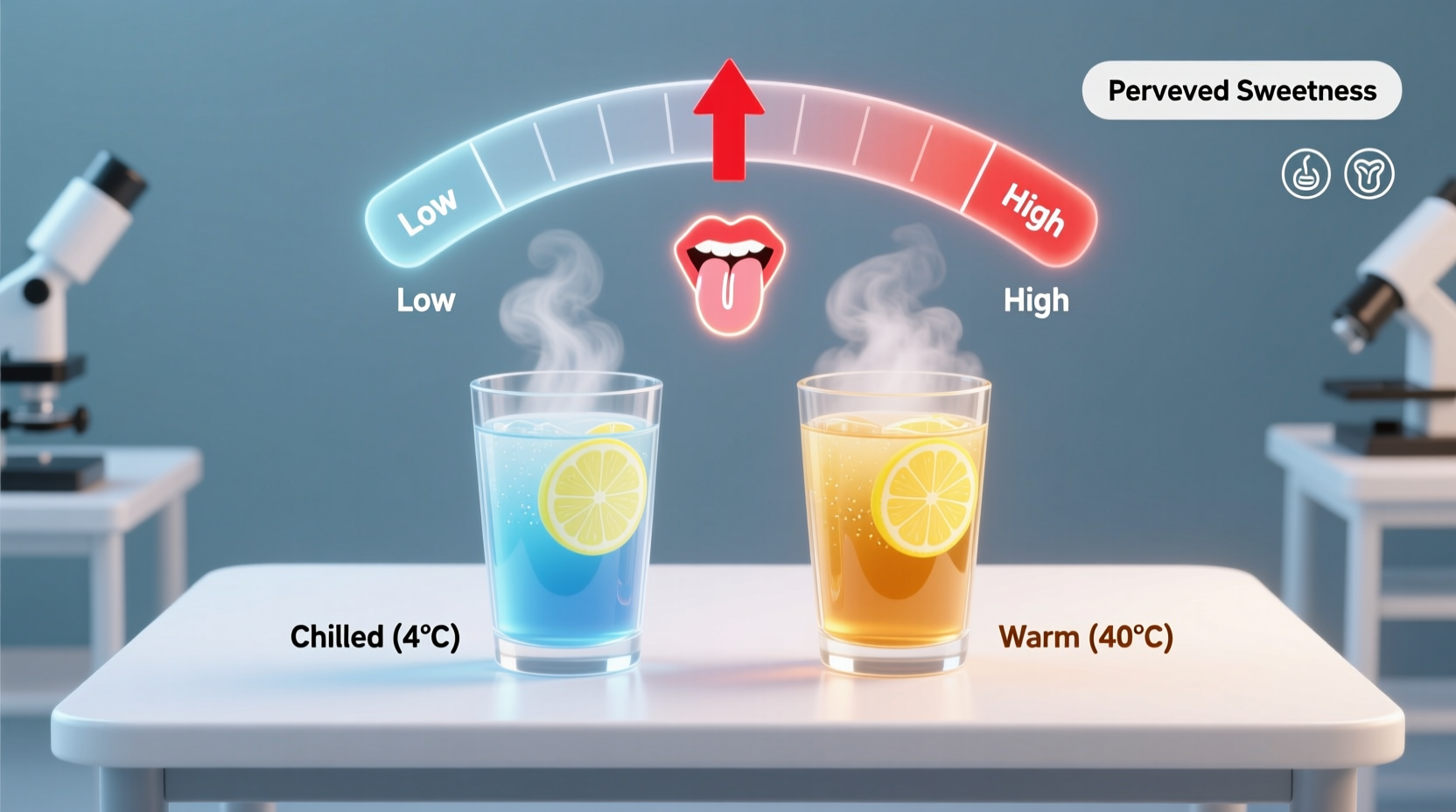
Human taste perception doesn’t occur in isolation. It’s a dynamic integration of thermal, chemical, and neural signals processed by the brain before we even register “sweet.” Three interlocking mechanisms explain why temperature changes how sweet a drink feels:
- TRPM5 ion channel sensitivity: This transient receptor potential channel in taste receptor cells is thermally activated. At warmer temperatures (above ~20°C / 68°F), TRPM5 becomes more responsive to sweet-tasting molecules like sucrose and fructose—amplifying the neural signal sent to the brain. Below 15°C (59°F), its activity drops sharply, dampening sweetness response.
- Solubility and molecular mobility: Sugar solubility increases with heat—but more critically, molecular vibration rises. Warmer solutions allow sweet molecules to interact more rapidly and frequently with taste receptors. In chilled drinks, slower diffusion reduces receptor engagement per unit time, lowering perceived intensity.
- Competing sensory interference: Cold suppresses not only sweetness but also bitterness and sourness—yet the suppression isn’t equal. Bitterness is suppressed *more* than sweetness at low temperatures, which can create an illusion of relative sweetness enhancement in some contexts (e.g., cold-brew coffee). However, absolute sweetness intensity still declines. Meanwhile, cold enhances trigeminal sensations—like minty coolness or carbonation bite—which can distract attention away from sweetness detection.
A 2021 study published in Chemical Senses tested 120 participants tasting identical 8% sucrose solutions across five temperatures (5°C, 10°C, 15°C, 20°C, and 30°C). Results showed a 37% average drop in sweetness intensity ratings between 30°C and 5°C—despite identical concentration. Notably, individual variation was small: over 92% of subjects rated the warmest sample as significantly sweeter.
Real-World Impact Across Beverage Categories
The implications extend far beyond laboratory beakers. Every major beverage category experiences measurable shifts in sweetness perception with temperature—and industry professionals adjust formulations, service protocols, and consumer guidance accordingly.
| Beverage Type | Optimal Serving Temp (°C) | Effect on Perceived Sweetness | Industry Adjustment |
|---|---|---|---|
| Sparkling Water & Sodas | 4–7°C | Reduced sweetness intensity; enhanced crispness and acidity | Formulators increase sugar or sweetener by ~5–8% vs. room-temp version to maintain target sweetness at chill |
| Dry White Wines (e.g., Sauvignon Blanc) | 8–10°C | Residual sugar appears less prominent; acidity and minerality dominate | Winemakers may reduce residual sugar by 0.5–1.0 g/L to avoid perceptual imbalance when served cold |
| Espresso-Based Drinks | 65–70°C (hot) vs. 4–8°C (iced) | Hot espresso highlights caramelized sweetness; iced versions mute natural sugars, making bitterness more apparent | Cold brew concentrates often contain added simple syrup (1:1 ratio) to compensate—where hot brew relies on intrinsic Maillard-derived sweetness |
| Fruit Juices (e.g., orange, apple) | 6–10°C | Acidity dominates; sweetness feels “cleaner” but less rounded | High-acid juices are often served slightly warmer (10–12°C) to preserve balanced perception; pasteurization temp also affects volatile aroma release linked to sweetness cues |
| Tea (black, green, oolong) | 60–85°C (hot) vs. 4–10°C (chilled) | Hot steeping extracts more polysaccharides and amino acids (e.g., theanine) that enhance mouthfeel and perceived sweetness; cold brew yields lighter, more astringent profile | Japanese tea masters specify precise water temps (e.g., 70°C for gyokuro) to maximize umami-sweet notes and minimize bitterness |
Mini Case Study: How a Craft Brewery Fixed Its “Too Sweet” Lager Complaints
In early 2022, Portland-based Cascade Hollow Brewing received consistent feedback on its flagship Pilsner: “delicious when draft-poured at the taproom, but cloying and unbalanced in cans.” Internal sensory panels confirmed the discrepancy. Lab analysis revealed identical residual sugar (2.1 g/L) and alcohol (4.8% ABV) across formats. The difference? Serving temperature.
In the taproom, beer flowed at 4.5°C directly from glycol-chilled lines. Canned samples were tested at ambient room temperature (22°C)—a full 17.5°C warmer. At that temperature, the TRPM5 channel amplified sweetness perception, while the elevated warmth also volatilized trace diacetyl and sulfur compounds that subtly enhanced perceived maltiness. Consumers interpreted the richer, warmer profile as “too sweet,” even though no sugar had been added.
The brewery responded with two evidence-based interventions: First, they adjusted packaging copy to recommend chilling cans to 3–5°C before opening. Second, they reduced mash temperature by 1.5°C during brewing—lowering dextrin formation and trimming residual sugar to 1.7 g/L. The result? Identical perceived sweetness across both formats, verified in blind consumer testing. Sales of canned Pilsner rose 22% within six months.
Practical Tips for Home Drinkers and Professionals
Tip: When evaluating sweetness in any beverage—especially when comparing brands or batches—always taste at the recommended serving temperature. A 5°C difference can shift perceived sweetness by up to one-third, invalidating side-by-side comparisons.Temperature isn’t just about comfort—it’s a critical variable in flavor calibration. These actionable strategies apply whether you’re pouring wine at a dinner party or developing a new energy drink formula:
- For coffee lovers: Brew hot coffee at 92–96°C for optimal extraction of sweet-tasting melanoidins. If serving iced, brew double-strength hot and chill rapidly—never dilute with ice after brewing. This preserves thermal sweetness cues lost in cold-brew methods.
- For wine enthusiasts: Don’t judge a Riesling’s balance straight from the fridge. Let it warm 3–4 minutes in the glass. At 8°C, its 12 g/L residual sugar reads as crisp and off-dry; at 11°C, it registers as distinctly fruity and round.
- For cocktail makers: Chill glasses *before* shaking or stirring—not after. A frosty coupe cools the drink faster upon pouring, preserving the intended thermal profile. Pre-chilling also prevents dilution from melting ice during service.
- For health-conscious consumers: If reducing added sugar, serve fruit-infused water or herbal teas slightly warmer (35–40°C). The thermal boost to sweetness perception makes lower-sugar versions more satisfying without artificial sweeteners.
- For foodservice operators: Calibrate refrigeration units to hold ready-to-drink beverages at 4–6°C—not 1–2°C. Over-chilling suppresses sweetness so severely that customers instinctively reach for sugary add-ons (e.g., flavored syrups in iced tea).
Expert Insight: What Sensory Scientists Say
“Temperature is not a background condition—it’s an active participant in taste coding. We’ve mapped TRPM5 activation thresholds across 17 sweet compounds, and every single one shows diminished response below 15°C. That means ‘ice-cold’ isn’t neutral. It’s a deliberate sensory filter—one that removes sweetness before the brain even gets the message.”
— Dr. Lena Torres, Director of Sensory Neuroscience, Monell Chemical Senses Center
“In premium beverage development, we treat temperature as a formulation ingredient. If your target experience is ‘bright and refreshing,’ you design for 6°C. If it’s ‘rich and layered,’ you build for 14°C. Changing the serving temp without reformulating is like changing the key of a song and expecting the melody to stay the same.”
— Marcus Chen, Lead Flavor Chemist, Nestlé Beverage Innovation Group
FAQ: Common Questions About Temperature and Sweetness
Does warming a cold soda make it taste sweeter—or just different?
It does both—but the sweetness increase is real and measurable. As the liquid warms from 4°C to 20°C, TRPM5 sensitivity rises, and molecular diffusion accelerates, leading to ~28% higher sweetness intensity in controlled trials. However, warming also volatilizes carbon dioxide, reducing effervescence and mouthfeel—so the overall impression shifts from “crisp and light” to “fuller and rounder,” not just “sweeter.”
Why do some people say lemonade tastes sweeter when cold if cold suppresses sweetness?
This reflects a perceptual contrast effect. Cold strongly suppresses sourness (citric acid perception drops ~40% between 20°C and 5°C), while suppressing sweetness only ~30%. The resulting *ratio* favors sweetness—making tartness recede faster than sweetness does. So although absolute sweetness declines, the drink feels comparatively sweeter because its dominant counterpoint (sourness) vanishes more dramatically.
Can I use temperature to reduce sugar in recipes without sacrificing satisfaction?
Yes—strategically. Serve naturally sweet beverages (carrot-ginger juice, roasted pear cider, mulled apple) at 45–55°C. The thermal boost to sweetness perception allows a 15–20% reduction in added sweeteners while maintaining hedonic appeal. Crucially, avoid exceeding 60°C for delicate aromatics (e.g., elderflower, basil), as heat degrades volatile esters that support sweetness perception.
Conclusion: Serve with Intention, Not Habit
Temperature is never neutral. It’s a silent conductor orchestrating how every molecule in your drink interacts with your senses. Dismissing it as mere “preference” overlooks decades of peer-reviewed research confirming its direct, quantifiable impact on sweetness—a cornerstone of flavor balance. Whether you’re selecting a wine for tonight’s meal, adjusting your morning cold brew ratio, or designing a functional beverage for mass market, understanding this thermal dimension transforms guesswork into precision. You don’t need lab equipment to apply this knowledge: simply pause before pouring. Ask yourself—not “How cold do I like it?” but “What sweetness story do I want this drink to tell?” Then choose the temperature that supports that intention. Your palate will notice. Your guests will taste the difference. And your appreciation for the craft of beverage-making will deepen—not just in theory, but in every sip.
💬 Have you noticed how temperature changes sweetness in your favorite drinks? Share your observations—whether it’s why your iced matcha tastes sharper in summer or how warming kombucha reveals hidden fruit notes. Real-world experiences help us all refine our sensory literacy.