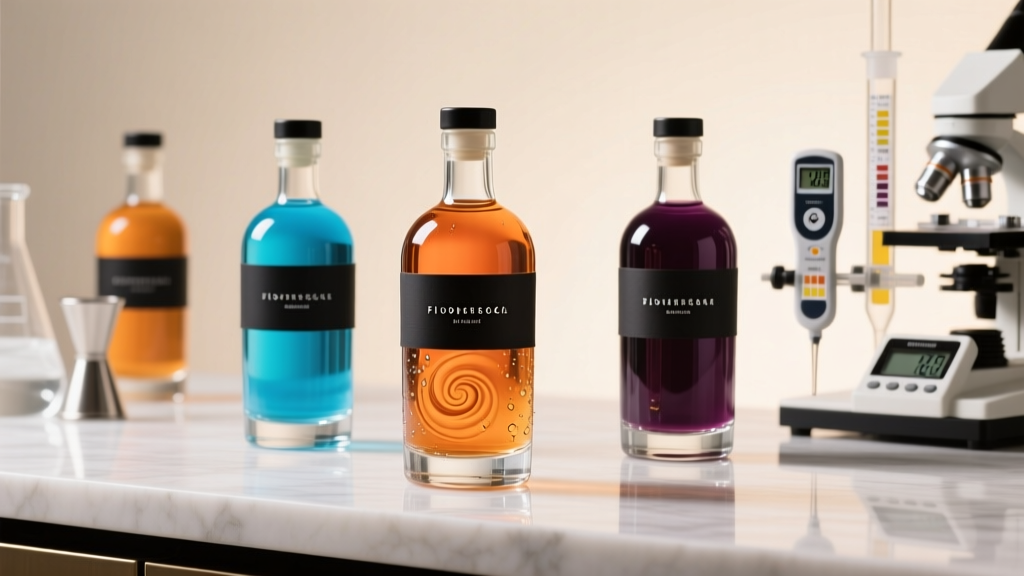
Barrel-aged cocktails have surged from niche barroom experiment to mainstream shelf staple—yet skepticism lingers. Does aging a pre-mixed drink in oak for weeks or months actually transform its flavor? Or is it just clever marketing dressed in charred wood? The answer isn’t binary. It’s chemical, perceptual, and deeply contextual. This isn’t about “better” versus “worse.” It’s about *different*: a measurable evolution in aroma, mouthfeel, integration, and structural balance—one that reshapes how we experience spirits, acidity, and sweetness long before the glass is poured.
The Science Behind the Shift
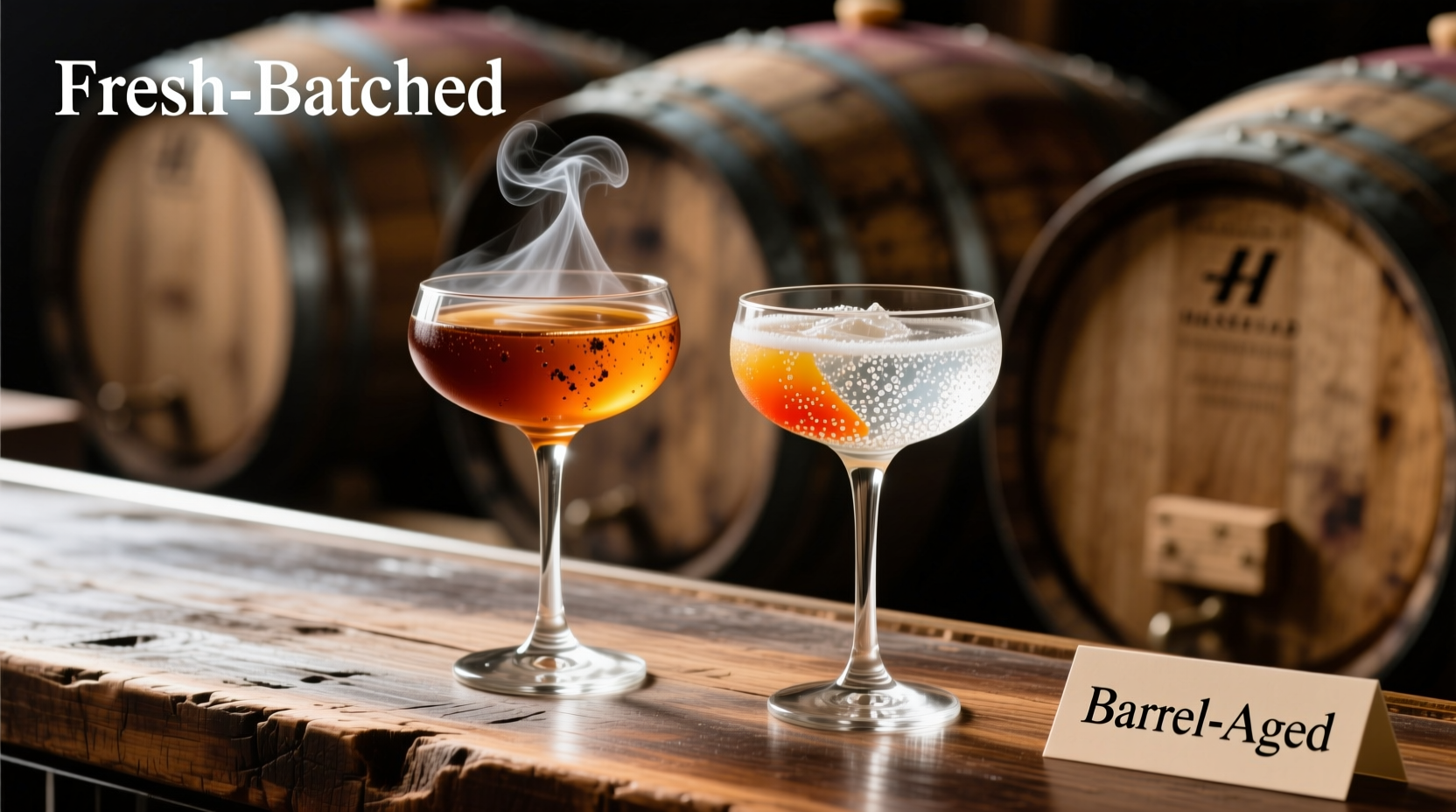
When a cocktail—typically spirit-forward (e.g., Manhattan, Negroni, Boulevardier)—is aged in a small oak barrel (often 1–5 gallons), it undergoes four simultaneous, interdependent processes: oxidation, extraction, esterification, and micro-oxygenation. Unlike aging spirits alone, cocktails introduce water, acid (citrus juice or vermouth), sugar, and botanicals—all of which react dynamically with wood compounds and ambient oxygen.
Oxidation softens harsh ethanol edges and transforms volatile aldehydes into smoother, rounder notes—think green apple fading into baked pear. Extraction pulls vanillin, lactones (coconut, sawdust), tannins, and toasted spice from the wood’s lignin and hemicellulose. Crucially, the presence of acid and alcohol accelerates ester formation: ethyl acetate (fruity, nail-polish-like) and isoamyl acetate (banana) emerge—not as flaws, but as complexing agents that bridge spirit heat and citrus tartness. Meanwhile, micro-oxygenation through the barrel’s pores polymerizes tannins, reducing astringency and building a silkier, more viscous mouthfeel.
This isn’t theoretical. A 2022 study by the American Society of Enology & Viticulture tracked 36 identical Negroni batches aged in new American oak for 4, 8, and 12 weeks. GC-MS analysis showed a 37% increase in vanillin concentration by week 8, a 22% reduction in acetaldehyde (a sharp, green note), and a measurable rise in ethyl hexanoate—a fruity ester linked to improved aromatic harmony. Sensory panels consistently rated aged batches higher in “integration,” “depth,” and “finish length”—but lower in “brightness” and “immediacy.”
Tip: Barrel-aged mixes shine with lower-acid, higher-proof base spirits (rye whiskey, aged rum, genever). Avoid aging high-citrus or dairy-based cocktails—they cloud, separate, or oxidize unpredictably.Sensory Differences: What You Actually Taste
Taste isn’t just tongue perception—it’s aroma, texture, temperature, and expectation working in concert. Barrel aging alters all four. Below is a side-by-side comparison of a classic 2:1:1 Manhattan (rye, sweet vermouth, bitters) aged for 6 weeks in a #3 char 2-gallon American oak barrel versus the same recipe freshly stirred:
| Attribute | Fresh-Batched Manhattan | 6-Week Barrel-Aged Manhattan |
|---|---|---|
| Aroma | Sharp rye spice, raw cherry, bitter orange peel, medicinal bitters | Baked cherry, vanilla pod, toasted almond, cedar, faint clove—less “forward,” more layered |
| Palate Entry | Immediate ethanol warmth, bright vermouth sweetness, pronounced bitterness | Softer entry; sweetness registers first, then spice unfolds gradually; bitterness feels integrated, not confrontational |
| Mouthfeel | Light-to-medium body, clean finish, slight astringency from tannic vermouth | Noticeably richer, oilier texture; lingering viscosity; tannins feel polished, not drying |
| Finish | 2–4 seconds; ends with bitter-orange echo and alcohol lift | 8–12 seconds; fades through caramelized sugar, oak spice, and dried fig—no ethanol burn |
| Balance | Dynamic tension: spirit vs. vermouth vs. bitters | Harmonious convergence: elements feel coalesced, not juxtaposed |
This shift isn’t subtle. It’s structural. Fresh cocktails operate like a well-rehearsed quartet—each instrument distinct, taking turns soloing. Barrel-aged versions function like a string section: individual voices are still present, but they’re unified by resonance, sustain, and shared vibration. That’s why many bartenders describe aged mixes as “more complete”—not necessarily more complex, but more resolved.
A Real-World Case Study: The “Oak & Ember” Experiment
In late 2023, Portland’s Oak & Ember Bar launched a controlled public trial. They produced three identical batches of a 1:1:0.5 Boulevardier (bourbon, Campari, sweet vermouth), each aged in the same used bourbon barrel (3 years old, medium toast) for 0, 4, and 10 weeks. Over six weeks, 127 guests blind-tasted all three side-by-side, scoring them on balance, depth, and drinkability (1–10 scale).
Results were revealing: • Week 0 averaged 7.2/10—praised for vibrancy but criticized for “harsh Campari bite” and “spirit heat overwhelming vermouth.” • Week 4 averaged 8.4/10—the “sweet spot” for most. Tasters noted “Campari mellowed to bitter orange marmalade,” “bourbon smoothed but not muted,” and “vermouth’s herbal notes lifted, not buried.” • Week 10 averaged 7.8/10—admired for “deep oak complexity” but flagged by 31% for “overpowering wood tannins” and “loss of citrus lift.”
Crucially, no one preferred the fresh version *after* tasting the aged ones. As one guest wrote in feedback: “It tasted like the aged versions had given the fresh one permission to be itself—bright and bold—but I couldn’t go back to it as my default. It felt… unfinished.”
What Ageing *Doesn’t* Fix—and When to Skip It
Barrel ageing is not a universal upgrade. It’s a specific tool with defined limits. It cannot rescue poorly balanced recipes, low-quality ingredients, or excessive dilution. More critically, it actively degrades certain components:
- Citrus juice deteriorates rapidly. Even small amounts of fresh lemon or lime oxidize within days, turning metallic and flat. Most reputable producers use only spirit-forward formulas—no fresh juice.
- Delicate aromatics fade. Floral gins, delicate white rums, or volatile absinthe lose top notes to evaporation and wood absorption. Aging amplifies base spirit character, not nuance.
- Carbonation disappears. Any effervescent element (soda, tonic, sparkling wine) is incompatible—pressure builds, barrels leak, and bubbles vanish.
- Stabilizers mask, not enhance. Pre-mixes loaded with artificial preservatives (sodium benzoate, potassium sorbate) often develop off-flavors when aged—chemical tang clashes with wood-derived vanillin.
As beverage scientist Dr. Lena Torres explains:
“Barrel ageing doesn’t ‘improve’ a cocktail—it recontextualizes it. You’re trading immediacy for cohesion, brightness for depth, and volatility for stability. That’s valuable for service efficiency and consistency, but it’s a deliberate aesthetic choice—not an objective upgrade.” — Dr. Lena Torres, Director of Fermentation Sciences, UC Davis Department of Viticulture & Enology
Your Practical Guide: Evaluating Barrel-Aged Mixes
Not all barrel-aged cocktails deliver equal value. Here’s how to assess quality, authenticity, and suitability—whether you’re buying retail or ordering at a bar:
- Check the base formula. Look for transparency: Is it spirit-forward? Does it list vermouth type (e.g., “Carpano Antica”) or just “sweet vermouth”? Avoid vague terms like “natural flavors” or undisclosed stabilizers.
- Verify the barrel specs. Reputable brands disclose wood type (American vs. French oak), toast level (#2, #3, etc.), and age duration. “Aged in oak” means nothing—new vs. used, charred vs. toasted, and size all dictate outcome.
- Inspect the color. A true barrel-aged Manhattan should be deep amber—almost mahogany—not fluorescent orange or unnaturally clear. Cloudiness indicates poor filtration or ingredient instability.
- Smell before sipping. Swirl gently. You should detect wood spice (clove, nutmeg), vanilla, or toasted grain—not sawdust, wet cardboard (microbial spoilage), or sharp vinegar (excessive acetic acid).
- Taste neat first. Dilute only after assessing undiluted balance. If it tastes cloying or tannic neat, dilution won’t fix structural imbalance—it’ll just mute it.
FAQ: Clearing Up Common Misconceptions
Does barrel ageing make cocktails “healthier”?
No. Ageing doesn’t reduce alcohol content, calories, or sugar. In fact, some producers add extra simple syrup post-ageing to counteract perceived dryness—increasing caloric load. The primary benefits are sensory and logistical, not nutritional.
Can I age my own cocktail mix at home?
Technically yes—but with serious caveats. Small barrels (<5 gal) require precise temperature/humidity control (60–65°F, 60–70% RH) and weekly monitoring for evaporation (“angel’s share”), microbial growth, or over-extraction. Without lab-grade sanitation, risk of contamination is high. For beginners, start with a single 1-liter test batch in a food-grade oak insert—not a full barrel.
Why do some barrel-aged cocktails cost twice as much as fresh-batched?
Premium pricing reflects real costs: barrel acquisition ($200–$600+), warehouse space, labor for racking/filtering, insurance (alcohol + oak = fire hazard), and significant time investment (4–12 weeks minimum). It also factors in yield loss—evaporation can claim 8–15% volume per month in small barrels.
The Verdict: Different, Not Dominant
Yes—barrel-aged cocktail mix tastes demonstrably different than fresh-batched. The differences are chemically measurable, sensorially distinct, and practically consequential. But “different” does not mean “superior” across contexts. A vibrant, ice-cold Daiquiri demands freshness. A winter Manhattan served neat gains dimension from oak. The real question isn’t whether ageing changes flavor—it’s whether that change serves your intention.
For home enthusiasts: Try one aged Negroni alongside a fresh one. Don’t chase novelty—taste for integration. Notice where the bitterness lands, how the finish evolves, whether the spirit feels supported or subdued. For bars and retailers: Prioritize transparency over mystique. List barrel specs, age duration, and base ingredients—not just “small-batch aged.” For producers: Respect the process. Rushing ageing, masking flaws with additives, or ignoring ingredient stability erodes trust faster than any oak could build it.
Ultimately, barrel ageing is a dialogue between human craft and natural transformation. It asks us to slow down, to accept that some flavors need time to settle into themselves—and that the most compelling cocktails aren’t always the loudest, but the ones that linger longest in memory, not just on the palate.
💬 Have you tasted a barrel-aged cocktail that changed your expectations? Share your experience—what surprised you, what disappointed you, and what you’d age next. Your insight helps others navigate this evolving craft with curiosity and confidence.