Walk into any well-stocked grocery cooler or taproom today, and you’ll see two dominant forces pulling in opposite directions: the rich, textured world of craft beer—and the crisp, minimalist appeal of hard seltzer. One promises complexity, tradition, and terroir; the other delivers lightness, predictability, and Instagram-ready simplicity. But beneath the marketing slogans and calorie counts lies a quiet tension: as consumers chase lower ABV and fewer calories, are we trading depth for digestibility? Are we mistaking *absence*—of calories, carbs, bitterness, even yeast—for *intention*? This isn’t just about taste preference. It’s about what happens when convenience, health optics, and industrial scalability begin reshaping our expectations of fermented beverages—not just what they contain, but what they’re allowed to *mean*.
The Calorie Math: What “Light” Really Costs
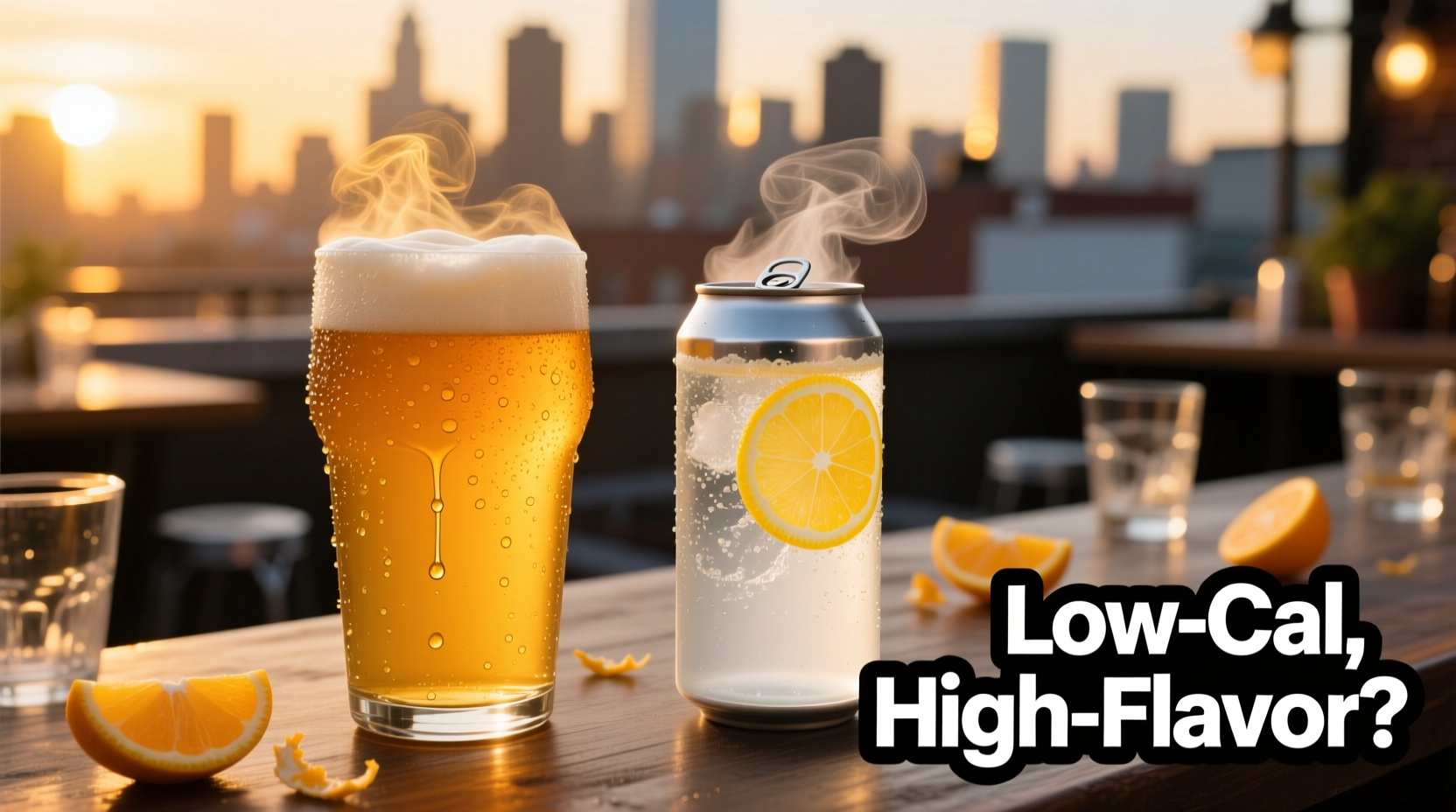
Let’s start with the numbers—because that’s where the narrative begins. A standard 12-oz can of hard seltzer typically contains 90–100 calories, 2g carbs, and 4.5–5% ABV. In contrast, a 12-oz bottle of session IPA (4.2–4.8% ABV) averages 130–160 calories and 10–14g carbs. A hazy IPA? Easily 180–220 calories and up to 20g carbs. At first glance, the math seems decisive: hard seltzer wins on every metric tied to weight-conscious consumption.
But calories alone don’t tell the full story. The source matters. Hard seltzer derives its alcohol almost exclusively from fermented cane sugar or malted barley syrup—then strips away nearly all residual solids, proteins, and polyphenols through heavy filtration, centrifugation, and sometimes charcoal treatment. What remains is ethanol, water, carbonation, and trace flavorings—often synthetic esters or cold-pressed fruit oils added post-fermentation. Craft beer, by contrast, retains its full biological signature: yeast metabolites (esters, phenols), hop-derived oils (myrcene, humulene), Maillard reaction compounds from kilned malt, and subtle tannins from grain husks. These aren’t “empty” calories—they’re functional molecules that influence satiety, gut microbiome interaction, and even perceived mouthfeel.
| Beverage Type | Avg. Calories (12 oz) | Carbs (g) | Key Flavor Contributors | Processing Level |
|---|---|---|---|---|
| Hard Seltzer (mass-market) | 95 | 1–2 | Synthetic fruit esters, citric acid, artificial sweeteners (in some) | Highly refined: fermentation → filtration → flavor addition → carbonation |
| Session Lager (craft) | 115 | 7–9 | Light malt sweetness, noble hop aroma, clean lager yeast character | Minimal intervention: traditional mash, boil, fermentation, cold crash |
| Hazy IPA (craft) | 195 | 15–18 | Biogenic esters (isoamyl acetate), hop oil emulsions, lactose (if used), unfiltered haze | Moderate: no filtration, dry-hopping, high-yeast pitching |
| Low-ABV Sour (craft) | 125 | 6–8 | Lactic acid, tropical fruit esters, barrel-derived vanillin & tannins | Complex: mixed-culture fermentation, extended aging, minimal fining |
The irony? Many low-calorie craft options now outperform mass-market seltzers on both flavor integrity and nutritional nuance. Consider a 4% ABV Berliner Weisse: tart, effervescent, under 110 calories, and loaded with live lactic acid bacteria. Or a dry-hopped pilsner brewed with enzymatic adjuncts to reduce residual dextrins—crisp, aromatic, and under 120 calories. These aren’t compromises. They’re deliberate expressions of restraint.
Flavor Architecture: Why “Less” Isn’t Automatically “Better”
Flavor isn’t additive—it’s relational. Our perception depends on balance: sweetness against acidity, bitterness against maltiness, carbonation against viscosity, aroma against retronasal finish. Hard seltzer often sacrifices this architecture entirely. Without residual sugars, proteins, or polyphenols, there’s little to anchor volatile aroma compounds. That “mango burst” you taste at first sip often vanishes by the third sip—not because the flavor fades, but because there’s nothing structurally supporting its persistence.
Craft beer, even at lower ABV, preserves this scaffolding. Yeast strains selected for fruity ester production (like London Ale III or Norwegian Kveik) generate complex aromas *during* fermentation—not after. Hops added late or as dry hops contribute not just aroma, but subtle oils that interact with saliva proteins, creating a lingering, textural impression. Malt bills built around Pilsner and wheat provide gentle body without heaviness. The result isn’t “lighter” in experience—it’s *focused*. As Dr. Charlie Bamforth, Professor Emeritus of Brewing Science at UC Davis, explains:
“Flavor fatigue isn’t caused by calories—it’s caused by sensory monotony. When a beverage lacks structural variety—no bitterness to cut sweetness, no acidity to lift aroma, no tannin to provide grip—the brain disengages quickly. That’s why many people drink three seltzers and still feel unsatisfied, while one well-made 4% sour leaves them savoring the finish.” — Dr. Charlie Bamforth, Brewing Science Authority
Real-World Trade-Offs: A Mini Case Study
In 2022, Portland-based Breakside Brewery launched “Lime Light,” a 3.8% ABV gose brewed with real Key lime juice, sea salt, and coriander. It contained 112 calories and 8g carbs per 12 oz—higher than most seltzers, but deliberately so. Within six months, it became their top-selling year-round package, outselling their flagship IPA in draft volume at local bars.
Why? Bartenders reported customers ordering it not as a “diet alternative,” but as a *flavor-forward choice*: the salt amplified the lime’s brightness, the lactic tang provided palate-cleansing acidity, and the unfiltered haze lent a soft, creamy mouthfeel absent in crystal-clear seltzers. One regular told The Oregonian: “I don’t drink it because it’s ‘good for me.’ I drink it because it tastes like summer vacation—and I remember the last sip as clearly as the first.”
Breakside didn’t win by chasing the lowest number. They won by honoring fermentation’s expressive potential—even within tight caloric boundaries. Their process required precise pH control, native lime pulp integration (not extract), and cold stabilization instead of forced filtration. It took longer and cost more—but delivered memorability. That’s the distinction too often lost in the “low-cal arms race.”
Actionable Tips: Choosing Flavor-Forward, Not Just Low-Cal
Tip: Look for “unfiltered,” “naturally cloudy,” or “dry-hopped” on the label—these signal retained flavor compounds, not stripped-down neutrality.Not all low-calorie options are created equal. Here’s how to navigate with intention—not just inertia:
- Read beyond ABV and calories. Scan ingredient lists: “natural flavors” is vague; “cold-pressed lime juice,” “whole-cone Cascade hops,” or “lactobacillus culture” signal craftsmanship.
- Seek texture cues. Words like “creamy,” “velvety,” “tart,” or “zesty” suggest active fermentation or ingredient integrity—not just flavor masking.
- Trust your glassware. Pour low-ABV beers into a tulip or snifter—not a tall can. Aroma concentration matters more when compounds are delicate.
- Pair intentionally. A bright, low-ABV kolsch cuts through spicy food better than a neutral seltzer—its gentle malt backbone provides contrast the seltzer lacks.
- Support transparency. Breweries publishing full ingredient decks (like Founders’ “All Together” initiative) prioritize accountability over marketing shorthand.
FAQ: Addressing Common Assumptions
Does “gluten-removed” beer offer the same flavor as traditional craft beer?
No—most gluten-removed beers undergo enzymatic or filtration processes that strip proteins responsible for mouthfeel and hop-binding capacity. While safe for many with gluten sensitivity, they often taste thinner and less aromatic than naturally gluten-free options like sorghum or buckwheat ales, or traditional lagers brewed with certified gluten-free malt.
Are all hard seltzers nutritionally identical?
No. Some use real fruit purees and avoid added sugars (e.g., White Claw Pure), while others rely on sucralose or acesulfame-K to mask bitterness—introducing aftertastes and metabolic questions. Always check the “added sugars” line on the Nutrition Facts panel; if it’s above 0g, flavor was likely engineered, not fermented.
Can craft beer be part of a weight-conscious lifestyle without sacrificing enjoyment?
Absolutely—if you shift focus from “lowest calorie” to “highest satisfaction per calorie.” A 4% farmhouse ale with complex Brettanomyces funk and citrus peel may clock 145 calories but deliver 15 minutes of engaged tasting. That’s biologically and psychologically more sustaining than three 95-calorie seltzers consumed rapidly and forgettably. Satisfaction isn’t measured in kilocalories—it’s measured in attention, memory, and resonance.
The Real Question Isn’t “Which Is Healthier?”—It’s “What Do We Want to Celebrate?”
We’ve conflated health with absence: no calories, no carbs, no bitterness, no foam, no sediment, no waiting. But fermentation has never been about subtraction. It’s about transformation—turning simple sugars into layered experiences, guided by time, microbe, and human intention. When we default to hard seltzer not because we love its profile, but because it’s the path of least resistance—when breweries reformulate beloved styles into “light” versions that sacrifice everything but alcohol—we aren’t choosing wellness. We’re outsourcing our palate’s education to algorithms and market share reports.
The resurgence of low-ABV craft categories—kellerbiers, saisons, Berliner Weisses, table sours—proves flavor need not be collateral damage in the pursuit of lightness. These styles were born from necessity: farmhouse brewers making refreshing, sessionable drinks for harvest laborers; German taverns serving unfiltered lagers straight from the lagering tank; Belgian monks crafting tart, quenching ales for summer. They’re not “compromises.” They’re masterclasses in efficiency—maximizing impact with minimal inputs.
So next time you reach for something cold and effervescent, pause before scanning the calorie count. Ask instead: Does this taste like it was made to be remembered? Does it invite curiosity—not just consumption? Does it honor the raw materials, the microbes, and the people who coaxed flavor from simplicity? If the answer is yes, you’ve already chosen wisely. The number on the label will matter far less than the impression it leaves.
💬 Your palate is your compass—not the nutrition label. Try a 4% farmhouse ale this week. Taste it slowly. Notice the way the acidity evolves. Then tell us in the comments: What low-ABV craft beer surprised you with its depth? Let’s rebuild flavor literacy—one intentional sip at a time.