Walk into any well-stocked wine shop or browse a premium grocery’s beverage aisle, and you’ll notice something that would have been unthinkable a decade ago: rows of sleek aluminum cans bearing labels from respected producers—some with vineyard-designated Pinot Noir, others with single-vineyard Sauvignon Blanc. Canned wine has moved beyond beach coolers and college tailgates. Yet despite its rapid growth—U.S. canned wine sales surged 42% in 2023 alone—many consumers still pause before selecting a can over a bottle, not because of price or convenience, but because of an unspoken assumption: if it’s in a can, it must be lower quality. That assumption isn’t irrational—it’s deeply rooted in decades of cultural conditioning, sensory psychology, and material associations. But is it accurate? Does the vessel truly alter how we perceive the wine inside—or even how the wine evolves over time? The answer lies at the intersection of chemistry, cognition, and commerce.
The Psychology of the Package: Why Cans Feel “Less Serious”
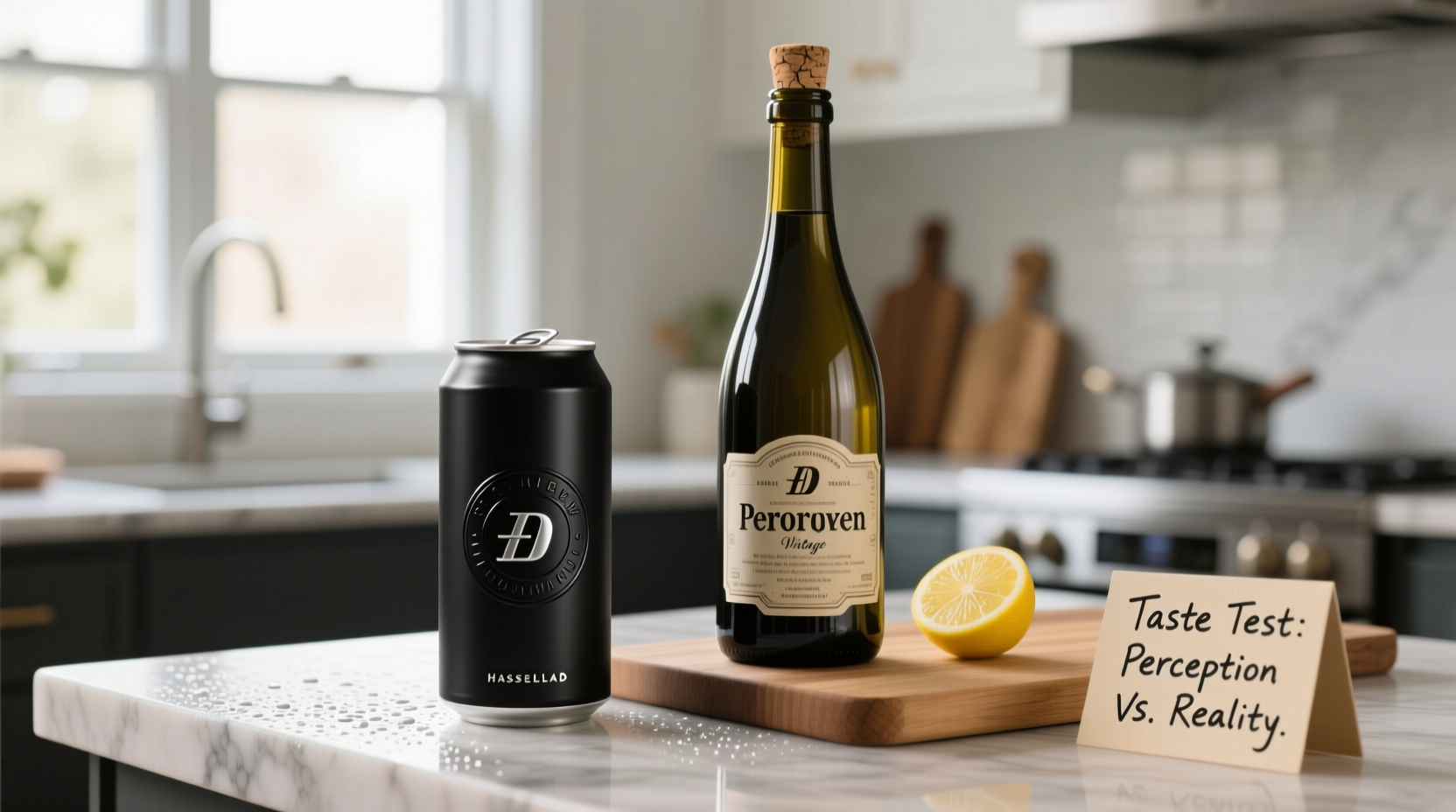
Human perception of quality is rarely objective. It’s shaped by context cues—color, weight, texture, sound, and especially container type. Bottles evoke tradition: hand-blown glass, cork pop, decanting rituals, cellar aging. Cans evoke portability, disposability, mass production. A 2022 study published in Food Quality and Preference confirmed this bias experimentally: when identical wines were served blind, participants rated them identically for aroma, balance, and finish. But when told one was “bottled in premium glass” and the other “packaged in recyclable aluminum,” the “bottle” version received significantly higher scores—even though both were the same wine, sourced from the same tank and filled on the same day.
This isn’t just about aesthetics. Neuroimaging research shows that visual packaging cues activate the medial prefrontal cortex—the brain region associated with value assessment and expectation formation—before the first sip. In short, the can primes skepticism; the bottle primes anticipation. That priming effect is powerful enough to override actual sensory input, especially among occasional drinkers and those with less wine training. For sommeliers and winemakers, the bias is often weaker—but not absent. Many admit they initially dismissed canned formats until tasting rigorously side-by-side.
Tip: When evaluating canned wine objectively, pour it into a proper glass, serve at the correct temperature, and taste without seeing the can. Your palate is more reliable than your preconceptions.Material Science: What Packaging Actually Does to Wine
Perception aside, what does packaging *do*—chemically and physically—to wine over time? The answer depends on three key factors: oxygen transmission, light exposure, and temperature stability.
Glass bottles (especially dark green or amber) offer excellent UV protection and near-zero oxygen ingress—when sealed with high-quality closures. Aluminum cans, by contrast, are completely impervious to light and oxygen. Their interior lining—a food-grade polymer—is engineered to prevent metal interaction and preserve flavor integrity. In fact, independent lab testing by the Australian Wine Research Institute found that canned wine exposed to 12 weeks of simulated summer heat (35°C/95°F) showed *less* oxidation than identical wine in clear glass bottles under the same conditions. Why? Because the can’s total barrier eliminates both light strike (which degrades methoxypyrazines and causes “wet cardboard” notes) and micro-oxygenation through cork or screwcap permeability.
That doesn’t mean all cans perform equally. Low-cost, thin-gauge cans with inconsistent linings may risk metallic taint or premature loss of volatile aromatics—especially in delicate whites like Riesling or rosé. But top-tier producers (e.g., Underwood, Sans Wine Co., and even Domaine Tempier’s experimental rosé can) use double-lacquered, ISO-certified containers designed specifically for wine, with rigorous fill-line oxygen-scavenging protocols.
Real-World Performance: Shelf Life, Freshness, and Consistency
A mini case study illustrates this in practice. In 2021, the Oregon-based winery Union Wine Company launched its flagship “Union” Pinot Gris in both 750ml bottle and 250ml can formats. To test stability, they stored identical batches—same lot, same harvest, same fermentation—in identical warehouse conditions for 18 months. At six-month intervals, they conducted blind sensory panels with certified wine professionals.
Results were revealing: at 6 months, no panelist detected meaningful difference. At 12 months, the bottled version began showing subtle nuttiness and slight reduction—common in early-stage bottle development. The canned version remained brighter, crisper, with more pronounced citrus and pear notes. By 18 months, the bottle had evolved further toward honeyed complexity (a positive for some), while the can retained primary fruit intensity—ideal for the brand’s target audience seeking freshness and vibrancy. Crucially, every panelist noted *greater consistency across cans*: no variation due to cork taint, seal failure, or ullage. Each 250ml serving delivered the exact profile intended.
This consistency matters—not just for quality control, but for equity. A $22 bottle may vary widely between pours (first glass oxidized, last glass warm), while a $4 can delivers uniform experience, every time. That reliability is why airlines, national parks, and outdoor festivals increasingly choose canned wine: it removes variables that degrade perceived quality in real-world settings.
Canned vs. Bottled: A Comparative Framework
Below is a functional comparison grounded in empirical data—not marketing claims—covering five core dimensions relevant to quality perception and actual performance:
| Factor | Canned Wine | Bottled Wine | Quality Implication |
|---|---|---|---|
| Oxygen Exposure | Negligible (hermetic seal) | Variable (cork: 1–10 mg/L/year; screwcap: ~0.1 mg/L/year) | Cans better preserve primary fruit; bottles allow controlled evolution |
| Light Protection | Complete (100% UV/opaque) | Partial (dark glass blocks ~90%; clear glass blocks ~0%) | Cans eliminate “light-struck” faults; bottles require careful storage |
| Temperature Stability | High surface-area-to-volume ratio → faster cooling, quicker warming | Thermal mass slows temp shifts; slower to chill, slower to warm | Cans ideal for immediate service; bottles better for extended service windows |
| Portion Control & Consistency | Precise 187ml or 250ml servings; zero variation | Dependent on pour technique, glass size, and bottle age | Cans reduce human error; enhance repeatability in hospitality |
| Sustainability Footprint | Aluminum is 75% recycled content avg.; infinitely recyclable; 95% less energy to recycle vs. new | Glass is 33% recycled avg.; heavier transport = higher CO₂; recycling rates <34% in U.S. | Cans reduce carbon per serving by up to 40% (UC Davis Life Cycle Analysis, 2023) |
What Experts Say: Beyond the Hype
Industry voices are shifting—not because of trend-chasing, but because of evidence. Master Sommelier Pascaline Lepeltier, who serves as Beverage Director for New York’s acclaimed Le Bernardin, began working with canned formats after noticing how many guests ordered sparkling rosé by the glass but never tried still versions—until offered in a can.
“The can removes hesitation. It signals approachability without compromising integrity. I’ve poured Union’s canned Gamay beside Burgundian bottlings at staff tastings—and watched seasoned sommeliers do double-takes. The quality is there. What’s changed isn’t the wine. It’s our willingness to let go of the bottle as the only valid vessel.” — Pascaline Lepeltier, MS, Beverage Director, Le Bernardin
Winemaker Rajat Parr, whose Sandhi label produces critically acclaimed canned Chardonnay from Santa Barbara, takes a pragmatic view: “A great wine starts in the vineyard and ends in the glass. The container is just the messenger. If the messenger is faster, cleaner, and more consistent—and reaches more people who might otherwise skip wine altogether—then it’s doing its job. We don’t judge a novel by its paperback cover. Why judge wine by its can?”
How to Choose Wisely: A Practical Checklist
Not all canned wine is created equal—and not all bottled wine benefits from its format. Use this checklist to make informed, quality-driven choices:
- Check the producer’s track record: Do they make respected bottled wine? Are they using the same juice, same vineyards, same winemaking team?
- Look for vintage and varietal specificity: “California Red Blend” is a red flag. “2022 Sonoma Coast Pinot Noir” signals intentionality.
- Verify the can specs: Reputable brands list “BPA-free liner” and “oxygen-barrier coating” on their websites or tech sheets.
- Assess the closure method: High-end cans use nitrogen-flush filling to displace oxygen before sealing—ask distributors if unsure.
- Consider the context: For picnics, hiking, concerts, or BYOB restaurants: cans win on practicality and freshness. For cellaring, formal dinners, or collector interest: bottles remain essential.
FAQ: Addressing Common Concerns
Does aluminum leach into wine?
No—reputable wine cans use FDA-approved, food-grade epoxy or polyester linings that fully isolate the wine from the metal. Accelerated migration tests at 40°C for 90 days show zero detectable aluminum in wine (limit of detection: 0.005 ppm). The EU and U.S. FDA both certify these linings for acidic beverages.
Can canned wine age like bottled wine?
Not meaningfully. Cans are designed for freshness, not evolution. Their total oxygen barrier prevents the slow oxidative reactions that build complexity in age-worthy reds. That’s intentional—not a flaw. Think of them as the “just-bottled” expression: vibrant, pure, and true to vintage character. If you seek tertiary notes (leather, earth, dried fruit), choose bottles built for aging.
Why do some canned wines taste metallic or flat?
Two likely causes: (1) Poorly lined or damaged cans—often from budget brands cutting corners on materials or fill-line sanitation; (2) Serving too cold (<6°C/43°F), which suppresses aromatic volatility and exaggerates structural elements. Let the can sit at room temp for 2 minutes before opening, then pour into a glass and aerate gently.
The Shift Is Structural—Not Superficial
The rise of canned wine isn’t a fad. It’s a response to real shifts: climate volatility demanding faster-to-market formats, younger consumers prioritizing sustainability and convenience without sacrificing authenticity, and a broader cultural move away from gatekeeping toward inclusivity. The bottle remains indispensable—for certain wines, certain occasions, certain traditions. But the can has earned its place not as a compromise, but as a distinct, scientifically sound, and perceptually potent format.
What’s changing isn’t the wine itself—but our assumptions about what vessels deserve respect. Every time a sommelier pours a $38 canned Bandol rosé alongside a $95 bottle, every time a winemaker dedicates a single-vineyard Syrah to aluminum, every time a consumer chooses freshness and consistency over ritual—they’re redefining quality on terms that matter today: integrity, accessibility, responsibility.
💬 Your palate is your authority. Next time you see a well-made canned wine, try it blind against its bottled sibling—or better yet, share both with friends and ask them to guess which is which. Then ask yourself: did the package shape your judgment? Or did the wine speak for itself?