
Fermenting fruit scraps—peels, cores, stems, and bruised leftovers—into lightly effervescent, subtly sweet, low-alcohol beverages is not just possible; it’s a centuries-old practice rooted in resourcefulness and microbial intelligence. From Scandinavian svagdricka to West African palm wine traditions, humans have long harnessed wild yeasts and lactic acid bacteria to transform waste into refreshment. Today, this approach gains renewed relevance: as food waste contributes to 8–10% of global greenhouse gas emissions, turning apple peels, pineapple rinds, or overripe berry trimmings into drinkable ferments offers tangible environmental and culinary value. But success hinges on understanding the fine line between safe, pleasant fermentation and spoilage—or worse, unintended ethanol accumulation. This article details exactly how it works, what variables matter most, and how to do it reliably at home—without specialized equipment.
The Science Behind Scrap Fermentation
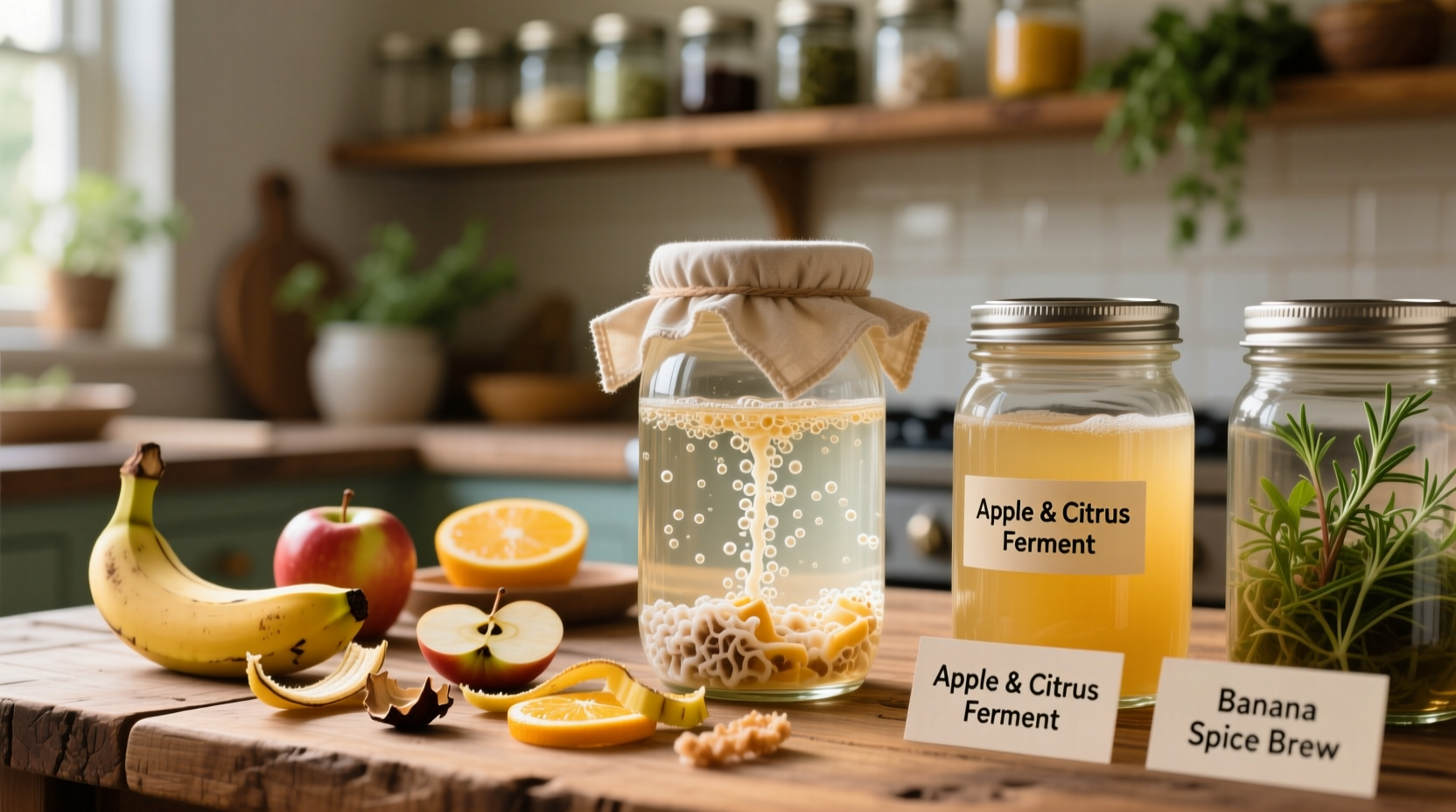
Fruit scraps contain residual sugars (glucose, fructose), moisture, organic acids, and surface-dwelling microbes—including wild Saccharomyces cerevisiae, Kloeckera, Hanseniaspora, and lactic acid bacteria like Lactobacillus. When submerged in a sugar-water solution (or simply with their own juice), these microbes begin metabolizing sugars. Yeasts primarily produce ethanol and CO₂; bacteria produce lactic and acetic acids. In open or loosely covered ferments at room temperature (18–24°C), yeast activity dominates early, but bacterial growth increases as pH drops and alcohol rises—naturally limiting further ethanol production. Crucially, most fruit-scraps ferments plateau between 0.5% and 2.5% ABV—not because fermentation “stops,” but because rising acidity, ethanol concentration, and nutrient depletion slow or inhibit yeast metabolism. Unlike wine or beer, no added yeast strains, nutrients, or sulfites are required; the process relies entirely on ambient microbiology and careful observation.
Tip: Always use organic fruit scraps when possible—conventional produce may carry fungicides (e.g., thiabendazole) that suppress wild yeast and delay or prevent fermentation.What You’ll Actually Get—and What You Won’t
A well-executed fruit scrap ferment yields a bright, tangy, gently fizzy beverage with nuanced flavor: apple-core soda might taste like crisp cider crossed with ginger ale; pineapple rind ferment carries tropical tartness and subtle funk; melon rind versions offer floral minerality and clean acidity. Alcohol content remains low—typically under 1.5% ABV after 3–5 days—making it suitable for most adults and even older children in small servings (though not recommended for pregnant individuals or those avoiding alcohol entirely). What it does not produce is high-alcohol wine (that requires controlled conditions, extended aging, and yeast selection), sterile shelf stability (it’s raw and perishable), or predictable uniformity (each batch reflects local microbes and seasonal fruit chemistry).
| Characteristic | Typical Range in Fruit Scrap Ferments | Notes |
|---|---|---|
| Alcohol by Volume (ABV) | 0.5% – 2.5% | Rarely exceeds 2.5% without added sugar or extended time; higher levels increase risk of vinegar formation or off-flavors. |
| Fermentation Time | 24–72 hours (primary); up to 5 days total | Longer than 5 days raises acetic acid (vinegar) risk unless refrigerated promptly. |
| pH Level | 3.2 – 3.8 | Safe range inhibits pathogens like E. coli and Salmonella; below 4.0 is critical for safety. |
| Carbonation | Light to medium effervescence | Depends on container seal: loose lid = minimal fizz; swing-top bottle = noticeable sparkle. |
| Shelf Life (refrigerated) | 7–14 days | Flavor evolves daily; best consumed within 1 week for brightest profile. |
A Real-World Example: The Brooklyn Community Compost Project
In 2022, the Brooklyn Community Compost Project launched a pilot program teaching urban residents to ferment citrus peels and berry tops collected from local farmers’ markets. Over six months, 42 households participated—each receiving standardized instructions, pH test strips, and weekly check-ins. Of the 217 batches recorded, 94% achieved successful primary fermentation (visible bubbles, pleasant aroma, pH ≤ 3.8) within 48 hours. Two batches developed mold (due to uncovered jars left in humid kitchens), and three turned vinegary after day 6—prompting an immediate revision to the guidance: “Refrigerate at 48 hours unless actively monitoring pH and taste.” Participants reported not only reduced food waste (averaging 1.2 kg/week diverted per household) but also heightened sensory awareness: “I now smell every scrap before adding it—I can tell when yeast is active versus when something’s off,” shared Maya R., a teacher and participant. Their data confirmed that consistent temperature control and timely refrigeration were stronger predictors of success than fruit variety or sugar addition.
Step-by-Step: Safe, Reliable Fruit Scrap Fermentation
- Gather & Prep Scraps: Collect 100–200 g of clean, unsprayed fruit scraps (e.g., 2 apple cores + 1 banana peel + ½ cup strawberry tops). Rinse gently—do not scrub or sterilize; surface microbes are essential. Chop into small pieces to increase surface area.
- Prepare Brine or Juice Base: For dry scraps (peels, cores), combine with 500 mL filtered or boiled-cooled water and 25 g unrefined cane sugar (or 1 tbsp honey or maple syrup). For juicy scraps (overripe berries, melon rind), skip added water—just add 15–20 g sugar per 200 g scraps.
- Combine & Initiate: Place scraps and liquid in a clean 1-quart glass jar. Leave 2–3 inches headspace. Cover with a coffee filter or cloth secured with a rubber band—never an airtight lid at this stage. Stir once daily with a clean utensil.
- Monitor Daily (Critical Step): At 24 hours, look for tiny bubbles at the surface and a faint yeasty or fruity aroma. At 48 hours, test pH with calibrated strips—if reading is ≥ 4.0, stir and wait 6 more hours, then retest. If still ≥ 4.0, discard (insufficient acidification = safety risk). If pH ≤ 3.8 and aroma is clean (no sulfur, rot, or ammonia), proceed.
- Bottle & Carbonate (Optional): Strain solids through cheesecloth (compost them). Pour liquid into swing-top bottles, leaving 1 inch headspace. Seal and store at room temperature for 12–24 hours for light carbonation—then refrigerate immediately. Consume within 10 days.
“Fermenting scraps isn’t about forcing alcohol—it’s about guiding ecology. The safest, most flavorful ferments emerge when acidity rises quickly and steadily. If your pH doesn’t drop below 3.8 within 72 hours, your environment or ingredients aren’t supporting protective microbes—and that’s valuable information, not failure.” — Dr. Lena Cho, Food Microbiologist, Cornell University Department of Food Science
Do’s and Don’ts: A Practical Checklist
- DO use a pH test strip kit (calibrated to 3.0–5.0 range) for every batch—this is non-negotiable for safety.
- DO keep fermentation vessels in a stable-temperature spot (18–24°C), away from direct sun or heating vents.
- DO refrigerate immediately after primary fermentation (usually at 48–72 hours), even if bubbles persist.
- DO compost strained solids—they’re rich in B vitamins and organic matter.
- DON’T use metal containers, lids, or utensils (acidic liquid causes leaching and off-flavors).
- DON’T ferment in sealed mason jars during primary phase—pressure buildup risks explosion.
- DON’T ignore visual or olfactory warnings: fuzzy mold, pink/orange slime, putrid odor, or excessive cloudiness mean discard immediately.
- DON’T assume “natural” means “safe”—uncontrolled ferments can harbor Bacillus cereus or biogenic amines if mishandled.
FAQ
Can I make alcohol-free versions?
Yes—but true “alcohol-free” is technically inaccurate, as wild yeast always produces trace ethanol (typically 0.2–0.5%). To minimize it: shorten fermentation to 12–24 hours, refrigerate immediately, and use cooler temps (15°C). The result is a probiotic-rich, lightly tangy “fruit shrub base” rather than a fermented drink—ideal for mixing with sparkling water.
Why did my batch turn vinegary?
Vinegar forms when Acetobacter bacteria oxidize ethanol into acetic acid—common when oxygen is present during late-stage fermentation. It’s safe to consume (many intentionally make fruit vinegars), but not the goal for low-alcohol drinks. Prevent it by refrigerating promptly after 48 hours and avoiding prolonged exposure to air post-straining.
Is it legal to share or sell these ferments?
In most U.S. states and EU countries, selling unpasteurized, low-alcohol fermented beverages made from scraps falls under cottage food laws—which typically prohibit products with any detectable alcohol (≥ 0.5% ABV) unless licensed as a brewery or winery. Gifting to friends or serving at private gatherings is permitted; commercial distribution requires lab testing, licensing, and strict process controls. Always verify local regulations before sharing beyond your household.
Conclusion
Fermenting fruit scraps into low-alcohol drinks is more than a clever kitchen hack—it’s an act of microbial literacy, ecological reciprocity, and everyday resilience. It asks us to observe closely, respond thoughtfully, and trust processes older than written recipes. You don’t need a lab, a hydrometer, or even a starter culture. You need clean jars, accurate pH strips, attentive senses, and respect for the invisible life thriving on your apple peels and mango rinds. Every successful batch reduces landfill contribution, deepens your connection to seasonal food, and delivers a uniquely alive beverage—one that tastes like place, time, and attention. Start small: choose one fruit, follow the 48-hour rule, test your pH, and taste with curiosity. Your first ferment won’t be perfect—and that’s where learning begins. Then, share what you discover. Not just the recipe, but the questions you asked, the pH readings you tracked, the way the aroma shifted hour by hour. Because the future of sustainable food culture isn’t built in factories or labs alone. It’s stirred each morning in a humble jar on a sunlit counter—bubbling quietly, transforming waste into wonder.
💬 Have you fermented scraps successfully—or learned from a misstep? Share your pH log, favorite fruit combo, or troubleshooting tip in the comments. Your experience helps others ferment with confidence.