
Fruit juice left unrefrigerated for even a short time can begin fermenting—not as a deliberate homebrewing project, but silently, invisibly, and sometimes dangerously. This isn’t theoretical: it’s biochemistry in action, driven by wild yeasts and bacteria present on fruit skins, in the air, and on kitchen surfaces. When sugar-rich juice sits at room temperature, these microbes convert glucose and fructose into ethanol and carbon dioxide. The result? A fizzy, sour, or vinegary beverage that may contain enough alcohol to affect children, pets, or those avoiding alcohol for medical or religious reasons—and in rare cases, enough to pose acute toxicity risks. Understanding this process isn’t about alarmism; it’s about informed stewardship of everyday food safety.
How Accidental Fermentation Actually Happens
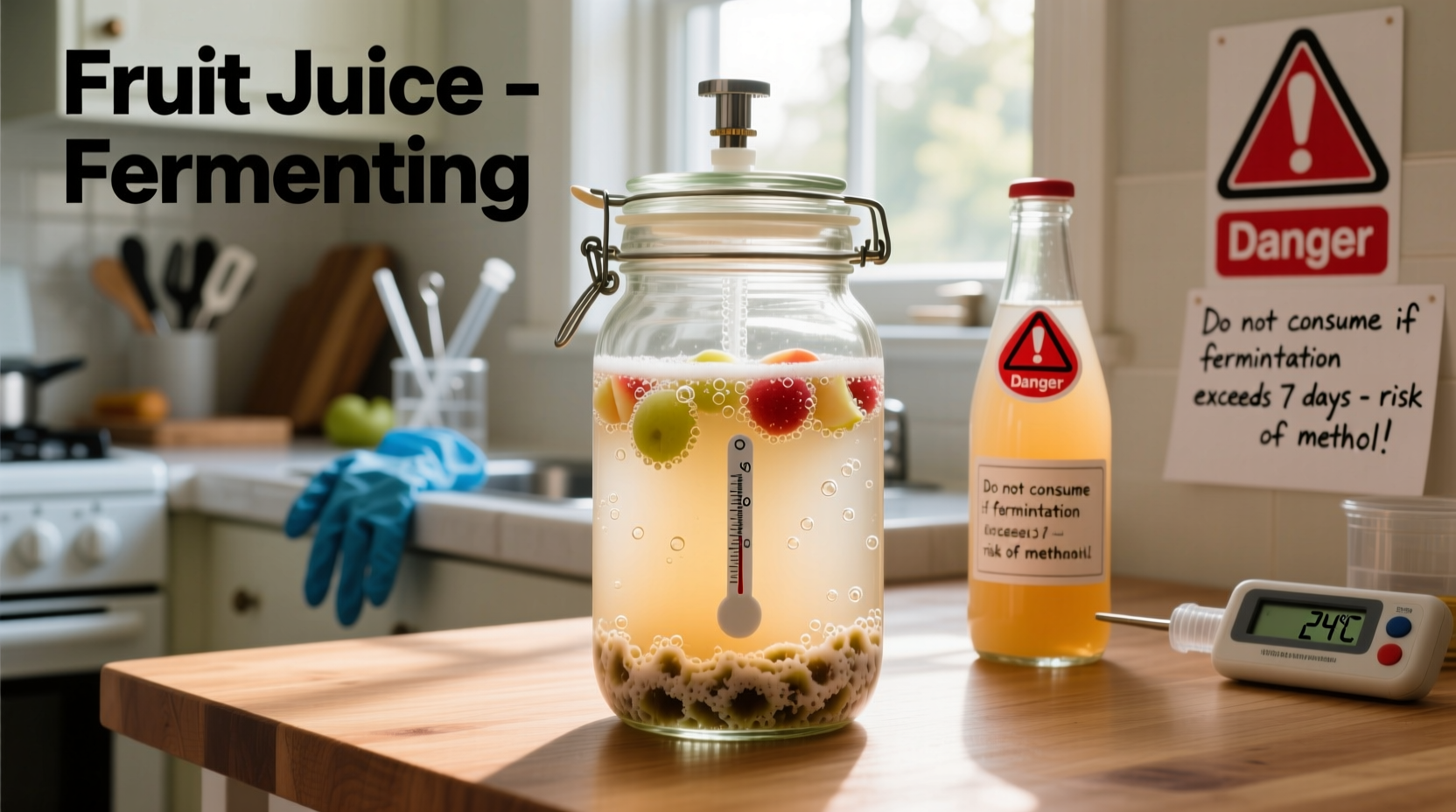
Fermentation begins the moment juice is exposed to ambient microbes. Unlike commercial pasteurization—which kills most wild yeast and bacteria—freshly squeezed, cold-pressed, or unpasteurized juice offers an ideal growth medium: high sugar content (10–15% by weight), neutral pH (3.3–4.2 for most fruits), and no preservatives. Wild Saccharomyces cerevisiae, Kloeckera apiculata, and Candida species land on the surface from dust, hands, or unwashed produce. Within 12–24 hours at 20–25°C (68–77°F), visible signs may appear: tiny bubbles rising through the liquid, a faint yeasty or bready aroma, or slight cloudiness. By 48–72 hours, measurable ethanol accumulates—often 0.5% to 2.0% ABV, depending on sugar concentration and temperature. In one documented case, apple juice stored in a warm pantry for 60 hours reached 1.8% ABV—equivalent to a light beer.
This isn’t “spoiling” in the traditional sense. Spoilage implies microbial growth that causes rot, mold, or putrid odors—often from Aspergillus or Penicillium. Fermentation is a different pathway: clean, anaerobic, and often odorless at first. That’s what makes it insidious. You won’t always smell or see danger—but the alcohol is there.
Real Risks: Why This Isn’t Just a Curiosity
Accidental fermentation poses three distinct categories of risk—physiological, behavioral, and legal—especially in households with vulnerable individuals.
- Children and infants: A toddler drinking 100 mL of juice fermented to just 1.0% ABV ingests ~0.8 g of pure ethanol—enough to lower blood sugar, cause drowsiness, or impair coordination. The American Academy of Pediatrics states there is no safe level of alcohol exposure for children.
- Pets: Dogs metabolize ethanol far less efficiently than humans. As little as 0.5 mL/kg of 1% ABV juice can trigger vomiting, ataxia, or metabolic acidosis. Grapes and raisins already carry nephrotoxic risk; adding ethanol multiplies the danger.
- Individuals in recovery or with medical conditions: People managing diabetes, liver disease, or taking disulfiram (Antabuse) may experience severe reactions—even from trace ethanol. One recovered alcoholic reported nausea and flushing after unknowingly consuming fermented orange juice left overnight in a thermos.
- Food safety liability: In childcare centers or elder care facilities, serving unintentionally fermented juice violates USDA and state health codes. A 2022 inspection in Oregon cited a preschool for “uncontrolled microbial growth in perishable beverages,” resulting in mandated staff retraining.
“Fermentation doesn’t require intent—it requires only sugar, moisture, warmth, and time. In kitchens, those four elements converge daily. Assuming ‘it’s just juice’ ignores basic microbiology.” — Dr. Lena Torres, Food Microbiologist, USDA-FSIS Division of Risk Assessment
7 Essential Safety Tips to Prevent Accidental Fermentation
Tip: Refrigerate all fruit juice within 15 minutes of opening—or better yet, pour only what you’ll consume immediately and return the container to the fridge before the first sip is finished.Prevention relies on interrupting the fermentation triad: microbes, substrate (sugar), and favorable environment. These seven evidence-based actions address each point directly:
- Chill immediately and consistently: Store juice at ≤4°C (39°F). At this temperature, yeast metabolism slows by over 90%. Never leave juice on the counter during meals—even for 20 minutes.
- Use clean, narrow-necked containers: Wide-mouth jars or pitchers increase surface area for airborne yeast colonization. Transfer opened juice to sealed glass or BPA-free plastic bottles with tight lids.
- Label and date everything: Write the opening date in permanent marker on the bottle. Discard refrigerated juice after 48 hours (pasteurized) or 24 hours (unpasteurized or fresh-squeezed).
- Wash produce thoroughly before juicing: Rinse apples, oranges, and grapes under running water while scrubbing gently with a produce brush. This removes up to 85% of surface yeasts—confirmed in a 2021 UC Davis study.
- Avoid “reusing” juice glasses: A glass left half-full on the counter becomes a fermentation starter. Wash glasses immediately—or use disposable cups if supervision is limited (e.g., with young children).
- Inspect before serving—every time: Look for bubbles clinging to the sides, a slightly frothy meniscus, or a faintly sour or cidery smell. If in doubt, discard. Taste testing is unsafe and unreliable.
- Choose pasteurized when possible: Commercial pasteurized juice undergoes flash-heating (71°C for 15 seconds), reducing viable yeast by >99.99%. While it may lack some heat-sensitive vitamins, its microbial stability is unmatched for casual consumption.
What to Do If You Suspect Fermentation: A Step-by-Step Response
Discovering fizz in your child’s morning orange juice demands immediate, calm action—not panic, but precision. Follow this sequence:
- Stop consumption immediately. Remove the container from reach. Do not taste or smell deeply—ethanol vapors can irritate mucous membranes.
- Assess symptoms (if consumed): For children: check for drowsiness, unsteady gait, flushed skin, or unusual quietness. For pets: watch for lethargy, vomiting, or difficulty standing.
- Estimate volume and time: Note how much was likely consumed and how long the juice sat out (e.g., “150 mL left on table for 3 hours”). This helps medical professionals assess risk.
- Rinse mouth with water (if safe to do so) and offer small sips of water to dilute gastric ethanol—but only if the person is fully alert and able to swallow without choking.
- Contact poison control or seek urgent care if: A child under 5 years drank >50 mL of suspected fermented juice; a pet shows neurological signs; or anyone experiences confusion, slow breathing, or loss of consciousness.
Note: Inducing vomiting is not recommended. Ethanol is rapidly absorbed—vomiting won’t remove meaningful amounts and increases aspiration risk.
Do’s and Don’ts: A Practical Comparison Table
| Action | Do | Don’t |
|---|---|---|
| Storing opened juice | Refrigerate in sealed container; label with date; use within 24–48 hours | Leave on counter “just until after lunch”; store in open pitcher; reuse same glass all day |
| Handling fresh-squeezed juice | Chill immediately after squeezing; serve in pre-chilled glasses; discard leftovers after 12 hours | Squeeze in morning for “all-day refreshment”; store in blender carafe on countertop |
| Identifying fermentation | Look for bubbles, cloudiness, or sour/cider-like scent; trust visual cues over “it still tastes fine” | Rely on expiration date alone; assume “no mold = safe”; taste-test questionable juice |
| For families with kids or pets | Use spill-proof sippy cups with one-way valves; store juice in high cabinets; teach older kids to check fridge dates | Leave juice boxes unattended on low tables; fill thermoses the night before for school lunches |
Mini Case Study: The Unnoticed Thermos Incident
In March 2023, a working parent in Portland prepared a thermos of freshly squeezed apple-carrot juice for their 4-year-old’s preschool lunch. The juice was made the night before, refrigerated overnight, then poured into a pre-warmed thermos at 7:15 a.m. By 11:45 a.m., teachers noticed the child was unusually drowsy and had slurred speech. Emergency responders measured mild hypoglycemia and detected a faint ethanol odor on the child’s breath. Lab analysis of remaining juice showed 1.3% ABV—fermented during the 4.5-hour window inside the thermos, where internal temperature held at 22°C (72°F), ideal for Saccharomyces activity. The child recovered fully after IV dextrose and observation, but the incident prompted the preschool to institute a “no homemade juice” policy and staff training on fermentation risks. Crucially, the parent had followed standard food safety advice—except one detail: they assumed refrigeration overnight “reset the clock.” It didn’t. Time starts anew once juice reaches ambient temperatures.
FAQ: Your Top Questions Answered
Can boiling fermented juice make it safe to drink?
No. Boiling kills yeast and bacteria, but it does not remove ethanol, which has a lower boiling point (78°C) than water. In fact, brief boiling may concentrate ethanol temporarily by evaporating water faster—though prolonged boiling (>15 minutes) will reduce alcohol content. However, the juice’s flavor, nutrients, and safety profile are already compromised; discarding is the only reliable option.
Does adding lemon juice or vinegar prevent fermentation?
Not reliably. While lowering pH inhibits some bacteria, common fruit yeasts like Saccharomyces cerevisiae thrive between pH 2.8 and 4.5—well within the range of citrus-acidified juice. Vinegar (acetic acid) may suppress yeast at high concentrations (>2%), but that would render the drink undrinkably sour and introduce new spoilage organisms like Acetobacter, which convert ethanol to acetic acid—making vinegar, not safer juice.
Is kombucha or kefir the same risk?
No—these are intentional, controlled fermentations using known starter cultures, specific ratios, and monitored timelines. They’re formulated to limit ethanol accumulation (typically <0.5% ABV) and include organic acids that inhibit pathogens. Accidental fermentation lacks all controls: no defined culture, no pH monitoring, no ethanol testing, and no barrier against opportunistic microbes like Enterobacter or Clostridium that may co-colonize.
Conclusion: Knowledge Is Your First Line of Defense
Accidental fermentation isn’t a fringe concern—it’s a predictable outcome of everyday choices interacting with immutable biology. You don’t need to fear juice. You need to understand it. Every time you squeeze an orange, pour a glass, or pack a lunchbox, you’re engaging with living systems that respond to temperature, time, and hygiene with quiet, chemical certainty. The safety tips here aren’t about restriction; they’re about alignment—with science, with vigilance, and with care for those who depend on you. Start today: check your fridge’s temperature (it should read ≤4°C), toss that half-empty juice pitcher from yesterday, and write “OPENED: [DATE]” on every bottle you uncork. Small habits recalibrate risk. And when you share this awareness—with a fellow parent, a caregiver, or a friend who juices daily—you extend protection beyond your own kitchen. Because safety isn’t solitary. It’s shared, practiced, and passed on—one properly chilled glass at a time.
💬 Have you encountered accidental fermentation at home? Share your experience—and how you adjusted your routine—in the comments below. Real stories help others recognize the signs faster.