
Aging spirits at home in small oak barrels has surged in popularity—fueled by DIY distilling communities, craft cocktail culture, and the allure of transforming raw white whiskey, unaged rum, or even neutral grain spirit into something complex and nuanced in weeks instead of years. But enthusiasm alone doesn’t guarantee success. Small-barrel aging (typically 1–10 liters) accelerates extraction dramatically—and with that speed comes real risks: off-flavors, excessive tannins, oxidation, microbial spoilage, and even chemical leaching if equipment or technique is compromised. This isn’t barrel-aging lite; it’s high-stakes wood chemistry conducted in your garage, basement, or kitchen. Done well, it yields remarkable results. Done poorly, it produces undrinkable, potentially hazardous liquid. Let’s cut through the marketing hype and examine what works—grounded in cooperage science, distiller experience, and food-safety standards.
Why Small Barrels Accelerate Aging—And Why That’s a Double-Edged Sword
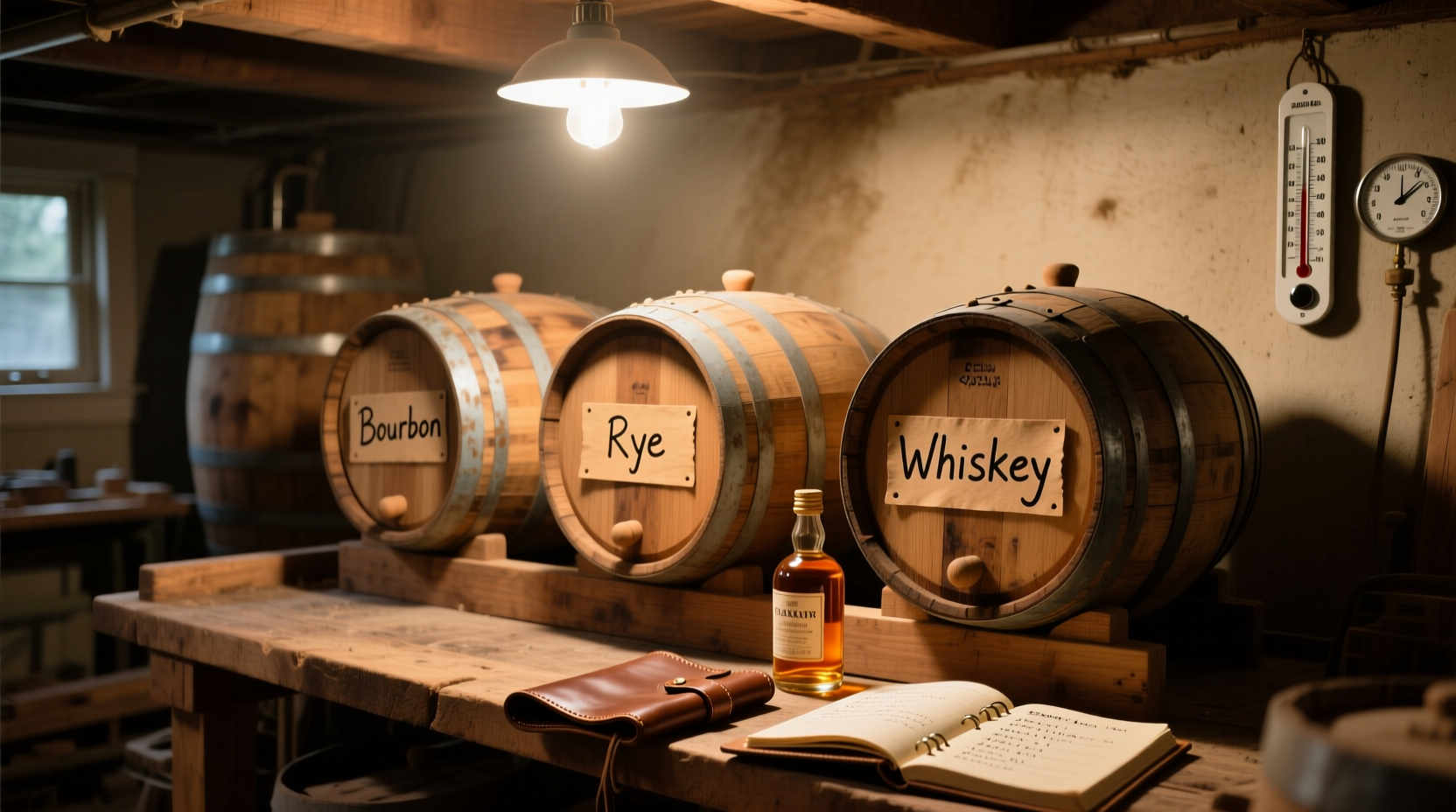
Barrel size directly governs the surface-area-to-volume ratio. A standard 53-gallon (200 L) bourbon barrel offers roughly 17 square inches of oak per gallon of spirit. A 1-gallon (3.8 L) barrel? Over 150 square inches per gallon—nearly nine times more contact. This intensifies extraction of lignin-derived vanillin, hemicellulose sugars (caramel, toast notes), and oak lactones (coconut, woody spice). It also accelerates oxidation and evaporation—the “angel’s share.” In a full-size barrel, this happens gradually over years. In a 2-liter barrel, significant change occurs in 2–8 weeks. But acceleration cuts both ways: desirable compounds extract quickly, yes—but so do harsh tannins, bitter ellagitannins, and volatile phenols if the wood isn’t properly prepared or the spirit isn’t monitored.
This isn’t theoretical. Distillers at Tennessee’s Prichard’s Distillery ran controlled trials comparing 5-gallon and 53-gallon barrels for their unaged rum. The 5-gallon samples developed deep amber color and pronounced vanilla within 12 days—but by day 18, they showed aggressive astringency and green-wood bitterness. The 53-gallon version remained balanced and integrated at 6 months. The lesson: small barrels demand vigilance, not just patience.
Safety First: What Can Go Wrong—and How to Prevent It
Home barrel-aging carries three primary safety concerns: microbial contamination, wood toxicity, and ethanol-related hazards.
- Microbial contamination: Spirits below 40% ABV (80 proof) lack sufficient alcohol to inhibit bacteria like Acetobacter (which converts ethanol to acetic acid/vinegar) or wild yeasts. Even at 45–50% ABV, prolonged exposure in warm, oxygen-rich environments invites spoilage.
- Wood toxicity: Not all oak is safe for beverage contact. Green (unseasoned), improperly dried, or chemically treated wood can leach harmful compounds—including methanol precursors, mold mycotoxins (from improper storage), or industrial adhesives used in cheap “barrel kits.” Only use barrels explicitly labeled “food-grade,” “beverage-safe,” or “distiller-certified.” Avoid any barrel made from unknown species (e.g., pine, eucalyptus, or cherry without proper validation).
- Flammability & handling: Ethanol vapors are highly flammable and heavier than air—they pool near floors. Never age near pilot lights, water heaters, furnaces, or electrical outlets. Store barrels on non-porous, stable surfaces away from direct sunlight (UV degrades oak polymers and accelerates oxidation).
The Critical Role of Wood Preparation and Barrel Quality
You cannot shortcut wood preparation. Properly aged oak must undergo slow, natural air-drying to leach harsh tannins and allow enzymatic breakdown of bitter compounds. Kiln-dried wood dries too fast, locking in astringency. Untoasted or lightly toasted barrels extract minimal flavor but risk imparting raw, green-wood notes. Conversely, heavy charring (level 3–4) creates a charcoal filter layer that softens spirit harshness while contributing smoky, roasted notes—but only if the char is even and the underlying wood is sound.
Here’s what to look for—and avoid—in your barrel:
| Feature | Acceptable | Unacceptable |
|---|---|---|
| Wood Species | White oak (Quercus alba), French oak (Q. robur or Q. petraea) | Pine, red oak, maple, or unidentified “hardwood” |
| Drying Method | Air-dried ≥18 months; moisture content 12–15% | Kiln-dried; damp, musty smell; visible mold or insect damage |
| Interior Finish | Consistent medium toast (level 2) or char (level 3); no glue seams, no paint, no varnish | Charred unevenly; black residue flakes off; sticky or glossy interior coating |
| Construction | Hand-split staves (grain perpendicular to liquid); tight-fitting hoops; no leaks after soaking | Mechanically sawn staves (weak structure); warped heads; persistent leaks after 48-hour soak |
Before first use, always perform a 48-hour water soak test. Fill the barrel with hot (not boiling) water, rotate hourly, and check for leaks. Discard any barrel that fails—even minor seepage indicates structural compromise that worsens with ethanol exposure.
A Step-by-Step Protocol for Safe, Effective Small-Barrel Aging
This sequence reflects best practices validated by master distillers and FDA-compliant craft producers. Deviate only after thorough testing and documentation.
- Select and sanitize: Choose a food-grade, air-dried, medium-toasted white oak barrel (1–5 L recommended for beginners). Rinse interior with hot water, then fill with 1:10 solution of food-grade sodium metabisulfite and cold water. Soak 2 hours. Drain and rinse thoroughly with hot water until no sulfur odor remains.
- Proof adjustment: Age spirits at 45–55% ABV (90–110 proof). Below 40% ABV invites spoilage; above 60% ABV extracts excessive tannins and slows ester formation. Dilute high-proof distillate with distilled (not tap) water before barreling.
- Fill and seal: Fill barrel to 95% capacity—leave headspace for expansion and micro-oxygenation. Insert bung tightly. Store horizontally (to keep staves swollen) in a cool (55–65°F / 13–18°C), dark, humidity-stable location (45–65% RH). Avoid garages with temperature swings >10°F daily.
- Monitor weekly: Every 7 days, draw 15 mL via sanitized pipette. Taste, note color, mouthfeel, and aroma. Track progress in a log: date, ABV (if measurable), dominant notes, harshness level (1–5 scale). Stop aging when desired profile peaks—usually between 14–42 days for 1–2 L barrels.
- Empty and stabilize: Once optimal flavor is reached, remove spirit immediately. Filter through a 0.5-micron stainless steel filter if particulates appear. Transfer to glass bottles, purge headspace with argon gas (or flush with inert gas), and seal. Consume within 6 months of bottling.
Real-World Case Study: A Home Distiller’s 3-Month Journey
Mark R., a retired chemist in Oregon, began aging 1.5 L batches of 48% ABV corn-based distillate in new medium-toast American oak barrels. His first attempt—filled in March, stored in an unheated garage averaging 42–72°F—produced a rich, caramel-forward spirit in 19 days. But by day 26, it turned aggressively astringent, with lingering bitterness he traced to temperature spikes during daytime sun exposure. He adjusted: moved barrels to a climate-controlled wine fridge (set to 58°F), added daily rotation to ensure even extraction, and began tasting every 48 hours. By his third batch, he achieved balance at day 22—vanilla, toasted almond, and subtle smoke—with zero bitterness. Crucially, he tested pH and ABV weekly: pH never dropped below 4.2 (ruling out bacterial acidification), and ABV held steady at 47.8%, confirming no ethanol loss to evaporation or spoilage. His logs now guide a local home-distiller co-op—and he insists, “The barrel doesn’t lie. But you have to listen to it every single day.”
Expert Insight: The Science Behind the Stave
“Small barrels aren’t ‘faster bourbon’—they’re a different category altogether. You’re not replicating warehouse aging; you’re conducting rapid wood-spirit extraction under controlled stress. That demands respect for wood chemistry: lignin breakdown requires time *and* thermal stability, not just surface contact. Rush it, and you extract bitterness before sweetness. Skip sanitation, and you invite microbes that thrive where ethanol can’t fully suppress them. There’s no substitute for disciplined observation.” — Dr. Lena Torres, Senior Research Fellow, Institute for Spirits Science, University of Kentucky
FAQ
Can I reuse a small barrel for multiple batches?
Yes—but with diminishing returns and increasing risk. After the first 2–3 uses, oak compounds deplete significantly. More critically, micro-cracks and residual yeast/bacteria colonies embed in porous wood. Sanitize rigorously between uses (metabisulfite soak + hot water rinse), but discard barrels showing mold, persistent sourness, or structural weakness. Never reuse a barrel that previously held anything other than spirits (e.g., vinegar, wine, or cider).
Do I need to top up the barrel like winemakers do?
No—and you shouldn’t. Topping up small barrels introduces oxygen and contaminant risk with every opening. Unlike wine, spirits benefit from controlled micro-oxygenation *and* evaporation (which concentrates flavors). Instead, accept 2–5% volume loss over the aging period. If leakage exceeds this, the barrel is compromised and should be retired.
Is charring necessary—or is toasting enough?
For safety and flavor integration, charring is strongly advised for spirits aged <30 days. A light char (15 seconds, level 2) creates a carbon filter that adsorbs sulfur compounds and fusel oils common in young distillates. Toasting alone (no char) works for very short ages (7–14 days) but offers less purification and smoother integration. Never use an uncharred, untoasted barrel for spirit aging—it will taste raw and vegetal.
Conclusion: Mastery Begins with Restraint
Yes—you absolutely *can* age spirits in small oak barrels at home safely and effectively. But the word “can” here is conditional: it assumes rigorous attention to wood provenance, unwavering sanitation discipline, precise environmental control, and daily sensory engagement. This isn’t passive waiting; it’s active stewardship of a living interface between fire, wood, and ethanol. The rewards—a custom-aged whiskey with layered complexity, a rum infused with toasted coconut and clove, or a brandy revealing baked apple and cedar—are deeply personal and profoundly satisfying. They reflect your judgment, your care, and your willingness to learn from each batch. Don’t chase speed. Chase balance. Taste early. Stop sooner than you think you should. Document everything. And remember: the finest small-barrel spirits aren’t the ones aged longest—they’re the ones pulled at the exact moment the oak and spirit achieve quiet, resonant harmony.
💬 Have you aged spirits at home? Share your biggest lesson, a hard-won tip, or a cautionary tale in the comments—your experience helps others navigate this rewarding, demanding craft.








