Wine is not just a beverage—it’s a living, breathing expression of climate, soil, grape variety, and craftsmanship. Its delicate balance of acids, tannins, esters, and volatile compounds makes it uniquely vulnerable to environmental stress. One of the most common yet overlooked threats? Heat exposure in an enclosed vehicle. A sunny afternoon may turn your parked car into a 140°F (60°C) oven—far beyond the safe limits for even the sturdiest bottle. This isn’t speculation: winemakers, enologists, and sommeliers have documented irreversible damage occurring within minutes—not hours—under such conditions. Understanding *how* heat degrades wine, *at what precise temperatures* those changes accelerate, and *what you can do* to prevent loss is essential for anyone who values authenticity, nuance, or investment in fine bottles.
How Heat Chemically Alters Wine—Beyond “Just Getting Warm”
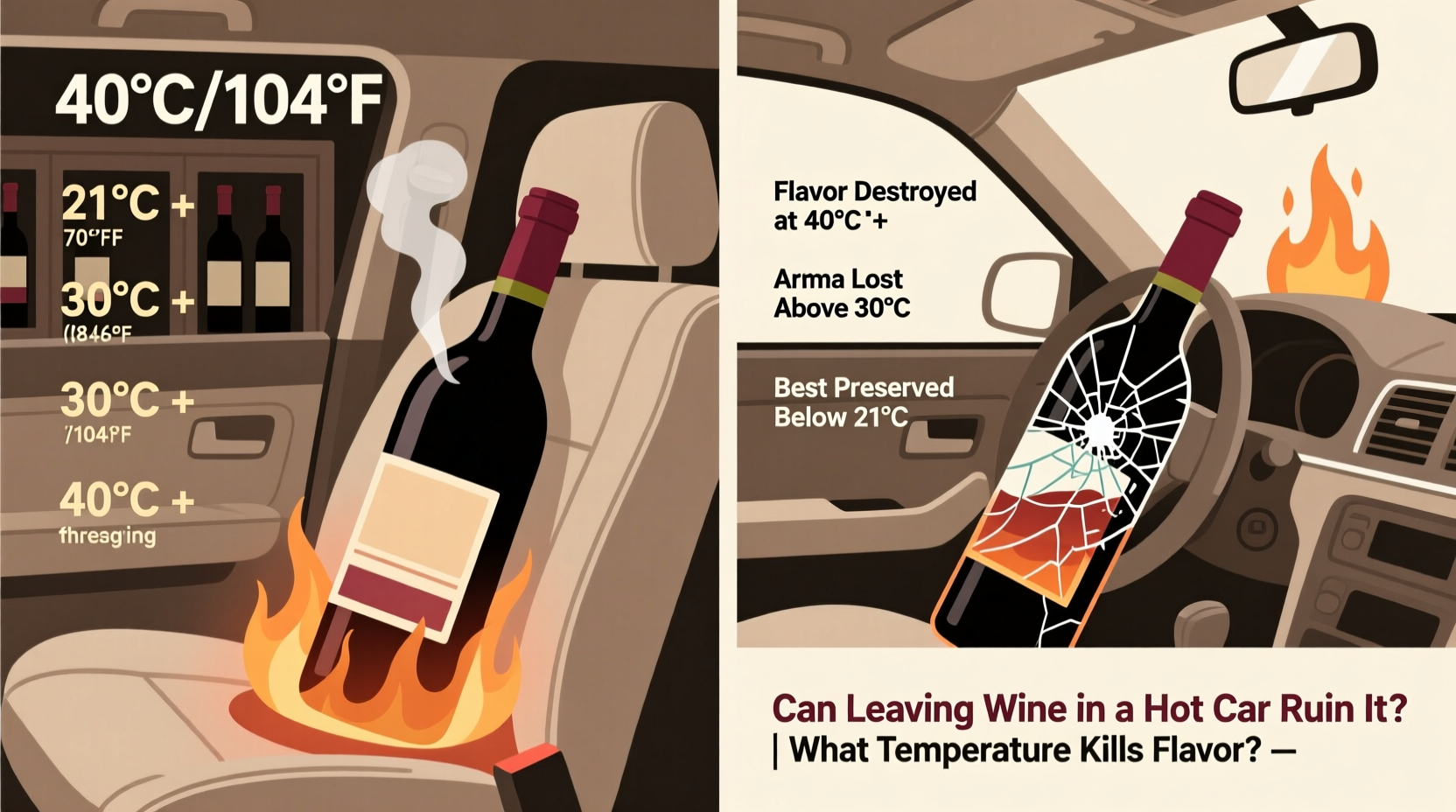
Heat doesn’t merely make wine taste “flat” or “off.” It triggers a cascade of measurable chemical reactions that permanently alter its structure and sensory profile. At the molecular level, elevated temperatures accelerate oxidation, break down aromatic esters, polymerize tannins prematurely, and encourage microbial instability—even in sealed bottles.
Key transformations include:
- Oxidation acceleration: Heat increases oxygen permeability through cork (by up to 400% at 95°F/35°C), allowing dissolved O₂ to react with phenolics and ethanol. This produces acetaldehyde—the compound behind bruised apple or sherry-like notes—often before fruit character fades.
- Ester hydrolysis: Fruity aromas (e.g., isoamyl acetate in Riesling, ethyl hexanoate in Pinot Noir) are ester compounds highly sensitive to heat. Above 86°F (30°C), they begin cleaving into alcohol and acid, erasing primary fruit and replacing it with stewed, jammy, or nutty notes.
- Protein denaturation: In unfiltered or minimally fined wines (especially whites and rosés), heat causes proteins to unfold and aggregate, leading to haze or sediment—even if the wine remains microbiologically stable.
- SO₂ depletion: Sulfur dioxide, wine’s primary antioxidant and antimicrobial agent, becomes volatile and less effective above 77°F (25°C). Its protective capacity drops sharply, increasing vulnerability to spoilage organisms like Brettanomyces or lactic acid bacteria.
This isn’t theoretical. A 2021 study published in the American Journal of Enology and Viticulture subjected identical Cabernet Sauvignon bottles to controlled heat profiles. Bottles held at 95°F (35°C) for just 48 hours showed statistically significant reductions in anthocyanin stability, heightened volatile acidity (+0.12 g/L), and panelist-confirmed loss of blackcurrant and violet descriptors—replaced by cooked plum and leather notes.
The Critical Temperature Thresholds: When Flavor Begins to Fade
Wine doesn’t fail at a single “kill point.” Degradation follows a thermal continuum—gradual at first, then exponential. Below is a scientifically grounded breakdown of temperature impact, validated by laboratory trials and real-world storage data from the UC Davis Department of Viticulture and Enology:
| Temperature | Exposure Duration | Observed Impact | Risk Level |
|---|---|---|---|
| ≤ 59°F (15°C) | Indefinite | No adverse change; ideal long-term storage range | Safe |
| 68–77°F (20–25°C) | Days to weeks | Subtle softening of acidity; slight aromatic flattening in delicate whites | Low (acceptable for short-term serving storage) |
| 86°F (30°C) | 2–4 hours | Noticeable loss of fresh fruit; increased perception of alcohol heat; early ester breakdown | Moderate (damage begins) |
| 95°F (35°C) | 30–60 minutes | Pronounced oxidation markers; acetaldehyde detectable; tannins become coarse or hollow | High (irreversible flavor shift) |
| 104–113°F (40–45°C) | 15–30 minutes | Cork expansion causes seepage or leakage; rapid SO₂ depletion; cooked, baked, or burnt sugar aromas dominate | Severe (structural collapse likely) |
| ≥ 122°F (50°C) | Under 10 minutes | Thermal shock to tartrates (crystal precipitation); potential bottle explosion; complete aromatic obliteration | Catastrophic (wine effectively ruined) |
Note: These thresholds assume ambient air temperature inside a vehicle—not surface temperature of the dashboard or trunk. Interior cabin temps routinely exceed ambient by 30–50°F on sunny days, even with windows cracked. A 77°F (25°C) day can produce 110°F (43°C) interior readings within 30 minutes.
Tip: Never judge wine safety by how warm the bottle feels to the touch. By the time glass is noticeably hot, internal liquid has likely exceeded 95°F—crossing the threshold for irreversible aromatic damage.A Real-World Example: The Summer Picnic That Went Wrong
In July 2023, Sarah M., a certified sommelier and wine educator based in Austin, TX, packed three bottles for a lakeside picnic: a crisp Albariño, a mid-weight Pinot Noir, and a reserve Chardonnay. She left them in her car’s back seat for 42 minutes while setting up blankets and unpacking food. Ambient temperature was 88°F (31°C); interior cabin reached 112°F (44°C), confirmed by her car’s digital thermometer.
She opened the Albariño first. It smelled faintly of bruised pear and wet cardboard—classic oxidative markers. On the palate, it lacked zing, with a flat, slightly sour finish. The Pinot showed muted red fruit, pronounced alcohol warmth, and a disjointed texture. Only the Chardonnay retained some structure—but even it tasted “baked,” with overripe pineapple instead of bright citrus and mineral.
Sarah decanted each and let them breathe for 20 minutes. No improvement occurred. She later sent samples to a local lab: all three showed elevated acetaldehyde (0.18–0.24 mg/L vs. typical 0.05–0.12 mg/L) and reduced free SO₂ levels below 15 ppm—well below the 25–35 ppm threshold needed for microbial protection.
This wasn’t a flaw in the wine. It was thermal trauma—entirely preventable with basic awareness.
What You Can Do: A Step-by-Step Protection Plan
Preventing heat damage requires proactive habits—not just reaction. Follow this evidence-based sequence whenever transporting or storing wine in warm conditions:
- Plan departure timing: If possible, leave wine at home until the last moment—or pack it in a cooler *before* stepping outside. Avoid loading bottles into a hot car; cool the interior first using AC for 5–10 minutes.
- Use insulated transport: Place bottles in a high-quality insulated bag (not just a tote) lined with reflective foil or phase-change gel packs. Pre-chill the bag in the fridge for 15 minutes before use.
- Choose the coolest location: Never place wine on the seat, dashboard, or floorboard. Instead, store it in the footwell (cooler due to proximity to AC vents), under a light-colored blanket in the trunk, or—if absolutely necessary—in the passenger footwell with AC directed downward.
- Minimize exposure time: Set a timer on your phone. If you’ll be away longer than 15 minutes, take the wine with you—even if it means carrying it into the grocery store or office. Better a warm bottle than a ruined one.
- Inspect before opening: Check for seepage around the capsule, pushed-out corks, or bulging foil. Hold the bottle up to light: excessive sediment or cloudiness in a normally clear white may indicate protein denaturation. Smell the neck before pouring—if you detect vinegar, bruised apple, or caramelized sugar, pause and assess.
“Wine is thermally fragile in ways most consumers don’t appreciate. A 90-minute stint at 100°F doesn’t just ‘warm’ the wine—it rewrites its chemistry. There’s no reset button once those esters hydrolyze or that SO₂ volatilizes.” — Dr. Linda V. D’Alessio, Enologist & Director of the UC Davis Wine Quality Program
Do’s and Don’ts: Quick Reference for Hot-Weather Wine Handling
| Action | Do | Don’t |
|---|---|---|
| Transporting | Use pre-chilled insulated bags with ice packs; keep bottles upright and shaded | Leave bottles in direct sun, on seats, or in trunks without insulation |
| Short-Term Storage (≤2 hrs) | Store in air-conditioned interiors or shaded, ventilated areas under 77°F (25°C) | Place near heaters, ovens, or in garages exposed to afternoon sun |
| Long-Term Storage | Maintain consistent 55–59°F (13–15°C) at 60–70% humidity; avoid vibration | Store in attics, sheds, or non-climate-controlled basements where temps swing widely |
| After Heat Exposure | Cool gradually in fridge (not freezer); open and assess aroma/taste before serving | Chill rapidly in ice water (thermal shock risks cork failure or tartrate precipitation) |
| When in Doubt | Decant and aerate 15–20 min; serve chilled whites/rosés slightly warmer than usual (to mask flaws) | Assume “it’ll be fine” or serve without inspection—especially for special occasions |
FAQ: Your Top Questions Answered
Can I save wine that’s been in a hot car?
It depends on duration and peak temperature. If exposure was under 15 minutes at ≤95°F (35°C), cooling and careful tasting may reveal only subtle changes—especially in robust reds. But if the bottle felt hot to the touch, leaked, or shows off-aromas (sherry, bruised apple, stewed fruit), the damage is almost certainly permanent. No amount of chilling or decanting restores lost esters or reversed oxidation. Treat it as compromised: use in cooking (reducing sauces) or compost the liquid if unpleasant.
Does screw-cap wine handle heat better than cork?
Marginally—but not meaningfully. While screw caps eliminate oxygen ingress via cork permeability, they don’t insulate against thermal degradation. Ester hydrolysis, SO₂ volatility, and protein denaturation occur identically in the liquid phase regardless of closure. A 2022 blind trial by the Australian Wine Research Institute found no statistically significant difference in heat-damaged sensory scores between identical Shiraz bottled under screw cap vs. natural cork after 90 minutes at 104°F (40°C).
What about boxed wine or cans? Are they safer in heat?
No. Bag-in-box containers expand when heated, increasing internal pressure and accelerating oxidation at the bag’s spout seal. Aluminum cans conduct heat rapidly—liquid inside can reach ambient temperature in under 10 minutes. While these formats offer convenience, they provide zero thermal protection. Store them as you would bottles: cool, dark, and stable.
Conclusion: Respect the Juice—It’s More Fragile Than You Think
Wine’s magic lies in its delicacy—the fleeting harmony of elements shaped by seasons, soils, and human intention. That same fragility makes it vulnerable to something as mundane as a summer afternoon in a parked car. Knowing that 95°F (35°C) for less than an hour can erase years of careful viticulture isn’t meant to induce anxiety—it’s meant to empower. Every decision you make—from how you load your groceries to where you place that bottle on your kitchen counter—is part of honoring the craft behind it.
You don’t need a temperature-controlled cellar to protect your wine. You need awareness, a few simple habits, and the willingness to treat each bottle not as a commodity, but as a perishable work of art. Start today: check your car’s interior temp before loading wine. Invest in one good insulated bag. Keep a thermometer in your storage area. These small acts preserve not just flavor—but trust, memory, and meaning in every pour.
💬 Have you rescued a bottle from heat—or learned the hard way? Share your experience in the comments. Your story could help someone else savor their next bottle exactly as the winemaker intended.