Mindless consumption—reaching for a glass of wine after work without intention, topping up a soda at lunch without noticing, or accepting a cocktail at a party out of habit—is one of the most under-recognized drivers of excess calorie intake, blood sugar spikes, and long-term health strain. Unlike binge eating or emotional overeating, which often trigger immediate self-awareness, beverage consumption slips through unnoticed: it’s fast, socially normalized, and rarely tracked. Yet research shows that what we drink accounts for up to 20% of daily calories for adults—and nearly half of those calories come from sources with little to no nutritional value. Journaling your drinks isn’t about rigid restriction or calorie counting. It’s about restoring agency: transforming automatic behavior into conscious choice.
Why Awareness Alone Isn’t Enough—And Why Journaling Is Different
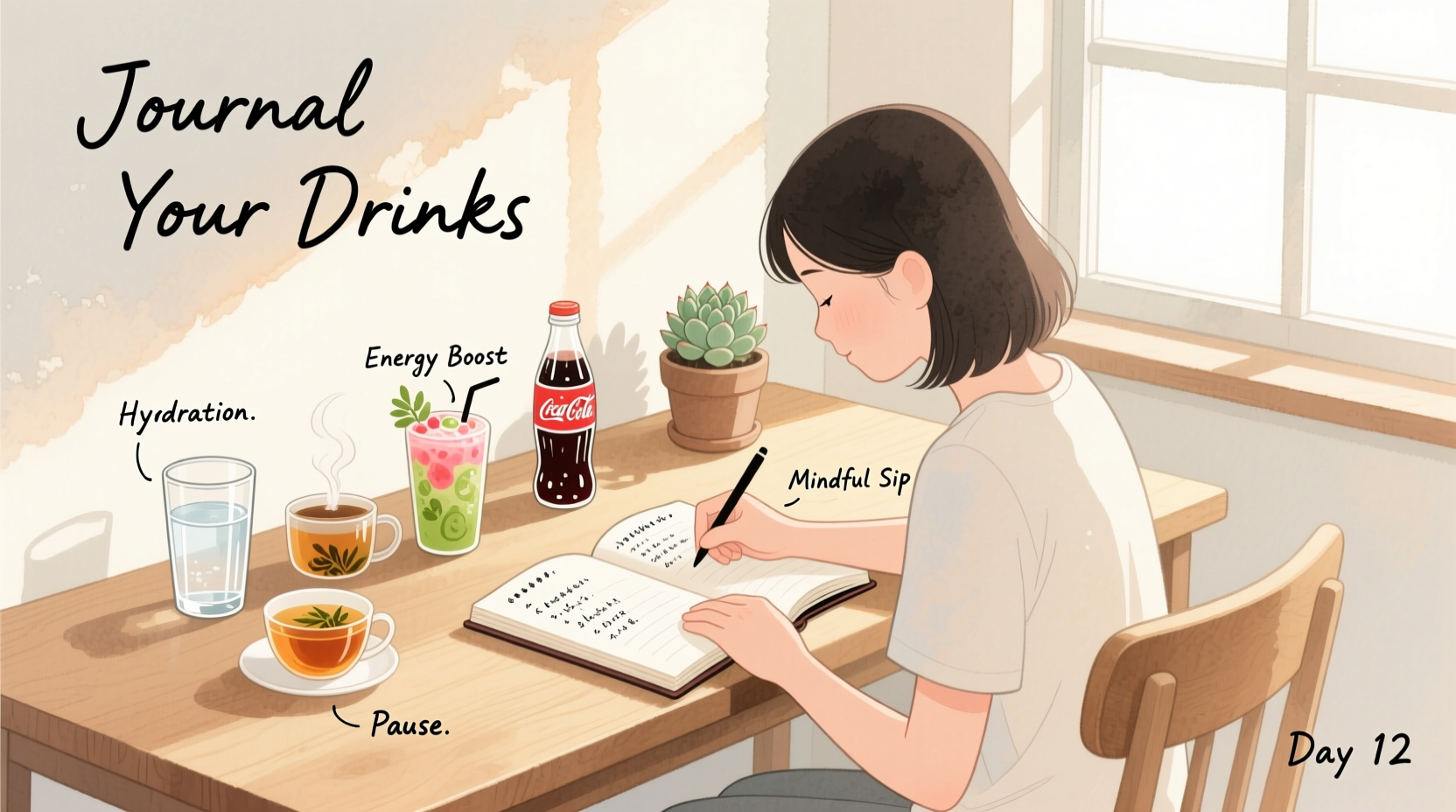
Most people know they “should probably cut back” on alcohol or sweetened beverages. But knowledge rarely changes behavior. What does shift patterns is *structured observation*. Journaling differs from casual awareness because it introduces three critical elements: consistency, specificity, and consequence. When you write down what you drank, when, where, and how you felt before and after, you begin to see patterns invisible in real time—like drinking more on days with poor sleep, or reaching for a second glass only when alone at home after 8 p.m.
A 2023 randomized controlled trial published in JAMA Internal Medicine followed 247 adults who consumed ≥14 alcoholic drinks weekly. One group used a digital drink journal with prompts for context (mood, location, social setting); the control group received general harm-reduction education. After 12 weeks, the journaling group reduced average weekly intake by 3.8 drinks—nearly 30%—compared to 0.9 drinks in the control group. Crucially, 68% of journalers reported “noticing triggers I’d never paid attention to before,” including fatigue, boredom, and unmet social needs disguised as thirst.
“Journaling doesn’t change behavior directly—it changes your relationship to your behavior. You stop being the actor and start becoming the observer. That shift is where real agency begins.” — Dr. Lena Torres, Clinical Health Psychologist and author of The Habit Observer
How Drink Journaling Interrupts the Mindless Loop
Mindless consumption operates through a well-worn neurological pathway: cue → routine → reward. A cue (e.g., finishing dinner), triggers an automatic routine (pouring wine), reinforced by a neurochemical reward (dopamine release from alcohol’s mild sedative effect or sugar’s rapid glucose surge). Journaling disrupts this loop at two key points: it delays the routine (you pause to record), and it reframes the reward (you note not just pleasure, but next-morning fatigue or afternoon brain fog).
This delay creates what behavioral scientists call a “friction interval”—a brief window where prefrontal cortex engagement overrides limbic system impulse. Over time, that window widens. Journaling also exposes the mismatch between expectation and reality: many people assume “one glass relaxes me,” yet their entries reveal increased anxiety or disrupted sleep. That cognitive dissonance becomes motivational fuel—not guilt, but clarity.
Tip: Start with just three questions per entry: (1) What did I drink? (2) Where was I—and who was with me? (3) How did I feel 30 minutes after? No analysis needed—just facts.A Practical, Sustainable Journaling System
Effective drink journaling isn’t about perfection or exhaustive detail. It’s about designing a system that fits your life—not the other way around. Below is a step-by-step approach proven to sustain engagement beyond the first week.
- Choose your medium: Pen-and-paper works best for most people—digital apps encourage quick logging but reduce reflection depth. Use a small notebook kept beside your coffee maker or on your nightstand.
- Define your scope: Track only what feels relevant. For alcohol, note standard drinks (e.g., “12 oz beer = 1 drink”). For sodas or juices, log ounces and sugar grams if possible—but “1 can cola” is sufficient to start.
- Anchor to existing habits: Record immediately after drinking—not later. Pair it with brushing your teeth, closing your laptop, or washing your evening dish. This leverages habit stacking.
- Add one reflective prompt weekly: Every Sunday, scan your entries and ask: “When did I drink without choosing to?” Circle those moments. Don’t judge—just notice.
- Review monthly—not daily: Daily review breeds obsession; monthly review reveals trends. Look for patterns across context (work stress?), timing (always after 6 p.m.?), or mood (more on low-energy days?).
What to Track (and What to Skip)
Not all data points are equally useful. Focus on variables that reveal actionable insight—not just volume. The table below compares high-value tracking elements versus low-impact ones.
| Element | Why It Matters | Skip If… |
|---|---|---|
| Time & Location | Reveals environmental triggers (e.g., “always after remote work ends at 5:15 p.m.” or “only at bar near office”) | You drink exclusively at home during dinner—no variation exists |
| Pre-Drink Mood/State | Identifies emotional drivers (boredom, loneliness, fatigue) versus physiological need (thirst) | You consistently drink only in celebratory contexts with clear external cues |
| Next-Morning Effect | Connects consumption to tangible consequences (headache, low focus, irritability) | You never experience any negative effects—even after multiple drinks |
| Exact Sugar Grams | Useful for metabolic health goals, but rarely changes behavior alone | You’re focused on reducing frequency or emotional reliance—not weight or blood sugar |
| Calorie Count | Abstract number with minimal behavioral relevance for most people | Always |
Real Example: How Sarah Reduced Her Wine Intake by 62% in 10 Weeks
Sarah, 38, a project manager in Portland, drank 2–3 glasses of wine nightly. She didn’t consider herself “a heavy drinker”—until her annual physical flagged elevated liver enzymes and persistent afternoon fatigue. She started journaling using a simple Moleskine notebook with three columns: “Time/Place,” “What & How Much,” and “How I Felt Before/After.” Within five days, she noticed a pattern: she poured wine at 6:02 p.m. sharp, every weekday, even when she hadn’t yet eaten dinner. Entries like “Before: tense, shoulders tight. After: relaxed for 20 min, then foggy” appeared repeatedly.
At week three, she added a fourth column: “What else could I do right now?” One evening, instead of opening the bottle, she walked around the block. She logged: “Walked 12 min. Shoulders loosened. Felt calmer—no crash later.” By week six, she’d replaced wine with herbal tea on three weeknights. By week ten, her average dropped from 19.5 to 7.3 drinks per week. Crucially, she didn’t eliminate wine—she reclaimed choice. “I still have a glass on Friday nights, but now I taste it. I don’t just drain it while scrolling,” she shared in a follow-up interview.
Your First 7-Day Journaling Checklist
- ✅ Keep a small notebook and pen within arm’s reach of your usual drinking spots (kitchen counter, desk, bedside table)
- ✅ Log within 2 minutes of finishing each drink—no exceptions, even for “just one sip”
- ✅ Write legibly enough to read later—this isn’t shorthand; it’s data collection
- ✅ Note the drink’s container (e.g., “wine poured from bottle into large glass” vs. “tasted from friend’s glass at party”)
- ✅ At bedtime, circle one entry that surprised you—no explanation needed, just mark it
- ✅ On Day 4, re-read Days 1–3. Underline any repeated phrase (e.g., “after work,” “while watching TV,” “to unwind”)
- ✅ On Day 7, write one sentence: “The biggest insight from my first week is…”
Frequently Asked Questions
Do I need to track non-alcoholic drinks too?
Yes—if they’re part of your mindless pattern. Sugary sodas, flavored coffees, and fruit juices often contribute more empty calories than alcohol. Tracking them reveals substitution habits (e.g., “I switched from wine to mocha lattes, but added 40g sugar daily”). Water and unsweetened tea require no logging—unless you’re deliberately trying to increase intake.
What if I forget to journal—or skip a day?
Forgetfulness is data, not failure. Note it: “Forgot to log tonight. Realized at 11 p.m. while brushing teeth.” Missing entries highlight high-risk moments (fatigue, distraction, social settings). Never backfill—journaling loses integrity when reconstructed. Instead, ask: “What made this moment hard to capture?” That question is often more revealing than the drink itself.
Will this make me anxious or obsessive about drinking?
It can—if your system focuses on rules (“must log everything”) rather than curiosity (“what happens when I notice?”). If you feel rising anxiety, scale back: track only one drink per day, or switch to weekly summaries. Journaling should expand your sense of possibility—not shrink it. If judgment dominates your entries (“bad choice,” “weak”), rewrite those lines with neutral language (“I chose X,” “I noticed Y effect”). Your journal is a mirror, not a courtroom.
The Quiet Power of Seeing Yourself Clearly
Drink journaling doesn’t promise overnight transformation. It offers something quieter, and more durable: self-knowledge. Every entry is a small act of reclamation—from autopilot to authorship, from habit to choice. You begin to recognize your own rhythms: the evenings when a glass truly enhances connection, and the ones when it merely muffles discomfort. You learn whether “I’ll just have one” is a reliable intention—or a signal that the environment or your energy level needs adjustment. Most importantly, you gather evidence—not about what you “should” do, but about what actually serves you.
This isn’t about austerity. It’s about alignment. When you see, clearly and repeatedly, that two glasses leave you irritable the next morning, or that sparkling water with lime satisfies the ritual without the slump, you’re not depriving yourself—you’re upgrading your choices. Journaling makes the invisible visible, and visibility is the first condition of change.
💬 Start today—not perfectly, but honestly. Grab any notebook, open to a blank page, and write down your next drink exactly as it happens. Then wait and watch what your own patterns reveal. Share your first insight in the comments—we’re building a community of curious observers, not perfect practitioners.