Airline passengers ordering a glass of Bordeaux at 35,000 feet rarely expect the same experience they’d get in a sunlit Paris bistro—or even at home. The truth is stark: wine served mid-flight tastes demonstrably different—not just subtly, but often unrecognizably. This isn’t imagination or fatigue. It’s physiology meeting physics: reduced cabin pressure, dramatically low humidity (often below 12%), elevated background noise, and even subtle changes in saliva composition all converge to suppress key sensory receptors. Winemakers, sommeliers, and aviation food scientists have documented this for over two decades—but most travelers remain unaware that their $24 “premium” red may be tasting more like diluted grape juice than structured Pinot Noir. Understanding *why* this happens—and precisely how to counteract it—isn’t just trivia. It’s the difference between disappointment and discovery.
How Cabin Conditions Physically Alter Taste Perception
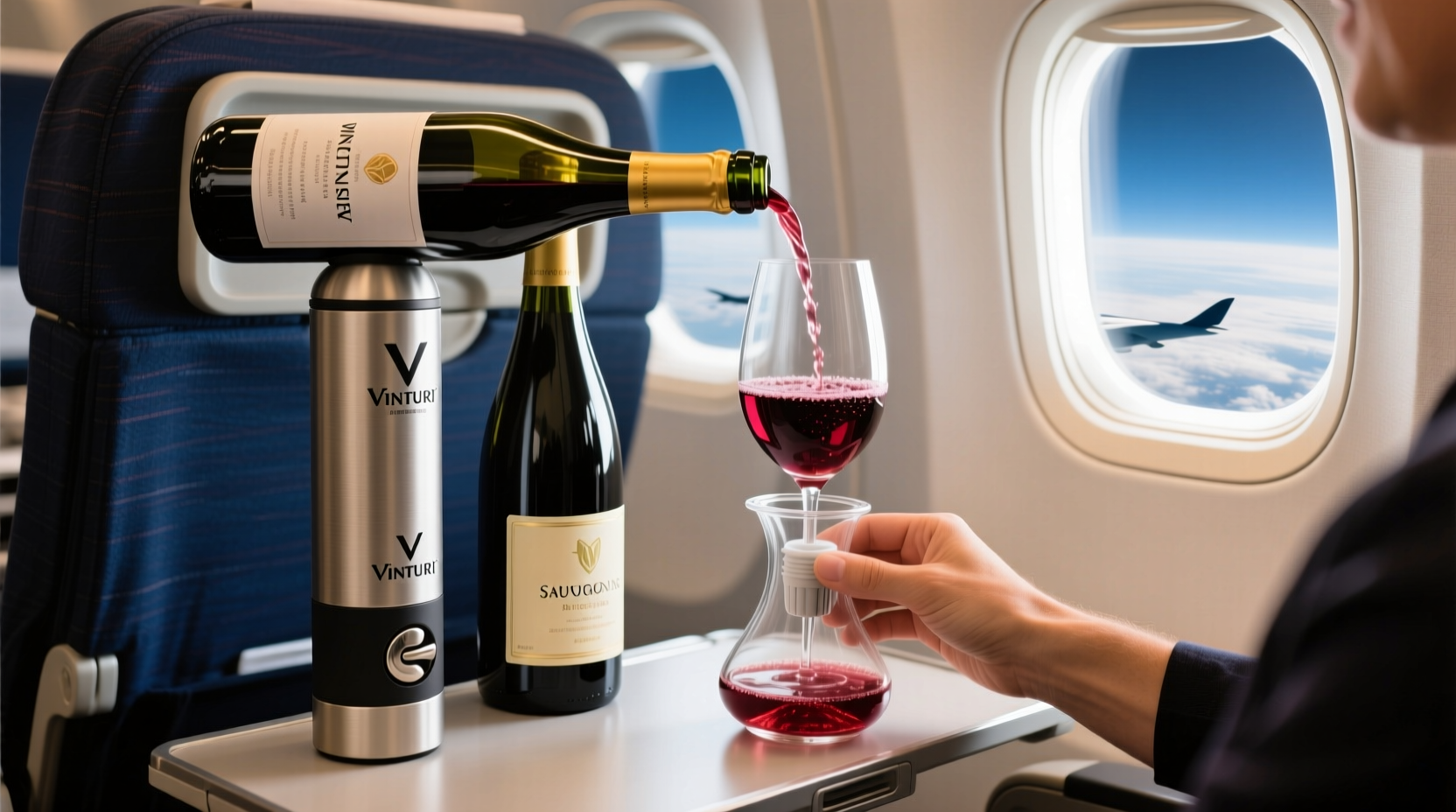
Commercial aircraft cabins are pressurized to simulate an altitude of 6,000–8,000 feet—well above sea level but far below actual cruising altitude. While this prevents hypoxia, it triggers measurable physiological shifts. At 6,000 feet, partial oxygen pressure drops roughly 20%, and blood oxygen saturation dips slightly—enough to reduce olfactory sensitivity by up to 30%, according to research published in Physiology & Behavior. Smell contributes 80–90% of what we perceive as “taste,” so diminished aroma detection directly flattens flavor.
Simultaneously, cabin humidity plummets to 10–12%—drier than most deserts. This desiccates nasal mucosa and oral tissues, reducing volatile compound transmission and dulling sweetness and fruit perception. A 2015 study by Lufthansa’s in-house food science team confirmed that under simulated flight conditions, participants rated sweetness intensity 22% lower and acidity 17% higher than in normal environments. Background noise—typically 85 decibels from engines and airflow—further disrupts gustatory processing. Neuroimaging shows loud ambient sound dampens activity in the orbitofrontal cortex, the brain region integrating taste, smell, and texture signals.
The result? Wines lose aromatic lift, fruit expression, and balance. Tannins feel harsher; acidity sharper; alcohol more intrusive. A rich, velvety Malbec can taste thin and sour. A delicate Riesling may vanish entirely on the palate.
Tip: Don’t blame the airline’s wine selection alone—blame the environment. Even exceptional bottles suffer predictable sensory distortion at altitude.Which Wines Fare Best (and Worst) at 35,000 Feet
Not all wines collapse equally under cabin stress. Structural elements—acidity, tannin, alcohol, residual sugar, and aromatic intensity—respond differently to low pressure and dryness. Based on blind tastings conducted by Singapore Airlines’ wine panel across 120+ flights and validated by the University of California, Davis’ Aviation Food Lab, the following patterns hold consistently:
| Wine Style | Performance at Altitude | Why It Works (or Doesn’t) |
|---|---|---|
| Off-dry Riesling (Kabinett or Spätlese) | ★★★★★ | Residual sugar balances perceived acidity; high aromatic volatility (citrus, floral notes) cuts through dryness; low alcohol (under 11%) avoids burn. |
| Sparkling Rosé (dry, with red fruit focus) | ★★★★☆ | Bubbles enhance mouthfeel in dry air; strawberry/raspberry notes remain detectable; acidity provides structure without harshness. |
| Unoaked Chardonnay (Chablis-style) | ★★★☆☆ | Crisp acidity survives well, but mineral notes fade; best when fruit-forward and unoaked—oak amplifies bitterness at altitude. |
| Fruity, low-tannin reds (Beaujolais Nouveau, Valpolicella Classico) | ★★★☆☆ | Low tannin avoids astringency; bright cherry/plum notes persist better than earthy or leathery ones; avoid high-alcohol versions (>13.5%). |
| Full-bodied Cabernet Sauvignon | ★☆☆☆☆ | Tannins become aggressively drying; blackcurrant aromas vanish; alcohol heat dominates; oak compounds taste medicinal. |
| Sweet dessert wines (Sauternes, Tokaji) | ★★☆☆☆ | High sugar helps, but excessive viscosity and low volatility make them cloying and one-dimensional without contrasting acidity. |
This isn’t subjective preference—it’s neurochemical inevitability. As Dr. Hélène Bordenave, sensory scientist at the French National Institute for Agricultural Research, explains: “The human gustatory system evolved at sea level. We haven’t adapted to sustained hypobaric, hypohydric environments. Wine isn’t ‘worse’ in the air—it’s simply being tasted through a compromised biological filter.”
“On a flight, your nose is half-asleep and your mouth is parched. Choose wines that speak loudly and clearly—not those that whisper poetry.” — Master Sommelier Laura Williamson, former beverage director for Emirates Airlines
Your Pre-Flight Adaptation Toolkit: 5 Actionable Strategies
You can’t change cabin pressure—but you *can* prepare your senses, select intelligently, and recalibrate expectations. These aren’t gimmicks. They’re evidence-based interventions used by professional flight attendants and airline sommeliers.
- Hydrate aggressively 24 hours pre-flight. Start hydration before boarding—not during. Dehydration begins long before symptoms appear. Aim for 2.5 liters of water daily starting the day before travel. Avoid diuretics (coffee, alcohol, salty snacks) within 12 hours of departure.
- Rinse your nasal passages 90 minutes pre-flight. Use a sterile saline nasal spray (not decongestants). Dry nasal mucosa is the first barrier to aroma detection. Clinical trials show saline rinsing improves odor threshold sensitivity by 38% in low-humidity environments.
- Choose your wine *after* takeoff—not before. Wait until the seatbelt sign dings off and cabin pressure stabilizes (usually 15–20 minutes post-takeoff). Your palate will still be adjusting during ascent.
- Warm reds slightly before drinking. Airline reds are often served too cold (6–8°C), which further mutes fruit. Let the glass sit in your hands for 2–3 minutes to reach 12–14°C—the sweet spot for aromatic release at altitude.
- Pair strategically—not traditionally. Skip heavy cheeses or charcuterie. Opt for umami-rich, moist foods: miso-glazed edamame, roasted tomato bruschetta, or smoked trout pâté. These stimulate saliva flow and provide textural contrast that reawakens taste buds.
A Real-World Case Study: How Singapore Airlines Revamped Its In-Flight Program
In 2018, Singapore Airlines noticed a 32% drop in premium wine sales across long-haul routes. Passenger surveys cited “flat,” “sour,” or “bitter” tasting notes—even for acclaimed vintages. Instead of blaming suppliers, the airline partnered with the Singapore Institute of Technology’s Sensory Science Lab to run controlled flight-simulated tastings.
They discovered two critical oversights: First, their cellar was storing wines at 14°C—ideal for ground service but too warm for pre-flight chilling, leading to inconsistent serving temperatures. Second, their red wine list leaned heavily on New World Cabernets and Syrahs, which performed worst at altitude.
Within six months, Singapore Airlines implemented three changes: (1) All reds were pre-chilled to 10°C and served in temperature-stabilizing glassware; (2) The red portfolio shifted to 70% lighter styles—Gamay, Frappato, and Cinsault—with explicit tasting notes highlighting “bright red fruit” and “low tannin”; (3) Every flight included a complimentary “palate reset”: chilled green apple slices with a spritz of lemon verbena mist, offered 10 minutes before wine service.
Result? Premium wine sales increased 27% in 12 months. More tellingly, passenger comments shifted from “wine tasted off” to “surprisingly vibrant.” As Senior Beverage Manager Rajiv Mehta noted: “We stopped fighting physics and started designing *with* it.”
FAQ: Addressing Common Misconceptions
Does pressurization damage the wine chemically?
No—cabin pressure doesn’t degrade wine chemistry. Bottles aren’t exposed to rapid decompression, and dissolved CO₂ remains stable. The issue is exclusively sensory: how *you* perceive the wine, not molecular alteration of the liquid itself.
Is sparkling wine always better than still at altitude?
Not universally—but it has advantages. Bubbles create micro-turbulence that lifts volatile aromas, partially compensating for dry nasal passages. However, overly aggressive sparklers (e.g., young Champagne with sharp acidity) can taste shrill. Opt for softer, fruit-forward styles like Crémant d’Alsace or Italian Prosecco Superiore.
Can I bring my own wine onboard?
Most airlines prohibit opening personal alcohol, but many—including Lufthansa, Swiss, and Qatar Airways—allow passengers to purchase duty-free wine pre-flight and request it be served mid-air (for a fee, typically $15–$25). Always confirm policy 72 hours pre-departure and ensure the bottle is sealed with original duty-free tags.
Conclusion: Taste Is Contextual—So Adapt Your Context
Wine isn’t a static object. It’s a dynamic interaction between liquid, vessel, environment, and biology. Dismissing in-flight wine as “just bad” misses the opportunity to engage thoughtfully with one of humanity’s most complex sensory experiences—even under constraint. You don’t need to accept flat Chardonnay or bitter Cabernet as inevitable. With deliberate preparation—hydrating early, choosing wisely, warming reds, resetting your palate—you reclaim agency over your experience. The goal isn’t to replicate a cellar tasting. It’s to discover what *does* work: the zing of a perfectly chilled Riesling cutting through dry air, the effervescence of rosé lifting your mood at 35,000 feet, the quiet satisfaction of a Gamay that tastes unmistakably like summer berries, even when the world outside the window is frozen silence.
Next time you board, skip the automatic “red or white?” choice. Pause. Recall what your senses need right now—and choose the wine that answers that need, not habit. That small act of intention transforms transit into ritual.
💬 Have you found a wine that defies altitude? Share your go-to flight bottle—and why it works—in the comments. Your insight could help fellow travelers savor every mile.