
Running out of poultry seasoning mid-recipe can bring meal prep to a halt—especially when roasting a turkey, simmering stuffing, or preparing a savory casserole. This all-purpose herb blend is a staple in American home kitchens for its warm, earthy aroma and balanced flavor profile that complements chicken, turkey, and other proteins. But what if it's not in your pantry? The good news: poultry seasoning is not an irreplaceable mystery. With a clear understanding of its components and function, you can easily substitute it using common herbs and spices already on hand. Whether you're adjusting for dietary needs, exploring global flavors, or simply improvising with what’s available, knowing the best alternatives ensures your dish maintains depth and authenticity without compromise.
Definition & Overview
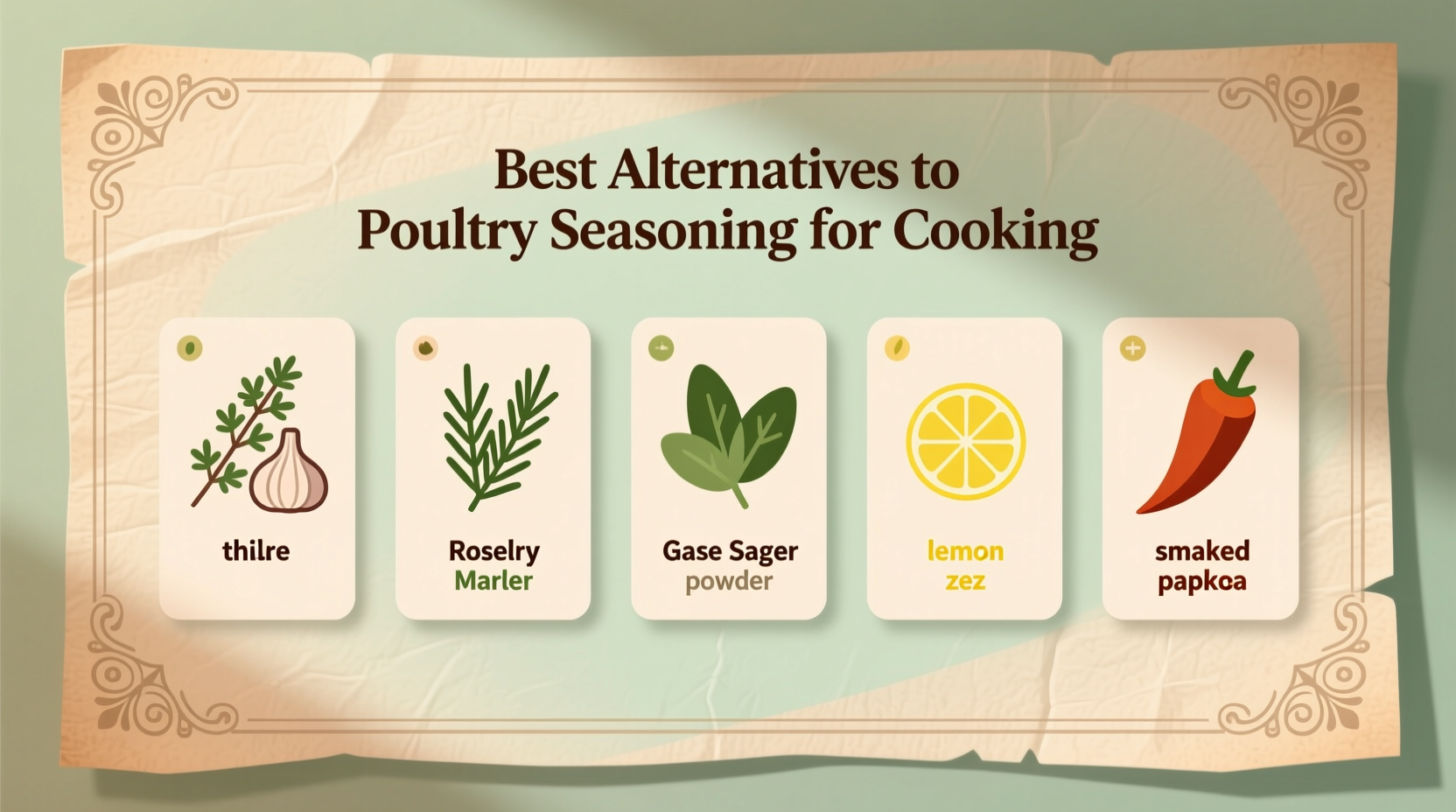
Poultry seasoning is a pre-mixed dried herb and spice blend traditionally used to flavor dishes centered around bird meats—most commonly chicken, turkey, duck, and game birds. Originating in North American home cooking during the 20th century, it became widely popular through commercial brands like McCormick and Badia. While formulations vary slightly by brand, the core ingredients typically include a combination of sage, thyme, marjoram, rosemary, black pepper, nutmeg, and sometimes ginger or onion powder.
The blend serves both functional and sensory roles: enhancing umami richness, balancing fatty notes in dark meat, and contributing to the nostalgic aroma associated with holiday meals. Unlike more aggressive rubs or marinades, poultry seasoning operates as a background enhancer—subtle enough not to overpower, yet complex enough to elevate simple preparations like roasted vegetables, grain stuffings, or soups.
Key Characteristics
| Characteristic | Description |
|---|---|
| Flavor Profile | Earthy, aromatic, mildly peppery with herbal sweetness; dominated by sage and thyme |
| Aroma | Warm, woodsy, slightly camphorous (from rosemary), with hints of citrus (marjoram) |
| Color/Form | Dried green-brown granules or fine powder |
| Heat Level | Mild – no significant spiciness unless extra pepper is added |
| Culinary Function | Seasoning base for poultry, stuffing, gravies, soups, stews, and plant-based meat analogs |
| Shelf Life | 1–2 years when stored in a cool, dark, dry place |
Practical Usage: How to Use Poultry Seasoning and Its Substitutes
In traditional applications, poultry seasoning is rubbed onto whole birds before roasting, mixed into breadcrumb-based stuffing, or stirred into mashed potatoes and vegetable dishes for depth. A standard ratio is 1 to 1½ teaspoons per pound of meat. When substituting, aim for a similar balance of savory, aromatic, and slightly sweet-spicy notes.
For example, when making classic cornbread stuffing, 1 tablespoon of poultry seasoning can be replaced with a custom blend of 2 tsp dried sage, 1 tsp thyme, ½ tsp marjoram, ¼ tsp black pepper, and a pinch each of nutmeg and ground rosemary. This maintains the structural integrity of the original flavor while allowing customization.
Pro Tip: Always add dried herbs early in slow-cooked dishes to allow full flavor infusion. For quick sautés or finishing touches, use fresh herbs instead—3 parts fresh to 1 part dried (e.g., 1 tbsp fresh sage ≈ 1 tsp dried).
Professional chefs often build their own versions rather than rely on store-bought blends, adjusting ratios based on the dish. In restaurant kitchens, a house-made poultry seasoning might include toasted coriander seed for brightness or a touch of sumac for subtle acidity—innovations rarely found in mass-market mixes.
Variants & Types of Poultry Seasoning
While most consumers encounter only one version—typically a standardized grocery-store blend—several variants exist depending on regional preferences, dietary standards, and culinary intent:
- Standard Commercial Blend: Contains MSG, salt, and anti-caking agents; convenient but less nuanced.
- Salt-Free Version: Ideal for low-sodium diets; relies solely on herbs and warming spices.
- Organic/Non-GMO: Made with certified organic herbs; preferred by health-conscious cooks.
- Smoked Poultry Seasoning: Includes smoked paprika or chipotle for barbecue-style applications.
- Global-Inspired Variants: May incorporate lemongrass, turmeric, or fenugreek for fusion cuisine.
Understanding these types helps determine whether a direct substitute is needed or if a creative reinterpretation suits the recipe better. For instance, a Moroccan-inspired chicken tagine wouldn’t benefit from classic poultry seasoning but could thrive with a modified version including cumin and cinnamon.
Best Alternatives to Poultry Seasoning
No single ingredient perfectly replicates the complexity of poultry seasoning, but several effective substitutes deliver comparable results depending on availability and desired outcome.
1. Homemade Poultry Seasoning Blend
The most accurate alternative is making your own blend. This gives complete control over quality, freshness, and flavor intensity.
- 2 tbsp dried rubbed sage
- 1 tbsp dried thyme
- 1 tbsp dried marjoram
- 1 tsp dried rosemary (crushed)
- 1 tsp black pepper
- ½ tsp ground nutmeg
- ½ tsp ground mace or allspice (optional)
- ¼ tsp ground ginger (optional)
Mix thoroughly and store in an airtight container. Use 1 teaspoon per pound of meat. This blend will last up to 18 months but peaks in flavor within 6 months.
2. Individual Herb Substitutions
If blending isn't feasible, individual herbs can stand in with careful adjustment:
- Sage: The dominant flavor in most blends. Use 1 part dried sage where poultry seasoning is called for—but reduce other herbs accordingly to avoid bitterness.
- Thyme: Offers earthy warmth without overwhelming. Combine with sage in a 2:1 ratio (thyme:sage) for balance.
- Marjoram: Sweeter and gentler than oregano; excellent in stuffings and creamy sauces.
- Rosemary: Potent and pine-like; use sparingly (⅓ amount) to avoid dominating the dish.
3. Herbes de Provence
This French herb mix shares several components with poultry seasoning—especially thyme, marjoram, and rosemary—but often includes lavender, which adds floral notes unsuitable for traditional American dishes. To adapt:
Omit lavender-heavy versions or counterbalance with extra sage (½ tsp per tbsp blend). Best used in roasted chicken or vegetable tarts, less ideal for Thanksgiving stuffing.
4. Italian Seasoning
A readily available supermarket staple, Italian seasoning usually contains basil, oregano, thyme, rosemary, and marjoram. It lacks sage and warming spices like nutmeg, so augmentation is key.
To convert: Use 1 tbsp Italian seasoning + ½ tsp dried sage + pinch each of nutmeg and black pepper = equivalent of 1 tbsp poultry seasoning.
5. Fines Herbes (French Fine Herbs)
Typically a mix of parsley, chervil, tarragon, and chives—often fresh. More delicate and suited to eggs, fish, or light sauces. Not a direct replacement for robust poultry dishes unless combined with stronger herbs like sage and thyme.
6. Za’atar
A Middle Eastern blend featuring thyme, sumac, sesame seeds, and sometimes oregano. Offers tanginess from sumac and nuttiness from sesame. Works well with grilled chicken or flatbreads but alters the flavor trajectory significantly.
Use at half strength (½ tbsp za’atar = 1 tbsp poultry seasoning) and pair with additional sage if needed.
7. Creole or Cajun Seasoning (with Adjustments)
These blends are bolder, featuring garlic, onion, paprika, cayenne, and herbs. While not a flavor match, they can work in hearty poultry stews or jambalaya where heat and smokiness are welcome.
To tone down: Reduce by half and omit added salt. Add ½ tsp sage to reintroduce familiar notes.
8. Allspice + Sage Combination
In Caribbean and Southern U.S. cooking, allspice (pimento) is used similarly to nutmeg and cloves. Paired with sage, it mimics the warm backbone of poultry seasoning.
Try: 1 tsp dried sage + ¼ tsp ground allspice + ½ tsp thyme = solid short-term substitute.
Comparison with Similar Ingredients
Many herb blends look interchangeable but serve distinct purposes. Understanding differences prevents misapplication.
| Ingredient | Flavor Profile | Key Differences from Poultry Seasoning | Best Used In |
|---|---|---|---|
| Italian Seasoning | Basil-forward, slightly sweet, herbal | Lacks sage and warm spices; lighter overall | Pasta, pizza, tomato sauces |
| Herbes de Provence | Floral, earthy, perfumed (due to lavender) | More aromatic, less savory; may clash in traditional stuffings | Roasted lamb, ratatouille, grilled vegetables |
| Fines Herbes | Delicate, grassy, mild | No dried robustness; doesn't withstand long cooking | Omelets, butter sauces, garnishes |
| Cajun Seasoning | Spicy, smoky, pungent | Heat-focused; includes chilies and alliums | Gumbos, blackened fish, dirty rice |
| Za’atar | Tangy, nutty, herbal | Acidic due to sumac; textural element from sesame | Flatbreads, hummus swirls, roasted carrots |
\"The secret to successful substitution isn't mimicry—it's understanding function. Ask: What role does this blend play in the dish? Is it background warmth, aromatic lift, or savory depth? Then choose accordingly.\" — Chef Elena Ruiz, Culinary Instructor, Institute of Artisan Foods
Practical Tips & FAQs
Can I use curry powder instead of poultry seasoning?
Only in experimental or fusion contexts. Curry powder introduces turmeric (color), cumin, coriander, and chili—flavors that redefine the dish entirely. Not recommended for classic Western recipes.
Is poultry seasoning gluten-free?
Most commercial blends are, but always check labels. Some manufacturers use fillers or anti-caking agents derived from wheat. Homemade versions are naturally gluten-free.
What’s the difference between poultry seasoning and pumpkin pie spice?
They share nutmeg and sometimes ginger, but pumpkin pie spice is sweet-oriented (cinnamon, clove, allspice), while poultry seasoning is savory. Never interchangeable.
Can I substitute fresh herbs for poultry seasoning?
Yes. Use triple the amount of fresh herbs compared to dried. For 1 tsp poultry seasoning, use 1 tbsp chopped fresh sage-thyme-marjoram mix. Add later in cooking to preserve volatile oils.
How long does homemade poultry seasoning last?
Up to 18 months in an airtight container away from light and moisture. After one year, potency diminishes—revive with a few drops of essential oil (e.g., rosemary extract) or replace entirely.
Can I use poultry seasoning in vegetarian or vegan cooking?
Absolutely. Its flavor profile enhances lentil loaves, mushroom risottos, tofu scrambles, and roasted root vegetables. Many plant-based meat brands actually use similar blends in their formulations.
Why does my poultry seasoning taste bitter?
Overuse of rosemary or burnt sage is the usual culprit. Both herbs turn harsh when overheated or used excessively. Stick to ¼–½ tsp rosemary per tablespoon blend and toast whole spices gently if grinding at home.
Storage Tip: Keep herb blends in amber glass jars with tight lids. Avoid storing above the stove or near windows—heat and sunlight degrade volatile compounds rapidly.
Summary & Key Takeaways
Poultry seasoning, though convenient, is fundamentally a formula—not a necessity. Knowing its composition allows informed substitutions that maintain culinary integrity even when the labeled jar is empty.
- The core of poultry seasoning is **sage**, supported by thyme, marjoram, rosemary, and warming spices like nutmeg and pepper.
- The best direct substitute is a **homemade blend** combining these elements in balanced proportions.
- Common pantry staples like **Italian seasoning** or **herbes de Provence** can work with minor adjustments—especially the addition of sage.
- Global blends like **za’atar** or **Cajun seasoning** offer creative alternatives in context-specific dishes.
- Always consider the **role** of the seasoning: background harmony versus bold statement.
- Fresh herbs require different ratios (3:1 fresh-to-dried) and timing (added later in cooking).
- Store all homemade blends properly to preserve potency and prevent mold or clumping.
Next time you reach for poultry seasoning, ask yourself: Do I need convenience—or do I want control? Building your own blend takes under five minutes and transforms ordinary meals into personalized culinary expressions. Start small, adjust to taste, and keep a labeled jar ready for your next roast, stew, or holiday centerpiece.