Barrel aging transforms cocktails—softening harsh edges, adding complexity, and weaving in layers of vanilla, caramel, spice, and tannin that no simple stir or shake can replicate. Traditionally reserved for distilleries and high-end bars with 55-gallon American oak barrels, this technique has long felt inaccessible to home enthusiasts. But what if you could achieve 80% of the depth—and 100% of the control—with a $12 bag of toasted oak staves and a mason jar?
This isn’t a shortcut. It’s a precision-driven, scalable adaptation rooted in extraction science, widely adopted by craft cocktail labs and informed home mixologists since the early 2010s. Unlike full-barrel aging—which introduces oxygen exchange, evaporation (“the angel’s share”), and unpredictable micro-oxygenation—stave-based aging offers reproducible results, minimal waste, and zero space or sanitation overhead. The key lies not in mimicking the barrel, but in understanding *how* oak compounds dissolve into spirit, and how time, surface area, toast level, and temperature govern that process.
Why Small Oak Staves Work Better Than You Think
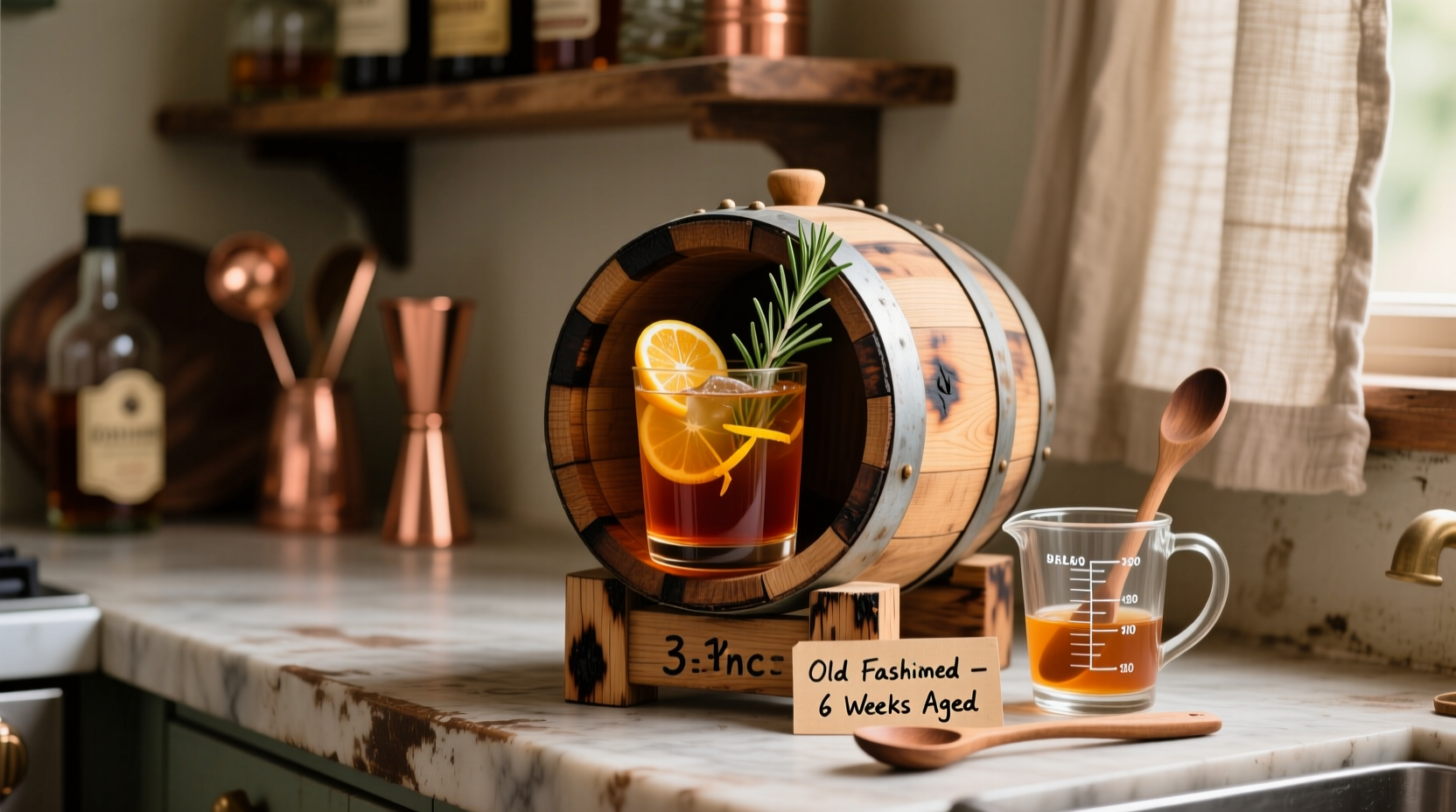
Oak contributes three primary compound families to aged spirits: lignins (which break down into vanillin and eugenol), hemicelluloses (responsible for caramel, toffee, and roasted nut notes), and tannins (providing structure, mouthfeel, and subtle bitterness). In a full barrel, these compounds leach slowly over months due to limited surface-area-to-volume ratio and diffusion barriers. A 1-inch by 1-inch by 6-inch oak stave submerged in 750 mL of liquid increases reactive surface area by over 400% compared to the same volume aged in a standard barrel. That means faster, more controllable extraction—but also greater risk of over-extraction if mismanaged.
Crucially, staves bypass the barrel’s most variable factors: charring inconsistencies, cooperage differences, and ambient humidity swings. You select the wood species, toast level, and cut geometry—then calibrate exposure time to match your base spirit’s strength and profile. A 45% ABV Manhattan extract will behave differently than a 60% ABV rum punch, just as French oak (higher tannin, floral nuance) differs from American white oak (bold vanillin, coconut, drier finish).
Tip: Always use food-grade, untreated oak staves labeled “for beverage aging.” Avoid landscaping-grade wood, which may contain pesticides, glues, or mold inhibitors harmful when infused in alcohol.Selecting & Preparing Your Oak Staves
Not all staves are equal. Here’s how to choose wisely:
- Species matters: American white oak (Quercus alba) delivers bold, sweet, woody notes ideal for whiskey-forward drinks like Old Fashioneds. French oak (Quercus robur or petraea) offers finer grain, higher ellagitannins, and elegant spice—better suited for lighter spirits like gin or blanco tequila.
- Toast level is your flavor dial: Light toast (15–20 minutes at 325°F) emphasizes raw wood, green almond, and subtle vanilla. Medium toast (25–35 minutes) unlocks caramel, cinnamon, and baked apple. Heavy toast (40+ minutes) yields smoke, dark chocolate, espresso, and char—use sparingly, especially with delicate spirits.
- Form factor affects speed: Staves >1 inch wide extract slower and more evenly than chips or cubes. For home use, ½-inch thick × 1-inch wide × 4–6-inch long staves offer optimal balance between control and efficiency. Avoid powder—it extracts too aggressively and clouds liquids irreversibly.
Before use, rinse staves under cool water to remove sawdust, then briefly soak in distilled water for 15 minutes. This hydrates the wood’s cellulose matrix, opening pores for smoother, more uniform compound release. Never boil or sterilize staves—they’re inert once cured, and excessive heat degrades volatile aromatics.
The Precision Aging Timeline: When to Pull the Plug
Timing is the single biggest differentiator between a nuanced, balanced cocktail and one overwhelmed by oak bitterness or medicinal tannin. There is no universal “7 days = perfect.” Extraction follows a logarithmic curve: rapid initial infusion (days 1–3), plateauing complexity (days 4–10), then diminishing returns and rising risk (beyond day 12 for most spirits at 40–50% ABV).
Follow this step-by-step protocol for consistent results:
- Day 0: Combine base spirit(s), vermouth (if using), bitters, and sweetener in a clean 750-mL glass jar. Stir thoroughly to ensure homogeneity. Add 1–2 medium-toast American oak staves (total surface area: ~18–24 in²). Seal tightly.
- Days 1–2: Store at room temperature (68–72°F), away from direct light. Shake gently once daily to agitate and redistribute compounds.
- Day 3: Begin tasting daily—using a clean spoon, never re-dipping. Look for emerging vanilla, softening of ethanol heat, and rounding of acidity. At this stage, most whiskey-based cocktails show clear oak influence but retain vibrancy.
- Days 4–7: Monitor tannin development. A slight astringency is desirable; bitterness or dry, chalky mouthfeel signals over-extraction. If using fortified wine (e.g., sweet vermouth), note its accelerated oxidation—this often peaks around day 5.
- Day 8 onward: Taste twice daily. Once desired profile is reached, immediately remove staves and transfer cocktail to a clean, airtight bottle. Refrigerate if vermouth-based; store at room temp if spirit-forward only.
Temperature accelerates extraction: aging at 78°F cuts optimal time by ~30% versus 68°F. Conversely, refrigeration slows it by 50%. Use this intentionally—if you need a batch ready in 48 hours for a dinner party, raise ambient temp slightly and taste hourly after hour 24.
Do’s and Don’ts of Home Stave Aging
| Action | Do | Don’t |
|---|---|---|
| Wood Selection | Match toast level to spirit intensity: light toast for gin, heavy for rye whiskey | Use the same stave across multiple batches without cleaning—residual oils cause off-flavors |
| Container | Use amber glass jars to block UV light; seal with PTFE-lined lids | Use plastic containers—even food-grade—they can leach chemicals into high-proof alcohol |
| Batch Size | Maintain 1:10 stave-to-spirit surface-area ratio (e.g., 20 in² stave per 750 mL) | Age less than 375 mL in a large jar—excessive headspace invites oxidation |
| Post-Aging | Filter through a paper coffee filter before bottling to remove fine tannin particulates | Assume aging stops once staves are removed—oxidation continues in bottle, especially with vermouth |
| Reusability | Rinse used staves, air-dry fully, and reuse once for lighter applications (e.g., aging simple syrup) | Reuse staves for spirit-forward aging beyond two cycles—extraction yield drops below 15% |
Real-World Example: Sarah’s Neighborhood Bar Takeover
Sarah Chen, a Brooklyn-based bartender and home enthusiast, needed a signature drink for her pop-up “Oak & Rye” night. Her goal: a Manhattan variation with layered spice and zero cloying sweetness. She started with a classic 2:1:2 ratio (rye whiskey:vermouth:sweetener), but found it sharp and unbalanced after two weeks in a mini-barrel.
Switching to staves, she tested three variables across four 375-mL batches: toast level (light vs. medium), stave count (1 vs. 2), and temperature (65°F vs. 74°F). At 74°F with two medium-toast staves, her cocktail hit peak harmony at 112 hours—vanilla and clove emerged cleanly, tannins added grip without bitterness, and the vermouth’s acidity softened just enough. She filtered, bottled, and served it chilled in coupe glasses with a lemon twist. Guests described it as “what a Manhattan dreams of becoming.” More importantly, Sarah replicated the exact profile for her next three events—something impossible with her inconsistent barrel.
“The beauty of stave aging is its fidelity. You’re not chasing a memory of a barrel—you’re engineering a specific sensory outcome, batch after batch.” — David T. Smith, Head Distiller, Leopold Bros., Boulder, CO
Frequently Asked Questions
Can I age cocktails containing citrus juice or dairy?
No. Fresh citrus juice oxidizes rapidly, turning acrid and metallic within 24–48 hours. Dairy or egg whites curdle and spoil under alcohol and oak tannins. Stave aging works exclusively with shelf-stable, high-proof components: spirits, fortified wines (vermouth, Lillet), liqueurs, and stable syrups (gum arabic–based orgedar, blackstrap molasses syrup). For citrus-forward drinks, add fresh juice *after* aging and dilution.
How do I prevent my cocktail from becoming overly woody or bitter?
Bitterness arises from over-extracted ellagitannins and lignin breakdown products. Prevent it by: (1) never exceeding 12 days for base spirits under 55% ABV; (2) using medium (not heavy) toast for most applications; (3) tasting daily starting on Day 3; and (4) removing staves the *moment* you detect drying astringency—not when it becomes unpleasant. Remember: you can always add more oak, but you cannot remove it.
Do I need to sanitize my jar and tools?
Yes—but simply. High-proof alcohol (≥40% ABV) is inherently antimicrobial. Wash jars and utensils in hot, soapy water, rinse thoroughly, and air-dry. Avoid bleach or vinegar rinses: residual traces react with oak compounds and create chlorophenol off-notes (medicinal, band-aid aroma). A final rinse with high-proof spirit (e.g., Everclear) is optional but effective for absolute sterility.
Getting Started: Your First Stave-Aged Batch Checklist
- ☐ Purchase food-grade American white oak staves, medium toast, ½\" × 1\" × 6\"
- ☐ Gather: 750-mL amber glass jar with PTFE-lined lid, digital kitchen scale, thermometer, clean spoons, coffee filter + funnel
- ☐ Prepare base cocktail (spirit-forward, no fresh juice/dairy); chill ingredients to 60–65°F before combining
- ☐ Rinse and soak staves 15 minutes in distilled water; pat dry
- ☐ Add staves to jar, seal, label with date/time/temp, and store in dark cupboard at stable 68–72°F
- ☐ Begin tasting on Day 3—record notes daily: “vanilla present,” “tannin grip increasing,” “heat softened,” etc.
- ☐ Filter and bottle immediately upon hitting target profile; refrigerate if vermouth-based
Barrel-aged cocktails at home aren’t about replicating a distillery’s infrastructure—they’re about reclaiming intentionality. Every element you control—the wood’s origin, its toast, the ambient temperature, the precise moment of extraction—becomes part of the drink’s story. You’re not just making a cocktail; you’re practicing liquid craftsmanship, where patience meets precision and chemistry serves hospitality.
Start small: one jar, one stave, one familiar recipe. Taste not just for “is it ready?” but for “what does this version say about balance, texture, and time?” Document your observations. Adjust one variable next round. Within three batches, you’ll move beyond imitation to innovation—perhaps aging a smoky mezcal with French oak and cherry bark, or softening an agricole rhum with light-toast Limousin staves and orange blossom honey.
💬 Your turn—share your first stave-aged experiment. What spirit did you choose? How many days? What surprised you? Drop your notes in the comments and help build the next generation of home-aged wisdom.