Boiling water is a daily ritual in homes around the world—whether for tea, coffee, instant meals, or sterilizing baby bottles. The two most common tools for this task are electric kettles and stovetop kettles. While both get the job done, they differ significantly in terms of speed, safety, convenience, and energy efficiency. Understanding these differences helps consumers make informed decisions based on their lifestyle, kitchen setup, and safety priorities.
Speed: How Quickly Can Each Kettle Boil Water?
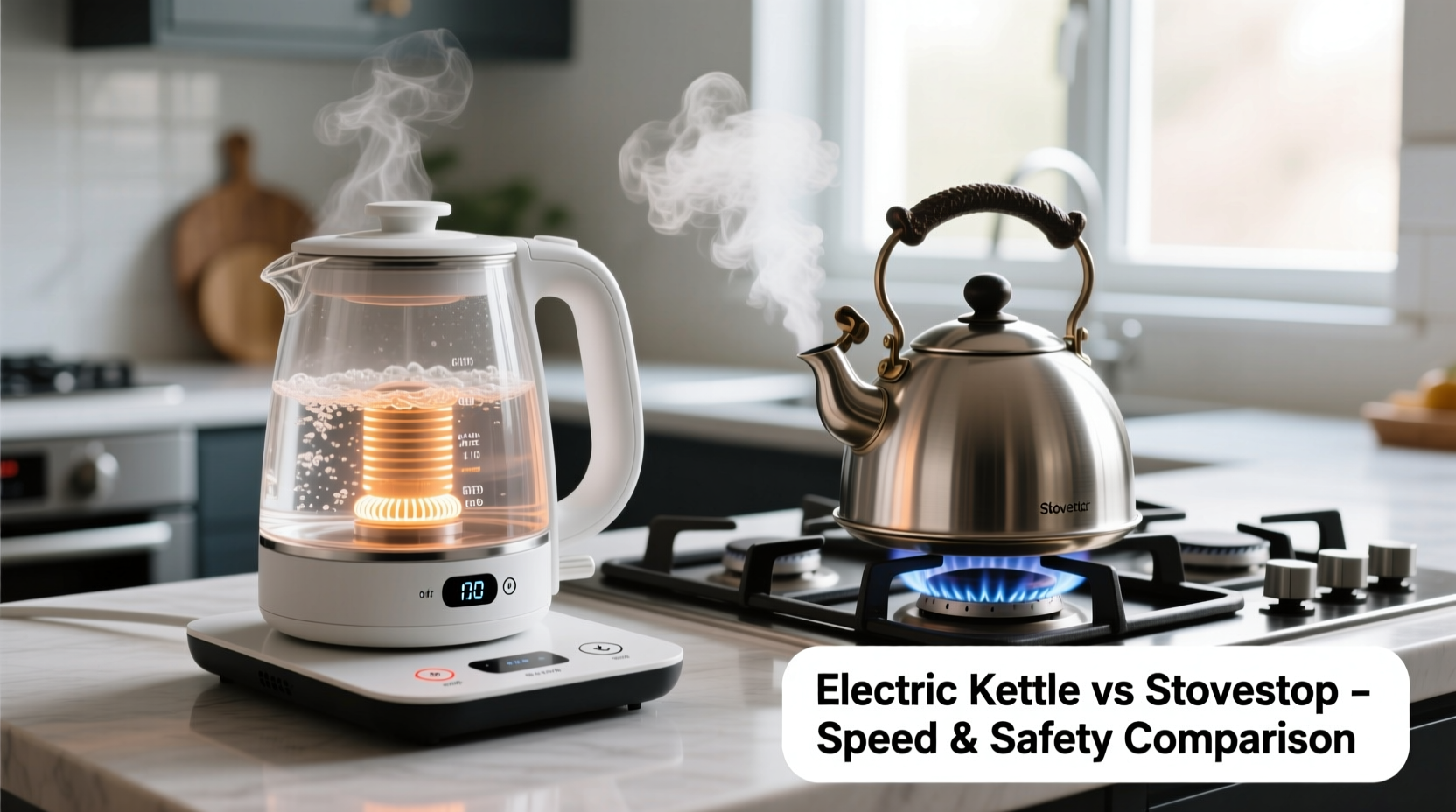
One of the most compelling reasons people choose electric kettles is speed. Modern electric kettles typically boil water in 3 to 5 minutes, depending on the volume and wattage. This rapid heating is due to direct immersion heating elements that transfer energy efficiently into the water.
In contrast, stovetop kettles rely on indirect heat from gas flames or electric coils. Even on high heat, they generally take 7 to 12 minutes to reach boiling, especially if using a lower-efficiency burner. Induction cooktops improve this time slightly—cutting it by nearly 30%—but still lag behind most electric kettles.
Tip: For maximum speed, only boil the amount of water you need. Overfilling adds unnecessary time and energy.The difference becomes more pronounced when comparing models across regions. In the UK and Europe, where standard electric kettles often operate at 2,800–3,000 watts, boiling a liter of water can take under three minutes. North American models, limited by 120-volt outlets, usually max out around 1,500 watts, making them slower but still faster than most stovetop options.
Safety: Which Option Poses Fewer Risks?
Safety is a critical factor, especially in households with children or individuals with limited mobility. Electric kettles have several built-in safety advantages over stovetop models.
Most modern electric kettles feature automatic shut-off mechanisms that activate as soon as the water reaches boiling point. This prevents dry boiling, overheating, and potential fire hazards. Additionally, many include boil-dry protection—if the kettle is switched on without water, it shuts off immediately.
Stovetop kettles, however, require constant monitoring. If left unattended, they can boil dry, damaging the kettle or igniting nearby materials. Whistle kettles alert users when water boils, but this depends on someone being present to hear it. On gas stoves, an open flame adds another layer of risk, particularly in kitchens with flammable items nearby.
“Electric kettles reduce human error through automation. Their integrated safety systems make them inherently safer for everyday use.” — Dr. Linda Tran, Home Appliance Safety Researcher, Consumer Tech Institute
Another safety consideration is handling. Electric kettles are designed with ergonomic handles and spouts that minimize splashing during pouring. Many also offer cordless serving, allowing users to lift the kettle safely away from the base. Stovetop kettles must be lifted directly from the heat source, increasing the risk of burns from hot handles or steam exposure.
Energy Efficiency and Environmental Impact
Efficiency matters not just for cost savings but also for environmental responsibility. Electric kettles are generally more energy-efficient than stovetop alternatives because they deliver heat directly to the water with minimal loss.
A typical electric kettle operates at about 80% efficiency, meaning 80% of the electrical energy consumed goes directly into heating the water. Gas stoves, by comparison, are only about 40% efficient—the rest of the energy dissipates into the surrounding air. Even electric coil stoves hover around 70% efficiency.
| Kettle Type | Heat Source | Typical Efficiency | Time to Boil 1L |
|---|---|---|---|
| Electric Kettle (EU) | 2,800–3,000W | ~80% | 2.5–3.5 min |
| Electric Kettle (US) | 1,200–1,500W | ~75% | 4–6 min |
| Stovetop (Gas) | Open Flame | ~40% | 8–12 min |
| Stovetop (Induction) | Magnetic Field | ~85% | 5–7 min |
| Stovetop (Electric Coil) | Resistive Heating | ~70% | 7–10 min |
While induction cooktops come close to matching electric kettles in efficiency, they are less common and more expensive. For most users, the electric kettle remains the most energy-conscious choice, especially when used mindfully—boiling only what’s needed and unplugging after use.
Real-World Performance: A Mini Case Study
Consider Sarah, a working mother of two in Manchester, UK. Her mornings are hectic—preparing breakfast, packing lunches, and getting kids ready for school. She used to rely on a stainless steel stovetop kettle for her morning tea, but frequently forgot it on the stove, leading to burnt elements and wasted gas.
Last year, she switched to a temperature-controlled electric kettle with keep-warm and rapid-boil functions. Now, she fills it the night before, sets it to boil at 7:15 a.m., and pours her tea within 90 seconds of waking. “It saves me at least five minutes every day,” she says, “and I don’t worry about leaving it on anymore.”
Her experience reflects a broader trend: households prioritizing time, safety, and consistency increasingly favor electric kettles. In Japan and South Korea, where precision brewing temperatures matter for green tea, advanced electric models dominate. Even in rural areas with unreliable electricity, dual-fuel households often reserve electric kettles for peak-use times.
Step-by-Step Guide: Choosing the Right Kettle for Your Needs
Selecting between an electric and stovetop kettle isn’t just about preference—it should align with your cooking habits, kitchen setup, and safety concerns. Follow this decision-making process:
- Assess your power availability: Do you have stable electricity? In areas with frequent outages, a stovetop kettle offers reliability.
- Evaluate your stove type: Gas users may find stovetop kettles sufficient. Induction or electric stove owners might benefit more from switching to electric kettles.
- Consider household members: Are there young children, elderly individuals, or people with mobility issues? Electric kettles reduce burn risks.
- Determine your usage frequency: If you boil water multiple times daily, the speed and efficiency of an electric kettle pay off quickly.
- Check space and storage: Countertop space is limited in small kitchens. Some prefer storing kettles in cabinets, which suits stovetop models better.
- Decide on features: Do you want variable temperature settings, keep-warm modes, or automatic shut-off? These are exclusive to electric models.
- Budget for long-term savings: While electric kettles cost more upfront (typically $30–$100), their energy efficiency reduces utility bills over time.
Common Myths and Misconceptions
Several myths persist about both types of kettles, often clouding consumer judgment.
- Myth: Stovetop kettles heat water more evenly. In reality, both methods produce uniformly heated water suitable for drinking and cooking.
- Myth: Electric kettles use too much electricity. While they draw high wattage, their short run time means total energy consumption is low—often less than running a microwave.
- Myth: All whistling kettles are safe. Whistles alert users, but delayed response can still lead to dry boiling, especially on busy mornings.
- Myth: Plastic electric kettles leach harmful chemicals. Reputable brands use BPA-free, food-grade plastics. Stainless steel or glass models eliminate this concern entirely.
Checklist: What to Look for When Buying a Kettle
Use this checklist to ensure you choose a safe, durable, and efficient kettle:
- ✅ Automatic shut-off feature (electric only)
- ✅ Boil-dry protection
- ✅ Heat-resistant handle and lid
- ✅ Clear water level indicator
- ✅ Cordless serving base (for electric models)
- ✅ Variable temperature settings (ideal for tea enthusiasts)
- ✅ Easy-to-clean interior (avoid hard-to-reach crevices)
- ✅ Trusted brand with safety certifications (UL, ETL, CE)
- ✅ Material compatibility (e.g., stainless steel, glass, or BPA-free plastic)
- ✅ Warranty of at least 1–2 years
Frequently Asked Questions
Can I use an electric kettle on a stovetop?
No. Electric kettles are not designed to withstand direct flame or contact with heating elements. Doing so will damage the kettle and create a serious fire hazard.
Are electric kettles safe to leave plugged in?
Yes, when used correctly. Most have insulated bases and auto-shutoff features. However, it's best practice to unplug them after use to prevent dust buildup and minor energy drain.
Do electric kettles affect water taste?
Some users report a metallic or plastic aftertaste, especially with new kettles. This usually disappears after a few uses. To minimize taste issues, run a vinegar-water cycle before first use and opt for stainless steel or glass models.
Final Verdict: Are Electric Kettles Safer and Faster?
The evidence strongly supports that electric kettles are both faster and safer than stovetop models for boiling water. Their superior heating efficiency, automatic safety features, and user-friendly design make them ideal for modern households. They reduce the risk of accidents, save time, and consume less energy per boil.
That said, stovetop kettles still have their place. They’re dependable during power outages, compatible with all heat sources—including camping stoves—and valued by those who appreciate traditional kitchen tools. For some, the whistle of a stovetop kettle is part of the ritual.
Ultimately, the best choice depends on context. Urban dwellers with electric kitchens, families with young children, or tea lovers seeking precision will likely benefit most from an electric kettle. Rural users, off-grid homes, or those with gas stoves may find stovetop models adequate—or even preferable.
🚀 Ready to upgrade your boiling routine? Evaluate your current setup using the checklist above, and consider testing an electric kettle for one week. You might never go back to waiting by the stove again.