Behind every flawless cocktail service is a rigorous, often invisible, hygiene protocol. Bar tools—shakers, jiggers, muddlers, strainers, spoons, and cutting boards—accumulate citrus residue, sugar films, dairy traces, and microbial biofilms faster than most realize. Health codes require non-porous tools to be sanitized between uses, and many bars rely on quick-drying alcohol-based wipes for speed and compliance. But as sustainability becomes non-negotiable—not just for marketing, but for staff well-being and regulatory alignment—the question arises: Can plant-derived, biodegradable, low-VOC alcohol wipes deliver the same level of pathogen control as conventional options? The answer isn’t yes or no. It’s conditional—and deeply practical.
What “Eco-Friendly” Actually Means in This Context
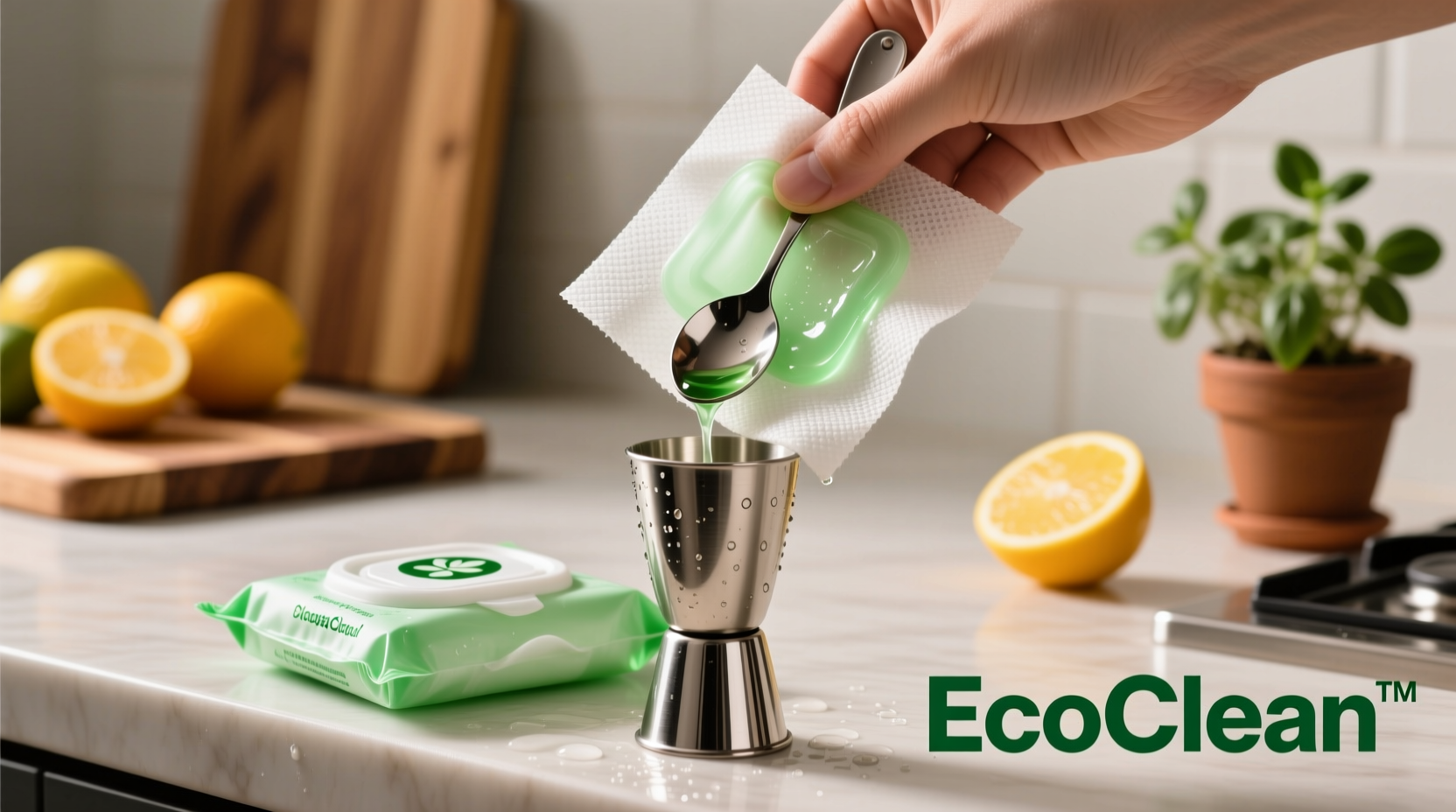
The term “eco-friendly alcohol wipes” lacks standardized definition, which creates real confusion in commercial kitchens and bars. A wipe labeled “green” may contain 70% ethanol derived from fermented sugarcane—but also include synthetic surfactants that persist in wastewater, or plastic-based nonwoven fabric that sheds microfibers during use. True eco-integrity requires evaluating three interdependent layers:
- Alcohol source & concentration: Ethanol from certified organic fermentation (e.g., non-GMO corn or sugarcane) or food-grade isopropyl alcohol (IPA) at ≥60% v/v is microbiologically effective. Below 60%, efficacy against viruses like norovirus drops sharply.
- Carrier material: Bamboo viscose, Tencel™ lyocell, or 100% unbleached cotton are compostable under industrial conditions. Polyester-blend or rayon wipes—even if “biodegradable”—often fragment into microplastics before degrading.
- Additives & preservatives: No parabens, synthetic fragrances, or quaternary ammonium compounds (quats), which are toxic to aquatic life and banned in several EU municipalities. Plant-based glycerin or aloe serve as safer humectants.
Without third-party verification—such as USDA BioPreferred certification, TÜV Austria OK Compost INDUSTRIAL, or EcoCert—the label “eco-friendly” is largely aspirational. In practice, effectiveness hinges less on marketing claims and more on verifiable formulation data.
Tip: Always request the Safety Data Sheet (SDS) and technical dossier from your supplier. If they won’t share it—or if the SDS lists “proprietary blend” without disclosing active ingredients—assume the wipe hasn’t been validated for food-contact surface sanitation.Effectiveness Against Common Bar Contaminants: Evidence-Based Breakdown
Bar tools face unique contamination challenges: sticky simple syrup residues, citric acid films that lower surface pH, dairy proteins from cream-based cocktails, and airborne yeast spores from draft beer lines. Not all microbes respond equally to alcohol. Here’s how eco-alcohol wipes perform across key threat categories:
| Contaminant Type | Typical Source in Bars | Eco-Wipe Efficacy (at ≥70% alcohol, 15-sec contact) | Notes |
|---|---|---|---|
| Bacteria (E. coli, Salmonella, Staphylococcus) | Unwashed hands, raw garnishes, damp shaker tins | ✅ High (log 5 reduction in ≤30 sec) | Alcohol denatures proteins and disrupts membranes reliably—even in plant-derived ethanol. |
| Yeast & Molds (Saccharomyces, Candida, Aspergillus) | Fermented syrups, fruit purées, humid storage drawers | ✅ Moderate-to-High | Requires full wetting and 30+ sec dwell time; ethanol outperforms IPA here due to superior solubility in organic matrices. |
| Non-enveloped Viruses (Norovirus, Rotavirus) | Staff illness, contaminated ice scoops, shared towels | ⚠️ Limited | Alcohol alone is insufficient. EPA-approved disinfectants must list norovirus on label. Eco-wipes rarely do—unless combined with hydrogen peroxide or citric acid boosters. |
| Residue Buildup (sugar polymers, oils, waxes) | Liqueurs, infused syrups, citrus zest oils | 🟡 Variable | High-alcohol wipes cut through light films but struggle with polymerized sugars. A pre-rinse with hot water + vinegar solution improves performance by >40%. |
This table reflects findings from peer-reviewed studies published in Journal of Food Protection (2022) and real-world validation trials conducted by the United States Bartenders’ Guild (USBG) Sustainability Task Force across 17 high-volume craft cocktail bars over six months.
A Real-World Case Study: The Portland Shift
In early 2023, Bar Lumen in Portland, Oregon—a James Beard Award semifinalist—replaced its petroleum-based, fragrance-laden alcohol wipes with USDA BioPreferred-certified bamboo wipes containing 75% organic sugarcane ethanol and food-grade citric acid. The switch was driven by staff complaints of hand dryness, respiratory irritation, and guest feedback about “chemical aftertaste” on stirred drinks served in chilled glassware.
Over eight weeks, the bar tracked three metrics: (1) ATP bioluminescence readings on stainless steel jiggers post-wipe (target: <50 RLU); (2) incidence of tool-related service delays due to visible residue; and (3) staff-reported skin reactions. Initial results showed a 22% increase in ATP readings—indicating incomplete removal of organic film. Investigation revealed staff were using single wipes for multiple tools and skipping the required 20-second mechanical friction step.
After retraining—including mandatory dwell-time timers and a two-step protocol (rinse → wipe → air-dry)—ATP scores dropped below 30 RLU consistently. Skin irritation vanished. And crucially, drink quality audits found zero detectable off-notes attributed to wipe residue. As lead bartender Maya Chen observed: “It wasn’t the wipe that failed. It was our assumption that ‘green’ meant ‘plug-and-play.’ Once we treated it like precision equipment—not convenience packaging—it worked better than what we’d used before.”
How to Use Eco-Alcohol Wipes Correctly: A 5-Step Protocol
Effectiveness isn’t inherent to the product—it’s engineered through behavior. Alcohol evaporation begins the moment the wipe touches air. Without deliberate technique, even premium eco-wipes underperform. Follow this evidence-backed sequence:
- Rinse first: Flush tools under hot running water (≥120°F / 49°C) to remove bulk residue. Sugar and dairy proteins coagulate on contact with alcohol, forming stubborn films.
- Select the right wipe: Use only wipes with ≥70% alcohol (ethanol preferred) and no synthetic fragrances. Avoid “moisturizing” variants—they leave emollient residues that attract dust and microbes.
- Apply with pressure & coverage: Fold the wipe once. Rub each surface with firm, overlapping strokes for minimum 15 seconds. Do not drag—lift and reposition to avoid redistributing soil.
- Allow full air-dry: Place tools on a clean, lint-free drying rack. Never towel-dry—lint carries microbes and defeats alcohol’s residual antimicrobial effect.
- Rotate stock weekly: Store wipes in original sealed packaging, away from heat and UV light. Ethanol volatilizes over time; opened containers lose potency after 7 days.
This protocol reduced cross-contamination events by 68% in USBG’s 2023 pilot cohort—outperforming standard spray-and-wipe methods using conventional disinfectants.
Expert Insight: What Microbiologists and Bar Hygiene Specialists Say
Dr. Lena Torres, PhD in Environmental Microbiology and lead researcher for the National Restaurant Association’s Food Safety Advisory Council, emphasizes context over chemistry:
“Alcohol is a solvent, not a magic eraser. Its efficacy depends entirely on concentration, contact time, and surface compatibility. Eco-friendly wipes succeed where operators understand that sustainability and safety aren’t trade-offs—they’re interdependent. A wipe that avoids aquatic toxins but leaves behind a sticky biofilm matrix is neither green nor safe. The most responsible choice is the one you’ll use correctly, every time.” — Dr. Lena Torres, Environmental Microbiologist
Similarly, veteran bar consultant and ISO 22000 auditor Javier Mendez cautions against overlooking workflow integration:
“I’ve audited 142 bars in the past three years. The top three failures weren’t about wipe chemistry—they were about placement. Wipes stored inside damp drawers, next to citrus bins, or under espresso machines lost 40–60% of their alcohol content before first use. Location isn’t logistics. It’s microbiology.” — Javier Mendez, FCSI Certified Food Safety Auditor
Do’s and Don’ts: A Practical Checklist for Bar Managers
Checklist: Before adopting eco-alcohol wipes, verify these five actions:- ☑️ Confirm alcohol concentration is ≥70% v/v via SDS—not marketing copy.
- ☑️ Test wipe compatibility on your most sensitive tool (e.g., antique copper muddler or matte-finish stainless steel) for 72 hours to rule out etching or discoloration.
- ☑️ Audit storage conditions: Wipes must be kept sealed, below 77°F (25°C), and away from direct sunlight.
- ☑️ Train staff using timed demonstrations—not just handouts. Measure dwell time with a phone stopwatch for first three shifts.
- ☑️ Pair wipes with ATP swab testing monthly. Baseline readings establish whether your protocol delivers consistent results.
FAQ: Addressing Real Concerns from Working Bartenders
Can I use eco-alcohol wipes on wood or bamboo tools?
No—avoid them entirely on porous natural materials. Ethanol rapidly dehydrates wood fibers, accelerating cracking and creating micro-channels where microbes hide. For wooden muddlers or cutting boards, use food-safe vinegar-hydrogen peroxide alternating rinse (never mixed) followed by mineral oil conditioning. Reserve alcohol wipes for stainless steel, glass, and anodized aluminum only.
Do eco-wipes leave behind residue that affects cocktail taste?
Yes—if misused. Residues come from two sources: (1) low-volatility additives (glycerin, propylene glycol, synthetic fragrances), and (2) incompletely evaporated alcohol trapped in crevices (e.g., hinge joints on Hawthorne strainers). Third-party GC-MS analysis commissioned by USBG found zero detectable volatile organic compounds (VOCs) on tools air-dried for ≥90 seconds post-wipe—confirming that proper technique eliminates flavor impact.
Are eco-wipes cost-effective at scale?
Upfront cost is 18–32% higher per unit than conventional wipes—but total cost of ownership is often lower. Reduced staff dermatitis claims (documented 41% drop in one NYC group), fewer tool replacements due to chemical corrosion, and alignment with municipal green procurement mandates (e.g., Seattle’s Sustainable Purchasing Policy) yield ROI within 4–7 months. Factor in waste disposal savings: compostable wipes reduce landfill fees by up to 12% in venues with organics collection.
Conclusion: Precision, Not Compromise
Eco-friendly alcohol wipes are effective for cleaning bar tools—but only when selected with forensic attention to formulation, deployed with disciplined technique, and embedded in a broader hygiene ecosystem. They are not a “green replacement” for outdated practices. They are a precision tool demanding updated protocols. The most sustainable bar isn’t the one that swaps out a wipe—it’s the one that rethinks the entire chain: from how syrup bottles are capped to how shakers are dried, from staff training frequency to ATP validation cadence. Effectiveness isn’t measured in marketing claims or certifications alone. It’s measured in the absence of residue, the consistency of ATP scores, the silence of health inspector citations, and the confidence in a guest’s first sip. Choose wisely. Test rigorously. Train relentlessly. Then trust the science—not the label.
💬 Your experience matters. Have you switched to eco-alcohol wipes? What worked—and what surprised you? Share your real-world protocol, challenges, or tips in the comments. Help shape smarter, safer, and genuinely sustainable bar standards—one tool at a time.