
At first glance, a beer keyring might seem like an odd fusion of novelty and function—a tiny metal slab shaped like a beer bottle or can, clipped to your keys, occasionally used to crack open a cold one. But peel back the surface, and you’ll find a surprisingly nuanced debate: are these gadgets simply over-engineered bottle openers, or do they serve a distinct purpose beyond prying caps off glass?
The answer isn’t as straightforward as it seems. While every beer keyring includes a bottle opener, many go further—embedding features like flathead screwdrivers, hex bits, or even emergency glass breakers. Their design often leans into branding, nostalgia, or collectibility. So calling them “bottle openers with extra steps” risks overlooking their cultural weight, minimalist engineering, and subtle utility in everyday carry (EDC) culture.
The Anatomy of a Beer Keyring
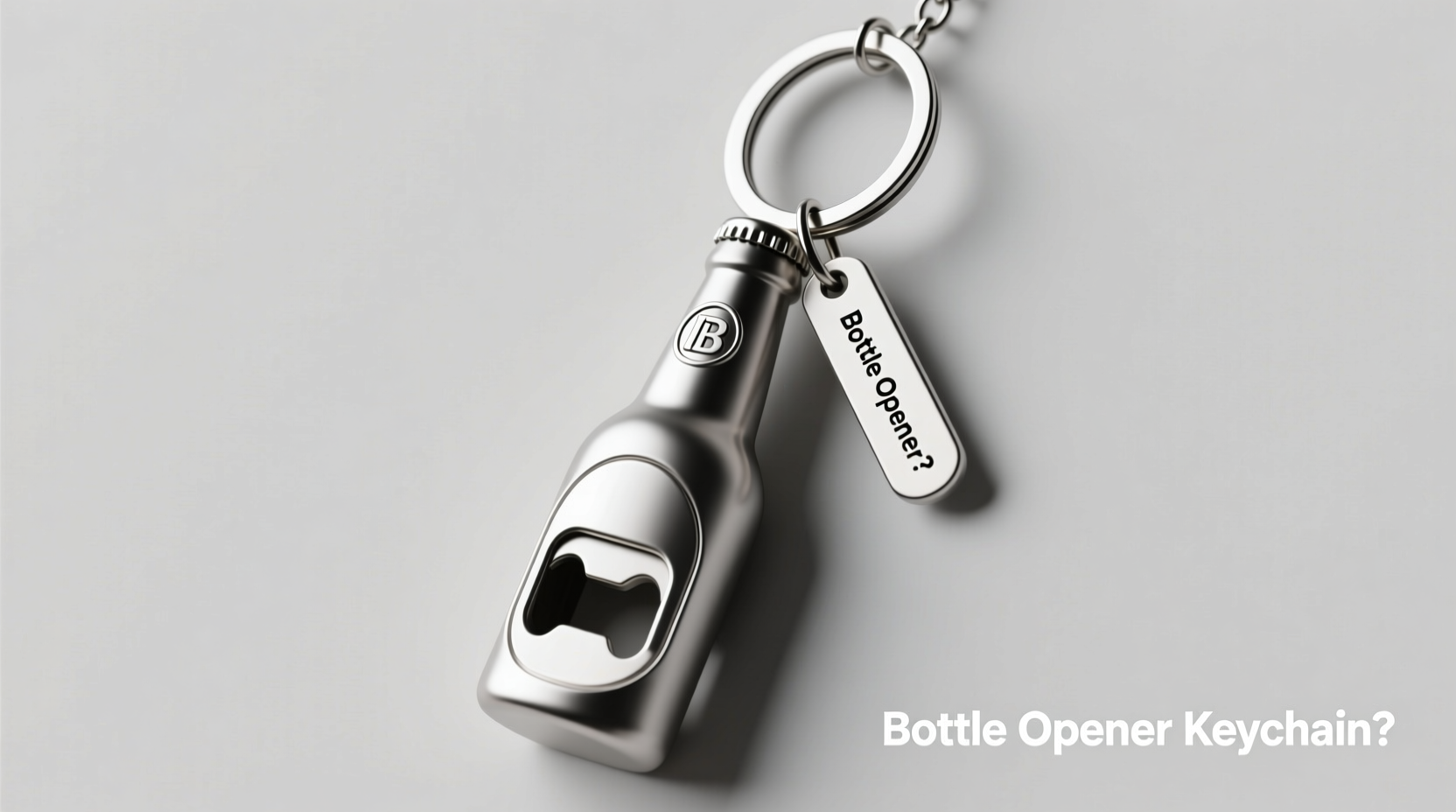
A typical beer keyring measures between 2 to 4 inches and weighs under an ounce. Most are made from stainless steel, aluminum, or zinc alloy for durability without bulk. The core feature is almost always a built-in bottle opener—usually integrated into a corner or edge. Beyond that, designs diverge significantly.
Some models replicate full beer bottles, complete with embossed labels and realistic caps. Others mimic cans, tap handles, or brewery logos. These aren’t just tools; they’re wearable memorabilia. A Pabst Blue Ribbon keychain isn’t merely functional—it’s a statement, a piece of brand loyalty carried on a key fob.
Yet functionality hasn’t been entirely sacrificed for aesthetics. Many modern beer keyrings include:
- Integrated flathead screwdrivers
- Hex wrench compatibility (e.g., for bike repairs)
- Carabiner-style clips for attachment
- Textured edges for grip during use
- Embossed measurements (inches/cm) for quick reference
Bottle Openers vs. Beer Keyrings: A Functional Breakdown
Not all bottle openers are created equal, and not all keychain tools labeled as \"beer keyrings\" deserve the title. To clarify the distinction, consider this comparison:
| Feature | Standard Bottle Opener Keychain | Beer-Themed Keyring |
|---|---|---|
| Primary Function | Opening bottles | Opening bottles + brand expression |
| Design Focus | Utility-first | Aesthetic + light utility |
| Material Quality | Often basic metal | Variably high-grade alloys |
| Additional Tools | Rare | Common (screwdriver, ruler, etc.) |
| Collectibility | Low | High (limited editions, regional brews) |
The data suggests beer keyrings occupy a hybrid space. They’re more than just openers—they’re identity markers. Yet in pure functional terms, a minimalist titanium bottle opener will outperform most novelty versions in leverage and ergonomics.
“People don’t buy beer keyrings because they need another way to open a bottle. They buy them because they want to carry a piece of a moment—the concert, the brewery tour, the friend group ritual.” — Marcus Lin, EDC Product Designer
Real-World Use Case: The Festival Goer’s Dilemma
Consider Alex, a regular at outdoor music festivals where coolers are allowed but glass is banned. He carries a backpack with cans, a foldable chair, and his keys—on which hangs a small, can-shaped keyring from a local craft brewery.
During the day, he uses the keyring’s edge to tighten a loose tent stake (thanks to its flathead bit). Later, when cracking open a drink, he uses the opener notch. After dark, he notices a friend struggling with a jammed water bottle cap. Alex flips the keyring and uses the serrated edge to grip and twist it free.
In this scenario, the beer keyring wasn’t just a bottle opener. It was a micro-tool solving multiple minor problems. Was it *designed* for those tasks? Probably not. But its multi-edge construction made improvisation possible—something a plain opener couldn’t offer.
When Simplicity Wins: The Minimalist Argument
Critics argue that most beer keyrings add complexity without meaningful benefit. A dedicated bottle opener keychain weighs less, has better leverage, and avoids the awkward bulk of a miniature beer can dangling from your pocket.
True minimalists prefer tools like the Wedge Wallet Bottle Opener or Strongarm Keychain Tool—devices engineered solely for efficient cap removal. These often feature ergonomic angles, knurled grips, and low-profile shapes that don’t snag.
So yes, if your only goal is opening bottles quickly and comfortably, a beer keyring is likely “a bottle opener with extra steps.” Its shape may reduce torque, its edges might dig into your fingers, and its aesthetic focus can compromise material strength.
But reducing any object to its single most obvious function misses broader human behaviors. We don’t just use tools—we attach meaning to them. A bottle opener shaped like a Coors Light can evokes memories of mountain hikes and campfire beers. That emotional utility matters.
How to Choose a Beer Keyring That Actually Works
If you're going to carry one, make it count. Here’s a checklist to ensure yours pulls double duty:
- Check the opener angle: Should allow wrist clearance when lifting the cap.
- Test the weight: Anything over 1.5 oz becomes noticeable on a keychain.
- Look for secondary functions: Screwdriver tip, ruler markings, or hex socket fit.
- Verify material: Stainless steel resists rust better than zinc alloy.
- Evaluate attachment: A rotating bail or carabiner clip reduces strain on other keys.
- Assess brand authenticity: Officially licensed brewery merch often uses higher-quality dies.
FAQ: Common Questions About Beer Keyrings
Can a beer keyring really open bottles effectively?
Yes, but effectiveness varies. Well-designed models with a deep fulcrum notch and sturdy pivot point work reliably. Cheaper versions may bend or slip, especially on stubborn caps.
Are beer keyrings worth collecting?
For enthusiasts, absolutely. Limited-run keyrings from breweries like Sierra Nevada, Founders, or Guinness have resale value and serve as souvenirs. Some collectors display them like pins or patches.
Do they damage bottle caps?
Poorly designed ones can crumple or shear caps, especially if the opener edge is too thin or misaligned. High-quality versions typically preserve cap integrity, making them suitable for reuse or bottle-cap crafts.
Conclusion: More Than Just a Gimmick
Calling beer keyrings “bottle openers with extra steps” oversimplifies their role. Yes, they perform the same basic mechanical task. But they also serve as tokens of experience, conversation starters, and surprisingly versatile micro-tools. In skilled hands, that little metal can does more than pop tops—it bridges memory, utility, and personal expression.
They won’t replace a dedicated multitool or a well-crafted EDC opener. But they fill a niche: lightweight, meaningful, and quietly capable. For the traveler, the festival-goer, the craft beer lover, or the nostalgic collector, a beer keyring isn’t redundant. It’s relevant.
💬 What’s on your keychain? Share your favorite beer keyring or EDC tool—and why it earns its spot.