
For years, fermented functional beverages have held a prominent place in wellness routines—especially among those seeking natural support for digestion, immunity, and metabolic balance. Two standouts dominate the conversation: apple cider vinegar (ACV) drinks and kombucha. Both are widely available, heavily marketed, and often praised anecdotally—but their mechanisms, scientific backing, and sensory experiences differ significantly. This article cuts through the noise with clinical context, real-world usability, and honest taste assessments—not hype.
What Each Beverage Actually Is—And How They’re Made
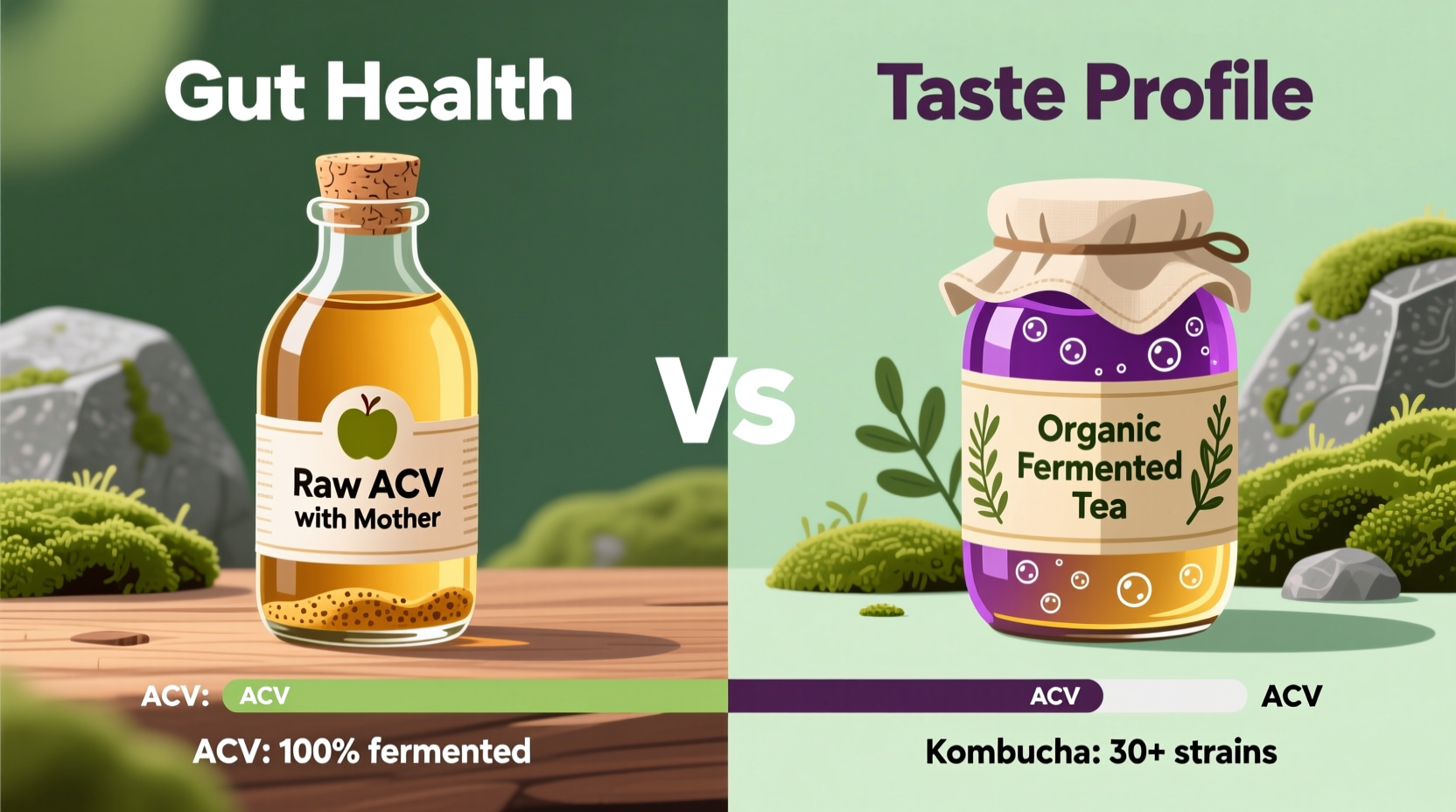
Understanding origins clarifies function. Apple cider vinegar is a product of double fermentation: first, crushed apples ferment into hard cider (yeast converts sugars to alcohol); then, acetic acid bacteria convert that alcohol into acetic acid—the primary active compound. Raw, unfiltered ACV contains the “mother”: a cloudy, enzymatic biofilm rich in proteins, enzymes, and beneficial bacteria.
Kombucha, by contrast, is a symbiotic culture of bacteria and yeast (SCOBY) fermenting sweetened tea—typically black or green—for 7–21 days. Its microbial profile includes Acetobacter, Gluconobacter, Lactobacillus, Bifidobacterium, and yeasts like Saccharomyces. Unlike ACV, which is standardized around acetic acid concentration (5–6%), kombucha’s composition varies widely by brewer, temperature, time, and starter culture.
This foundational difference dictates everything that follows: microbiological diversity, acidity level, sugar content, and physiological impact.
Gut Health Impact: Mechanisms, Evidence, and Limitations
Both beverages are promoted for gut health—but their pathways diverge sharply.
ACV’s primary contribution lies in its acetic acid content. Studies show acetic acid can slow gastric emptying, modestly improve postprandial glucose response, and exert antimicrobial effects against pathogens like Escherichia coli and Staphylococcus aureus. However, human trials on gut microbiota modulation are sparse. A 2022 pilot study in Nutrients found no significant shifts in fecal bacterial diversity after 4 weeks of daily diluted ACV (15 mL in water), though participants reported reduced bloating and improved stool consistency—likely due to gastric pH modulation rather than probiotic colonization.
Kombucha, meanwhile, delivers live microbes—though not all survive gastric transit. A 2023 analysis in Frontiers in Microbiology confirmed viable Lactobacillus and Acetobacter strains in commercial refrigerated kombucha, but viability dropped by >90% after simulated stomach acid exposure. Still, kombucha provides prebiotic substrates (glucuronic acid, organic acids, polyphenols from tea) that feed resident gut bacteria. Human data remains limited but promising: a small 2021 randomized trial showed increased Bifidobacterium abundance and reduced intestinal permeability markers in adults consuming 330 mL/day for 8 weeks.
“The distinction matters: ACV is primarily a prebiotic-acid modulator; kombucha is a low-dose, multi-strain probiotic vehicle with metabolic byproducts. Neither replaces evidence-based probiotics for clinical indications like antibiotic-associated diarrhea.” — Dr. Lena Torres, Gastrointestinal Nutrition Researcher, Tufts UniversityTip: If you're taking proton-pump inhibitors (PPIs) or have Barrett’s esophagus, consult your physician before regular ACV use—its acidity may exacerbate mucosal irritation.
Taste, Texture, and Sensory Realities
Taste drives adherence—and here, expectations rarely match reality.
ACV drinks are intensely sour and pungent. Even diluted (1–2 tsp in 8 oz water), they deliver sharp volatile acidity, a lingering vinegary bite, and subtle fruity esters if raw and unpasteurized. Flavored versions (with ginger, lemon, or honey) mask but don’t eliminate the dominant note. Most people acclimate over 1–2 weeks—but 30% discontinue use within 5 days due to palatability alone, per a 2023 consumer survey by the Functional Beverage Institute.
Kombucha offers far greater sensory range. Traditional brews are tart, effervescent, and mildly sweet—with notes of green apple, white grape, or earthy umami. Flavored variants (blueberry basil, hibiscus mint, juniper citrus) leverage the base’s acidity as a canvas. Carbonation levels vary: homebrews tend to be gently fizzy; commercial cold-killed versions lose effervescence unless force-carbonated. Importantly, residual sugar remains: most store-bought brands contain 4–12 g per 12 oz serving—often masked by acidity and botanicals.
| Characteristic | Apple Cider Vinegar Drink | Kombucha |
|---|---|---|
| pH Range | 2.4–3.0 | 2.7–3.5 |
| Typical Acetic Acid | 5–6% (undiluted); ~0.25% when diluted | 0.5–1.5% (varies by batch) |
| Live Microbes | Low diversity; mostly acetic acid bacteria (in raw ACV) | Moderate diversity; lactic acid bacteria, yeasts, acetic acid bacteria |
| Residual Sugar (per 12 oz) | 0 g (if plain water dilution) | 4–12 g (unless labeled “low sugar”) |
| Calories (per 12 oz) | 3–5 kcal | 30–60 kcal |
| Key Bioactive Compounds | Acetic acid, chlorogenic acid, gallic acid | Glucuronic acid, D-saccharic acid-1,4-lactone, polyphenols, B vitamins |
Practical Usage: When to Choose Which—and How to Use Them Safely
Neither beverage is universally appropriate—and timing, dosage, and preparation profoundly affect outcomes.
For ACV drinks: Best used *before* meals (15–20 minutes prior) to support gastric acid signaling and glycemic moderation. Never consume undiluted—this risks esophageal erosion and dental enamel demineralization. Always rinse mouth with water afterward. Start with 1 tsp in 8 oz water; increase only if well tolerated after 5 days.
For kombucha: Best consumed with or after meals to aid digestion without suppressing natural gastric acid. Refrigerated, unpasteurized varieties retain maximal microbial viability. Avoid heating or mixing with hot liquids. Consume within 7 days of opening to prevent secondary fermentation and excessive carbonation buildup.
A realistic scenario illustrates the difference: Maya, 42, experienced post-meal bloating and sluggish energy. She tried ACV before breakfast for two weeks—reporting sharper hunger cues and less mid-morning fatigue, but persistent gas. Switching to 4 oz of plain ginger-kombucha with lunch improved her bowel regularity and reduced abdominal distension within 10 days. Her gastroenterologist noted her low-grade SIBO symptoms responded better to kombucha’s broader microbial metabolites than ACV’s narrow acid effect.
Step-by-Step: Building a Sustainable Routine Without Overload
- Week 1: Assess tolerance. Try ACV (1 tsp in water, before breakfast) OR kombucha (4 oz, with lunch)—not both. Track digestive symptoms, energy, and oral comfort for 7 days.
- Week 2: Optimize timing and dose. If well-tolerated, adjust: ACV → max 2 tsp before largest meal; kombucha → up to 8 oz daily, split across meals. Discontinue if heartburn, tooth sensitivity, or new diarrhea emerges.
- Week 3: Evaluate synergy or substitution. If using ACV, add 4 oz kombucha with dinner *only if* no reflux occurs. If using kombucha alone, skip ACV—it adds unnecessary acidity without added benefit for most.
- Week 4: Integrate mindfully. Replace one sugary beverage daily (e.g., soda, juice) with your chosen option. Do not exceed 12 oz kombucha or 2 tbsp ACV total per day.
- Ongoing: Rotate seasonally. In summer, favor lighter kombucha; in winter, lean into warming ACV-ginger infusions. Reassess every 8 weeks—gut needs evolve.
FAQ: Clear Answers to Common Concerns
Can I drink ACV and kombucha together in one day?
Yes—but not simultaneously. Space them at least 2 hours apart. Combining high-acid beverages increases risk of gastric irritation and enamel erosion. Prioritize one as your primary functional beverage; use the other occasionally (e.g., ACV before breakfast, kombucha with dinner twice weekly).
Does pasteurized kombucha still offer gut benefits?
Partially. Pasteurization kills live microbes, eliminating probiotic potential—but organic acids, polyphenols, and glucuronic acid remain intact. These compounds support liver detoxification pathways and provide prebiotic fuel. For immune or microbiome goals, choose raw, refrigerated kombucha labeled “live cultures” and “unpasteurized.”
Is “mother” in ACV the same as a kombucha SCOBY?
No. The ACV mother is a cellulose-based biofilm formed by Acetobacter during fermentation. A kombucha SCOBY is a thicker, gelatinous mat containing multiple bacterial and yeast species cohabiting in symbiosis. They’re taxonomically and functionally distinct—neither can substitute for the other in brewing.
Final Considerations: Beyond the Hype
Neither ACV nor kombucha is a panacea. Their value lies in consistent, context-aware integration—not daily dogma. ACV excels for targeted metabolic support and gentle gastric priming; kombucha shines for microbial diversity exposure and digestive rhythm support. Taste preferences matter deeply: if you dread your morning shot, you won’t sustain it—and sustainability determines real-world benefit more than any lab assay.
Also recognize limits. Neither corrects dysbiosis caused by chronic stress, poor sleep, or ultra-processed diets. Neither replaces fiber-rich whole foods—the true cornerstone of gut health. And neither should be used in place of medical care for diagnosed conditions like IBS-D, SIBO, or GERD without clinician guidance.
What works long-term is simplicity: choose the beverage you enjoy, respect its physiological boundaries, and pair it with foundational habits—adequate sleep, varied plant intake, mindful eating, and movement. That combination creates the terrain where any functional beverage can thrive—not the other way around.
💬 Your experience shapes this conversation. Have you switched from ACV to kombucha—or vice versa—based on gut response or taste? Share what worked (or didn’t) in the comments. Real stories help others navigate beyond the labels.