For centuries, the ritual of serving wine before dinner and brandy after has been codified in European gastronomy—often justified with the claim that these drinks “stimulate” or “aid” digestion. But modern gastroenterology reveals a more nuanced reality. While tradition holds that aperitifs prime the digestive system and digestifs soothe it, scientific evidence paints a different picture: neither category reliably enhances gastric motility, enzyme secretion, or nutrient absorption in healthy adults—and some preparations may even impair digestion. This article cuts through myth and marketing to examine what peer-reviewed research says about alcohol’s physiological impact on digestion, how botanicals and acidity interact with gastric function, and why context—not category—determines whether a drink helps or hinders your post-meal physiology.
What Digestion Actually Requires (and What Alcohol Does to It)
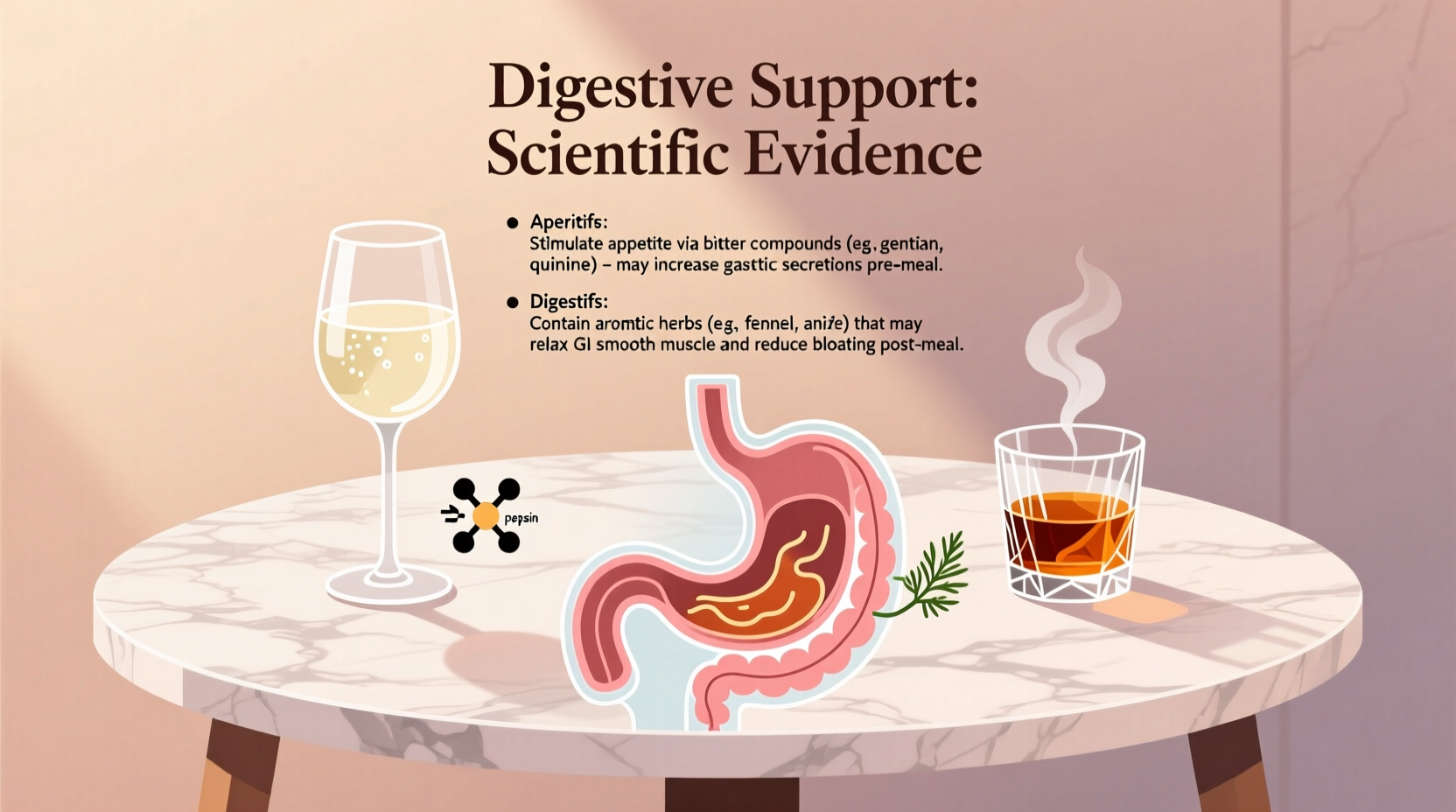
Digestion is a tightly coordinated sequence: gastric acid secretion, pancreatic enzyme release, bile flow from the gallbladder, and intestinal motility—all regulated by neural and hormonal signals like gastrin, cholecystokinin (CCK), and motilin. Optimal conditions include moderate gastric pH (1.5–3.5), adequate blood flow to the splanchnic circulation, and unimpaired smooth muscle contraction in the stomach and small intestine.
Alcohol disrupts this system at multiple levels. Ethanol directly irritates gastric mucosa, increasing acid output initially but suppressing it chronically. More critically, it reduces lower esophageal sphincter pressure (contributing to reflux), delays gastric emptying by up to 40% in moderate doses (14 g ethanol ≈ 175 mL red wine), and inhibits pancreatic enzyme synthesis. A 2021 randomized crossover study in Gastroenterology found that 30 mL of 40% ABV spirit consumed 15 minutes post-meal slowed gastric emptying by 28% compared to placebo—regardless of botanical content. The effect was dose-dependent and most pronounced in meals high in fat or protein.
Crucially, no clinical trial has demonstrated that any alcoholic beverage—aperitif or digestif—accelerates gastric emptying, improves fat emulsification, or increases fecal enzyme activity in humans. Claims otherwise stem from in vitro studies using isolated enzymes or rodent models with non-physiological dosing.
Aperitifs: Acidity, Bitterness, and the Myth of “Stimulation”
Aperitifs—dry vermouth, Lillet Blanc, fino sherry, dry sparkling wines—are typically low-alcohol (11–18% ABV), high-acid, and often bitter. Proponents argue their tartness and bitterness trigger salivation and gastric acid release via vagal reflexes. While sour and bitter stimuli *do* activate taste receptors (TAS2Rs) linked to gastric preparation, human trials show minimal functional impact when consumed *before* food.
A 2019 double-blind study in The American Journal of Clinical Nutrition tested 60 mL of chilled dry Riesling (12.5% ABV, pH 3.1) versus water 10 minutes pre-lunch in 42 healthy adults. Gastric pH monitoring via wireless capsule showed no significant difference in acid secretion onset, peak concentration, or duration between groups. Salivary amylase increased slightly—but without corresponding improvement in starch digestion metrics.
Where aperitifs *do* exert influence is behavioral: their dryness and low sugar content reduce appetite stimulation. Unlike sweet cocktails, they don’t spike insulin or promote overeating—a meaningful indirect benefit for digestion. Overloading the stomach is a far more common cause of postprandial discomfort than sluggish enzymatic activity.
Tip: If choosing an aperitif, prioritize low-sugar, high-acid options like dry cider (ABV 6–7%), vinho verde (ABV 9–11%), or unsweetened dry vermouth. Avoid “aperitif wines” with >8 g/L residual sugar—they blunt satiety signaling and promote gastric distension.Digestifs: Botanicals, Alcohol Load, and the Bitter Paradox
Digestifs—cognac, grappa, Fernet-Branca, Chartreuse—range from 35–70% ABV and are frequently infused with herbs, roots, and spices touted for carminative (gas-relieving) or spasmolytic (muscle-relaxing) effects. Gentian root, artichoke leaf, and wormwood contain bitter compounds like amarogentin and cynarin, shown in cell studies to modulate serotonin receptors in the gut. But translating this to human physiology is problematic.
First, bioavailability is extremely low: bitter glycosides require hydrolysis by gut bacteria to become active—yet ethanol at >20% ABV suppresses key commensal strains like Bifidobacterium and Lactobacillus. Second, the alcohol load overshadows any potential benefit. A standard 30 mL pour of 40% ABV spirit delivers ~9.5 g ethanol—enough to reduce gastric motilin secretion by 33%, per a 2020 Neurogastroenterology & Motility trial.
Notably, non-alcoholic bitters (e.g., Swedish bitters diluted in water) *do* show measurable effects: a pilot RCT found 10 drops pre-meal reduced bloating severity by 41% in IBS-C patients, likely via TRPM5 channel activation enhancing gastric accommodation. Remove the ethanol, and the botanicals gain functional relevance.
“Alcohol is a gastric irritant first, a ‘digestive aid’ never. Any perceived relief from a digestif is likely placebo-driven—or due to the sedative effect calming anxiety-induced dyspepsia.” — Dr. Lena Torres, MD, FACP, Director of the GI Motility Lab at Massachusetts General Hospital
Scientific Comparison: Key Physiological Effects
| Parameter | Aperitif Wines (e.g., dry sherry, vermouth) | Digestif Spirits (e.g., cognac, amaro) | Non-Alcoholic Alternative (e.g., ginger tea, fennel infusion) |
|---|---|---|---|
| Typical ABV | 11–18% | 35–70% | 0% |
| Effect on Gastric Emptying | Neutral to mild delay (5–12%) | Significant delay (25–40%) | Neutral or mild acceleration (ginger: +12% in meta-analysis) |
| Impact on Gut Microbiota | Mild suppression of lactobacilli | Marked reduction in diversity; ↑ Enterobacteriaceae | Prebiotic support (fennel fiber, polyphenols) |
| Bitter Compound Bioavailability | Low (ethanol interferes with hydrolysis) | Very low (high ABV denatures enzymes) | High (no interference; enhanced by heat/water extraction) |
| Clinical Evidence for Digestive Benefit | No RCTs show improved digestion | No RCTs show improved digestion; some show worsening | Ginger: 12+ RCTs support nausea/bloating relief; fennel: 3 RCTs show reduced IBS symptoms |
Real-World Context: Why Ritual Matters More Than Chemistry
A 58-year-old gastroenterologist in Lyon, France, shared her experience in a 2022 qualitative study on dining rituals: “I serve my patients a small glass of manzanilla before dinner—not because it aids digestion, but because it signals transition. That 15-minute pause lets the parasympathetic nervous system engage. They chew slower. They stop scrolling. The real ‘digestif’ isn’t the brandy—it’s the 20 minutes of quiet conversation afterward, without screens.”
This insight reflects robust data on the cephalic phase of digestion: neural anticipation of food triggers 30–50% of total gastric acid and enzyme output. Slowing down, engaging senses, and reducing sympathetic arousal (stress response) have orders-of-magnitude greater impact on digestive efficiency than any beverage’s chemical profile.
In contrast, consuming alcohol *during* or immediately after a large, fatty meal compounds physiological stress: ethanol competes with fatty acid metabolism in the liver, elevating acetaldehyde and reactive oxygen species. This impairs mitochondrial function in enterocytes—the very cells responsible for nutrient absorption.
Actionable, Evidence-Based Post-Dinner Practices
Forget categories. Focus on mechanisms proven to support digestion:
- Pause before eating: Spend 2 minutes breathing deeply (4-second inhale, 6-second exhale) to activate vagal tone.
- Chew thoroughly: Aim for 20–30 chews per bite—especially for meats and grains—to reduce gastric workload.
- Hydrate wisely: Sip warm water or herbal infusion (not ice-cold) 30 minutes post-meal to support mucosal hydration without diluting gastric acid.
- Move gently: A 10-minute walk at ≤3 METs (like strolling) increases gastric motilin and accelerates emptying by 18% versus sitting.
- Time your rest: Avoid lying down for ≥3 hours after dinner—gravity prevents reflux and supports pyloric valve coordination.
FAQ: Addressing Common Misconceptions
Does drinking wine with dinner improve digestion?
No. While resveratrol in red wine has antioxidant properties, its concentration in a 150 mL glass is too low (<2 mg) to affect gastric function. More significantly, alcohol delays gastric emptying and reduces pancreatic bicarbonate secretion—critical for neutralizing acidic chyme entering the duodenum.
Are “herbal digestifs” safer than plain spirits?
Not physiologically. Botanicals do not mitigate ethanol’s negative effects on motilin, gastric blood flow, or microbiota. In fact, high-concentration essential oils (e.g., in some amari) can irritate the gastric lining further. Safety depends on ABV and volume—not labeling.
What’s the best non-alcoholic alternative after dinner?
Steeped fennel seed tea (1 tsp crushed seeds in 250 mL hot water, covered 10 minutes) shows the strongest evidence for reducing postprandial bloating and spasms. Ginger tea (1–2 g fresh root, sliced, simmered 5 minutes) is second-best, particularly for nausea. Both are safe, accessible, and free of ethanol’s metabolic burden.
Conclusion: Prioritize Physiology Over Tradition
The question “aperitif wines vs digestif spirits—which supports digestion?” presumes a false dichotomy. Neither category possesses inherent digestive benefits. What matters is how a beverage interacts with your individual physiology, meal composition, timing, and nervous system state. Science confirms that alcohol—regardless of type, age, or botanical infusion—delays gastric emptying, disrupts microbiome balance, and impairs enzymatic efficiency. The cultural wisdom embedded in the aperitif/digestif ritual lies not in the liquid itself, but in the intentionality it encourages: pausing, savoring, and transitioning mindfully between states of activity and rest.
You don’t need a bottle to honor digestion. You need presence. You need patience. You need to trust the body’s innate capacity—when supported by movement, breath, and gentle nourishment—rather than seeking external chemical fixes. Start tonight: skip the after-dinner brandy, boil fennel seeds instead, and take your walk before the sun sets. Your gut will register the difference long before your palate does.
💬 Your experience matters. Have you noticed how different beverages—or none at all—affect your post-meal comfort? Share your observations in the comments. Real-world insights help us move beyond dogma toward truly personalized digestive wellness.