Many home cooks assume anise seeds and star anise are interchangeable—after all, both deliver a distinct licorice-like flavor. But despite their similar taste profiles, these two spices differ significantly in botanical origin, physical form, intensity, culinary application, and cultural usage. Confusing one for the other can subtly or dramatically alter the outcome of a dish. Understanding their distinctions is essential for precision in baking, savory cooking, spice blending, and global cuisine. This guide clarifies the core differences, explores their individual characteristics, and provides practical guidance on when and how to use each correctly.
Definition & Overview
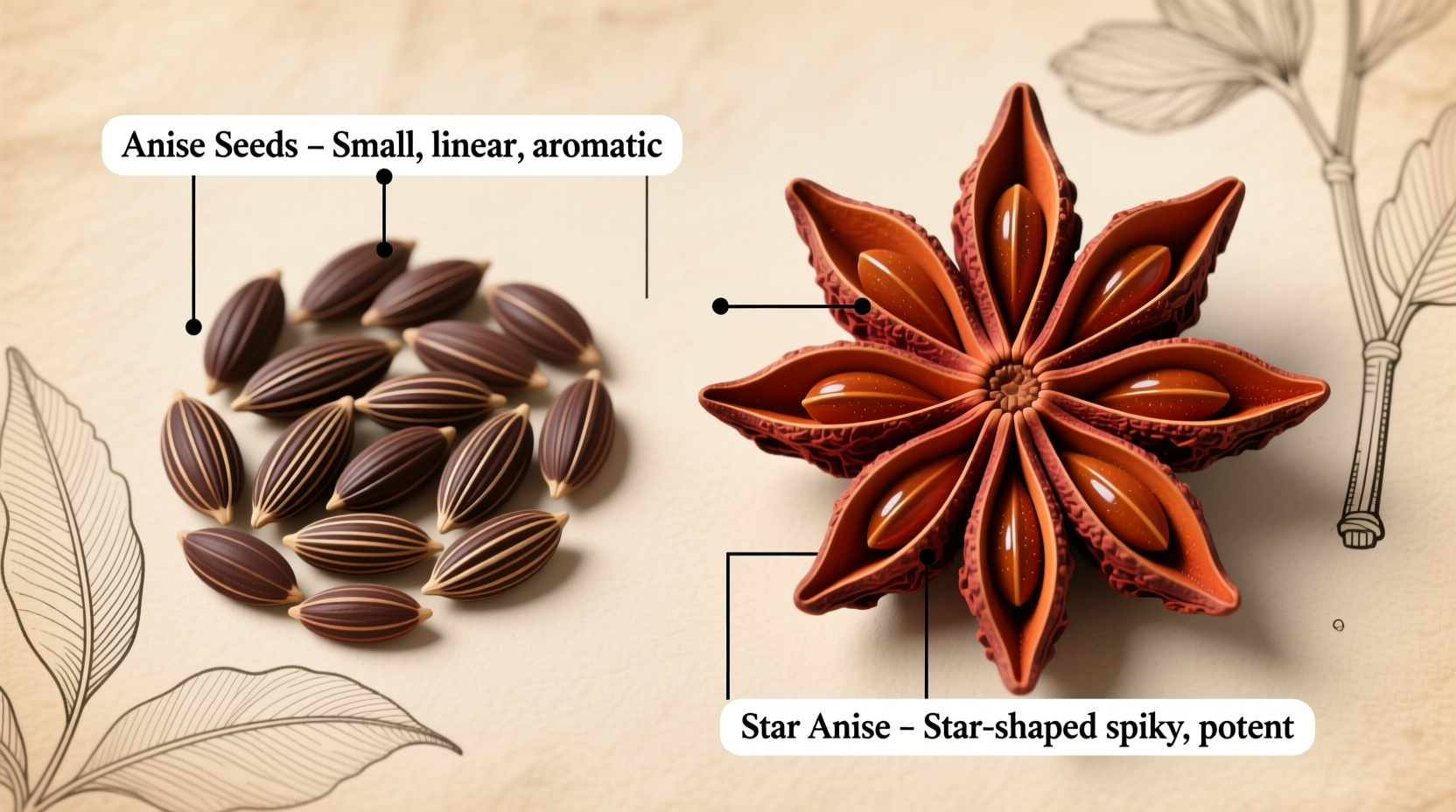
Anise seeds (Pimpinella anisum) are small, oval-shaped seeds from a flowering plant in the Apiaceae family, native to the eastern Mediterranean and Southwest Asia. They have been used since ancient times in medicine, confectionery, and spirits such as ouzo, absinthe, and arak.
Star anise (Illicium verum), on the other hand, is the star-shaped fruit of a small evergreen tree native to China and Vietnam. Each “arm” of the star contains a single seed, and the entire dried fruit—typically sold whole or ground—is used as a spice. It is a cornerstone of Chinese five-spice powder and Vietnamese pho broth.
Though both contain anethole—the organic compound responsible for the signature licorice note—they are unrelated botanically. Anise is an herb; star anise is a fruit. This distinction affects not only flavor depth but also potency, pairing potential, and substitution viability.
Key Characteristics
| Characteristic | Anise Seeds | Star Anise |
|---|---|---|
| Botanical Source | Pimpinella anisum (herb) | Illicium verum (tree fruit) |
| Form | Small, grayish-brown oval seeds | Hard, rust-colored 5–8 pointed stars |
| Flavor Profile | Sweet, warm, distinctly licorice-forward with floral notes | Stronger licorice, slightly bitter, woody, and more complex |
| Aroma | Fragrant, sweet, reminiscent of fennel or tarragon | Intense, penetrating, spicy-sweet with camphorous undertones |
| Heat Level | None (non-pungent) | None (non-pungent) |
| Culinary Function | Flavoring agent in baked goods, liqueurs, dressings | Braising spice, soup base, component of spice blends |
| Shelf Life | 2–3 years (whole), 1–2 years (ground) | 3–4 years (whole), 1–2 years (ground) |
| Common Uses | Biscotti, rye bread, anise cookies, Middle Eastern sweets | Pho, Chinese braises, mulled wine, garam masala variants |
Practical Usage: How to Use Each Spice
Anise Seeds in Cooking
Anise seeds shine in applications where their delicate sweetness can be highlighted without overpowering. Because they are smaller and less intense than star anise, they integrate seamlessly into dry batters and doughs.
- Baking: Add 1–2 teaspoons of crushed anise seeds to biscotti, gingerbread, or rye bread for a subtle aromatic lift. They pair well with citrus zest, cinnamon, and cardamom.
- Dressings & Marinades: Toast and grind anise seeds to blend into vinaigrettes or yogurt-based marinades for lamb or chicken. Their slight sweetness balances acidity.
- Liqueurs & Infusions: Steep 1 tablespoon of anise seeds in 750ml of neutral spirit with sugar for homemade sambuca or pastis-style drinks.
- Vegetable Dishes: Sprinkle over roasted carrots or fennel to enhance natural sweetness and add complexity.
Tip: For maximum flavor, lightly toast whole anise seeds in a dry skillet over medium heat for 1–2 minutes until fragrant. Cool before grinding or using whole.
Star Anise in Cooking
Star anise is far more potent and is typically used whole in slow-cooked dishes, then removed before serving. Its hard structure doesn’t break down easily, making it ideal for infusion without dissolving into the final dish.
- Broths & Soups: Add one or two whole stars to pho, ramen, or beef stew during simmering. The spice deepens umami and adds warmth without spiciness.
- Braised Meats: Include in Chinese red-cooked dishes (e.g., soy-braised pork belly). Combine with cinnamon, Sichuan pepper, and clove for balance.
- Spice Blends: Essential in five-spice powder (alongside cinnamon, cloves, fennel, and Sichuan pepper). Also appears in some Indian garam masala variations.
- Desserts & Poached Fruits: Simmer with pears or apples in red wine or syrup for festive desserts. Remove before serving.
Ground star anise can be used in spice rubs or baked goods, but due to its intensity, use sparingly—one-quarter to one-half teaspoon replaces one whole star.
Pro Tip: Never chew on whole star anise—it’s too tough and overwhelmingly strong. Always remove before serving unless finely ground and fully incorporated.
Variants & Types
Anise Seed Variants
- Whole Anise Seeds: Most common form. Retain freshness longer and allow controlled release of flavor through crushing or grinding.
- Ground Anise Seed: Convenient but loses potency faster. Best used within six months of grinding. Ideal for spice mixes and batters.
- Anise Extract: Alcohol-based liquid concentrate. One drop equals roughly 1/4 tsp of seeds. Common in baking.
- Fennel Seeds (Common Substitute): Often confused with anise, fennel has a milder, sweeter profile. Can stand in when anise is unavailable.
Star Anise Variants
- Whole Star Anise: Preferred for infusions. Look for deep reddish-brown color and intact points—avoid broken or pale specimens.
- Ground Star Anise: Less common but useful in spice blends. Ensure freshness, as it degrades quickly.
- Japanese Star Anise (Illicium anisatum): Highly toxic. Resembles true star anise but contains neurotoxins. Only purchase from reputable spice vendors.
\"The difference between anise and star anise is like comparing fresh mint to menthol crystals—one suggests, the other commands.\" — Chef Mei Lin, James Beard Award Winner
Comparison with Similar Ingredients
Several spices share aromatic qualities with anise and star anise, leading to frequent confusion. Here's how they compare:
| Spice | Similarity to Anise/Star Anise | Key Difference | Substitution Advice |
|---|---|---|---|
| Fennel Seeds | Very similar licorice flavor, especially raw | Milder, sweeter, lacks the sharpness of anise | Use 1:1 in salads or sausages; not ideal for strong liqueurs |
| Tarragon | Herbal licorice note | Grassy, green, less sweet—better in sauces than baking | Not a direct substitute; use in French-inspired dishes |
| Licorice Root | Natural sweetness and anethole content | Medicinal, earthy, less aromatic | Best in teas or herbal preparations, not cooking |
| Caraway Seeds | Some licorice nuance, often in rye bread | More earthy, pungent, with cumin-like undertones | Can work in breads but alters overall flavor profile |
Practical Tips & FAQs
Can I substitute anise seeds for star anise?
Yes, but cautiously. Use 1 teaspoon of anise seeds to replace one whole star anise. However, the result will be less robust and lack the woody depth of star anise. Best for quick applications or when only a hint of licorice is desired.
Is star anise stronger than anise seed?
Yes. Star anise contains a higher concentration of anethole—up to 90% compared to about 80–90% in anise seeds—and has additional resinous, almost medicinal notes that make it more assertive. One whole star imparts more flavor than a full teaspoon of seeds.
How should I store these spices?
Both should be stored in airtight containers away from light and heat. Whole forms last significantly longer than ground. Label containers with purchase dates. Avoid storing near the stove or dishwasher.
Are there health benefits?
Traditionally, both have been used to aid digestion and relieve bloating. Star anise is a source of shikimic acid, used in antiviral medications like Tamiflu. However, do not consume Japanese star anise, which is toxic.
What dishes absolutely require star anise?
Authentic Vietnamese pho, Chinese five-spice chicken, Indian biryanis using regional masalas, and certain mulled wines rely on star anise for authenticity. Omitting it changes the dish’s character.
Can I use both in the same recipe?
Rarely advisable. Their overlapping flavor profiles can become overwhelming. If combining, reduce quantities by half and test frequently. More effective to choose one based on the cuisine and cooking method.
Storage Checklist:
- Store both spices in glass jars with tight lids.
- Keep in a cool, dark pantry—not above the oven.
- Label with purchase date.
- Check aroma every 6 months; if faint, replace.
- Avoid plastic containers, which can absorb odors and degrade.
Case Study: Pho Broth – Why Star Anise Is Non-Negotiable
In Hanoi-style pho, the broth simmers for 6–12 hours with charred onion, ginger, beef bones, and a bouquet of spices. Among them, 2–3 whole star anise pods are essential. A test batch made with anise seeds instead produced a broth that was noticeably thinner in aroma, lacking the deep, rounded warmth that defines the dish. While anise seeds contributed sweetness, they failed to deliver the resinous backbone that balances the cinnamon and clove. This illustrates why ingredient specificity matters: cultural authenticity often hinges on precise spice selection.
Summary & Key Takeaways
Anise seeds and star anise, while both delivering a licorice-like flavor due to anethole, are distinct ingredients with unique roles in the kitchen. Recognizing their differences ensures better results and prevents culinary missteps.
- Anise seeds are best for baking, dressings, and light infusions where a sweet, floral note is desired.
- Star anise dominates in long-simmered dishes like broths, braises, and spice blends, offering greater intensity and complexity.
- They are not direct substitutes without adjustment—star anise is significantly stronger.
- Always source star anise from trusted suppliers to avoid toxic look-alikes.
- Store both whole whenever possible to preserve flavor and extend shelf life.
Final Thought: Mastering spices isn't just about adding flavor—it's about understanding origin, potency, and purpose. Next time you reach for that licorice note, pause and ask: Do I need the subtlety of anise seed, or the boldness of star anise? The answer will elevate your dish from good to authentic.