
The iPhone’s built-in camera system has evolved into one of the most capable mobile imaging tools on the market. With computational photography, Night mode, Deep Fusion, and advanced HDR, Apple continues to raise the bar for smartphone photography. Yet, a growing number of third-party lens accessories—particularly those branded under renowned optics names like Zeiss—promise to elevate the experience even further. But do Zeiss iPhone lenses actually deliver enough improvement to justify stepping beyond the stock camera? Or is the marketing stronger than the results?
Understanding the Role of Zeiss iPhone Lenses
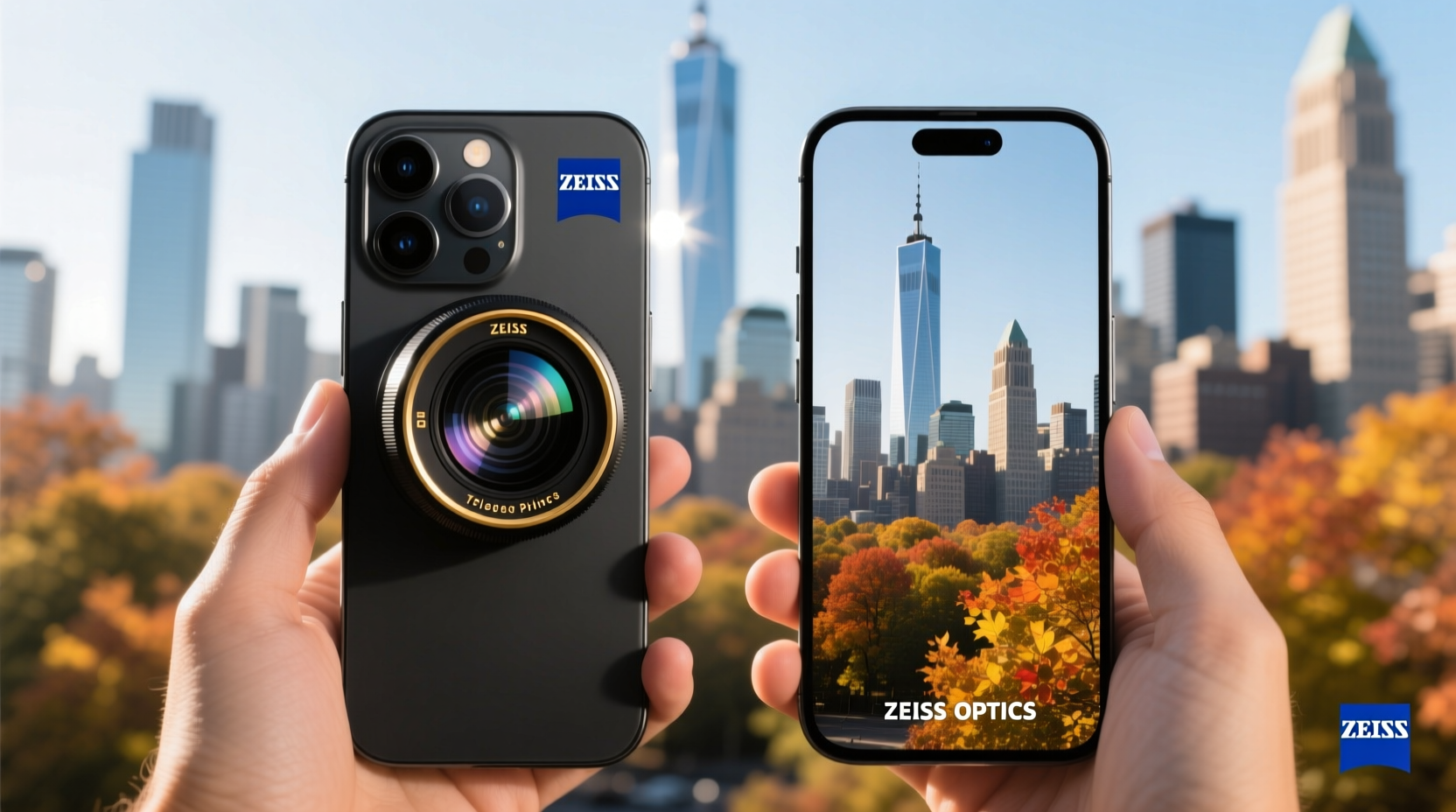
Zeiss-branded lenses for iPhones are not standalone cameras but clip-on or case-mounted optical attachments designed to expand the capabilities of the native iPhone camera. These typically include wide-angle, macro, and telephoto options that aim to overcome the physical limitations of the iPhone’s fixed focal lengths.
It's important to clarify: these are not lenses manufactured by Zeiss themselves in the same way their DSLR glass is made. Instead, they are often developed in partnership with accessory brands such as ZEISS Mobile Vision or previously with Moment (before their split). The optics are engineered to meet Zeiss standards, leveraging their T* anti-reflective coating and precision glass elements to reduce glare and improve clarity.
While the iPhone offers digital zoom and software-enhanced ultra-wide shots, Zeiss lenses provide *optical* alternatives—meaning actual changes in focal length before light hits the sensor. This distinction matters because optical expansion preserves detail better than digital cropping or AI upscaling.
Tip: Always clean the lens surface with a microfiber cloth before shooting—smudges are magnified with add-on optics.Image Quality: Real-World Performance Comparison
To assess whether Zeiss lenses are worth it, we need to compare real photo output under typical conditions. Here’s how they stack up against the stock iPhone camera across key categories:
| Feature | Stock iPhone Camera | With Zeiss Lens (e.g., Wide-Angle) |
|---|---|---|
| Field of View | Limited ultra-wide (~120°) | Up to 150°+ with minimal distortion |
| Edge Sharpness | Excellent center, slight softening at edges | Slight vignetting, but improved edge clarity due to T* coating |
| Low-Light Performance | Strong, thanks to Night mode | Slightly reduced due to added glass; requires steady hands or tripod |
| Macro Detail | Digital zoom only; limited close focus | True macro capability (1–3 cm focus distance), revealing textures |
| Convenience | Always ready, seamless integration | Requires attachment, alignment, potential bulk |
In daylight and well-lit environments, Zeiss lenses consistently outperform digital alternatives when capturing architecture, landscapes, or tight indoor spaces where a wider perspective is essential. The optical quality minimizes fisheye distortion common in iPhone’s built-in ultra-wide mode. In macro use, the difference is even more pronounced—fine details in petals, insects, or fabric textures become visible in ways the stock camera simply can’t achieve without post-processing tricks.
“Optical fidelity still beats algorithmic enhancement when you’re pushing creative boundaries.” — Daniel Lin, Mobile Photography Instructor at NYIP
A Closer Look: When Zeiss Lenses Shine—and When They Don’t
The value of Zeiss lenses isn't universal. Their benefit depends heavily on your use case.
Scenarios where Zeiss lenses excel:
- Architectural and interior photography requiring true wide-angle coverage
- Nature and macro photography needing high-magnification detail
- Videography where consistent framing and minimal digital crop matter
- Creative projects demanding optical authenticity over processed output
Where the stock camera remains superior:
- Everyday snapshots and social media content
- Low-light environments without supplemental lighting
- Situations requiring speed and portability
- Portrait mode shots with depth mapping already optimized by Apple
The iPhone’s Smart HDR and Deep Fusion process multiple exposures instantly, something an external lens cannot enhance unless paired with manual editing apps like ProCamera or Halide. Zeiss lenses give you more raw data—but not automatic optimization.
Mini Case Study: Travel Photographer in Lisbon
Maya, a travel content creator based in Barcelona, tested a Zeiss DigiAnamorphic lens during a week-long shoot in Lisbon. Her goal was to capture narrow alleyways and tiled facades without distortion. Using her iPhone 15 Pro Max, she compared the built-in ultra-wide camera to the Zeiss wide-angle attachment.
The Zeiss lens allowed her to step closer to subjects while maintaining full context—critical in crowded areas. She noted sharper tile patterns and truer color reproduction, especially in shaded courtyards. However, she also reported frustration when switching between lenses mid-walk, losing moments due to setup time. For fast-paced street scenes, she defaulted back to the stock camera.
Her conclusion: “For planned shots, the Zeiss lens added professional-grade depth. For spontaneity, I trusted Apple’s software any day.”
Step-by-Step Guide: Getting the Most from Your Zeiss iPhone Lens
If you decide to invest in a Zeiss lens, follow this workflow to maximize results:
- Choose the right model: Confirm compatibility with your iPhone version and desired focal length (wide, macro, or tele).
- Use a protective case with mounting system: Ensure secure attachment—wobble ruins sharpness.
- Clean both lenses: Wipe the iPhone’s native lens and the Zeiss element with a microfiber cloth.
- Align carefully: Center the lens precisely over the iPhone’s camera array to avoid vignetting.
- Shoot in good light: Avoid dim conditions unless using a stabilizer and third-party app.
- Use a tripod or grip: Extra weight increases shake risk; stabilize for crisp results.
- Edit with intention: Apply subtle corrections in Lightroom or Snapseed to enhance—not fix—images.
Checklist: Is a Zeiss iPhone Lens Right for You?
Answer these questions before purchasing:
- Do I frequently shoot subjects that require a wider or closer perspective than my iPhone allows?
- Am I willing to carry extra gear and spend time setting up shots?
- Do I edit photos professionally or share them in high-resolution formats?
- Have I maxed out the stock camera’s capabilities and need more optical control?
- Am I using apps that support manual controls (ISO, shutter speed, focus)?
If you answered “yes” to three or more, a Zeiss lens could be a worthwhile upgrade. Otherwise, you may find diminishing returns relative to convenience.
Frequently Asked Questions
Can Zeiss lenses work with older iPhone models?
Yes, many Zeiss-compatible systems are designed for specific generations (e.g., iPhone 12–15 series). Check manufacturer specs for exact fit. Adapters may be available, but precision alignment decreases with mismatched mounts.
Do Zeiss lenses improve video quality?
They can enhance cinematic potential—especially anamorphic or ultra-wide lenses for dynamic shots. However, stabilization relies on your grip or gimbal, as optical image stabilization (OIS) in the iPhone may struggle with added weight and altered focus planes.
Are Zeiss iPhone lenses worth $200+?
Only if your work demands optical precision beyond digital enhancement. Casual users won’t notice enough improvement to justify the cost and inconvenience. For professionals or serious enthusiasts, the upgrade can be transformative in specific scenarios.
Final Verdict: Hype vs. Reality
The Zeiss name carries immense prestige in optics, and rightly so. Their legacy in microscopy, cinematography, and astronomy sets a high benchmark. When applied to iPhone photography, Zeiss lenses do deliver measurable improvements in field of view, edge sharpness, and macro fidelity. But they don’t replace the stock camera—they complement it.
The iPhone’s built-in camera excels in automation, consistency, and accessibility. It’s the Swiss Army knife of mobile imaging. Zeiss lenses are the specialized tool: powerful in the right hands, but cumbersome when overused. They shine in deliberate, creative photography—not everyday point-and-shoot situations.
Ultimately, whether they’re “worth the hype” depends on your definition of value. If you prioritize optical authenticity and are willing to trade convenience for quality, then yes—Zeiss lenses offer tangible benefits. But if you rely on speed, simplicity, and smart processing, Apple’s native system remains unmatched.
💬 Have you tried Zeiss lenses with your iPhone? Share your experience, favorite setups, or before-and-after examples in the comments below—we’d love to hear what works for you!