
In the critically acclaimed series Yellowjackets, moments of visceral horror often stem not from supernatural forces but from the unraveling of human psychology under extreme duress. One such moment—Taissa Turner killing her family’s dog, Whistle—lingers long after the episode ends. On the surface, it seems senseless. But within the context of trauma, dissociation, and subconscious self-preservation, the act becomes a chilling symptom of a mind at war with itself. This is not just a story about survival in the wilderness; it’s about how survival can infiltrate and corrupt the psyche long after rescue.
The Scene: A Quiet Horror
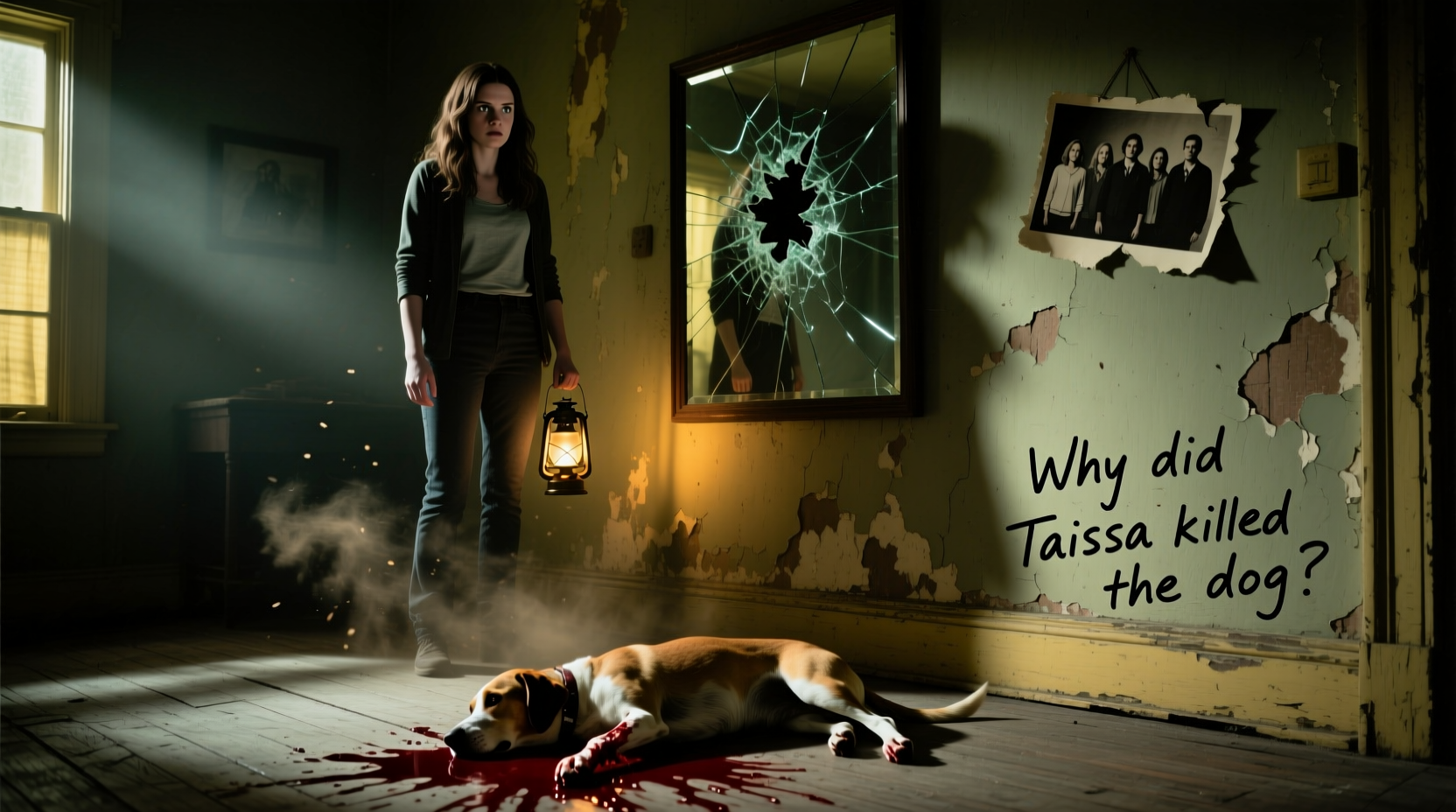
Taissa kills Whistle during one of her sleepwalking episodes, a behavior introduced earlier as a side effect of her undiagnosed dissociative identity disorder (DID). She wakes up covered in blood, standing over the dead dog, with no memory of the act. The camera lingers on her face—not panic, not grief, but a slow dawning horror mixed with eerie detachment. It’s not remorse that grips her, but confusion, as if her body committed a crime her conscious mind didn’t authorize.
This scene isn’t framed for shock value alone. It’s a narrative pivot, revealing that the wilderness didn’t just change Taissa—it fractured her. And the fracture has followed her into adulthood.
Tip: Pay attention to sleepwalking scenes in Yellowjackets—they’re not dreams or metaphors. They’re real actions taken by alternate selves.Trauma Fragmentation and the Birth of \"Others\"
Taissa’s sleepwalking is more than insomnia. It’s a manifestation of dissociation—a psychological defense mechanism where the mind separates from reality to survive unbearable stress. In the crash’s aftermath, Taissa begins splitting. Her need for control, order, and leadership in the wilderness creates cognitive dissonance with the brutal acts required to survive. To reconcile this, her psyche forms alters—distinct identities that carry out tasks her primary self cannot tolerate.
Dr. Bessel van der Kolk, a leading trauma researcher, explains:
“Dissociation allows the mind to function when direct confrontation with trauma would be overwhelming. It’s not weakness—it’s an ingenious, albeit costly, adaptation.” — Dr. Bessel van der Kolk, The Body Keeps the Score
In adulthood, Taissa maintains a meticulously controlled life: successful surgeon, disciplined athlete, politically ambitious wife. But her sleepwalking episodes—including cannibalistic cravings and violent behaviors—suggest her “other” selves remain active. Killing Whistle wasn’t random. It was symbolic, ritualistic, and possibly protective.
Why the Dog? Symbolism and Subtext
Whistle isn’t just a pet. He represents domestic normalcy, unconditional love, and the illusion of safety in Taissa’s post-rescue life. For her dominant personality—the composed, rational Taissa—Whistle is a comfort. But for her alter(s), he may symbolize vulnerability, dependence, or even betrayal.
- Symbol of Weakness: In the survival hierarchy of the wilderness, emotional attachments are liabilities. Whistle, as a non-contributing member, might be seen by Taissa’s survival self as unworthy of resources.
- Replacement Ritual: The girls resorted to cannibalism. Killing and consuming animals—or even humans—became normalized. Whistle’s death could mirror that lost ritual, reenacted unconsciously.
- Boundary Enforcement: By eliminating something beloved, the alter asserts dominance over Taissa’s civilian identity, reminding her that the wilderness never left.
The act wasn’t about hatred for the dog. It was about reclaiming power, asserting the presence of a self forged in blood and snow.
A Timeline of Dissociation: From Crash to Canine Death
To understand the full weight of the moment, consider the progression of Taissa’s mental state:
- Day 1–30 (Post-Crash): Taissa assumes leadership, enforcing rules and rationing food. Denial and control dominate her behavior.
- Week 8: First signs of dissociation—she finds herself in strange places with no memory. Begins sleepwalking.
- Month 3: The group turns to cannibalism. Taissa participates but later claims amnesia. This is likely when her alters fully form.
- Rescue (19 months later): Taissa returns home, suppresses memories, and rebuilds a “normal” life. The alters go dormant but don’t vanish.
- Present Day: Political pressure, pregnancy fears, and repressed guilt trigger the alters. Sleepwalking escalates. Whistle is killed.
This timeline shows that the dog’s death isn’t isolated. It’s the culmination of decades of buried trauma finally erupting through a symbolic act.
Psychological Defense Mechanisms at Play
Taissa’s psyche uses several unconscious strategies to manage internal conflict. Understanding these helps decode the dog’s murder:
| Mechanism | Definition | How It Applies to Taissa |
|---|---|---|
| Dissociation | Mental separation from thoughts, identity, or surroundings | Allows her to commit violent acts without conscious awareness |
| Repression | Pushing painful memories into the unconscious | She doesn’t remember eating Jackie or killing animals in the wild |
| Projection | Attributing one’s own unacceptable feelings to others | She suspects her husband of instability, but it’s her alters acting out |
| Ritualization | Repeating symbolic behaviors to regain control | Killing Whistle mirrors past survival rituals |
The dog’s death fits perfectly within this framework. It’s not madness—it’s logic from a shattered mind trying to restore balance.
Mini Case Study: The Politician’s Wife Who Slept With a Knife
Consider a real-world parallel: a high-achieving woman in public office begins exhibiting nocturnal violence—damaging property, harming pets, waking up confused. Diagnosed later with DID stemming from childhood abuse, she recalls nothing of the events. Like Taissa, she maintained a flawless public image while her subconscious fought battles she refused to acknowledge.
Taissa’s situation is fictional but psychologically sound. The pressure of maintaining perfection—being a candidate, a wife, a mother-to-be—creates intolerable tension. Her alters respond by destabilizing her world, forcing confrontation. Killing Whistle isn’t just an act of violence—it’s a cry from the buried self saying, I’m still here. You can’t bury me forever.
Checklist: Signs of Dissociation in High-Functioning Individuals
If someone appears “together” but exhibits odd behaviors, they may be dissociating. Watch for:
- Unexplained injuries or missing time
- Reports from others of “not being themselves”
- Sleepwalking or night terrors
- Extreme reactions to triggers (certain smells, words, weather)
- Denial of past traumatic events despite evidence
- Multiple, conflicting personal narratives
Taissa checks nearly all these boxes. Her ability to function doesn’t negate her trauma—it amplifies it.
FAQ: Understanding Taissa’s Actions
Did Taissa know she was going to kill the dog?
No. Conscious Taissa had no intent or memory of the act. It was carried out by an alter during a dissociative episode. This is consistent with documented cases of dissociative violence.
Could the dog have been spared?
Possibly. If Taissa had received proper trauma therapy after rescue—especially EMDR or somatic experiencing—her dissociation might have been addressed before it escalated. But in the 1990s, understanding of complex PTSD was limited, especially in adolescents.
Is Taissa dangerous to people?
The show strongly implies yes. Her alters have already demonstrated capacity for human violence in the wilderness. Her self-harm (eating glass) and cryptic messages (“I’m not you”) suggest an internal war that could spill outward. The dog was likely not the first or last victim of her fractured identity.
Conclusion: The Cost of Survival
Taissa didn’t kill the dog because she hated him. She killed him because part of her never left the frozen wasteland. That part remembers hunger. It remembers sacrifice. It remembers that love gets you killed.
The true horror of Yellowjackets isn’t the cannibalism or the cold—it’s the realization that survival demands pieces of your soul. Taissa gave hers willingly, then spent decades pretending she hadn’t. The dog’s death is the moment the lie collapses.
💬 What do you think—was Taissa’s act premeditated by her subconscious, or pure chaos? Share your theory in the comments.