The evolution of wearable tech has reached a pivotal moment. With devices like the XG88Pro Smart Glasses entering the mainstream, capable of capturing high-resolution video from a first-person perspective without the need for handheld rigs or chest mounts, many are asking: are traditional action cameras like the GoPro finally obsolete? While GoPro has dominated the adventure filming space for over a decade, new competition is emerging—not just in form factor, but in functionality and user experience.
This shift isn’t just about convenience; it’s about immersion. The XG88Pro promises seamless integration into daily life and extreme sports alike, offering real-time audio, voice commands, and unobtrusive 4K recording—all built into a pair of sunglasses. But does this mean the GoPro era is ending? Let’s analyze both technologies across key performance categories to determine whether action cameras still hold relevance—or if they’re being quietly replaced by smarter, sleeker alternatives.
Design and Usability: Wearable vs Mountable
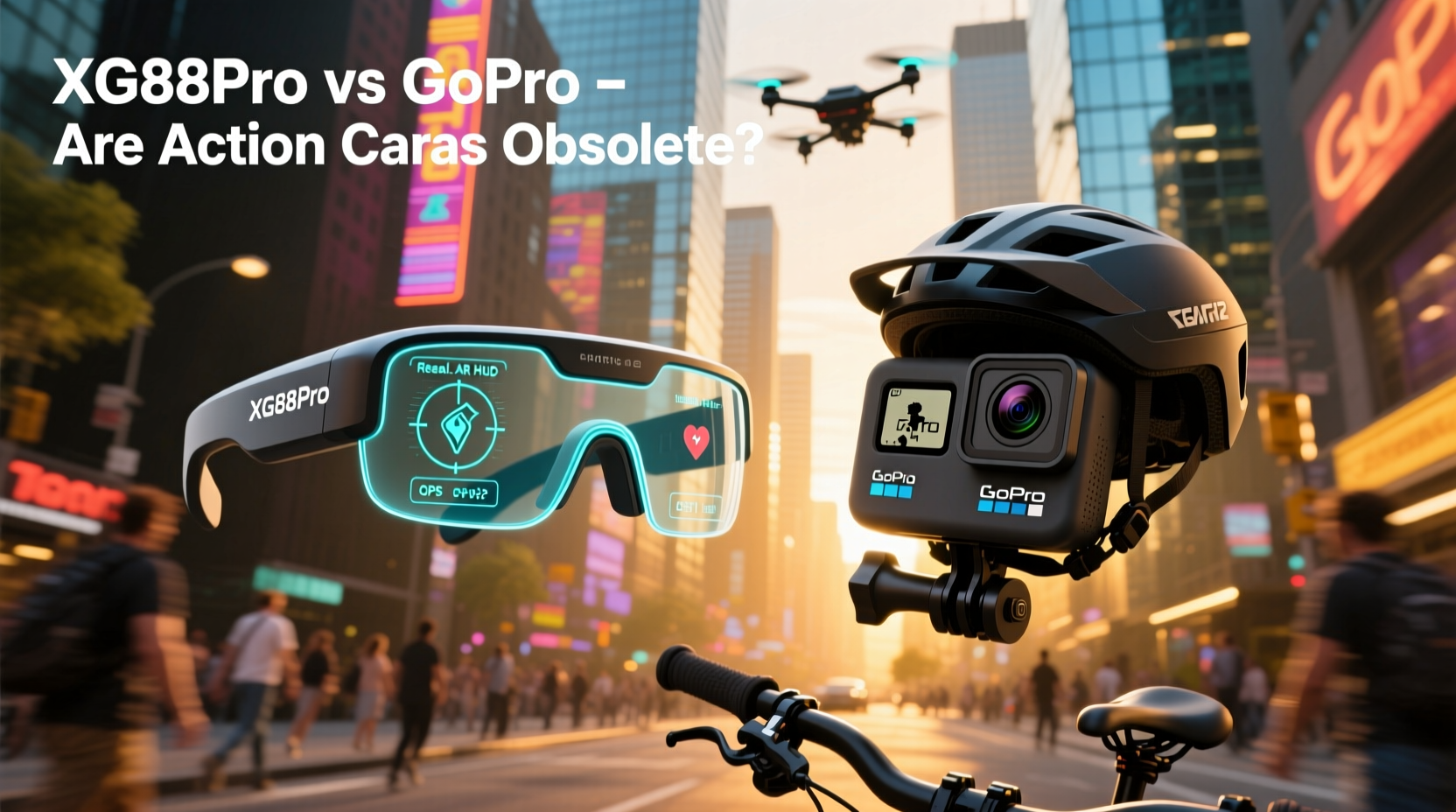
One of the most immediate differences between the XG88Pro and GoPro lies in their design philosophy. The XG88Pro is engineered as everyday eyewear—lightweight, stylish, and designed to be worn continuously. It resembles premium polarized sunglasses with embedded cameras near the temples, making them socially acceptable in urban environments and ideal for discreet recording during travel, cycling, or vlogging.
In contrast, GoPro models like the HERO12 Black are modular systems built around ruggedness and adaptability. They require external mounts, cases, and often additional accessories to function effectively across different scenarios. This modularity allows for creative angles and stabilization setups but comes at the cost of visibility and social subtlety.
Tip: If your priority is blending in while recording, smart glasses offer a significant advantage over bulky helmet-mounted cameras.From a usability standpoint, the XG88Pro supports touch controls on the frame and voice activation (“Okay, record”), enabling completely hands-free operation. GoPro also offers voice control, but its interface remains more complex, often requiring app interaction or physical button presses in challenging conditions.
Video Quality and Field of View Comparison
At first glance, specs suggest parity: both devices support 4K resolution at 30fps, electronic image stabilization (EIS), and HDR video capture. However, practical differences emerge under real-world use.
The XG88Pro captures a narrower field of view (FOV) of approximately 85 degrees, closely matching natural human vision. This results in more stable, cinematic footage without the fisheye distortion common in GoPro videos. For storytelling, journalism, or POV interviews, this is a major benefit.
GoPro, on the other hand, defaults to a wide 120+ degree FOV, which excels in dynamic sports like mountain biking or skydiving where capturing peripheral motion matters. However, this ultra-wide lens can distort edges and requires post-processing correction for professional output.
“Natural perspective is becoming more valuable than sheer coverage. Users want footage that feels authentic, not artificially stretched.” — David Lin, Tech Analyst at Wearable Insights Group
| Feature | XG88Pro Smart Glasses | GoPro HERO12 Black |
|---|---|---|
| Max Video Resolution | 4K @ 30fps | 5.3K @ 60fps |
| Field of View | 85° (natural) | 120°+ (ultra-wide) |
| Stabilization | EIS + gyro-assisted | Hypersmooth 6.0 (advanced EIS) |
| Low-Light Performance | Moderate (small sensors) | Excellent (larger sensor, Night Lapse) |
| Audio Recording | Built-in dual mics with wind reduction | Improved mic array, optional external mic support |
Battery Life and Real-World Endurance
Battery limitations remain one of the biggest hurdles for smart glasses. The XG88Pro offers approximately 70 minutes of continuous 4K recording on a full charge. While sufficient for short hikes or city walks, it falls short for extended adventures. Charging via USB-C takes about 90 minutes, and there’s no option for hot-swapping batteries.
GoPro’s HERO12, by comparison, delivers up to 2.5 hours of continuous recording at 4K/30fps with a standard battery. Extended-life batteries and portable power banks extend this further, making it far better suited for all-day shoots or multi-day expeditions.
Tip: Always carry a spare battery when using smart glasses for anything beyond casual recording.However, the XG88Pro shines in passive usage modes. When used intermittently—recording 10-second clips throughout the day—it can last up to 10 hours, functioning more like a lifelogging device than a dedicated camera.
Use Case Scenarios: Where Each Device Excels
Not all users have the same needs. Understanding where each device performs best helps clarify whether action cameras are truly obsolete—or simply being repositioned.
- XG88Pro Best For: Urban exploration, travel vlogging, cycling, motorcycling, covert recording, training documentation (e.g., coaching athletes), and social media content creation where discretion matters.
- GoPro Best For: Underwater diving, skiing, drone mounting, car racing, long-duration filming, and any scenario requiring maximum durability, battery life, or accessory compatibility.
Mini Case Study: Mountain Biking Vlogger Tests Both Devices
Alex Rivera, an outdoor content creator based in Colorado, recently tested both devices during a weekend trail ride. He wore the XG88Pro for general trail riding and mounted the GoPro on his helmet for downhill segments.
He found the XG88Pro ideal for conversational vlogs and scenic shots, praising its comfort and natural framing. “I forgot I was recording,” he said. “It felt like just riding with friends.” However, during fast descents, the GoPro captured smoother, wider-angle footage with better low-light clarity in shaded forest areas. Battery life also allowed him to record the entire descent without interruption—something the XG88Pro couldn’t match.
Conclusion: He continues to use both, reserving the smart glasses for storytelling and the GoPro for performance-focused sequences.
Is the Action Camera Obsolete? A Balanced Verdict
The answer is nuanced: action cameras are not yet obsolete, but their dominance is being challenged in meaningful ways. The XG88Pro represents a shift toward integrated, always-on personal recording—a trend likely to grow as AI, AR, and miniaturization advance.
Yet, GoPro maintains clear advantages in versatility, environmental resilience, and ecosystem maturity. Its vast array of mounts, waterproof housing, and third-party software integrations make it irreplaceable for professionals and enthusiasts who demand reliability across extremes.
What’s changing is the definition of “action.” As lifestyle content blurs with adventure, devices that serve multiple roles—like smart glasses that double as fashion accessories, communication tools, and cameras—are gaining ground. For casual creators, journalists, and travelers, the convenience may outweigh raw performance.
Checklist: Choosing Between XG88Pro and GoPro
- ✅ Do you prioritize discretion and hands-free operation? → Lean toward XG88Pro
- ✅ Will you film in water or extreme weather? → Choose GoPro
- ✅ Is battery life critical for long sessions? → GoPro wins
- ✅ Do you value natural-looking POV footage? → XG88Pro excels
- ✅ Need compatibility with drones, bikes, or cars? → GoPro ecosystem is unmatched
- ✅ Want a device you can wear daily? → XG88Pro integrates better
Frequently Asked Questions
Can the XG88Pro replace my GoPro entirely?
For casual use and everyday recording, yes. But for professional-grade, long-duration, or underwater work, the GoPro remains superior. Most serious creators will benefit from owning both.
Are smart glasses legal to use in public?
Laws vary by region. In the U.S., recording in public spaces is generally permitted, but some states require consent for audio. Always check local regulations before filming others.
How do I transfer videos from the XG88Pro?
Videos sync wirelessly via Bluetooth to the companion smartphone app or can be transferred through USB-C. Storage is limited to 64GB internal memory, so regular offloading is recommended.
Final Thoughts: Evolution, Not Extinction
The rise of smart glasses like the XG88Pro doesn’t signal the death of the action camera—it signals evolution. Technology is expanding the toolkit available to creators, offering new perspectives and greater accessibility. Rather than rendering GoPros obsolete, innovations like the XG88Pro are redefining what immersive recording means.
Looking ahead, expect convergence: future GoPro models may adopt wearable formats, while smart glasses improve in battery life, zoom capability, and low-light performance. The goal is no longer just capturing action, but living it—while documenting every moment seamlessly.
🚀 Ready to explore the future of personal filming? Try pairing a smart glasses setup with your existing action camera and discover how combining both can elevate your content. Share your hybrid rig tips in the comments below!