For hikers, few things are more disruptive than foot blisters. They can turn a rewarding trail adventure into a painful ordeal. Among the most effective defenses against blisters is proper sock selection—specifically, choosing between traditional wool and merino wool. While both materials are natural fibers known for warmth and moisture management, they differ significantly in performance, comfort, and blister prevention. Understanding these differences isn’t just about preference—it’s about protecting your feet over miles of rugged terrain.
Despite their similar names, \"wool\" and \"merino wool\" are not interchangeable. Traditional wool typically refers to coarse fibers from breeds like Romney or Lincoln sheep, while merino wool comes from Merino sheep and is prized for its softness, breathability, and fine micron count. When it comes to long-distance hiking, where friction, sweat, and temperature fluctuations are constant challenges, the choice between these two materials can make or break your experience.
The Science of Blisters: Why Sock Choice Matters
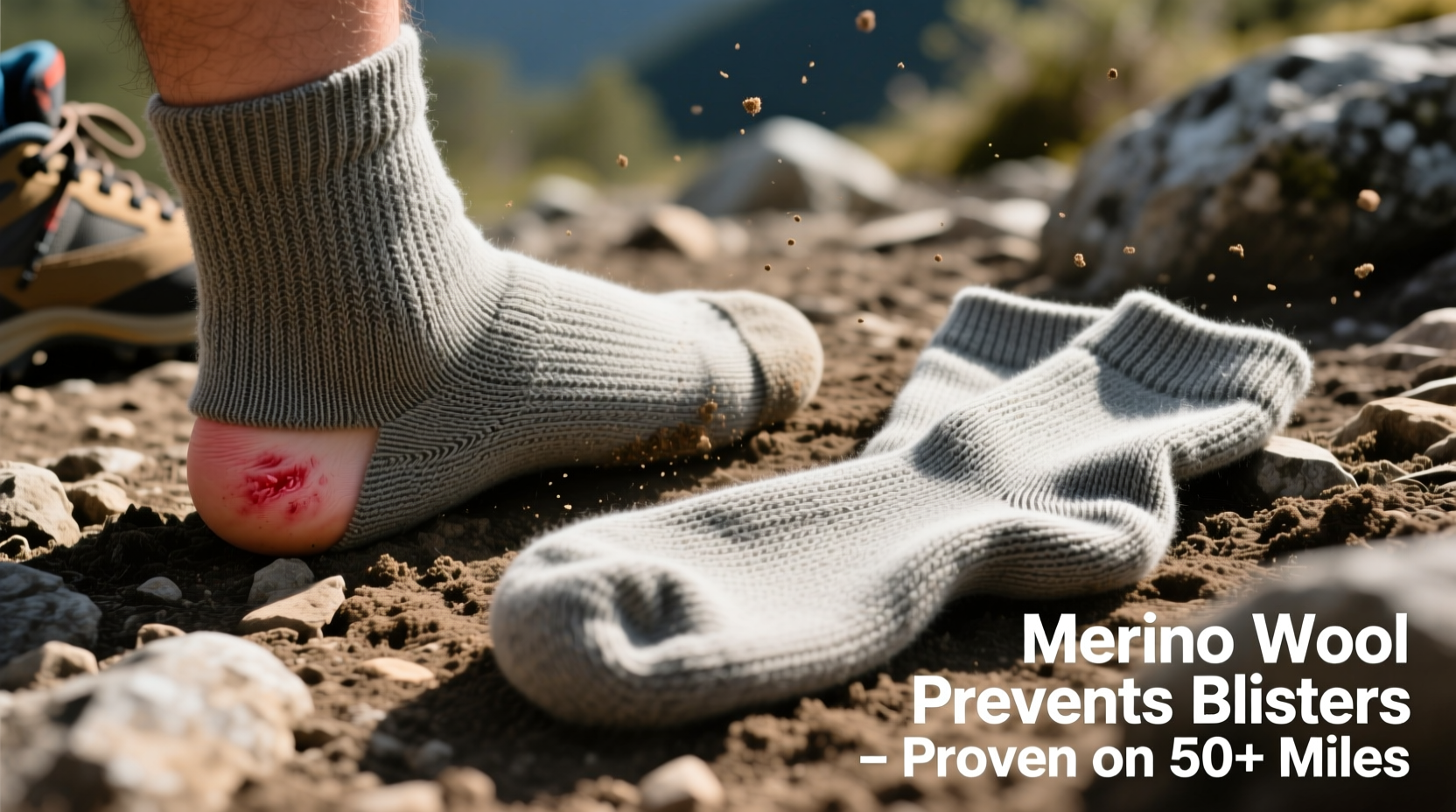
Blisters form when layers of skin separate due to repeated friction, often worsened by moisture and heat. The foot’s microclimate inside a boot—especially during prolonged activity—can become hot and damp, increasing skin vulnerability. Cotton socks, for example, absorb sweat but retain it, creating a soggy environment that softens skin and promotes slippage. This is why synthetic and natural moisture-wicking fabrics like wool are preferred.
Both wool and merino wool wick moisture away from the skin, but their efficiency varies. Wool fibers have a scaly outer layer that traps air and repels water, helping regulate temperature. However, coarse wool can irritate the skin, leading to micro-abrasions that precede blister formation. Merino wool, with fibers measuring 17–22 microns (compared to 25–40+ in regular wool), is much finer and less abrasive. This reduces friction against the skin, directly lowering the risk of blisters.
“Merino wool’s combination of softness, moisture regulation, and natural elasticity makes it one of the most blister-resistant materials available for hikers.” — Dr. Lena Torres, Podiatrist & Outdoor Medicine Specialist
Material Comparison: Key Differences That Impact Blister Prevention
To understand which material offers superior blister protection, consider five critical factors: fiber diameter, moisture management, temperature regulation, odor resistance, and durability.
| Feature | Traditional Wool | Merino Wool |
|---|---|---|
| Fiber Diameter | 25–40+ microns (coarse) | 17–22 microns (fine, soft) |
| Moisture Wicking | Moderate; absorbs up to 30% of weight in moisture before feeling wet | Excellent; wicks efficiently and dries faster |
| Temperature Regulation | Good insulation but prone to overheating in warm conditions | Superior breathability; adapts to varying climates |
| Skin Comfort | Can be itchy; may cause irritation with prolonged wear | Non-irritating; suitable for sensitive skin |
| Blisters Risk | Higher due to stiffness and friction points | Lower due to softness and reduced skin movement |
The data shows that merino wool outperforms traditional wool across nearly every category relevant to blister prevention. Its ability to maintain a stable foot environment—keeping feet dry, cool, and free from abrasion—is unmatched by standard wool alternatives.
Tip: Always pair your wool socks with well-fitted hiking boots. Even the best sock won't prevent blisters if your footwear causes heel lift or toe jamming.How Fit and Construction Influence Performance
A sock’s material is only part of the equation. Construction details—such as seam placement, cushioning zones, and elastic retention—play a crucial role in minimizing movement and pressure points. Many merino wool hiking socks are engineered with anatomical shaping, seamless toes, and targeted padding in high-friction areas like the heel and ball of the foot.
In contrast, traditional wool socks are often knitted with simpler patterns and thicker, bulkier weaves. While this provides warmth, it can lead to excess volume inside the boot, increasing the chance of internal shifting. This movement creates shear forces on the skin, especially during downhill sections where the foot slides forward repeatedly.
Modern merino blends frequently incorporate nylon or spandex (typically 5–15%) to enhance elasticity and shape retention. This helps the sock stay snug without constricting circulation—a key factor in maintaining consistent contact and reducing slippage. A sock that moves with the foot, rather than against it, drastically lowers blister formation.
Real Example: Appalachian Trail Hiker Case Study
Mark R., an experienced backpacker, completed a 450-mile section of the Appalachian Trail in spring 2023. He began the trek wearing thick, 100% traditional wool socks, believing their durability would suffice. By mile 80, he developed painful blisters on both heels and the base of his toes. After switching to a blend of 80% merino wool, 18% nylon, and 2% elastane, he reported immediate improvement. Over the next 370 miles, he had no new blisters despite similar terrain and weather conditions.
His journal noted: “The merino socks stayed dry even in rain, didn’t bunch up, and never felt scratchy. I could feel the difference in how my foot sat inside the boot—no sliding, no hot spots.” This anecdote aligns with broader user feedback and clinical studies on textile-skin interaction during endurance activities.
Step-by-Step Guide: Choosing the Right Sock for Blister Prevention
Selecting the optimal sock isn’t guesswork. Follow this sequence to ensure maximum protection on long hikes:
- Assess your hike conditions: Consider climate, distance, elevation gain, and expected moisture exposure (river crossings, rain).
- Determine sock weight: Lightweight for warm weather and fast-paced hikes; midweight for cooler temperatures and multi-day trips; heavyweight only for extreme cold.
- Prioritize merino wool blends: Look for 60–80% merino content with added nylon or polyester for durability and stretch.
- Check construction features: Seamless toe closure, reinforced heels/toes, and arch support bands reduce friction and improve fit.
- Test before committing: Wear the socks on shorter hikes with your intended boots to evaluate comfort and fit.
- Practice proper care: Wash in cold water, avoid fabric softeners, and air dry to preserve fiber integrity.
Debunking Common Myths About Wool and Blisters
Several misconceptions persist about wool socks and their role in blister prevention:
- Myth: All wool socks are itchy. While traditional wool can irritate, merino is naturally soft due to its fine fibers and crimp structure, making it comfortable for direct skin contact.
- Myth: Wool loses effectiveness when wet. Both types retain insulating properties when damp, but merino continues wicking and drying faster, keeping feet safer.
- Myth: Thicker socks prevent blisters. Excess thickness can increase pressure and reduce boot fit precision. Thin-to-midweight merino socks often perform better by minimizing bulk.
- Myth: Synthetic socks are always better. While synthetics wick well, they lack wool’s natural odor resistance and temperature buffering. Merino also biodegrades, making it more sustainable.
Essential Checklist for Blister-Free Hiking Socks
Before packing for your next long hike, use this checklist to verify your sock choice supports foot health:
- ✅ Made with at least 60% merino wool
- ✅ Includes synthetic reinforcement (nylon/spandex) for durability and fit
- ✅ Seamless or flat-toe construction to eliminate pressure points
- ✅ Anatomical shaping (left/right specific design preferred)
- ✅ Appropriate weight for season and activity level
- ✅ Paired with properly fitted hiking boots or shoes
- ✅ Carried in multiple pairs for rotation and drying
Frequently Asked Questions
Can merino wool socks prevent all blisters?
No single factor eliminates blister risk entirely. While merino wool significantly reduces the likelihood by managing moisture and friction, proper boot fit, gait, lacing technique, and foot hygiene are equally important. Think of merino socks as a critical component—not a standalone solution.
Are merino wool socks worth the higher price?
Yes, for most hikers. Though merino socks cost more upfront (typically $18–$28 per pair), their longevity, comfort, and blister-prevention benefits justify the investment. Users report fewer foot issues, longer wear between washes, and greater overall trail enjoyment.
Can I wear merino socks in hot weather?
Absolutely. Merino wool’s natural breathability allows it to perform well in warm conditions. Lightweight merino blends actually help cool the foot by wicking sweat and enabling evaporation. Many desert hikers prefer them over cotton or pure synthetics for this reason.
Final Recommendation: Why Merino Wool Wins for Long-Distance Hiking
When comparing wool socks versus merino wool specifically for blister prevention during long hikes, the evidence strongly favors merino. Its superior softness minimizes skin irritation, its advanced moisture management keeps feet dry, and its adaptive thermal properties prevent overheating—all critical factors in reducing friction and shear forces that lead to blisters.
Traditional wool still has a place in extreme cold or minimalist setups, but for the majority of hikers tackling varied terrain and conditions, merino wool offers a balanced, high-performance solution. It bridges the gap between natural materials and technical innovation, delivering comfort, durability, and real-world protection.
Ultimately, the best sock is one that disappears on your foot—where you forget it’s there because it fits perfectly, manages moisture seamlessly, and doesn’t fight against your movement. For most modern hikers, that sock is made primarily of merino wool.
💬 Have a favorite merino sock brand or personal blister-prevention tip? Share your experience in the comments and help fellow hikers stay comfortable on the trail!








