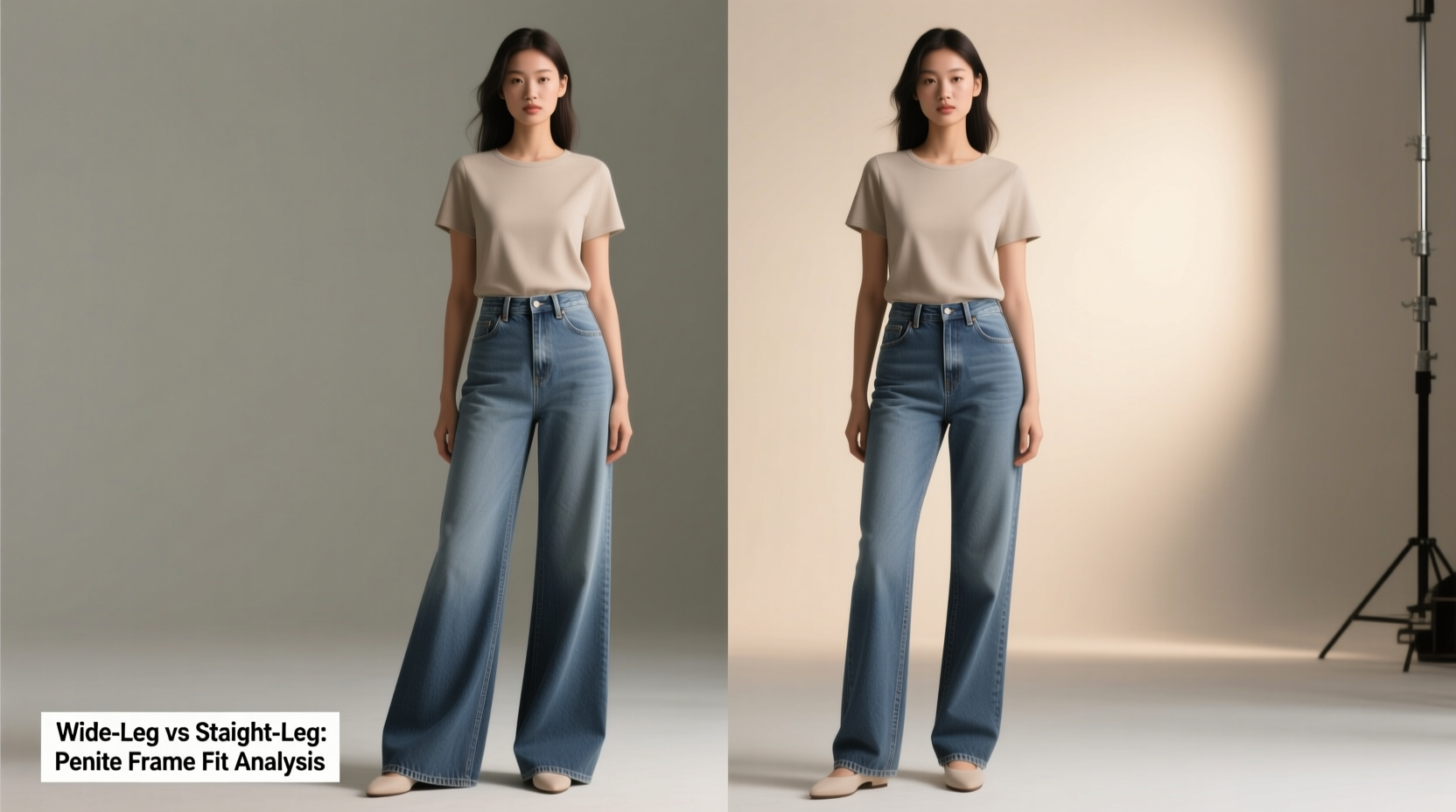
For women under 5'4\", finding jeans that enhance rather than overwhelm the frame is a constant balancing act. The debate between wide leg and straight cut jeans has long divided fashion circles—especially when it comes to petite figures. While both styles have their merits, the right choice hinges on proportion, fabric weight, rise, and how they interact with footwear and silhouette. The goal isn’t just to wear trendy denim but to create the illusion of elongation, balance, and confidence.
Jeans are more than a wardrobe staple—they’re a foundation piece. A poor fit can shorten legs, drown the waistline, or make even the most stylish outfit feel off. For petite women, every inch matters. Understanding how different cuts affect perception is key to mastering personal style without sacrificing comfort or current trends.
The Petite Frame: Proportions Matter
Petite doesn’t mean small in an absolute sense—it refers to proportion. A petite frame typically features shorter limbs, a narrower shoulder line, and a shorter torso. When clothing lacks attention to these dimensions, it can distort natural balance. Oversized elements like exaggerated hems or low rises may swallow the figure, while well-placed seams and tailored silhouettes can create harmony.
Denim, with its rigid structure and lasting shape, plays a powerful role in shaping visual length. The cut of the leg—from hip to hem—directly influences how tall and balanced a person appears. Wide leg jeans spread fabric outward, creating volume. Straight cuts maintain a consistent width from thigh to ankle, offering a more contained profile. The difference may seem subtle, but in practice, it’s transformative.
“Fit is everything for petites. A style that works for someone 5’8” might visually chop a 5’2” woman in half if the proportions are off.” — Lena Park, Celebrity Stylist & Fit Consultant
Wide Leg Jeans: Bold But Risky
Wide leg jeans have surged in popularity, championed by designers and influencers alike for their retro flair and comfort. With a relaxed fit through the hip and thigh and a dramatic flare from mid-calf to hem, they evoke 1970s glamour. However, their success on petite frames depends heavily on execution.
The primary concern with wide legs on shorter women is scale. If the leg opening exceeds 20 inches or the inseam is too long, the pants can pool at the ankles, shortening the leg line. Additionally, low-rise versions pull focus downward, breaking the body’s vertical continuity.
That said, wide leg jeans aren’t inherently unflattering. When worn intentionally, they can be empowering. High-waisted versions with a cropped hem (just above the ankle) prevent dragging and draw the eye upward. Pairing them with pointed-toe shoes or heels maintains the illusion of length. Structured fabrics like rigid cotton or lightweight denim blends hold shape better than drapey materials, preventing excess bulk.
Tip: Opt for wide leg jeans with a front crease or pressed seam—it creates a clean vertical line that mimics longer legs.Straight Cut Jeans: The Balanced Choice
Straight cut jeans run parallel from hip to hem, offering a streamlined yet relaxed fit. Unlike skinny jeans, they don’t cling tightly, allowing room for movement and layering. Unlike bootcuts or flares, they don’t widen dramatically at the ankle. This moderation makes them uniquely suited to petite figures seeking both comfort and proportion.
The straight leg provides a consistent silhouette that doesn’t interrupt the leg line. When paired with the right rise—ideally high or mid-high—it defines the waist and extends the torso visually. A 26–28 inch inseam, often labeled “petite” or “cropped,” ensures the hem rests cleanly on the shoe without bunching.
Fabrics with slight stretch (1–3% elastane) improve wearability without compromising structure. Darker washes further enhance slimming effects, while minimal distressing keeps the focus on clean lines. Because straight cuts don’t rely on dramatic volume, they transition easily from day to night and pair seamlessly with sneakers, loafers, or heels.
Comparative Breakdown: Wide Leg vs Straight Cut
| Feature | Wide Leg Jeans | Straight Cut Jeans |
|---|---|---|
| Leg Opening Width | 18–24 inches | 14–16 inches |
| Inseam Impact | Must be precisely cropped; long lengths drag | Forgiving; works with multiple inseams |
| Rise Recommendation | High rise only | Mid to high rise ideal |
| Best Fabric Weight | Medium to lightweight (avoids heaviness) | Medium-weight with slight stretch |
| Footwear Pairing | Heels, platform sandals, pointed toes | All types: flats, heels, boots |
| Visual Effect | Dramatic, elongating if styled correctly | Balanced, naturally proportional |
| Difficulty Level (Petite Fit) | Advanced—requires precision | Beginner to intermediate |
Real-World Example: Maya’s Denim Transformation
Maya, 5’1”, had avoided wide leg jeans for years after an ill-fitting pair made her look boxy and shorter. She preferred skinny jeans but found them uncomfortable and outdated. On the advice of a stylist, she tried a high-waisted, cropped wide leg in a medium indigo wash with a 26-inch inseam. Paired with nude block-heel mules, the outfit created a continuous line from waist to foot. The elevated waist emphasized her natural curves, and the slight flare added movement without overwhelming her frame.
She later compared this look to a classic straight leg in black denim—equally flattering but more versatile. On casual days, the straight cut with white sneakers felt effortless. For work, she rolled the cuff slightly to expose her ankle, maintaining proportion. The experience taught her that both styles could work, but straight cuts required less effort to master.
Actionable Checklist: Choosing the Right Jeans for Your Petite Frame
- ✅ Prioritize rise: Choose mid to high rise (9.5”–11” front rise) to define the waist and elongate the torso.
- ✅ Check inseam: Aim for 25–28 inches depending on height; avoid full-length unless wearing heels daily.
- ✅ Look for clean hems: Cropped or ankle-length prevents pooling; consider tailoring if needed.
- ✅ Test the stride: Walk in the jeans—fabric shouldn’t tug or restrict movement at the thigh.
- ✅ Assess proportion: Stand sideways in a mirror—your hip line should align with the widest part of the leg opening.
- ✅ Try with shoes: Always test jeans with your most-worn footwear to judge balance.
- ✅ Avoid excessive detailing: Large pockets, rips, or embroidery can break up the silhouette.
Expert Styling Tips for Maximum Flattery
Regardless of cut, how you style jeans determines their impact. For petite figures, cohesion between top, bottom, and shoes is essential.
- Tuck strategically: A full tuck or French tuck with a fitted top draws attention to the waist and prevents fabric from spilling over the hips.
- Monochrome dressing: Wearing the same color from top to toe, especially in darker tones, creates an uninterrupted vertical line.
- Heels help, but aren’t mandatory: Even a 1-inch heel or wedge can lift the hem to the ideal point. For flat lovers, opt for pointed-toe flats to extend the foot.
- Belts as anchors: A slim belt at the narrowest part of your waist reinforces proportion, especially with high-rise jeans.
- Top length matters: Avoid tops that end at the hip. Instead, choose cropped styles that hit at the waist or longer tunics that skim the hip.
Frequently Asked Questions
Can petite women wear wide leg jeans at all?
Absolutely—but with conditions. Choose high-rise, cropped versions with a clean hem. Avoid overly baggy fits or low rises. Pair with heels or platform shoes to maintain leg length. The key is controlling volume and ensuring the pants end at or above the ankle bone.
Are straight leg jeans more versatile than wide leg?
Yes, for most petite women. Straight leg jeans adapt easily to various shoe types and occasions. They require less precise tailoring and are less likely to overwhelm the frame. Their moderate fit makes them suitable for office wear, weekends, and evening outings with simple styling changes.
Should I size down in wide leg jeans to avoid looking swamped?
No. Sizing down can distort the intended drape and cause pulling at the crotch or thighs. Instead, find your true size in a brand known for petite-friendly proportions. Focus on rise, inseam, and waist fit rather than overall looseness. Tailoring is always an option for minor adjustments.
Final Verdict: Which Style Wins for Petite Frames?
If forced to choose one, straight cut jeans are the safer, more universally flattering option for petite frames. They offer consistency, versatility, and a natural extension of the leg line without demanding perfect coordination with shoes or heels. They work across seasons, settings, and body shapes within the petite range.
Wide leg jeans can be flattering—but they are high-effort. They demand attention to detail: correct inseam, proper rise, strategic footwear, and often tailoring. When executed well, they project boldness and elegance. But a single misstep—like a hem that grazes the floor—can undermine the entire look.
The modern wardrobe doesn’t require choosing one over the other. Many petite women successfully incorporate both, reserving wide legs for events or days when they want drama, and relying on straight cuts for everyday ease. The real victory lies in understanding your proportions and using denim as a tool to express—not hide—your shape.
“Style isn’t about following trends. It’s about editing them to serve your body. The best jeans for a petite woman aren’t the trendiest—they’re the ones that make her stand taller.” — Diego Mendez, Fashion Director at *Frame Magazine*
Take Control of Your Denim Destiny
Don’t let generic sizing or runway trends dictate what looks good on you. Experiment thoughtfully. Try wide leg jeans with a heel, then compare them to a well-fitted straight leg with flats. Take photos, assess proportions, and trust your eyes over opinions. The most flattering jeans are the ones that make you feel balanced, confident, and effortlessly put together.
💬 Have a favorite pair of jeans that transformed your look? Share your story in the comments—your insight could help another petite woman find her perfect fit.








