Matcha has surged in popularity over the past decade, appearing in lattes, desserts, skincare, and even supplements. Yet one question persists among consumers: why does a small tin of green powder cost anywhere from $20 to over $100? The answer lies not in marketing hype, but in centuries-old agricultural practices, meticulous processing, and strict quality hierarchies. Understanding the labor-intensive journey from tea field to teacup reveals exactly why premium matcha commands such high prices.
The Origins of Matcha: A Tradition of Precision
Matcha’s roots trace back to 12th-century Japan, where Zen monks adopted powdered green tea for meditation rituals. Unlike steeped teas, matcha involves consuming the entire leaf—ground into a fine powder—delivering a concentrated dose of nutrients, antioxidants, and caffeine. But this method demands exceptional care at every stage, beginning long before harvest.
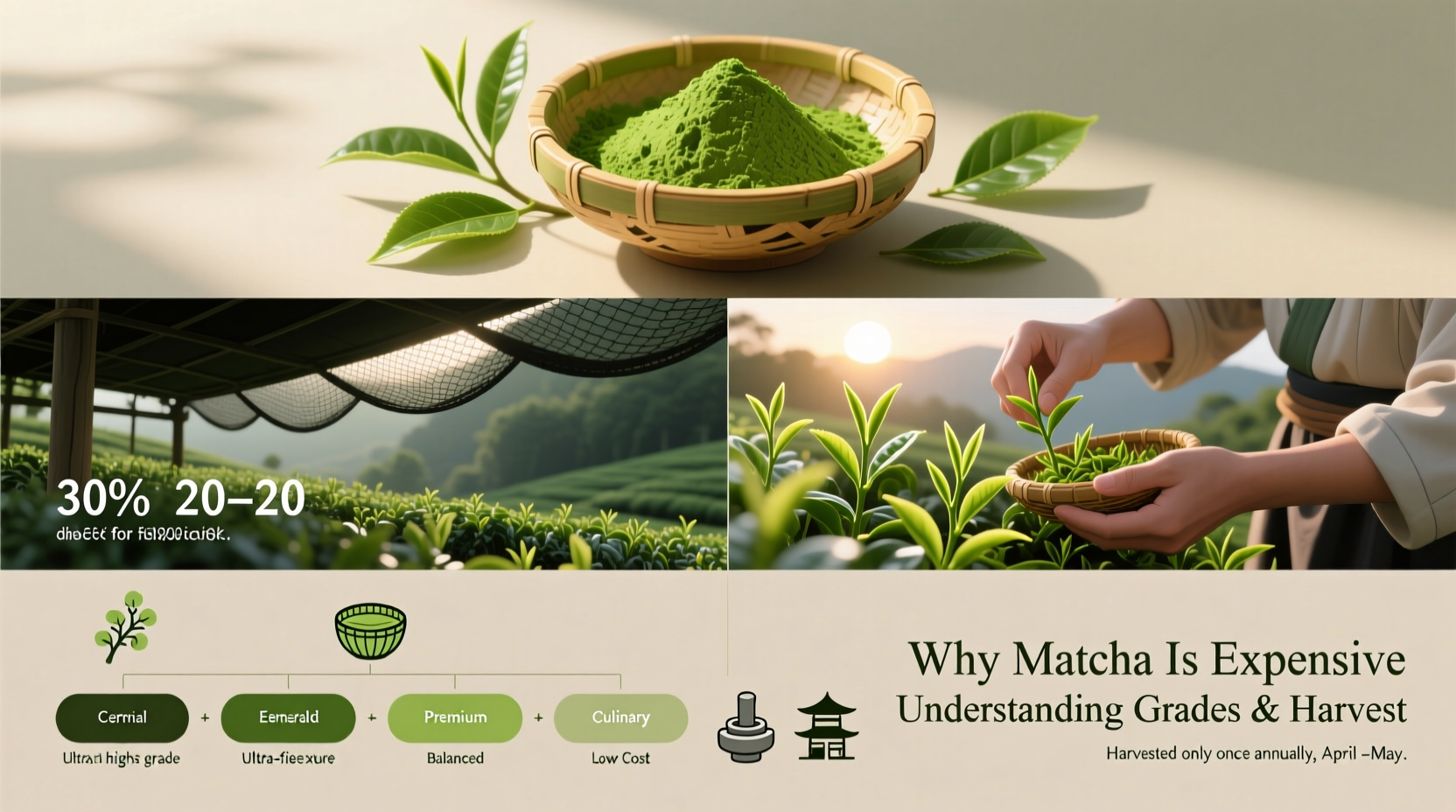
Japanese tea farmers, particularly in Uji (Kyoto), Nishio (Aichi), and Shizuoka, follow rigorous protocols passed down through generations. The most critical factor influencing both flavor and cost is the shading process. Approximately 20 to 30 days before harvest, tea plants (Camellia sinensis) are covered with black nylon nets or traditional reed screens. This blocks 70–90% of sunlight, triggering physiological changes in the leaves.
“Shading increases chlorophyll and L-theanine production, giving matcha its vibrant color and calming umami depth. It’s a delicate balance—too much shade weakens the plant; too little ruins the taste.” — Dr. Kenji Tanaka, Agricultural Researcher at Kyoto University Tea Science Center
Reduced photosynthesis forces the plant to produce more amino acids, especially L-theanine, which contributes to matcha’s signature smoothness and mental clarity. Simultaneously, chlorophyll levels rise, deepening the green hue—a visual hallmark of quality. However, shading also reduces yield by up to 40%, increasing scarcity and driving up costs.
Harvest Timing and Leaf Selection: The First Filter of Quality
Only the youngest, most tender leaves from the top two to three nodes of the tea plant are used for premium matcha. These leaves are harvested once a year during spring—typically late April to early May—for the first flush (ichibancha). This initial harvest produces the finest flavor profile: sweet, creamy, and minimally bitter.
Subsequent harvests (second, third, or even fourth flush) occur throughout the summer and autumn. While these later flushes yield more leaves, they contain higher levels of tannins and catechins, resulting in astringency and bitterness. These lower-grade leaves are typically reserved for culinary-grade matcha.
The harvesting itself is often done by hand for ceremonial-grade matcha, especially on steep terraced fields where machinery cannot operate. Hand-picking ensures only the highest-quality buds are selected and prevents bruising. Even when machines are used, careful calibration is required to avoid damaging delicate leaves.
Tip: Always check the harvest date and origin on matcha packaging. Spring-harvested matcha from Uji or Nishio generally offers superior freshness and complexity.Processing: From Leaf to Powder – A Delicate Art
After harvest, the leaves undergo several precise steps that further differentiate quality and justify cost:
- Steaming: Within hours of picking, leaves are briefly steamed to halt oxidation, preserving color and nutrients. Over-steaming creates a grassy, cooked flavor; under-steaming leads to browning.
- Drying and Destemming: Leaves are dried and sorted to remove stems and veins, which add bitterness. Premium matcha uses only the flat, soft leaf tissue (tencha).
- Stone Grinding: Tencha is slowly ground using granite millstones rotating at 40–60 RPM. This low-speed process prevents heat buildup, which could degrade flavor and aroma. One stone grinder produces only about 30–40 grams of matcha per hour—making it extremely labor-intensive.
The slow grinding process alone explains part of the high price. Automated steel grinders exist but generate heat and metal particles, compromising purity and taste. Authentic matcha producers rely on stone mills, some of which are over a century old. Replacing them is costly and rare.
Grading Systems: Decoding Ceremonial, Premium, and Culinary Matcha
Unlike many teas, matcha follows an informal but widely recognized grading system based on harvest time, leaf position, color, texture, and intended use. There is no official government standard, but reputable suppliers adhere to consistent benchmarks.
| Grade | Harvest Time | Leaf Source | Flavor Profile | Best Use | Average Price (per 30g) |
|---|---|---|---|---|---|
| Ceremonial Grade | First flush (spring) | Top young leaves, shaded 20–30 days | Sweet, umami-rich, minimal bitterness | Whisked with hot water (traditional preparation) | $35–$100+ |
| Premium Grade | Late first flush or early second flush | Middle leaves, moderate shading | Balanced, slightly vegetal | Matcha lattes, smoothies | $20–$35 |
| Culinary Grade | Second, third, or fourth flush | Older leaves, minimal or no shading | Bitter, robust, earthy | Baking, cooking, blended drinks | $10–$20 |
Ceremonial-grade matcha is designed for mindfulness and ritual. Its smooth mouthfeel and nuanced sweetness reflect optimal growing conditions and expert processing. In contrast, culinary-grade matcha is built to withstand sugar, milk, and heat—its boldness holds up in recipes but would be harsh when consumed plain.
How to Spot High-Quality Matcha
Not all green powders labeled “matcha” are equal. Adulteration and mislabeling are common, especially online. To ensure authenticity:
- Color: Vibrant emerald green indicates freshness and proper shading. Dull or yellowish tones suggest older leaves or poor storage.
- Texture: Fine, silky powder that dissolves easily. Graininess means inferior grinding or added fillers.
- Scent: Fresh, grassy, and slightly sweet. Musty or stale odors signal oxidation.
- Taste: Smooth with natural sweetness and umami. Bitterness should be mild, not dominant.
- Origin: Look for “Made in Japan” or specific regions like Uji, Nishio, or Kagoshima. Chinese or Vietnamese “matcha” often differs in cultivar and processing.
Real-World Example: A Day in a Uji Tea Farm
In early April, the Ito family begins preparing their two-acre farm in Uji for the upcoming harvest. For weeks, they install bamboo scaffolding and cover the tea bushes with layered black nets. Workers inspect each row daily, adjusting coverage based on weather. Rain increases disease risk; too much cloud cover reduces chlorophyll development.
When the leaves reach peak tenderness—determined by touch and lab analysis—they call in a team of six harvesters. By hand, they collect only the top two leaves and bud from each shoot. Over three days, they gather just 25 kilograms of fresh leaves—enough to produce about 2.5 kilograms of tencha after processing.
This tencha is then sent to a local artisan who owns three stone mills. Grinding takes nearly 70 hours. The final product: 2.2 kilograms of ceremonial-grade matcha, sold directly to a Tokyo tea house at $85 per 30 grams. The entire season’s first-flush output sells out within two weeks.
Compare this to industrial farms producing culinary matcha: machine-harvested, multiple flushes, steel-grinding, and bulk export. The same weight might sell for $12—but lacks the depth, aroma, and health benefits of true ceremonial matcha.
Why Cost Doesn’t Always Equal Quality—And How to Buy Smart
While price often correlates with quality, it’s not foolproof. Some brands inflate prices with luxury branding while sourcing mid-tier powder. Others cut corners despite premium claims. Here’s how to make informed choices:
Tip: Avoid matcha that’s bright neon green—it may contain added coloring. Natural vibrancy is rich but not artificial-looking.Checklist: Buying Authentic, Worthwhile Matcha
- Verify the origin: Japanese-grown is best for traditional matcha.
- Look for harvest date: Ideally within the last 6–12 months.
- Check ingredient list: Should be 100% pure matcha—no fillers, anti-caking agents, or flavorings.
- Assess packaging: Opaque, airtight tins protect against light and moisture.
- Start small: Try sample sizes before investing in large tins.
- Read reviews from experienced users, not just influencers.
Frequently Asked Questions
Is expensive matcha worth it?
For traditional preparation—whisked with hot water—yes. Ceremonial-grade matcha offers a sensory experience unmatched by lower grades. For baking or lattes with milk and sugar, premium or culinary grade may suffice without sacrificing results.
Can I use culinary matcha for drinking straight?
It’s not recommended. Culinary matcha tends to be bitter and astringent when prepared traditionally. It’s formulated to blend into other ingredients, not stand alone.
How should I store matcha to preserve freshness?
Keep it in an airtight, opaque container in the refrigerator or freezer. Exposure to light, heat, air, and moisture degrades flavor and color rapidly. Once opened, use within 1–2 months for peak quality.
Conclusion: Respecting the Craft Behind the Cup
The high cost of matcha isn’t arbitrary—it reflects the convergence of tradition, terroir, and tireless craftsmanship. From the careful shading of tea plants to the slow grind of volcanic stone mills, every step adds value and limits scalability. When you sip a bowl of high-grade matcha, you’re not just consuming a beverage; you’re participating in a centuries-old practice rooted in mindfulness and excellence.
Understanding the grades and harvest process empowers you to make thoughtful choices—whether you seek a meditative morning ritual or a flavorful addition to your favorite dessert. Invest in quality when it matters, respect the craft, and savor the difference.
🚀 Ready to experience real matcha? Start by sampling a certified ceremonial-grade tin from a reputable Japanese supplier—and taste the tradition for yourself.