Kawaii fashion—once seen as a niche subculture tied primarily to Japanese street style and anime fandoms—is now emerging on international runways, mainstream retail shelves, and social media feeds far beyond the confines of cosplay events and fan gatherings. What began as a distinctly local aesthetic rooted in Tokyo’s Harajuku district has evolved into a global phenomenon embraced by diverse audiences across age groups, cultures, and identities. The appeal of kawaii fashion extends well beyond its visual charm; it taps into deeper societal shifts around emotional expression, digital identity, and resistance to rigid norms. This article explores the multifaceted reasons behind its rising global traction and what this means for fashion, culture, and individual empowerment.
The Cultural Evolution of \"Kawaii\"
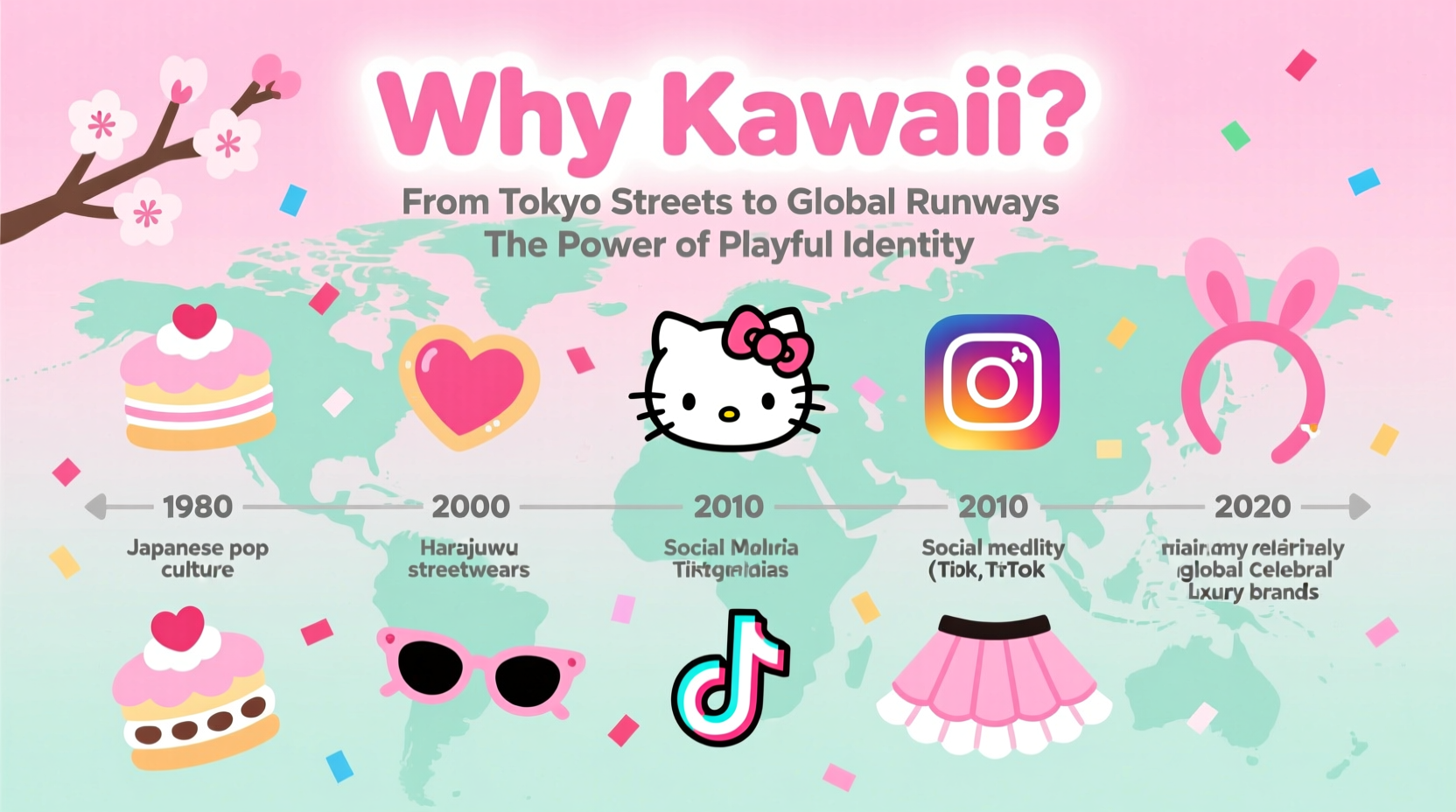
In Japan, “kawaii” translates literally to “cute,” but its cultural meaning runs much deeper. Since the 1970s, kawaii has grown from a handwritten schoolgirl script trend into a full-fledged aesthetic philosophy influencing everything from product design to public behavior. It embodies softness, innocence, playfulness, and emotional warmth—values that stand in contrast to traditional expectations of stoicism or seriousness.
While early Western perceptions associated kawaii with childlike fantasy or anime obsession, today’s global interpretation is more nuanced. Kawaii fashion is no longer just about wearing pastel skirts and cat ears—it's a form of personal storytelling. Designers like Junko Shimada (of Baby, The Stars Shine Bright) and Takako Yamaguchi helped lay the foundation for kawaii’s artistic legitimacy, blending Victorian silhouettes with exaggerated proportions and whimsical motifs. These elements have now been reinterpreted through a global lens, merging with local styles such as cottagecore, e-girl aesthetics, and gender-fluid fashion.
“Kawaii is not escapism—it’s reclamation. People are using cuteness to assert control over how they’re perceived in a world that often demands toughness.” — Dr. Mina Kawamura, Cultural Anthropologist, Waseda University
Social Media as a Catalyst for Global Reach
No discussion of kawaii fashion’s rise would be complete without acknowledging the role of digital platforms. Instagram, TikTok, and Pinterest have become virtual runways where users curate highly stylized personas, often drawing inspiration from Japanese streetwear while adapting it to their own environments.
On TikTok alone, hashtags like #kawaiifashion and #cutecore have collectively amassed billions of views. Unlike traditional fashion cycles dictated by seasonal collections, kawaii content thrives on immediacy and authenticity. A teenager in Buenos Aires can post a DIY coord (coordinate outfit) made from thrifted pieces paired with handmade accessories, only to see it replicated weeks later in Seoul, Berlin, or Toronto.
This democratization of style allows micro-trends to emerge rapidly and spread globally within days. Moreover, algorithmic visibility rewards creativity and consistency, incentivizing creators to refine their looks and build communities around shared aesthetics. As a result, kawaii fashion has transitioned from a costume-like novelty to an everyday wearable identity for many.
Tip: Follow regional kawaii influencers—not just Japanese ones—to see how the style adapts across climates, body types, and cultural contexts.Psychological Resonance in a Post-Pandemic World
The surge in kawaii fashion parallels broader mental health trends. After years of collective anxiety fueled by global crises—from the pandemic to climate instability—many people are seeking comfort, joy, and emotional safety in their daily lives. Clothing becomes one of the most accessible tools for mood regulation.
Wearing bright colors, plush textures, and nostalgic designs can trigger positive psychological responses. Research in environmental psychology suggests that exposure to playful visuals reduces cortisol levels and increases feelings of approachability and trust. In practical terms, choosing a frilly dress or a backpack shaped like a cloud isn’t frivolous—it’s a deliberate act of self-care.
This shift is especially evident among Gen Z and younger Millennials, who prioritize authenticity and emotional well-being over traditional markers of professionalism. Uniforms are being replaced by individuality; power suits give way to pastel puffers and glitter hair clips. For many, dressing kawaii is less about fitting in and more about feeling safe in one’s skin.
A Mini Case Study: From Office Worker to Kawaii Advocate
Lena, a 28-year-old graphic designer in Vancouver, spent years conforming to corporate dress codes despite feeling disconnected from her wardrobe. After leaving her job during the 2022 remote work wave, she began experimenting with kawaii fashion through online communities. Starting with small touches—pastel socks, enamel pins, heart-shaped sunglasses—she gradually built full coordinates inspired by Mori Kei and Fairy Kei styles.
What started as a weekend hobby became a catalyst for personal transformation. Lena launched a YouTube channel documenting her journey, which now has over 60,000 subscribers. More importantly, she reported improved confidence and reduced anxiety. “Putting on something soft and colorful signals to my brain that today doesn’t have to be hard,” she said in a recent interview. Her story reflects a growing pattern: kawaii fashion as a tool for emotional recalibration.
Commercial Adoption and Mainstream Integration
As consumer demand grows, major brands are integrating kawaii elements into their offerings. Collaborations between luxury labels and Japanese designers—such as Comme des Garçons’ PLAY line or Sanrio’s partnerships with Coach and Levi’s—have brought kawaii motifs into high-end markets. Even fast fashion retailers like H&M and & Other Stories have released collections featuring ruffles, bows, and cartoon prints under the guise of “playful femininity.”
However, commercialization brings challenges. Critics argue that when stripped of its cultural context, kawaii risks becoming superficial—aesthetic appropriation without understanding its roots in rebellion, youth autonomy, and anti-conformity. Yet others believe that evolution is inevitable and that globalization allows for respectful reinterpretation.
| Aspect | Traditional Kawaii Context | Globalized Interpretation |
|---|---|---|
| Motifs | Animals, food, fictional characters (e.g., Hello Kitty) | Abstract hearts, rainbows, surreal creatures |
| Color Palette | Pastels, white, baby pink/light blue | Bright neons mixed with muted tones |
| Dress Code Function | Subcultural identity, protest against formality | Self-expression, mental wellness, inclusivity |
| Gender Norms | Often feminine-coded but increasingly non-binary | Frequently used in gender-blurring fashion |
Step-by-Step Guide to Embracing Kawaii Fashion Authentically
For those intrigued by kawaii fashion but unsure where to begin, here’s a practical timeline to explore the style meaningfully:
- Research Core Styles: Familiarize yourself with foundational kawaii substyles such as Lolita (sweet, gothic, classic), Decora (layered accessories), Fairy Kei (vintage 80s-inspired pastels), and Gyaru (glamorous, tanned look). Each has distinct rules and histories.
- Start Small: Introduce one kawaii element per outfit—perhaps a bow headband, striped socks, or a tote bag with a cute character. Observe how it affects your mood and interactions.
- Curate a Moodboard: Use Pinterest or Canva to collect images that resonate with you. Focus not just on clothes but also on color schemes, textures, and lifestyle vibes.
- Thrift and Customize: Many kawaii pieces can be found secondhand or modified. Sew on patches, dye fabrics, or add lace trims to personalize mass-market items.
- Join Communities: Engage with forums like Reddit’s r/koreanvariety or Discord servers dedicated to Japanese fashion. Ask questions, share photos, and learn etiquette before attending events.
- Define Your Version: Don’t feel pressured to replicate exact Japanese coords. Blend kawaii elements with your existing wardrobe—pair a puffy skirt with combat boots, or wear a pastel hoodie under a tailored coat.
Checklist: Building a Sustainable Kawaii Wardrobe
- ✅ Prioritize quality over quantity—invest in durable fabrics like cotton, wool, and polyester blends
- ✅ Support independent designers and ethical makers, especially those based in Japan or part of diaspora communities
- ✅ Repair and maintain delicate items (e.g., hand-wash lace garments, store hats in boxes)
- ✅ Avoid mass-produced knockoffs that misrepresent cultural symbols
- ✅ Document your outfits to track what works and reduce impulse buys
- ✅ Swap or donate pieces instead of discarding them
FAQ
Is kawaii fashion only for women or girls?
No. While historically marketed toward young females, kawaii fashion is increasingly adopted by all genders. Male-presenting individuals participate in styles like Men’s Lolita or Bōgu Kei (protector style), and non-binary creators are redefining kawaii as a gender-neutral aesthetic rooted in emotion rather than biology.
Do I need to be into anime to wear kawaii fashion?
Not at all. While anime conventions were early hubs for visibility, many current enthusiasts have no connection to anime. Kawaii fashion stands independently as an artistic movement focused on aesthetics, texture, and emotional resonance.
Isn’t wearing kawaii fashion childish?
Cuteness does not equate to immaturity. In Japan, adults regularly engage in kawaii culture—from salarymen carrying Pikachu briefcases to elderly women decorating their homes with Hello Kitty knickknacks. Choosing joy and softness is a valid adult expression, particularly in response to stressful environments.
Conclusion: Beyond Trend, Toward Transformation
Kawaii fashion’s ascent beyond anime conventions reflects a profound cultural shift—one where vulnerability is no longer weakness, where playfulness coexists with purpose, and where personal style becomes a quiet act of resistance. Its global popularity isn’t merely a fad driven by viral videos; it’s a response to real human needs for comfort, belonging, and creative freedom.
As long as society continues to value efficiency over empathy, productivity over presence, there will be a counter-movement rooted in softness and sincerity. Kawaii fashion offers a visual language for that movement—a way to say, without words, “I choose gentleness. I honor my inner child. I refuse to be hardened by the world.”
💬 Ready to express yourself differently? Try incorporating one kawaii element into your next outfit and notice how it changes your day. Share your experience online with #MyKawaiiMoment and inspire others to embrace their authentic selves.