In 2025, anime has evolved beyond a niche entertainment form into a dominant cultural force reshaping the global fashion landscape. Once considered a subcultural phenomenon confined to dedicated fanbases, anime now commands attention on high-fashion runways, influences major streetwear collaborations, and inspires design philosophies across continents. The fusion of Japanese visual storytelling with bold aesthetics, emotional depth, and futuristic themes has struck a chord with a generation that values individuality, narrative, and digital-native expression. This shift isn’t fleeting—it’s rooted in demographic changes, technological integration, and a redefinition of what fashion can communicate.
The Cultural Convergence Behind Anime’s Fashion Ascent
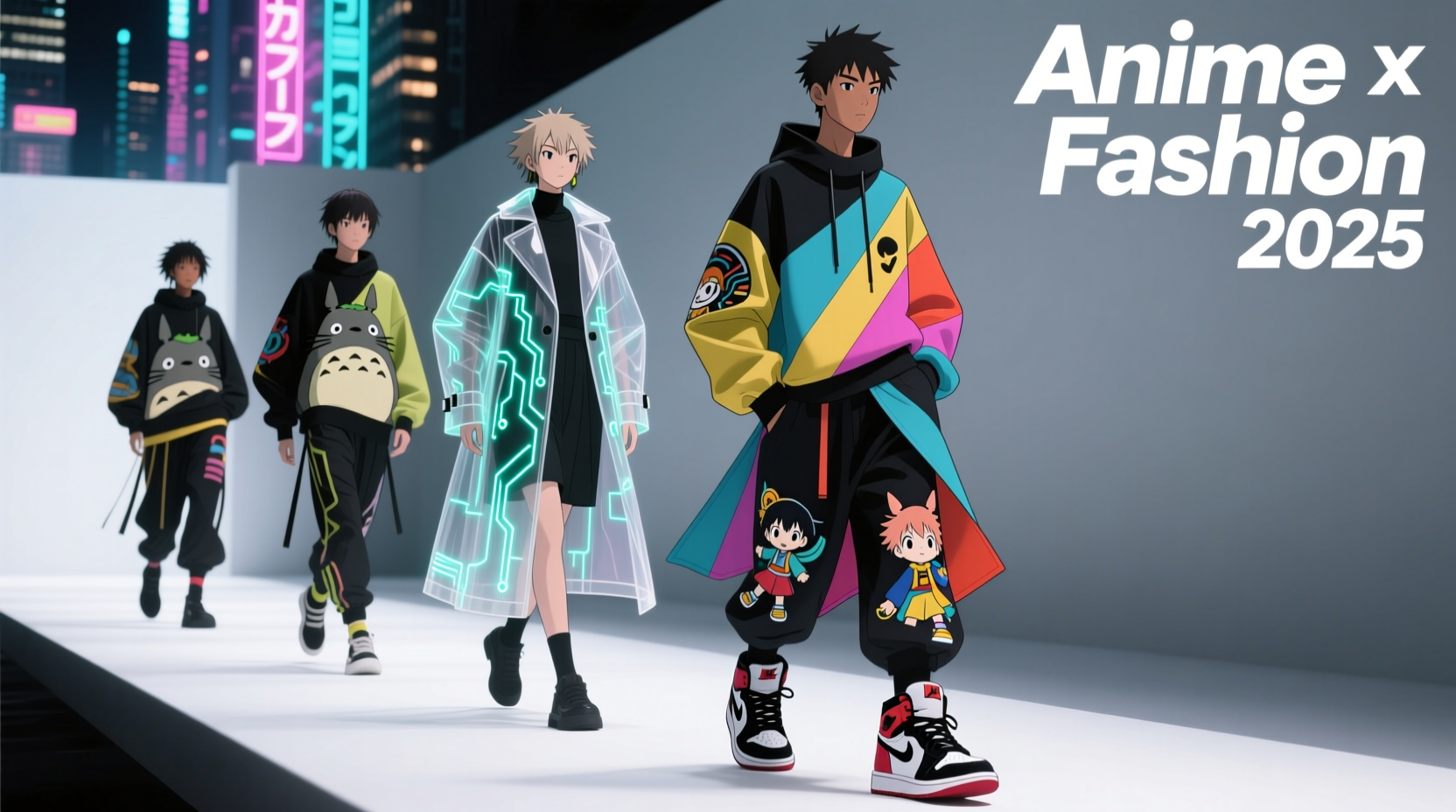
The rise of anime in fashion reflects a broader cultural convergence. Gen Z and younger Millennials—digital natives raised on streaming platforms like Crunchyroll, Netflix’s anime catalog, and YouTube deep dives—have grown up immersed in anime’s visual language. Unlike previous generations who encountered anime through late-night cable or bootleg DVDs, today’s youth engage with it as a primary source of style inspiration. Characters from series like *Sailor Moon*, *Neon Genesis Evangelion*, *Attack on Titan*, and *Jujutsu Kaisen* don’t just represent stories—they embody identities, archetypes, and sartorial ideals.
Fashion, as a medium of self-expression, naturally absorbs such powerful iconography. Designers increasingly recognize that anime offers more than flashy graphics; it provides rich thematic textures—identity transformation, dystopian futurism, cybernetic augmentation, and spiritual duality—that resonate deeply in an era defined by digital alienation and existential uncertainty.
“Anime doesn’t just depict clothing—it constructs entire worlds where fashion is part of the character’s power. That narrative weight is irresistible to designers.” — Lina Takahashi, Creative Director at Tokyo-based label NEXUS FLOW
From Streetwear to Runway: How Anime Aesthetics Are Being Reinterpreted
Anime’s influence manifests differently across fashion tiers, but its presence is unmistakable.
Streetwear: Identity Through Iconography
Streetwear brands have been the earliest adopters of anime’s visual vocabulary. Collaborations between anime studios and urban labels are no longer novelties—they’re strategic moves. Supreme partnered with *Akira* in 2023, releasing jackets emblazoned with Kaneda’s iconic red biker suit motif. BAPE has consistently drawn from *Dragon Ball Z*, while Uniqlo’s UT line features monthly anime drops spanning classics to new hits.
These designs go beyond logos. They tap into nostalgia, fandom loyalty, and a sense of belonging. Wearing an *Evangelion*-themed hoodie isn’t just about style—it signals membership in a global community that values resilience, introspection, and rebellion against conformity.
Tip: When incorporating anime-inspired pieces into your wardrobe, focus on one statement item per outfit to maintain balance and avoid overwhelming the look.Luxury Fashion: Narrative Meets Craftsmanship
High fashion has embraced anime not for its surface-level graphics, but for its conceptual depth. In 2024, Maison Margiela’s Artisanal collection featured layered silhouettes inspired by *Ghost in the Shell*, exploring the boundary between human and machine. Rei Kawakubo of Comme des Garçons cited *Spirited Away* as a reference for her SS25 deconstructed kimonos, emphasizing transformation and impermanence.
What sets these interpretations apart is their abstraction. Rather than printing Goku on a jacket, designers extract mood, color theory, and structural innovation from anime’s visual grammar. Think asymmetrical cuts mimicking battle damage, iridescent fabrics evoking energy auras, or modular garments that suggest transformation sequences.
Key Drivers of Anime’s Fashion Influence in 2025
Several interlocking factors explain why anime’s fashion moment has arrived now—not earlier, not later.
- Digital Integration: With augmented reality (AR) filters, NFT wearables, and virtual influencers modeled after anime characters, the line between digital persona and physical fashion is blurring. Brands like Ader Error and Coperni are designing pieces meant to be experienced both IRL and in metaverse spaces.
- Globalization of Japanese Culture: Japan’s soft power, amplified by UNESCO recognition of manga and anime, has elevated its cultural exports. Governments and institutions now actively support anime diplomacy, making collaborations more accessible and prestigious.
- Youth-Led Consumer Shift: Under-30 consumers prioritize meaning over logos. They seek brands that reflect personal values, creativity, and storytelling—areas where anime excels.
- Sustainability Through Story: Anime often portrays post-apocalyptic or ecologically fragile worlds. Designers are using this to justify upcycled materials, distressed finishes, and “worn future” aesthetics that align with slow fashion principles.
Mini Case Study: The Rise of “Otaku Chic” in Paris
In early 2025, a pop-up boutique titled Otaku Archive opened in Le Marais, Paris. Curated by French-Japanese designer Kenji Moreau, the space blended vintage anime VHS covers with custom garments inspired by 90s shoegaze anime aesthetics. One standout piece—a tailored coat with detachable fiber-optic lining mimicking *Akira*’s psychic aura effects—sold out within hours.
Moreau didn’t market the collection as “anime fashion.” Instead, he framed it as “urban armor for the emotionally complex.” Shoppers weren’t just buying clothes; they were investing in a narrative of inner strength and vulnerability. Local press dubbed the trend “le chic du otaku,” signaling a shift from cosplay-associated kitsch to sophisticated cultural hybridity.
This case illustrates a critical evolution: anime is no longer being consumed as foreign entertainment, but reimagined as a design philosophy—one that speaks to anxiety, hope, and transformation in the digital age.
Checklist: How to Embrace Anime-Inspired Fashion Authentically
If you’re drawn to anime’s growing influence but want to integrate it thoughtfully into your style, consider this actionable checklist:
- Identify Your Resonant Themes: Is it cyberpunk rebellion? Spiritual purity? Emotional resilience? Choose anime that aligns with your personal narrative.
- Start with Accessories: Try enamel pins, scarves, or bags featuring subtle motifs before committing to full graphic pieces.
- Mix High and Low: Pair an anime-themed hoodie with tailored trousers or a trench coat to elevate the look.
- Respect Cultural Context: Avoid sacred symbols (e.g., Shinto motifs) unless used in collaboration with Japanese creators.
- Support Ethical Collaborations: Prioritize brands that license content officially and share royalties with studios.
- Experiment with Silhouettes: Adopt anime-inspired shapes—oversized sleeves, layered hems, asymmetry—without relying on prints.
Do’s and Don’ts of Anime-Inspired Fashion
| Do | Don’t |
|---|---|
| Use anime themes to express personal identity and emotion | Treat anime references as mere novelty or costume |
| Collaborate with artists from anime-producing regions | Appropriate religious or culturally sensitive imagery |
| Incorporate motion-inspired details (zippers, straps, modular parts) | Overload outfits with multiple competing anime prints |
| Explore texture and fabric innovation (glossy, reflective, layered) | Assume all anime looks are inherently “edgy” or rebellious |
| Engage with the story behind the character or series | Reduce anime to meme culture or sexualized tropes |
Step-by-Step Guide to Building an Anime-Influenced Wardrobe
Adopting anime-inspired fashion doesn’t require a closet overhaul. Follow this timeline to integrate the aesthetic sustainably and stylishly:
- Week 1–2: Research & Moodboarding
Select 2–3 anime series that resonate with you. Collect screenshots of character outfits, color palettes, and key scenes. Use apps like Pinterest or Milanote to create a visual guide. - Week 3–4: Acquire Foundational Pieces
Purchase one or two core items: a monochrome coat reminiscent of *Psycho-Pass* enforcers, a pleated skirt echoing *Sailor Moon*, or a techwear vest inspired by *Cowboy Bebop*. Focus on quality over quantity. - Month 2: Layer with Meaning
Add accessories that reflect thematic elements—chokers symbolizing restraint, gloves suggesting transformation, or LED-embedded jewelry for a cybernetic touch. - Month 3: Customize & Personalize
Work with a tailor or use fabric paint to add subtle anime references: a small embroidered sigil, a hidden phrase in katakana, or a lining print only visible when the jacket is open. - Ongoing: Rotate & Reflect
Reassess your collection seasonally. Does each piece still align with your evolving identity? Let go of items that feel performative rather than authentic.
FAQ
Is wearing anime fashion considered cultural appropriation?
Not inherently. Wearing anime-inspired clothing becomes problematic only when sacred cultural symbols (like Shinto talismans or Buddhist iconography) are used without context or respect. When done collaboratively and with understanding, anime fashion celebrates Japanese creativity rather than exploits it.
Can anime influence be incorporated into professional settings?
Yes, subtly. Opt for ties with micro-patterns referencing *Akira*’s cityscapes, shirts with asymmetric collars inspired by *Berserk*, or minimalist jewelry based on *Demon Slayer* breathing techniques. The key is abstraction—suggest the theme without overtly displaying it.
Are luxury brands profiting off anime without giving back?
Some early collaborations faced criticism for this. However, in 2025, most reputable brands now partner directly with studios like Toei Animation, Studio Ghibli, or MAPPA, ensuring licensing fees support creators. Look for official co-branded tags as a sign of ethical practice.
Conclusion: Fashion as a Portal to Alternate Worlds
Anime’s infiltration into mainstream fashion in 2025 is not a trend—it’s a transformation. It reflects a deeper yearning for clothing that does more than cover the body; it wants to tell stories, evoke emotions, and connect wearers to expansive universes of meaning. From the structured chaos of a *Tokyo Revengers* jacket to the ethereal drapery of a *Your Name*-inspired gown, anime teaches us that fashion can be a vessel for alternate identities, psychological depth, and speculative futures.
As boundaries between digital and physical, East and West, subculture and mainstream continue to dissolve, the designers and wearers who embrace anime’s essence—narrative, transformation, and emotional truth—will lead the next wave of authentic style. The question isn’t whether anime belongs in fashion. It’s how deeply we’re willing to let it reshape what we wear—and who we become.
💬 How has anime influenced your personal style? Share your favorite anime-fashion moments or tag a designer pushing these boundaries. Let’s build a conversation around fashion that tells stories worth living in.