There’s nothing more frustrating than applying foundation with care in the morning, only to see it break apart, slide off, or look patchy by midday. You’re not alone—many people struggle with foundation separation, especially as temperatures rise or humidity shifts throughout the day. While commercial primers and setting sprays offer temporary fixes, they often contain synthetic ingredients that can irritate sensitive skin or worsen oil production over time.
The good news is that foundation separation isn’t inevitable. With the right understanding of your skin type, product compatibility, and preparation techniques, you can achieve a smooth, natural-looking base that lasts—without relying on chemical-laden solutions. This guide dives deep into the root causes of midday breakdown and offers science-backed, natural strategies to keep your makeup intact from morning coffee to evening plans.
Understanding Why Foundation Separates
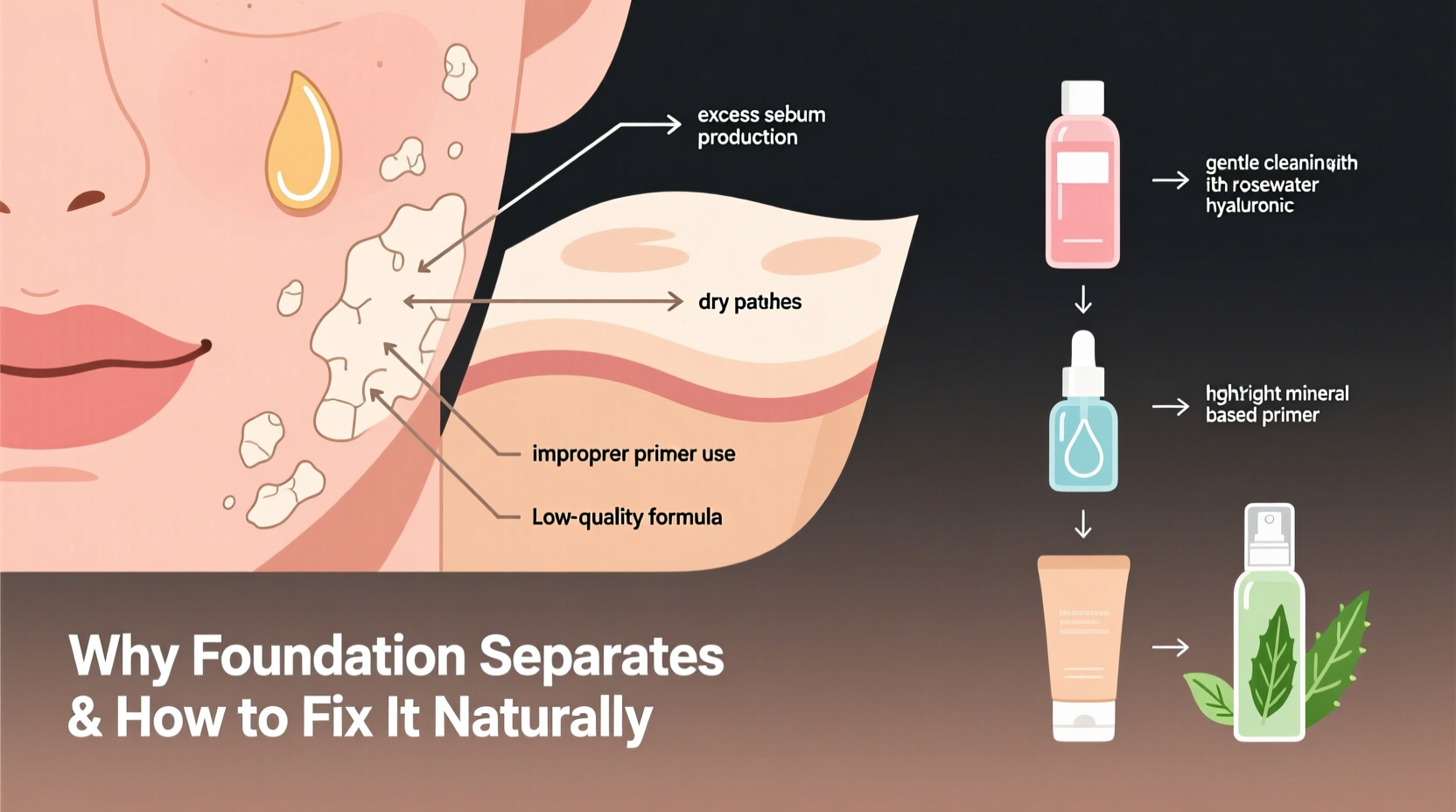
Foundation separation—also known as “makeup meltdown” or “pilling”—occurs when your foundation lifts, cracks, or forms uneven patches on the skin. It’s not just about sweat or oil; several interconnected factors contribute to this issue:
- Skin type mismatch: Using a foundation or moisturizer that doesn’t align with your skin’s natural tendencies (oily, dry, combination) creates imbalance.
- Product incompatibility: Layering silicone-based products with water-based ones can cause repulsion, leading to pilling.
- Inadequate skincare prep: Dehydrated or flaky skin prevents even application, while excess sebum breaks down foundation bonds.
- Environmental exposure: Heat, humidity, and pollution accelerate oxidation and emulsification of makeup.
- Movement and touch: Frequent face-touching, mask-wearing, or facial expressions disrupt the foundation film.
When these elements combine, the result is visible separation—often starting around the T-zone, jawline, or under the eyes. The key to prevention lies not in heavier layers, but in smarter preparation and ingredient-conscious choices.
Tip: Always let each skincare layer absorb fully before applying the next. Rushing leads to mixing and pilling.Natural Skincare Foundations for Long-Lasting Makeup
Your skin is the canvas for your foundation. If it’s unbalanced, no amount of makeup will stay put. A natural, consistent skincare routine tailored to your skin type lays the groundwork for lasting wear.
Balancing Oil Production Naturally
If you have oily skin, your sebaceous glands may overproduce oil by midday, breaking down foundation. Instead of stripping the skin with harsh cleansers—which triggers rebound oiliness—opt for gentle, plant-based regulation.
Aloe vera gel, witch hazel (alcohol-free), and niacinamide-rich serums help regulate sebum without drying. Incorporating omega-3 fatty acids through diet (chia seeds, walnuts, flaxseed) also supports balanced oil production from within.
Hydration Without Heaviness
Dry skin flakes and pulls foundation apart. But heavy creams can mix with makeup and cause caking. Choose lightweight, humectant-rich moisturizers like those containing hyaluronic acid derived from fermented wheat or rice.
Apply moisturizer to damp skin to lock in hydration. Allow 5–7 minutes to absorb completely before foundation. This ensures a smooth, non-greasy surface.
“Makeup failure often starts before the first brushstroke. If your skin barrier is compromised, nothing will adhere properly.” — Dr. Lena Torres, Holistic Dermatology Consultant
Choosing the Right Natural Foundation
Not all natural foundations perform the same. Many mineral formulas are powder-based and prone to settling into fine lines if the skin isn’t prepped. Others contain clays or oils that may clash with your skincare.
Look for liquid or cream foundations made with natural emollients like jojoba oil, shea butter, or squalane (derived from olives or sugarcane). These mimic the skin’s lipid layer, improving adhesion and flexibility.
Key Ingredients to Look For:
- Zinc oxide: Offers light coverage with anti-inflammatory benefits.
- Titanium dioxide: Provides opacity without clogging pores.
- Rice starch: Absorbs excess oil naturally.
- Beeswax or candelilla wax: Helps bind and stabilize the formula on skin.
Avoid foundations with talc or synthetic silicones like dimethicone, which can create a barrier that traps sweat and eventually sloughs off.
| Natural Ingredient | Benefit | Best For Skin Type |
|---|---|---|
| Jojoba Oil | Mimics sebum, improves blendability | Dry, Combination |
| Rice Starch | Controls shine, reduces friction | Oily, Acne-Prone |
| Aloe Vera | Calms redness, hydrates lightly | Sensitive, Reactive |
| Shea Butter | Protective barrier, rich moisture | Dry, Mature |
Step-by-Step: Natural Routine to Prevent Separation
Follow this simple, effective morning routine using natural products to extend your foundation’s wear time:
- Cleanse gently: Use a milk or oil-based cleanser (e.g., almond or apricot oil) to remove overnight buildup without stripping.
- Tone with balance: Apply alcohol-free witch hazel or rosewater with a cotton pad to refine pores and restore pH.
- Hydrate deeply: Press 2–3 drops of aloe vera or hyaluronic serum into damp skin.
- Moisturize wisely: Use a pea-sized amount of natural moisturizer. Focus on dry zones; avoid over-application on oily areas.
- Wait before makeup: Allow at least 5 minutes for full absorption. This prevents mixing and sliding.
- Prime naturally: Use a thin layer of aloe gel or green tea-infused moisturizer as a primer alternative.
- Apply foundation with tools: Use a damp natural sponge or vegan brush for even blending—fingers transfer heat and oil.
- Set strategically: Dust translucent rice powder only on oily zones (T-zone, under eyes) using a fluffy brush.
- Blot, don’t layer: At noon, use blotting papers or a clean tissue to absorb oil—avoid adding more product unless necessary.
Real Example: Sarah’s Midday Meltdown Fix
Sarah, a 34-year-old teacher with combination skin, used a popular natural liquid foundation that looked great at 8 a.m. but separated by noon, especially around her nose and chin. She blamed the classroom heat but noticed her colleagues didn’t have the same issue.
After reviewing her routine, she realized she was applying foundation just 60 seconds after moisturizing—a shea-based cream that hadn’t fully absorbed. She also used a silicone-based sunscreen underneath, which clashed with her water-based foundation.
She switched to an aloe-jelly moisturizer, waited seven minutes before makeup, and replaced her sunscreen with a mineral version using zinc oxide and sunflower oil. Within three days, her foundation stayed intact until 3 p.m. She now uses rice paper for touch-ups instead of reapplying, and her skin looks fresher all day.
Checklist: Daily Habits to Prevent Foundation Separation
Use this checklist every morning to ensure your foundation stays put:
- ✅ Wash face with gentle, non-foaming cleanser
- ✅ Tone with pH-balancing mist (rosewater or chamomile)
- ✅ Apply hydrating serum to damp skin
- ✅ Use lightweight, non-comedogenic moisturizer
- ✅ Wait 5–7 minutes before foundation
- ✅ Choose a natural foundation compatible with your skincare
- ✅ Blend with a sponge or brush—never fingers
- ✅ Set only oily zones with rice or cornstarch-based powder
- ✅ Carry blotting papers for midday oil control
- ✅ Avoid touching face throughout the day
Frequently Asked Questions
Can drinking more water really help my foundation last longer?
Yes. Internal hydration supports skin plumpness and elasticity. Well-hydrated skin cells are less likely to flake or pull foundation apart. Aim for 2–2.5 liters of water daily, especially in dry or hot climates.
Is it okay to use coconut oil before foundation?
For most people, no. Coconut oil is highly comedogenic and can clog pores, especially in oily or acne-prone skin. It also creates a slippery base that prevents foundation from adhering. Opt for non-comedogenic oils like jojoba or grapeseed instead.
Why does my foundation separate only at the jawline?
This is often due to product buildup or differences in skin texture between the face and neck. Ensure you blend foundation down the jawline and onto the neck slightly. Also, exfoliate the jaw and neck weekly with a soft cloth or natural scrub (e.g., oat flour and honey) to prevent dead skin accumulation.
Final Thoughts: Lasting Beauty Starts Beneath the Surface
Foundation separation isn’t a makeup flaw—it’s a signal from your skin. By addressing root causes like dehydration, oil imbalance, and product incompatibility, you can enjoy a fresh, natural look that endures. The most effective solutions aren’t found in heavy powders or setting sprays, but in thoughtful preparation and ingredient awareness.
Embrace a slower, more intentional routine. Let your skin breathe. Choose products that nourish rather than mask. When your foundation finally stops separating, you’ll know you’ve achieved not just cosmetic success, but true skin health.
💬 Have a natural tip that keeps your foundation flawless? Share your experience in the comments—your insight could help someone finally beat the midday melt!








