There’s nothing more frustrating than applying foundation with care in the morning, only to notice by noon that it has settled into fine lines, creased around the nose, or developed an uneven, heavy texture—commonly known as “cakey” makeup. This issue affects countless people regardless of skin type, yet it’s often preventable. Cakey foundation doesn’t mean you need a new product; more often than not, it’s the result of incorrect preparation, technique, or environmental factors. Understanding the root causes and avoiding common pitfalls can transform your makeup routine from one of frustration to flawless wear.
Understanding What “Cakey” Foundation Really Means
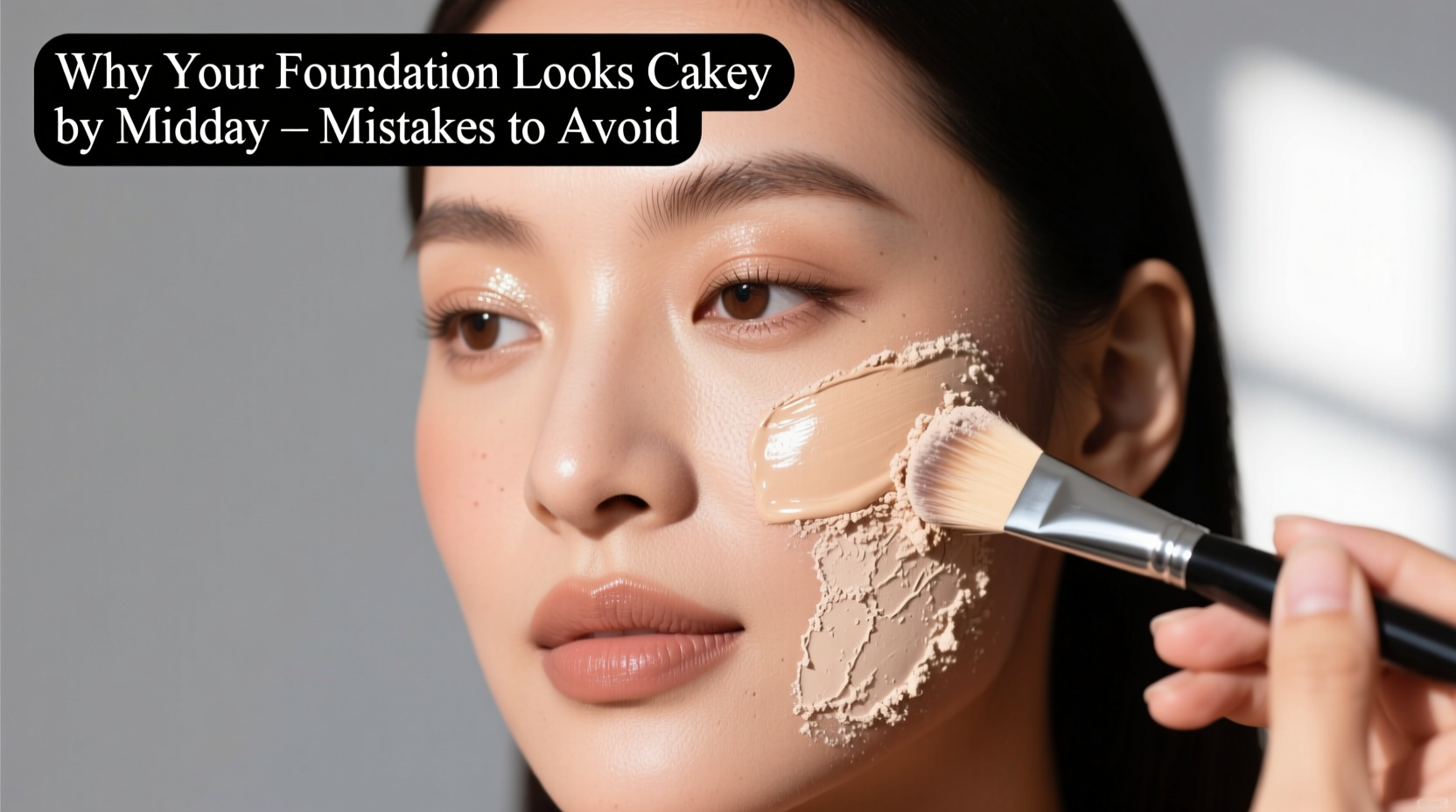
When we describe foundation as “cakey,” we’re referring to a look where the product appears thick, dry, and visibly layered—often cracking or settling into pores and wrinkles. It lacks a natural, skin-like finish and tends to emphasize texture rather than smooth it out. This effect is not just about using too much product; it’s typically a combination of poor blending, incompatible formulas, and inadequate skincare prep.
Cakeiness usually develops over time, worsening by midday due to oil production, moisture loss, movement of facial muscles, and environmental exposure. The key to preventing this lies in addressing both the condition of your skin and the method of application.
Tip: Always test foundation under natural light to assess its true finish—indoor lighting can mask texture issues.Common Application Mistakes That Lead to Cakey Makeup
Even high-end foundations can look unflattering if applied incorrectly. Below are some of the most frequent errors that contribute to a cakey appearance by midday.
1. Skipping Proper Skincare Preparation
Your foundation is only as good as the canvas it's applied to. Applying makeup on dehydrated, flaky, or oily skin leads to uneven absorption and patchiness. Failing to cleanse, tone, moisturize, and prime properly disrupts the smooth adhesion of foundation.
2. Using Too Much Product
One pump or pea-sized amount is usually sufficient for most formulas. Over-applying forces layers to sit on top of each other, increasing the risk of caking, especially in areas prone to movement like around the mouth and eyes.
3. Choosing the Wrong Formula for Your Skin Type
A matte, full-coverage foundation might be ideal for oily skin but disastrous for dry complexions. Similarly, hydrating formulations can slide off oily skin without proper setting. Mismatched formulas lead to breakdown and buildup throughout the day.
4. Not Blending Thoroughly
Incomplete blending creates harsh edges and concentrated deposits, particularly along the jawline and hairline. These spots attract light differently, drawing attention to unevenness and texture.
5. Layering Without Setting Between Steps
Applying concealer, powder, and additional foundation without allowing each layer to set can cause pilling and separation. This is especially true when mixing silicone-based and water-based products.
6. Over-Powdering
Excessive use of setting powder, particularly in dry areas, absorbs moisture and causes foundation to crack. While some powder is necessary for longevity, overdoing it turns a dewy base into a dusty mask.
“Foundation should enhance your skin, not replace it. When it starts looking ‘heavy,’ it’s usually a sign of process error—not product failure.” — Lila Monroe, Celebrity Makeup Artist
The Role of Skin Type and Environmental Factors
Your skin’s behavior changes throughout the day, influenced by hormones, climate, hydration levels, and external stressors. Recognizing how these variables interact with makeup helps explain why cakeiness emerges hours after application.
Dry skin loses moisture over time, causing foundation to cling to flakes and settle into fine lines. Oily skin produces sebum that breaks down foundation bonds, making it migrate and accumulate in creases. Combination skin faces both challenges simultaneously.
Environmental conditions also play a role. Low humidity dries out skin, while heat increases oil production. Air-conditioned offices and heated homes strip moisture, accelerating foundation breakdown.
| Skin Type | Common Midday Issue | Prevention Strategy |
|---|---|---|
| Dry | Flaking, cracking, emphasis on lines | Hydrating primer, cream foundation, minimal powder |
| Oily | Shine, sliding, creasing | Mattifying primer, long-wear formula, blotting + light powder |
| Combination | T-zone shine, cheek dryness | Zonal application: different primers/powders per area |
| Sensitive | Pilling, redness, irritation | Fragrance-free products, gentle layering, minimal actives pre-makeup |
Step-by-Step Guide to Flawless, Long-Lasting Foundation
Follow this detailed routine to minimize cakeiness and maximize wearability. This sequence balances skincare and makeup science for optimal results.
- Cleanse Gently: Use a mild cleanser suited to your skin type. Avoid stripping natural oils, which triggers rebound oiliness or dryness.
- Exfoliate (2–3 Times Weekly): Remove dead skin cells that cause patchiness. Choose chemical exfoliants (like lactic or salicylic acid) over physical scrubs for smoother results.
- Hydrate with Toner or Essence: Replenish surface moisture before heavier products. Look for hyaluronic acid or glycerin-based toners.
- Apply Lightweight Moisturizer: Allow 5–10 minutes for absorption. For dry skin, opt for richer creams at night and lighter ones during the day.
- Use a Targeted Primer: Match the primer to your concern—pore-minimizing, hydrating, mattifying, or color-correcting. Apply only where needed.
- Choose the Right Foundation: Test formulas based on your skin’s daytime behavior, not just morning condition. Creams suit dry skin; liquids or powders work better for oily types.
- Apply with the Correct Tool: Damp sponges give sheer, blended coverage. Brushes offer precision. Fingers warm the product for seamless melding—but wash hands first.
- Build Thin Layers: Start with a small amount. Let it set for 60 seconds before adding more only where needed. Avoid going back over still-wet areas.
- Set Strategically: Use a translucent powder only on areas that tend to crease or shine—under eyes, T-zone. Press, don’t swipe, to avoid disturbing foundation.
- Lock It In with Setting Spray: A fine mist of hydrating or mattifying spray fuses makeup to skin, reducing separation and maintaining freshness.
Real-Life Example: From Cakey to Confident
Sophia, a 32-year-old marketing executive, struggled daily with her foundation looking dull and cracked by 1 PM despite spending 20 minutes on her routine each morning. She used a full-coverage matte foundation because she believed it would last longer, but her combination skin reacted poorly—oily forehead, dry cheeks.
After consulting a dermatologist and makeup artist, she made three key changes: switched to a hydrating serum foundation, began using a mattifying primer only on her T-zone, and replaced her compact powder with a setting spray. She also reduced her foundation quantity by half and blended with a damp sponge.
Within a week, her makeup stayed even and radiant until evening. “I finally feel like I’m wearing *makeup*, not a mask,” she said. Her transformation wasn’t about buying luxury products—it was about aligning her routine with her skin’s actual needs.
Checklist: Prevent Cakey Foundation by Midday
- ✅ Cleanse and hydrate skin before makeup
- ✅ Exfoliate regularly (but not daily)
- ✅ Use a moisturizer appropriate for your skin type
- ✅ Apply primer tailored to your concerns
- ✅ Select foundation matching your skin’s daytime behavior
- ✅ Use minimal product—start with less than you think you need
- ✅ Blend thoroughly, especially at hairline and jaw
- ✅ Set only problem areas with powder
- ✅ Finish with a compatible setting spray
- ✅ Carry blotting papers, not extra foundation, for touch-ups
Frequently Asked Questions
Can drinking more water really help prevent cakey foundation?
Yes—internal hydration supports skin barrier function. Well-hydrated skin holds onto makeup better and resists flakiness. While drinking water alone won’t fix all issues, it’s a foundational element of healthy skin that enhances makeup performance.
Why does my foundation look fine in the morning but bad by lunchtime?
This is typically due to dynamic skin changes. Sebum production peaks midday, and facial expressions cause foundation to shift. Without proper adherence and flexibility in the formula, it separates, settles, or oxidizes. A well-prepped base and setting techniques are essential to combat this.
Is it better to apply foundation with fingers, brush, or sponge?
Each tool has advantages. Fingers provide warmth and blend effortlessly. Brushes offer control and coverage. Sponges (especially damp ones) yield a natural, airbrushed finish. The best choice depends on your desired look and formula. For lightweight, skin-like results, a sponge is ideal. For fuller coverage, brushes work well. Always clean your tools weekly to prevent bacteria buildup and streaking.
Final Thoughts: Make Your Makeup Work With Your Skin, Not Against It
The goal of foundation isn’t invisibility—it’s enhancement. When your makeup begins to look cakey by midday, it’s not a personal failing or a reflection of low-quality products. It’s a signal that something in your routine is out of balance. By revisiting your skincare, reassessing your product choices, and refining your technique, you can achieve a finish that stays fresh, comfortable, and natural-looking from morning meetings to evening plans.
Beauty evolves with understanding. Take the time to observe how your skin behaves throughout the day, adjust accordingly, and embrace a flexible approach. Small tweaks often deliver dramatic improvements. The result? Confidence that lasts as long as your makeup does.
💬 Have you cracked the code to non-cakey foundation? Share your go-to tips or biggest struggles in the comments below—your insight could help someone else achieve their best makeup day yet.