Synthetic cosplay wigs are essential for bringing characters to life, but their tendency to tangle can be frustrating—especially when you're preparing for a convention or photoshoot. Unlike human hair, synthetic fibers behave differently: they���re more prone to static, heat damage, and irreversible matting. If your wig seems to tangle within hours of wearing it, the issue likely lies in fiber type, styling habits, or maintenance routine. Understanding the root causes and adopting proper care techniques can dramatically extend the lifespan of your wig and preserve its flawless appearance.
Why Synthetic Wigs Tangle So Easily
Synthetic wigs are made from plastic-based fibers like kanekalon, toyokalon, or modacrylic. These materials are engineered to mimic the look and texture of natural hair, but they lack elasticity and moisture absorption. As a result, they’re far more vulnerable to friction-induced tangling. When strands rub against clothing, backpacks, or even themselves during movement, knots begin to form at the ends and progress upward. This process accelerates in dry environments where static electricity builds up on the fibers.
Another major contributor is improper brushing. Using a fine-tooth comb or brushing a wig when it’s dry and tangled creates more resistance, leading to snags and breakage. Over time, repeated stress weakens the fibers, making them more susceptible to fraying and knotting. Additionally, exposure to heat—from hot tools, direct sunlight, or even heated rooms—can warp the fibers, altering their alignment and increasing friction between strands.
Tip: Always store your wig on a stand or mannequin head to prevent creasing and reduce surface contact that leads to tangles.The Role of Environmental Factors
Humidity levels play a significant role in wig maintenance. Low humidity increases static, causing fibers to repel each other and fly away, which then tangles upon contact with surfaces. Conversely, high humidity can cause some synthetic fibers to absorb moisture slightly, leading to limpness and clumping. Indoor heating systems and air conditioning further dry out the air, exacerbating the problem.
Dust and debris also accumulate on wigs during events. Particles settle into the fibers and act as abrasives, increasing friction and accelerating tangle formation. Frequent handling—adjusting the wig throughout the day, touching the hair unconsciously, or wearing hats over it—adds mechanical stress that compounds these issues.
How to Detangle a Cosplay Wig Gently and Safely
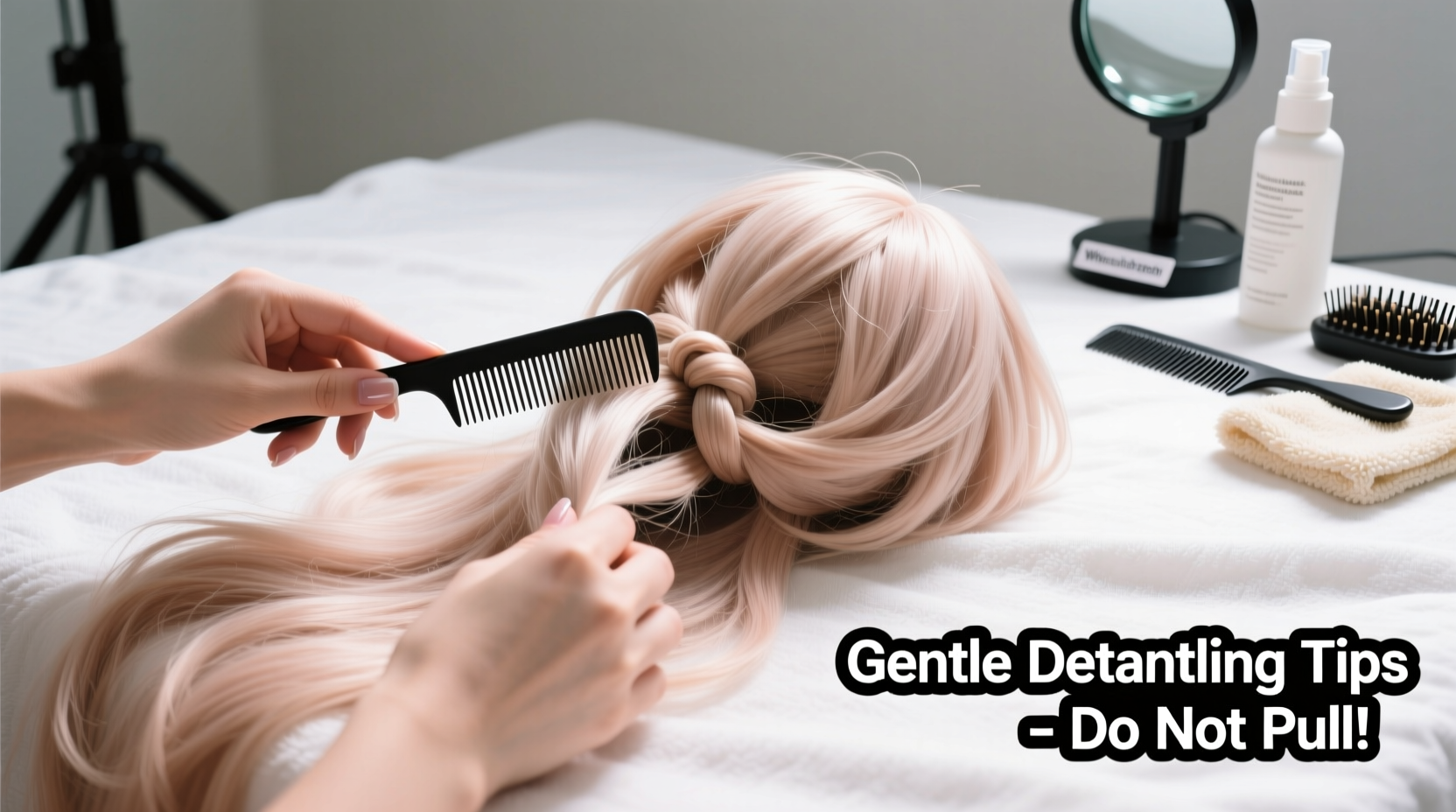
Detangling should never involve forceful pulling. Aggressive brushing damages synthetic fibers permanently, creating split ends and fuzziness that worsen future tangling. Instead, a methodical, patient approach preserves fiber integrity and restores smoothness.
Step-by-Step Guide to Gentle Detangling
- Secure the wig: Place it on a wig stand or mannequin head. This stabilizes the base and allows access to all sections without pulling at the cap.
- Use a wide-tooth comb or wig brush: Start with a tool designed for synthetic hair. Avoid metal combs or fine-tooth brushes, which increase snagging.
- Work from the bottom up: Begin at the tips and gently work through small sections. Hold the upper part of the strand to minimize tension on the knot.
- Mist with a wig detangler or cool water: Lightly spray the tangled area to reduce static and lubricate the fibers. Never use regular hair conditioner—it can degrade synthetic materials.
- Use fingers first for severe knots: For tight tangles, gently separate the mass with your fingertips before introducing a comb.
- Comb in small increments: Move upward in 1-inch segments, ensuring each section is smooth before proceeding.
- Rinse and repeat if necessary: For heavily matted wigs, repeat the process after a short rest to avoid overheating the fibers from friction.
Preventative Care: Keeping Your Wig Tangle-Free
Prevention is far more effective than repair. A consistent maintenance routine not only reduces tangling but also maintains the wig’s color, volume, and overall shape. The key is minimizing friction, managing static, and storing properly.
Do’s and Don’ts of Wig Maintenance
| Do | Don't |
|---|---|
| Brush daily with a wide-tooth comb | Brush when dry and severely tangled |
| Store on a wig stand or in a breathable bag | Throw in a drawer or pile under other items |
| Mist with cool water to refresh | Use heat-styling tools above 160°C (320°F) |
| Wash every 5–10 wears using cold water | Soak in hot water or harsh shampoos |
| Use anti-static sprays made for synthetic fibers | Apply oils, serums, or leave-in conditioners |
Washing and Conditioning Alternatives
Unlike human hair, synthetic wigs cannot benefit from traditional conditioning. However, a gentle cleansing routine removes dust and resets the fiber alignment. Use cold water and a mild shampoo (baby shampoo works well). Submerge the wig and swish gently—never rub or twist. Rinse thoroughly, then apply a small amount of fabric softener diluted in water (1 tsp per liter) as a one-minute soak. This helps reduce static without damaging the fibers. Rinse again and air-dry on a stand away from direct heat or sunlight.
“Many people treat synthetic wigs like real hair, but they require a completely different approach. The moment you start using heat or heavy products, you compromise the fiber structure.” — Lena Park, Wig Stylist & Cosplay Consultant
Real Example: From Matted Mess to Show-Ready
Sophie, a frequent con attendee, noticed her long blue anime wig became unmanageable after just two events. Despite careful storage, she found knots forming behind the ears and at the nape. After consulting a professional wig technician, she realized she had been brushing the wig dry every morning and storing it loosely in a garment bag.
She adjusted her routine: now she sprays the ends with cool water before brushing, uses only a wide-tooth comb, and stores the wig on a foam head inside a cotton pillowcase. She also began washing it after every third wear using the fabric softener rinse method. Within weeks, tangles decreased significantly, and the wig maintained its original shine and flow during panels and photo ops.
This case highlights how small changes in daily habits can yield dramatic improvements in wig longevity and manageability.
Essential Checklist for Long-Lasting Wig Care
- ✔️ Brush gently from ends to roots daily
- ✔️ Mist with water or wig spray before brushing
- ✔️ Store on a wig stand or mannequin head
- ✔️ Cover with a breathable cloth or net when stored
- ✔️ Wash every 5–10 wears using cold water and mild cleanser
- ✔️ Air-dry completely before storing or re-wearing
- ✔️ Avoid heat sources, including blow dryers and direct sun
- ✔️ Use anti-static spray sparingly during events
Frequently Asked Questions
Can I use fabric softener on my cosplay wig?
Yes—but only in very diluted form and as a final rinse, not a leave-in treatment. Mix one teaspoon of liquid fabric softener per liter of cold water. Soak the wig for one minute after shampooing, then rinse thoroughly. This helps neutralize static and soften fibers without residue buildup.
What should I do if my wig is already severely matted?
If the wig has large, tight knots, cutting may be unavoidable. For minor matting, try soaking in cold water with a drop of baby shampoo, then gently separating with fingers. For deep mats near the crown or nape, carefully trim only the most damaged sections with small scissors, preserving the overall length and style.
Is it safe to sleep in a cosplay wig?
No. Sleeping in a wig causes constant friction against pillows, leading to rapid tangling and fiber stress. If you must wear it overnight (e.g., for early shoots), braid the hair loosely and cover with a silk scarf to reduce friction.
Conclusion: Treat Your Wig Like the Investment It Is
A high-quality cosplay wig isn’t disposable—it’s a crafted piece of costume artistry worth protecting. Tangling is not inevitable; it’s a symptom of improper handling and environmental exposure. By understanding the limitations of synthetic fibers and adopting a disciplined care routine, you can keep your wigs looking pristine for years. Gentle detangling, smart storage, and preventive maintenance aren’t just chores—they’re acts of respect for your craft and character.
💬 Have a favorite detangling hack or product that saved your wig? Share your experience in the comments and help fellow cosplayers fight the tangle battle together!