Choosing between a 50ml and 100ml bottle of perfume isn’t just about size—it’s a decision that impacts your budget, fragrance experience, and even sustainability. Many assume that buying larger automatically means better value, but the reality is more nuanced. For some, a 100ml bottle offers convenience and savings; for others, it may lead to waste, oxidation, or unused product gathering dust on a shelf.
The truth lies in how you use fragrance, your lifestyle, scent preferences, and storage habits. By understanding the real differences—beyond just volume—you can make smarter, more economical choices without sacrificing luxury or enjoyment.
Understanding Perfume Sizes: What Do 50ml and 100ml Actually Mean?
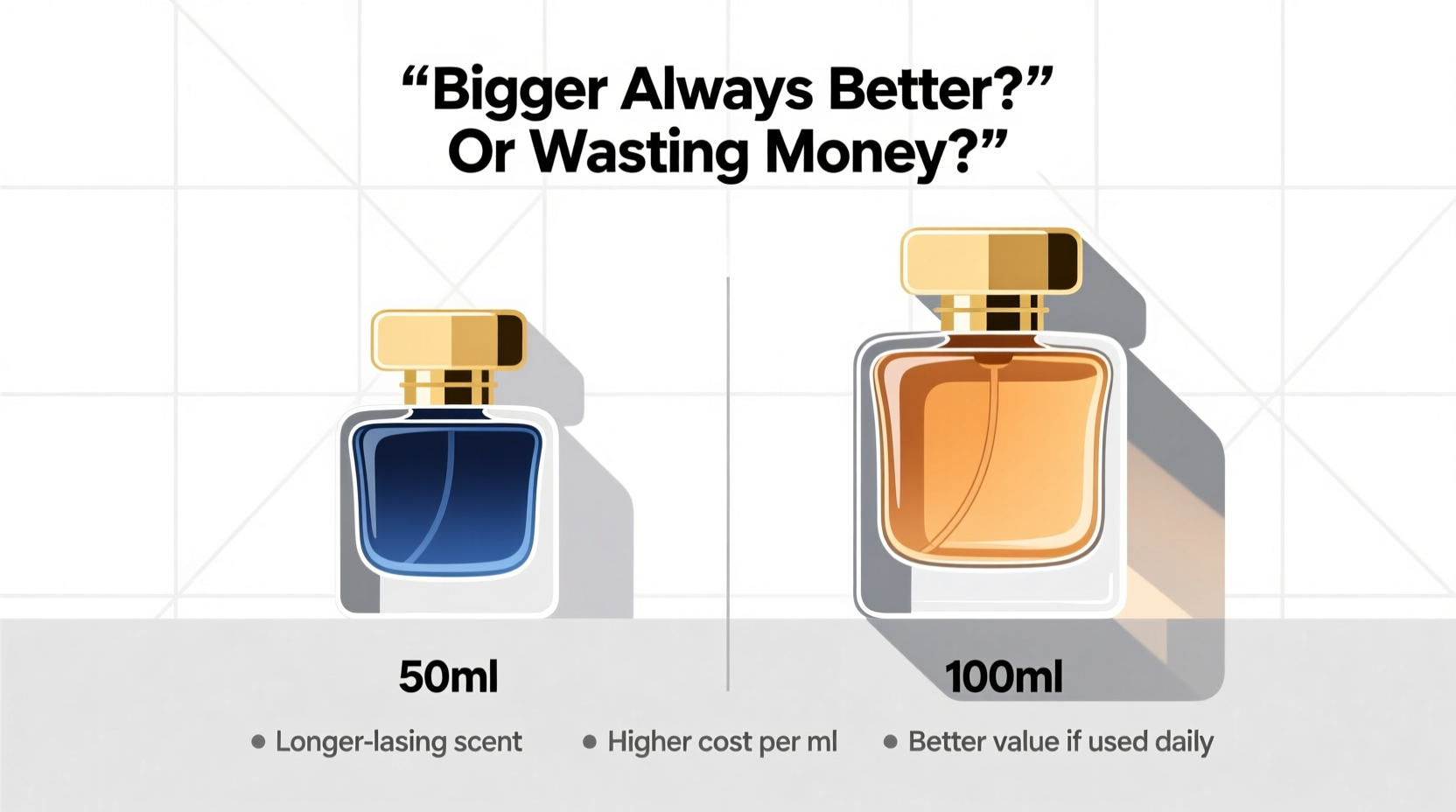
A 50ml bottle contains approximately 1.7 fluid ounces, while a 100ml holds 3.4 fluid ounces—double the volume. But double the liquid doesn’t necessarily mean double the value. The price difference between sizes often exceeds the proportional increase in quantity. For example, a 50ml bottle might cost $90, while the 100ml version costs $160—only 78% more for twice the amount.
This pricing structure reflects packaging, branding, and consumer psychology. Larger bottles are marketed as premium purchases, appealing to those who want “more for their money.” Yet, unless you're using the fragrance daily and finishing the bottle within 12–24 months, you may not realize the full benefit.
“Perfumes degrade over time, especially when exposed to light and air. A large bottle only saves money if it’s used before its peak freshness passes.” — Clara Nguyen, Fragrance Archivist & Olfactory Consultant
Cost Per Milliliter: Is Bigger Really Cheaper?
To determine true value, calculate the cost per milliliter (ml). This simple metric reveals whether the larger size actually offers savings.
| Fragrance | Size | Price | Cost per ml |
|---|---|---|---|
| Luxura Noir | 50ml | $90 | $1.80/ml |
| Luxura Noir | 100ml | $160 | $1.60/ml |
| Essence Bloom | 50ml | $75 | $1.50/ml |
| Essence Bloom | 100ml | $135 | $1.35/ml |
In both examples, the 100ml option provides a lower cost per ml—about 10–15% savings. However, this only translates into real-world savings if you use the entire bottle. If half goes unused or degrades due to poor storage, you’ve effectively paid more for less usable product.
Tip: Always compare cost per ml before purchasing. A 20% discount on a 50ml during a sale may offer better value than a full-price 100ml.Lifestyle Fit: Who Should Choose 50ml vs 100ml?
Your choice should align with how frequently and consistently you wear a particular scent. Consider these scenarios:
- Occasional wearers: If you rotate fragrances seasonally or wear perfume only for events, a 50ml is likely sufficient and reduces risk of spoilage.
- Daily users: Those who apply fragrance every morning may finish a 100ml bottle in under a year, making it a smart investment.
- Collectors: If you enjoy sampling new scents, sticking to 50ml or smaller sizes prevents clutter and waste.
- Gift buyers: A 100ml makes a more impressive gift, but only if the recipient already loves the scent.
Mini Case Study: Sarah’s Scent Rotation
Sarah, a marketing executive in her early 30s, owns eight perfumes. She uses two daily—one for work, one for evenings—and rotates seasonal scents in spring and fall. Last year, she bought a 100ml bottle of her favorite woody fragrance, expecting it to last two years. After 14 months, she noticed the scent had flattened—top notes dulled, base notes overly dominant. Despite having nearly 30ml left, she stopped using it. Had she purchased the 50ml, she would have finished it at peak quality and possibly repurchased fresh.
Her experience illustrates a common issue: larger bottles aren’t always better when usage is moderate.
Preservation and Shelf Life: Why Size Matters Over Time
Perfumes don’t expire like food, but they do degrade. Exposure to heat, light, and oxygen alters their chemical composition. Citrus and floral notes fade fastest; heavier base notes like vanilla or musk linger longer, sometimes becoming overpowering.
A 100ml bottle, opened and used sporadically, exposes more air each time it's sprayed. Over months, this repeated oxidation accelerates aging. In contrast, a 50ml bottle empties faster, minimizing exposure and preserving integrity.
Most perfumers recommend using an opened bottle within 12 to 24 months for optimal performance. Unopened, perfumes can last 3–5 years if stored properly.
Step-by-Step Guide: Maximizing Perfume Longevity
- Store in a cool, dark place: Avoid windowsills, bathrooms, or near heaters.
- Keep the cap on: Minimize air exposure when not in use.
- Buy based on usage, not impulse: Only go big if you’re certain about long-term wear.
- Use original box: It provides extra protection from light and temperature shifts.
- Track purchase dates: Label bottles with the opening date to monitor freshness.
When Bigger Makes Sense (And When It Doesn’t)
Here’s a clear breakdown of situations where each size shines:
| Scenario | Best Choice | Why |
|---|---|---|
| Daily fragrance user | 100ml | Will finish within 1–2 years, maximizing value and freshness |
| Frequent traveler | 50ml | Easier to pack, TSA-compliant, less risk if lost |
| Trying a new scent | 50ml or smaller | Reduces financial risk if you don’t love it long-term |
| Limited storage space | 50ml | Takes up less room, easier to organize |
| Signature scent lover | 100ml | Ensures consistent supply, fewer reorders |
Checklist: Choosing the Right Perfume Size
- ✅ Do I wear this fragrance daily or multiple times a week?
- ✅ Have I loved this scent for over six months?
- ✅ Do I have proper storage conditions?
- ✅ Is the 100ml price-per-ml significantly lower?
- ✅ Am I buying out of habit or actual need?
FAQ: Common Questions About Perfume Sizes
Does a 100ml perfume last twice as long as a 50ml?
Only if used at the same frequency. In practice, usage patterns vary. A 50ml bottle typically lasts 3–6 months with daily use, while a 100ml can last 8–14 months. But longevity also depends on spray count per application—some use 2 sprays, others 6.
Can I return an unopened 100ml if I don’t like it?
Most retailers do not accept returns on opened beauty products, and even unopened bottles may be non-returnable due to hygiene policies. Always test a sample first when trying a new fragrance.
Are travel sprays worth it instead of buying smaller bottles?
Refillable travel atomizers offer flexibility and let you carry favorites without committing to large sizes. They’re ideal for testing or rotating scents, making them a cost-effective alternative to multiple full-size bottles.
Conclusion: Make the Choice That Fits Your Life, Not Just the Price Tag
Bigger isn’t inherently better when it comes to perfume. While 100ml bottles often deliver a lower cost per milliliter, their value depends entirely on your habits. Wasting half a bottle because it oxidized or no longer smells right means you didn’t save money—you overspent.
The most intelligent approach balances cost, usage, and care. If you’re a devoted fan of a scent and use it daily, the 100ml is a practical, economical choice. But if you enjoy variety, live minimally, or simply don’t wear fragrance often, the 50ml gives you luxury without excess.
🚀 Next time you shop, ask yourself: Will I use it all before it fades? Your nose—and wallet—will thank you.