Have you ever sprayed a new perfume, loved the opening notes, only to realize an hour later that the scent has vanished—without a trace? You’re not imagining it. Many people experience this phenomenon: certain fragrances seem to “disappear��� on their skin while others bloom with intensity. This isn’t magic or faulty memory—it’s chemistry. Understanding the interplay between your skin and fragrance molecules can help explain why some scents vanish quickly and how to choose ones that last.
Fragrance performance varies dramatically from person to person, even when using the exact same bottle. What lingers beautifully on one individual may barely register on another. The reasons are rooted in biochemistry, environmental factors, and formulation science. By exploring these elements, we can demystify scent longevity and make smarter choices when selecting perfumes.
The Science of Scent: How Perfume Interacts with Skin
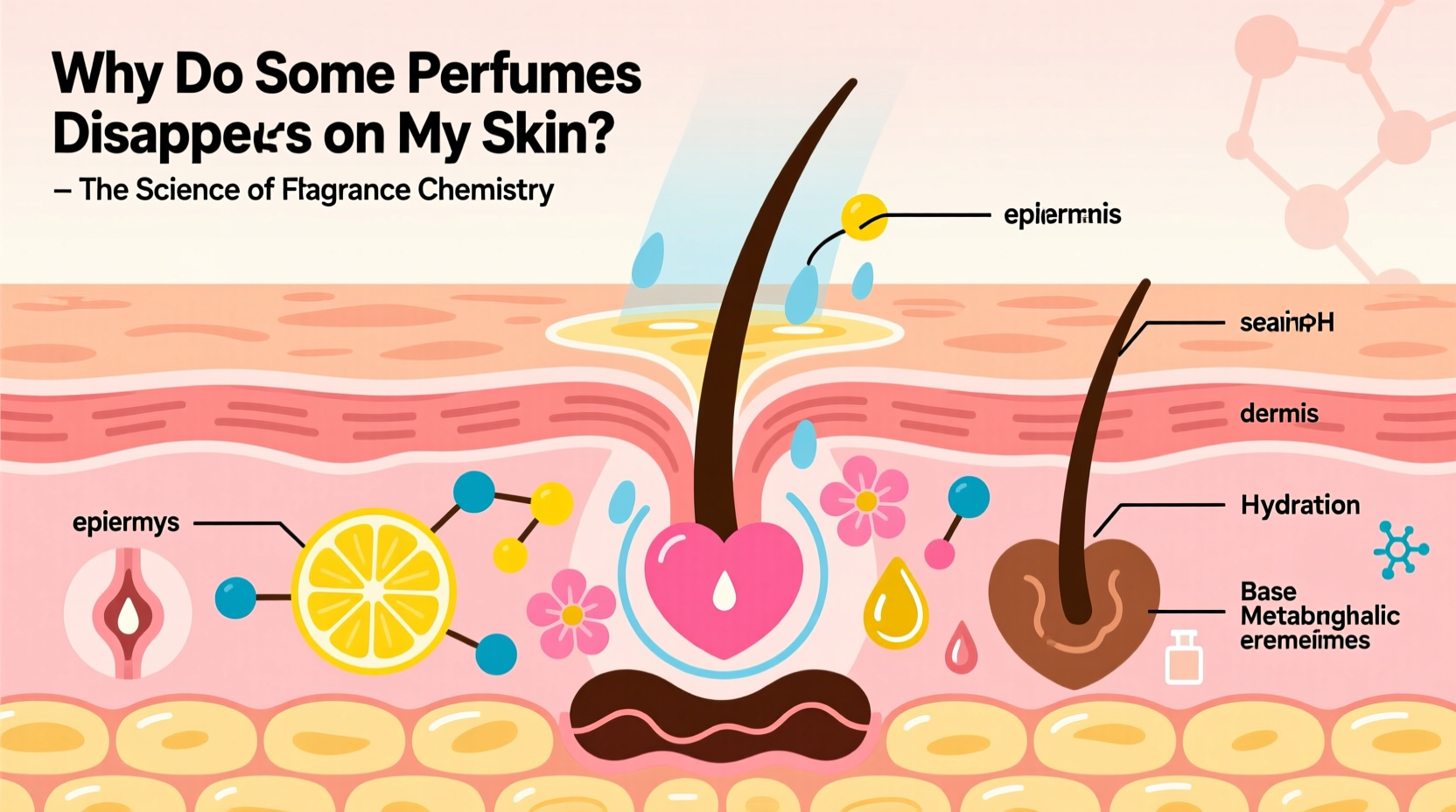
Perfume is not a static substance; it's a dynamic blend of volatile aromatic compounds designed to evolve over time. When applied to the skin, fragrance undergoes a process known as olfactory evaporation, where different notes emerge in stages: top, middle (heart), and base. However, the skin acts as both a canvas and a catalyst for this transformation.
Your skin’s pH level, sebum (oil) production, moisture content, and temperature all influence how fragrance molecules behave. For instance, acidic skin (lower pH) can accelerate the breakdown of certain esters and aldehydes, causing top notes to fade faster. Conversely, oily skin tends to hold onto fragrance longer because oils help anchor scent molecules, slowing their evaporation.
A 2020 study published in the Journal of Cosmetic Science found that individuals with higher sebum levels retained fragrance up to 40% longer than those with dry skin. This doesn't mean dry-skinned individuals can't enjoy long-lasting scents—they simply need to adjust application techniques and fragrance concentration choices.
Tip: Apply unscented moisturizer before spraying perfume to create a hydrated base that helps lock in fragrance.Fragrance Chemistry: Why Some Notes Evaporate Faster
All perfumes follow a structure called the fragrance pyramid, composed of three layers:
- Top notes: Light, volatile molecules like citrus, herbs, and aldehydes that evaporate within 5–15 minutes.
- Heart notes: The core of the fragrance—floral, spicy, or fruity accords—that emerge after the top notes fade.
- Base notes: Heavy, slow-evaporating molecules such as woods, musks, resins, and vanilla that provide depth and longevity.
The speed at which each layer unfolds depends on molecular weight and volatility. Smaller, lighter molecules (like limonene in lemon oil) escape into the air quickly, while heavier ones (such as patchouli or ambergris) linger for hours. If a perfume relies heavily on top and heart notes with minimal base presence, it may seem to “disappear” once those initial phases pass—even if the scent is still technically present.
This explains why citrus colognes often fade rapidly compared to oriental or woody fragrances. It's not that your skin is “eating” the scent; rather, the composition lacks staying power. Reformulating with more tenacious base ingredients can solve this issue—but many niche and designer brands prioritize freshness over longevity, especially in daytime or summer scents.
“Fragrance longevity isn't just about skin type—it's equally about formulation balance. A well-structured perfume should transition smoothly from top to base without vanishing.” — Dr. Lena Moretti, Cosmetic Chemist & Fragrance Formulator
Skin Type and Its Impact on Scent Longevity
Your skin is chemically unique, much like a fingerprint. Several biological factors determine how a fragrance performs on you:
- pH Level: Healthy skin typically ranges between pH 4.5 and 5.5. Alkaline skin (higher pH) can break down certain fragrance components faster, altering both scent and duration.
- Hydration: Dry skin absorbs fragrance oil but lacks the lipid barrier to retain it. Well-moisturized skin creates a smoother surface for scent diffusion.
- Body Heat: Warmer skin increases molecular movement, accelerating evaporation. But moderate warmth also enhances sillage (the trail of scent).
- Diet and Hormones: Foods rich in spices or garlic can subtly alter body odor, clashing with or masking fragrance. Hormonal fluctuations (e.g., during menstruation or menopause) can change skin chemistry temporarily.
For example, someone with naturally oily, warm skin might find that heavy gourmands become overwhelming, while a person with cool, dry skin struggles to get any projection from light eau de toilettes. These differences aren't flaws—they're variations in human biology.
Real-Life Example: Two Women, One Perfume
Sophia and Mia both purchased the same popular floral-eau de parfum. Sophia has combination skin, lives in a humid climate, and applies lotion daily. She finds the fragrance lasts over six hours with noticeable sillage. Mia, however, has very dry skin, works in an air-conditioned office, and rarely uses moisturizer. To her, the scent fades within 90 minutes. Neither experience is incorrect—both are valid outcomes shaped by skin chemistry and environment.
When Mia switched to applying a glycerin-based balm before fragrance and began storing her perfume away from sunlight, she noticed a significant improvement in wear time. Small adjustments made a big difference.
Choosing Long-Lasting Fragrances: A Practical Guide
If you're tired of perfumes disappearing too quickly, consider these evidence-backed strategies:
1. Match Concentration to Your Needs
Fragrance concentration refers to the percentage of aromatic compounds in alcohol. Higher concentrations generally last longer:
| Type | Aromatic Oil % | Average Longevity | Best For |
|---|---|---|---|
| Eau Fraîche | 1–3% | 1–2 hours | Summer refreshment |
| Eau de Cologne | 2–4% | 2–3 hours | Daytime use |
| Eau de Toilette (EDT) | 5–10% | 3–5 hours | Everyday wear |
| Eau de Parfum (EDP) | 10–15% | 5–8 hours | Evening/long days |
| Parfum/Extrait | 15–30% | 8+ hours | Special occasions |
For those struggling with vanishing scents, upgrading to EDP or parfum can yield dramatic improvements.
2. Prioritize Base Notes
Look for perfumes featuring long-lasting base ingredients:
- Musks (synthetic or natural)
- Oakmoss and other mosses
- Sandalwood, vetiver, cedar
- Vanilla, tonka bean, benzoin
- Amber, labdanum, resins
These molecules have low volatility and high molecular weight, meaning they evaporate slowly and cling to skin effectively.
3. Layer Your Fragrance
Using matching body products (shower gel, lotion, spray) builds a “scent reservoir” on the skin. Even if the top notes fade, the layered base continues to emit fragrance throughout the day.
Tip: Apply perfume right after showering when pores are open and skin is slightly damp for better absorption.Action Checklist: Make Your Perfume Last Longer
Follow these steps to maximize fragrance performance:
- Moisturize skin before applying perfume (use unscented or matching-scent lotion).
- Choose Eau de Parfum or Parfum concentration for longer wear.
- Apply to pulse points: wrists, neck, behind ears, inner elbows.
- Avoid rubbing wrists together—this crushes delicate top notes.
- Store perfumes in a cool, dark place to preserve integrity.
- Reapply strategically: carry a travel atomizer for touch-ups.
- Layer with complementary scented products from the same line.
- Test fragrances on your own skin before buying—never rely solely on blotters.
Frequently Asked Questions
Can medications affect how perfume smells on my skin?
Yes. Certain medications, particularly antibiotics, antihistamines, and hormonal treatments, can alter body chemistry and perspiration, which in turn affects how fragrance interacts with your skin. For example, some drugs increase skin dryness or change pH, leading to shorter scent life.
Why does a perfume last longer on clothes than on my skin?
Fabric fibers absorb and trap fragrance molecules more effectively than skin, especially natural fabrics like cotton or wool. Unlike skin, clothing doesn’t produce heat or oils that accelerate evaporation. However, always check care labels—alcohol can stain or damage delicate materials.
Is it possible to be “unscented” to perfume?
You’re never truly “unscented,” but anosmia (loss of smell) to specific molecules can occur. Some people cannot detect certain notes—like lily of the valley or musk—due to genetic variation. Additionally, rapid olfactory fatigue (nose blindness) may make you think the scent is gone when others can still smell it.
Conclusion: Work With Your Chemistry, Not Against It
The disappearance of perfume on your skin isn’t random—it’s a predictable outcome of personal biochemistry meeting fragrance formulation. Instead of blaming yourself or assuming a product is defective, recognize that every skin type has its own relationship with scent. Armed with knowledge about pH, hydration, concentration, and base notes, you can select perfumes that align with your biology and lifestyle.
Start small: hydrate your skin before application, upgrade to a richer concentration, and pay attention to base ingredients. Track what works and refine your choices over time. Fragrance should be a source of joy, confidence, and self-expression—not frustration.
🚀 Ready to rediscover your favorites? Re-test a perfume you thought vanished too fast—this time with moisturized skin and fresh eyes. Share your results in the comments below and help others unlock their perfect scent match.








