Microblading is a popular semi-permanent cosmetic procedure that enhances the appearance of sparse or uneven brows by creating fine, hair-like strokes with pigment. While many achieve stunning results, it’s not uncommon for clients to notice asymmetry or unevenness during or after the healing process. This can be alarming—especially when you've invested time and money into perfecting your look. Understanding why this happens and knowing how to respond is essential for achieving balanced, natural-looking brows.
The appearance of uneven eyebrows post-microblading isn't always a sign of poor technique or permanent flaw. Much of what you see during the first few weeks is part of the body’s natural healing response. Pigment settles differently, skin sheds unevenly, and swelling subsides at different rates—all contributing to temporary irregularities. With proper care and realistic expectations, most concerns resolve over time or can be corrected in touch-up sessions.
Why Asymmetry Occurs After Microblading: The Science Behind Healing
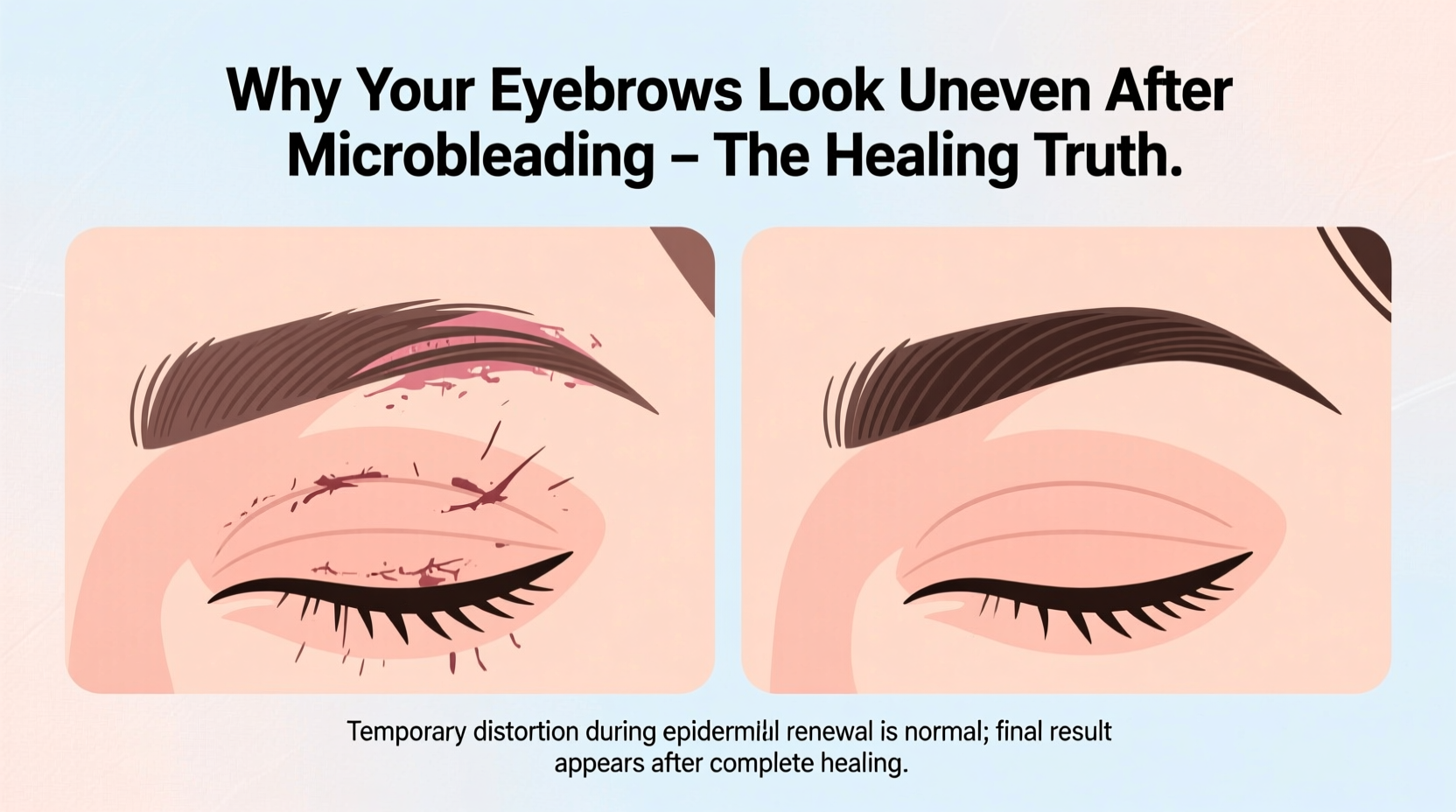
Skin is not uniform across the face. Differences in oil production, thickness, elasticity, and blood flow between the left and right sides mean each eyebrow heals at its own pace. These biological variances are normal but often overlooked when evaluating immediate post-procedure results.
During the initial healing phase (typically 7–14 days), scabbing and flaking occur as the epidermis repairs itself. If one side flakes more aggressively or retains less pigment due to drier skin or accidental picking, that area may appear lighter or thinner. Additionally, inflammation from the trauma of microblading can cause temporary puffiness, making one brow sit higher than the other until swelling resolves.
Pigment retention also varies based on skin type. Oily skin tends to push out pigment faster, leading to patchy or faded areas, especially near the tail of the brow where sebaceous glands are more active. Combination skin might retain color well in dry zones but lose definition in oil-prone regions. This differential absorption creates the illusion of unevenness even if the original stroke work was symmetrical.
Tip: Avoid touching or scratching healing brows—even gentle rubbing can dislodge pigment and create gaps.Anatomy Isn’t Symmetrical—And That’s Normal
Facial symmetry is a myth. No two sides of the face are identical. One eye may sit slightly higher, one cheekbone more prominent, or one brow bone elevated. A skilled technician works *with* these features rather than imposing artificial balance. What looks “uneven” might actually be an accurate representation of your natural structure.
For example, if your left brow bone arches higher than the right, replicating the same shape on both sides would make the left brow appear too high. Instead, the artist adjusts the design so both brows harmonize with their underlying bone structure. After healing, clients sometimes misinterpret this intentional adaptation as a mistake.
“After thousands of procedures, I’ve learned that true beauty lies in personalized symmetry—not mirror-image perfection.” — Lena Torres, Master Cosmetic Tattoo Artist & Educator
Healing Timeline: What to Expect Week by Week
Understanding the stages of healing helps prevent panic over temporary changes. Here’s a realistic timeline of how microbladed brows evolve:
- Days 1–3: Brows appear bold, dark, and sharply defined. Mild redness and swelling are normal.
- Days 4–7: Skin begins to flake; pigment may look cloudy or patchy. The \"ghosting phase\" starts as outer layers peel away.
- Weeks 2–4: Flaking completes. Color softens significantly. True pigment retention becomes visible.
- Weeks 5–6: Final healed result emerges. Some areas may need reinforcement during touch-ups.
It's crucial not to judge results before the six-week mark. Many apparent imperfections self-correct once full healing occurs.
Common Healing Complications That Cause Uneven Appearance
- Uneven exfoliation: One side sheds thicker flakes, removing more pigment.
- Inconsistent aftercare: Moisturizing only one side or sleeping on one brow can affect healing.
- Picking or scrubbing: Manual removal of scabs leads to blank spots.
- Over-saturation: Excessive ointment causes maceration (skin breakdown), reducing pigment uptake.
- Allergic reaction or irritation: Inflammation alters pigment distribution.
How to Minimize Unevenness During Healing
Post-procedure care plays a massive role in final outcome. Even minor deviations from recommended practices can lead to asymmetrical healing. Follow these evidence-based steps to support even recovery:
Step-by-Step Healing Protocol
- Clean gently twice daily: Use sterile cotton pads and saline solution or a mild soap recommended by your artist. Wipe in downward motions to avoid disturbing strokes.
- Pat dry immediately: Do not rub. Allow air drying for 1–2 minutes before applying balm.
- Apply thin layer of healing ointment: Use fingertip to dab a rice-grain-sized amount across both brows equally.
- Avoid water exposure: No swimming, saunas, or steam for 10 days. Sweat can lift pigment.
- Sleep on your back: Or use a silk pillowcase to reduce friction.
- No makeup near brows: For at least 10 days, avoid foundation, concealer, or powders around the treated area.
- Don’t pick flakes: Let them fall off naturally, no matter how tempting.
| Do’s | Don’ts |
|---|---|
| Wash hands before touching brows | Use alcohol-based cleansers |
| Apply ointment thinly and evenly | Over-apply healing balm |
| Protect from sun with hat or shade | Exfoliate or use retinoids nearby |
| Attend scheduled touch-up appointment | Assume final result at day 7 |
| Take weekly progress photos under same lighting | Compare brows mid-heal using mirrors |
When to Seek Correction: Assessing Real vs. Perceived Unevenness
Not all unevenness requires correction. Some degree of variation is anatomically inevitable. However, there are clear indicators that professional intervention may be needed:
- Persistent gaps or missing strokes after 6 weeks
- Noticeable color difference between brows (e.g., one much lighter)
- Drooping tail or lifted arch that disrupts facial balance
- Blurred or feathered edges suggesting improper depth
If concerns persist beyond the healing window, schedule a follow-up with your technician. Most reputable artists include one touch-up session within 6–8 weeks of the initial procedure. This visit allows refinement of shape, repigmentation of weak areas, and subtle adjustments for improved symmetry.
Mini Case Study: Sarah’s Healing Journey
Sarah, a 34-year-old client, returned two weeks after her microblading session distressed because her right brow appeared significantly lighter and shorter than the left. She reported minimal flaking on the left but heavy peeling on the right, which she admitted to gently picking at “just once.”
Upon examination, the artist confirmed uneven pigment loss due to premature flake removal. The original design had been symmetrical, but healing complications caused imbalance. During her touch-up, the technician re-established the tail line and layered additional pigment into the faded region. Four weeks later, Sarah’s brows were balanced and natural-looking.
This case highlights how small aftercare missteps can disproportionately affect results—and why patience and adherence to guidelines matter.
Frequently Asked Questions
Can uneven brows be fixed permanently?
Yes, in most cases. Skilled technicians can correct asymmetry during touch-ups by adjusting stroke density, extending tails, or modifying arch height. Permanent correction depends on skin type, pigment choice, and consistent aftercare.
Is it normal for one brow to heal darker than the other?
Yes. Variations in blood flow, skin thickness, and product application can lead to temporary differences in darkness. These usually even out over 4–6 weeks. If disparity remains, targeted pigment boosting can help during the touch-up.
Will my brows ever look perfectly symmetrical?
Perfect mirror-image symmetry is neither achievable nor desirable. The goal is harmonious balance—brows that complement your unique facial structure. Minor variations are normal and often go unnoticed by others.
Checklist: Ensuring Even Healing After Microblading
- ✅ Clean brows twice daily with approved cleanser
- ✅ Apply healing ointment in pea-sized amounts
- ✅ Avoid water immersion (showers okay with caution)
- ✅ Refrain from picking or scratching
- ✅ Sleep on back or side with silk pillowcase
- ✅ Block UV rays with wide-brimmed hat
- ✅ Attend touch-up appointment at 6–8 weeks
- ✅ Take consistent progress photos for comparison
- ✅ Communicate concerns early with your artist
- ✅ Wait until fully healed before judging results
Conclusion: Trust the Process and Take Action
Uneven eyebrows after microblading are far more common than most realize—and usually temporary. The healing phase is dynamic, unpredictable, and deeply personal. What appears flawed today may transform into a beautifully balanced result in just a few weeks. Rather than reacting emotionally to early-stage changes, focus on disciplined aftercare, objective observation, and timely communication with your technician.
If asymmetry persists past the healing period, don’t hesitate to seek correction. A qualified artist can refine your brows to align with your aesthetic goals. Remember: microblading is a two-step process—initial application and precision enhancement. Both are vital to achieving long-lasting, confidence-boosting results.
💬 Have questions about your healing journey? Share your experience or ask for advice in the comments below—your story could help someone else feel less alone.