
Fossils are more than ancient relics buried in rock—they are critical archives of life on Earth, offering profound insights into the planet’s biological and geological past. From the tiniest microfossil to the towering skeleton of a Tyrannosaurus rex, each fossil tells a story that spans millions, even billions, of years. These preserved remains or traces of organisms provide scientists with tangible evidence to reconstruct evolutionary pathways, understand extinction events, and predict future environmental changes. Their importance extends beyond paleontology, influencing fields like geology, climatology, and even medicine.
Understanding Evolution Through Fossil Records
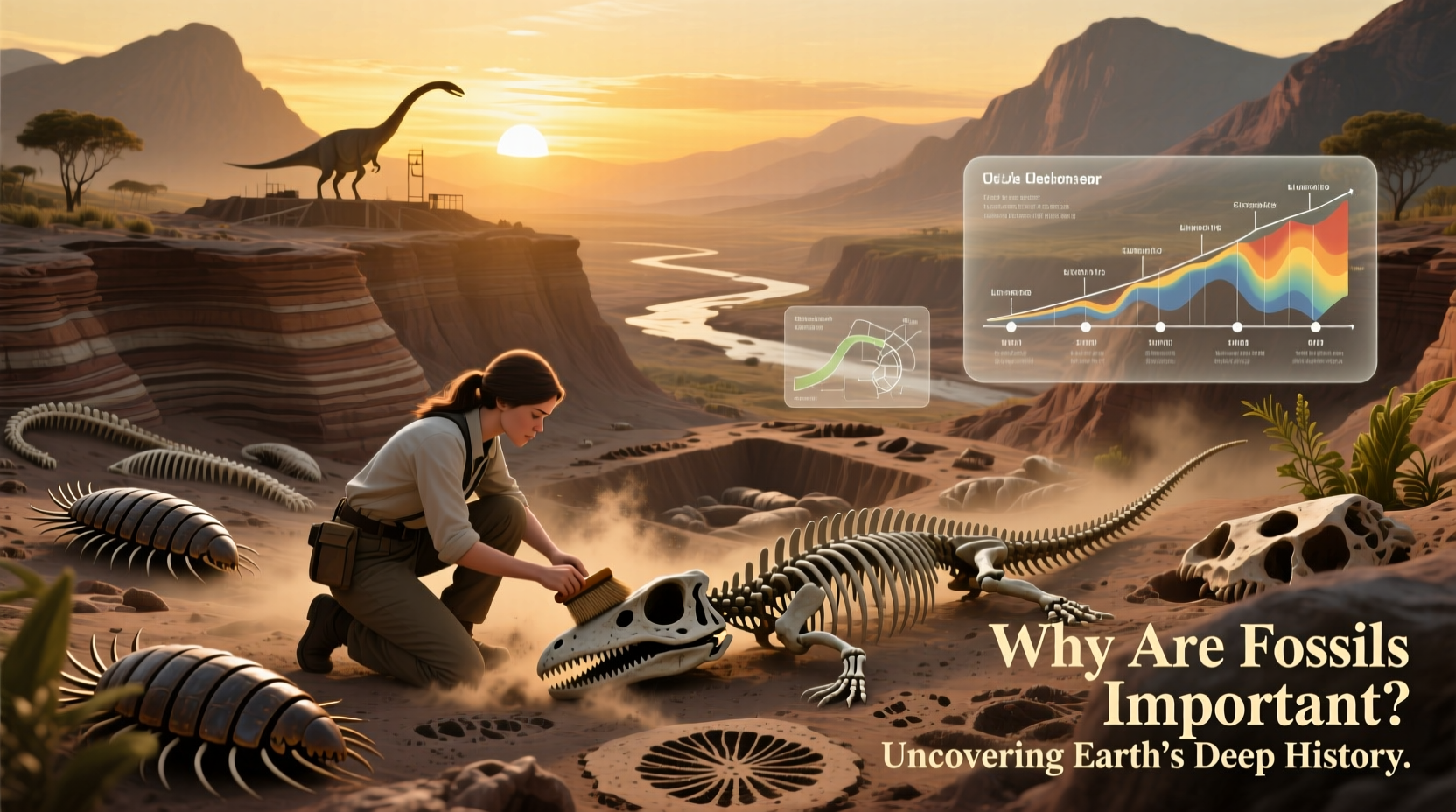
The fossil record is one of the most compelling sources of evidence for evolution. By examining fossils found in successive layers of sedimentary rock, scientists can trace how species have changed over time. For example, the transition from aquatic to terrestrial life is clearly documented in fossils such as Tiktaalik, a fish-like creature with limb-like fins that lived about 375 million years ago. This intermediate form bridges the gap between fish and early amphibians.
Fossils also reveal patterns of adaptive radiation—when a single ancestor gives rise to multiple species adapted to different environments. The evolution of horses, documented through a rich fossil lineage from small, multi-toed ancestors like Hyracotherium to the large, single-toed modern horse, illustrates gradual changes driven by shifting climates and habitats.
Tip: When studying evolutionary trends, focus on transitional fossils—they often hold the clearest evidence of morphological change over time.Reconstructing Past Climates and Environments
Fossils serve as natural climate proxies. The types of plants and animals preserved in a given layer of rock reflect the environmental conditions of their time. For instance, coal deposits rich in plant fossils indicate ancient swampy, tropical forests, while marine fossils found atop mountain ranges suggest those areas were once underwater.
Pollen and spore fossils (palynomorphs) are particularly useful in paleoclimatology. By analyzing the abundance and distribution of certain pollen types, researchers can infer temperature, precipitation, and vegetation patterns across millennia. This data helps model long-term climate cycles and provides context for current global warming trends.
One striking example is the study of foraminifera—microscopic marine organisms whose shell chemistry reflects ocean temperatures at the time of formation. Deep-sea sediment cores containing these fossils have revealed detailed records of ice age cycles over the past several million years.
Tracking Mass Extinctions and Biodiversity Shifts
Fossil records document five major mass extinction events in Earth’s history, the most famous being the Cretaceous-Paleogene (K-Pg) extinction that wiped out the non-avian dinosaurs 66 million years ago. The sudden disappearance of certain fossil groups across global rock layers marks these catastrophic events.
Studying these extinctions helps scientists understand how ecosystems collapse and recover. For example, after the K-Pg event, mammal fossils become increasingly diverse and abundant, indicating an evolutionary opportunity created by the absence of dominant reptilian predators.
“The fossil record is our only direct window into the dynamics of biodiversity over deep time. It shows us not just who lived, but how life rebounds after catastrophe.” — Dr. Jane Holloway, Paleobiologist, University of California
Today, this knowledge is crucial as we face what many scientists believe is a sixth mass extinction driven by human activity. Comparing current extinction rates to those in the fossil record underscores the urgency of conservation efforts.
Contributions to Geology and Resource Exploration
Fossils play a vital role in stratigraphy—the study of rock layers. Index fossils, which come from species that existed for short periods but were widespread, help geologists date rock formations and correlate strata across continents. For example, the presence of the trilobite Olenellus indicates rocks from the early Cambrian period.
In the energy sector, microfossils like diatoms and radiolarians are used in oil and gas exploration. Because certain fossil assemblages are associated with specific depositional environments (e.g., deep marine vs. shallow shelf), they help identify potential hydrocarbon reservoirs. Oil companies routinely analyze fossil content in drill cores to assess subsurface geology.
| Fossil Type | Geological Use | Time Period Example |
|---|---|---|
| Trilobites | Index fossils for Paleozoic strata | 540–250 million years ago |
| Ammonites | Correlating Jurassic and Cretaceous layers | 200–66 million years ago |
| Foraminifera | Oil exploration & paleoclimate analysis | 500 million years ago–present |
| Pollen grains | Reconstructing past vegetation and climate | 470 million years ago–present |
Scientific and Educational Value
Beyond research, fossils inspire public interest in science. Museums around the world display fossil collections that captivate audiences of all ages, fostering curiosity about natural history and scientific inquiry. Dinosaur exhibits, in particular, serve as gateways for children to explore biology, geology, and critical thinking.
In education, hands-on fossil analysis teaches students about observation, classification, and inference. Field trips to fossil sites or classroom simulations of digs promote experiential learning and interdisciplinary understanding.
Tip: Encourage young learners to sketch fossils they observe—this reinforces attention to detail and strengthens scientific documentation skills.A Real-World Discovery: The Burgess Shale
The Burgess Shale in British Columbia, Canada, is one of the most significant fossil sites in the world. Discovered in 1909 by Charles Doolittle Walcott, it contains exquisitely preserved soft-bodied organisms from the Cambrian explosion—a period of rapid diversification of life around 508 million years ago.
Unlike typical fossil sites that preserve only hard parts like shells and bones, the Burgess Shale includes imprints of gills, eyes, and internal organs. This exceptional preservation has allowed scientists to study early animal body plans in unprecedented detail, reshaping our understanding of evolutionary biology.
The discovery of creatures like Anomalocaris, a large predator with grasping appendages, challenged previous assumptions about the simplicity of early ecosystems. Today, the site continues to yield new species, demonstrating that even well-studied fossil beds can offer fresh insights.
How to Approach Fossil Study: A Step-by-Step Guide
Whether you're a student, amateur enthusiast, or aspiring paleontologist, following a structured approach enhances your understanding and contribution to fossil science.
- Learn basic geology: Understand sedimentary rock types and stratification principles.
- Study common fossil groups: Familiarize yourself with local flora and fauna from different eras.
- Join a field group: Participate in guided fossil hunts or museum-led expeditions.
- Document findings: Record location, rock layer, and photographs—never remove fossils from protected sites without permission.
- Consult experts: Share discoveries with universities or natural history institutions for identification.
Frequently Asked Questions
Can fossils form from any organism?
No. Fossilization is a rare process that typically requires rapid burial and mineral-rich water. Organisms with hard parts like bones, teeth, or shells are more likely to fossilize. Soft-bodied creatures only preserve under exceptional conditions, such as in fine mud or anoxic environments.
How do scientists determine a fossil’s age?
Scientists use both relative and absolute dating methods. Relative dating compares fossil positions in rock layers, assuming deeper layers are older. Absolute dating, such as radiometric techniques (e.g., carbon-14 or potassium-argon), measures the decay of radioactive isotopes in surrounding minerals to assign numerical ages.
Are all fossils dinosaurs?
No. While dinosaur fossils are among the most famous, the vast majority of fossils are from invertebrates like clams, corals, and trilobites. Microfossils, including plankton and pollen, are far more common and scientifically valuable for environmental reconstruction.
Conclusion: Preserving the Past to Inform the Future
Fossils are irreplaceable keys to understanding the history of life on Earth. They illuminate the slow march of evolution, reveal the fragility of ecosystems, and ground our perspective on humanity’s brief tenure on this planet. As climate change accelerates and biodiversity declines, the lessons encoded in fossils become ever more relevant. Protecting fossil sites, supporting paleontological research, and promoting public education ensures that these silent witnesses to deep time continue to speak to future generations.
🚀 Explore your local natural history museum or join a fossil walk in your area. You might be standing on millions of years of history—start uncovering it today!








