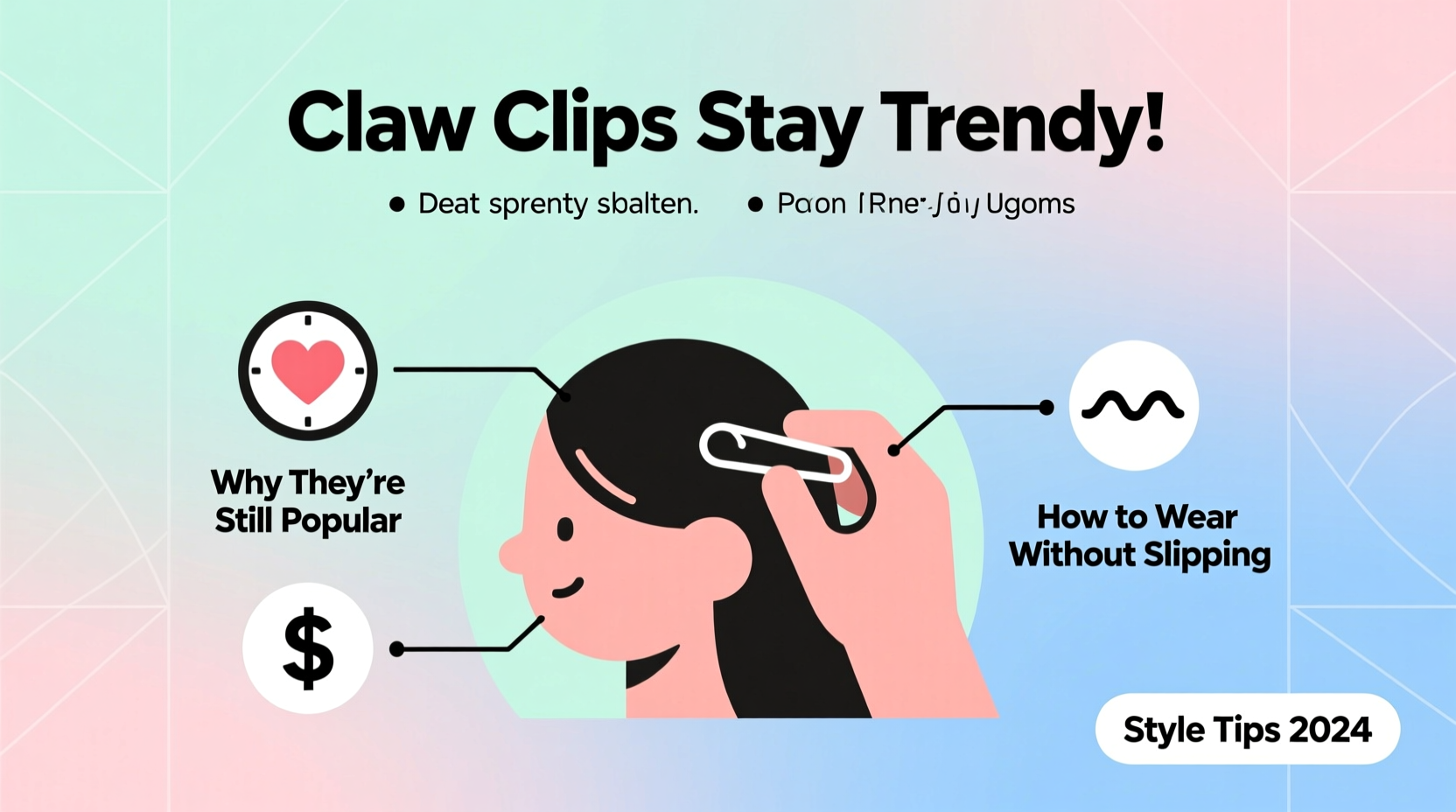
Claw clips have surged back into mainstream fashion, but their staying power goes beyond nostalgia. Once dismissed as a relic of the '90s, they’ve reemerged as a functional, stylish solution for managing hair with ease. From runways to coffee runs, claw clips are now a daily essential for people with thick, fine, curly, or straight hair. Their versatility, comfort, and ability to elevate a simple hairstyle make them more than just a trend—they’re a long-term hair accessory staple. Yet, one common frustration remains: slipping. Even the most beautiful clip can fail if it doesn’t hold securely. Understanding why claw clips continue to dominate—and how to use them effectively—can transform your styling routine.
The Enduring Appeal of Claw Clips
Claw clips aren’t just riding a wave of retro appeal; they offer practical advantages that modern hair accessories often lack. Unlike bobby pins or elastic bands, which can tug at roots or crease hair, claw clips distribute pressure evenly across strands. This reduces breakage and scalp tension, making them ideal for daily wear. Their design allows for quick application and removal, which is especially valuable during rushed mornings or impromptu style changes.
Fashion cycles play a role in their resurgence, but so does functionality. Designers like Marine Serre and Simone Rocha have featured oversized, embellished claw clips on runways, reinforcing their status as both utilitarian and fashionable. Social media has amplified this visibility, with influencers showcasing dozens of ways to style them—from messy buns to half-up twists. The result is a universal tool that transcends age, hair type, and occasion.
“Claw clips are the perfect marriage of form and function. They solve real problems—like securing thick hair without damage—while allowing for creative expression.” — Lila Nguyen, Celebrity Stylist and Texture Specialist
Why Claw Clips Stay Popular in 2024 and Beyond
Their popularity endures because they meet multiple needs simultaneously:
- Hair Health Preservation: No tight elastics mean less stress on follicles and reduced risk of traction alopecia.
- Versatility: Can be used on damp or dry hair, short or long lengths, and styled in countless ways.
- Aesthetic Flexibility: Available in minimalist matte finishes, bold colors, pearls, or metallics to match any outfit or mood.
- Sustainability: Durable plastic or acetate clips last years, reducing reliance on disposable hair ties.
- Inclusivity: Effective for textured, coily, wavy, and fine hair when chosen correctly.
Common Reasons Claw Clips Slip—and How to Fix Them
Slippage isn’t always about poor quality. It’s often due to mismatched clip size, incorrect placement, or hair texture challenges. Understanding the mechanics behind the grip helps prevent failure.
The claw mechanism works by compressing hair between two hinged prongs. If the clip is too small, it overextends and loses tension. Too large, and it won’t close fully, leaving gaps where hair escapes. Hair type also affects performance: fine hair offers less resistance, while thick or coarse hair may require stronger springs.
Key Factors That Cause Slipping
| Factor | Effect on Hold | Solution |
|---|---|---|
| Clip Size Too Small | Overstretched, weak grip | Use medium or large clips for thick or long hair |
| Smooth Inner Surface | Lacks friction on silky hair | Choose clips with ridges, silicone strips, or matte finish |
| Wet or Oily Hair | Reduces friction and grip | Dry hair slightly or apply texturizing spray first |
| Incorrect Placement | Uneven pressure distribution | Position clip parallel to jawline, not crown |
| Weak Spring Mechanism | Poor closure force | Invest in high-quality brands known for durability |
Step-by-Step Guide: How to Wear a Claw Clip Without Slipping
Follow this proven method to ensure your claw clip stays secure all day, regardless of hair type.
- Prep Your Hair: Towel-dry damp hair or let it air-dry 80%. For extra hold, apply a light texturizing spray or sea salt mist. Avoid heavy oils or serums near the roots.
- Gather Hair Strategically: Instead of pulling hair straight back, twist or loosely braid it first. This adds volume and creates natural resistance against slippage.
- Position the Clip Correctly: Tilt your head forward slightly. Open the clip and place it at the nape of your neck or mid-head level—not the crown. The hinge should face downward, parallel to your jawline.
- Insert Gradually: Feed hair into the clip from bottom to top, ensuring even distribution between the prongs. Don’t rush the snap—let the teeth engage slowly.
- Reinforce with Technique: After closing, gently tug the clip upward. If it holds, you’ve achieved optimal tension. For added security, insert one bobby pin horizontally through the base of the clip into your underlayer.
- Final Check: Shake your head gently. If the clip moves, reposition or try a different size.
Choosing the Right Claw Clip for Your Hair Type
Not all claw clips work equally well for every hair texture. Matching clip design to hair characteristics ensures lasting hold and comfort.
- Fine or Thin Hair: Use small to medium clips with silicone lining or internal ridges. Oval-shaped clips provide better surface contact than wide, flat ones.
- Thick or Long Hair: Choose large, wide-toothed clips with strong spring tension. Look for reinforced hinges made from metal-core acetate.
- Curly or Coily Hair: Opt for deep-grip, flexible prongs that accommodate volume without flattening curls. Wider clips prevent bunching and breakage.
- Straight or Slippery Hair: Matte-finish or sand-textured clips increase friction. Avoid glossy surfaces unless lined with non-slip material.
“I used to think claw clips were only for second-day hair, but once I found a textured, medium-large clip designed for volume, they became my go-to—even for client shoots.” — Jamal Reed, Editorial Hairstylist
Mini Case Study: Transforming a Daily Struggle into a Signature Style
Sophia, a 28-year-old teacher with shoulder-length, fine, straight hair, had given up on claw clips after repeated failures. “They’d fall out by lunchtime,” she said. “I tried everything—different sizes, scrunchies underneath—but nothing worked.”
After consulting a stylist, she switched to a medium-sized, matte black claw clip with silicone strips along the inner edges. She also adjusted her technique: instead of pulling hair straight back, she twisted it loosely before inserting it into the clip positioned at ear-level. The change was immediate. “Now it stays put through recess duty and P.E. class. I even got compliments on how ‘effortlessly chic’ it looks.”
Her experience highlights that success often lies not in abandoning the tool, but in refining the approach.
Checklist: Secure Claw Clip Application in 6 Steps
Use this checklist every time you style your hair to minimize slippage:
- ☐ Prep hair with texturizing product (if needed)
- ☐ Select the right clip size and grip type for your hair
- ☐ Gather hair with a twist or loose braid for added volume
- ☐ Position clip parallel to jawline, hinge down
- ☐ Insert hair slowly, ensuring even distribution
- ☐ Test hold with a gentle shake and reinforce if necessary
FAQ: Common Questions About Claw Clips
Can I sleep with a claw clip in my hair?
It’s not recommended. While claw clips are gentler than elastics, sleeping in one can create pressure points and lead to creasing or breakage. If you must, use a soft scrunchie or silk scarf instead.
Are metal claw clips better than plastic?
Not necessarily. Metal clips offer strong tension but can snag or damage hair if the edges aren’t polished. High-quality acetate or bio-based plastic clips with reinforced springs often provide a safer, more balanced hold.
How do I clean and maintain my claw clips?
Wipe them weekly with a damp cloth and mild soap. For deeper cleaning, soak in warm, soapy water for 5–10 minutes, then air dry. Avoid boiling or dishwashers, which can warp plastic or weaken springs.
Conclusion: Master the Clip, Elevate Your Style
Claw clips remain popular because they genuinely work—when used correctly. Their blend of simplicity, safety, and style makes them unmatched in the world of hair accessories. Slippage isn’t a flaw of the design but often a mismatch of tool, technique, and hair type. By selecting the right clip, prepping your hair, and applying it with precision, you can enjoy a secure, elegant hold that lasts from morning meetings to evening outings.
💬 Have a favorite claw clip hack or brand that never slips? Share your tip in the comments and help others find their perfect hold!








