When choosing a leather backpack, one of the most overlooked yet crucial decisions is whether to go with a washed or regular (unfinished) leather finish. While both styles offer distinct aesthetics and performance characteristics, the real question isn’t just about appearance—it’s about longevity. Specifically, does the worn-in, lived-in look of a washed leather backpack endure better over time than the clean, structured appearance of a regular leather bag? The answer depends on how you define “last longer”—whether by structural durability, resistance to wear, or the ability to maintain its intended aesthetic through years of use.
Leather, as a natural material, ages uniquely. But the starting treatment—washed or untreated—plays a major role in how that aging process unfolds. Understanding the differences helps consumers make informed choices based not just on style, but on long-term value and functionality.
What Is Washed Leather?
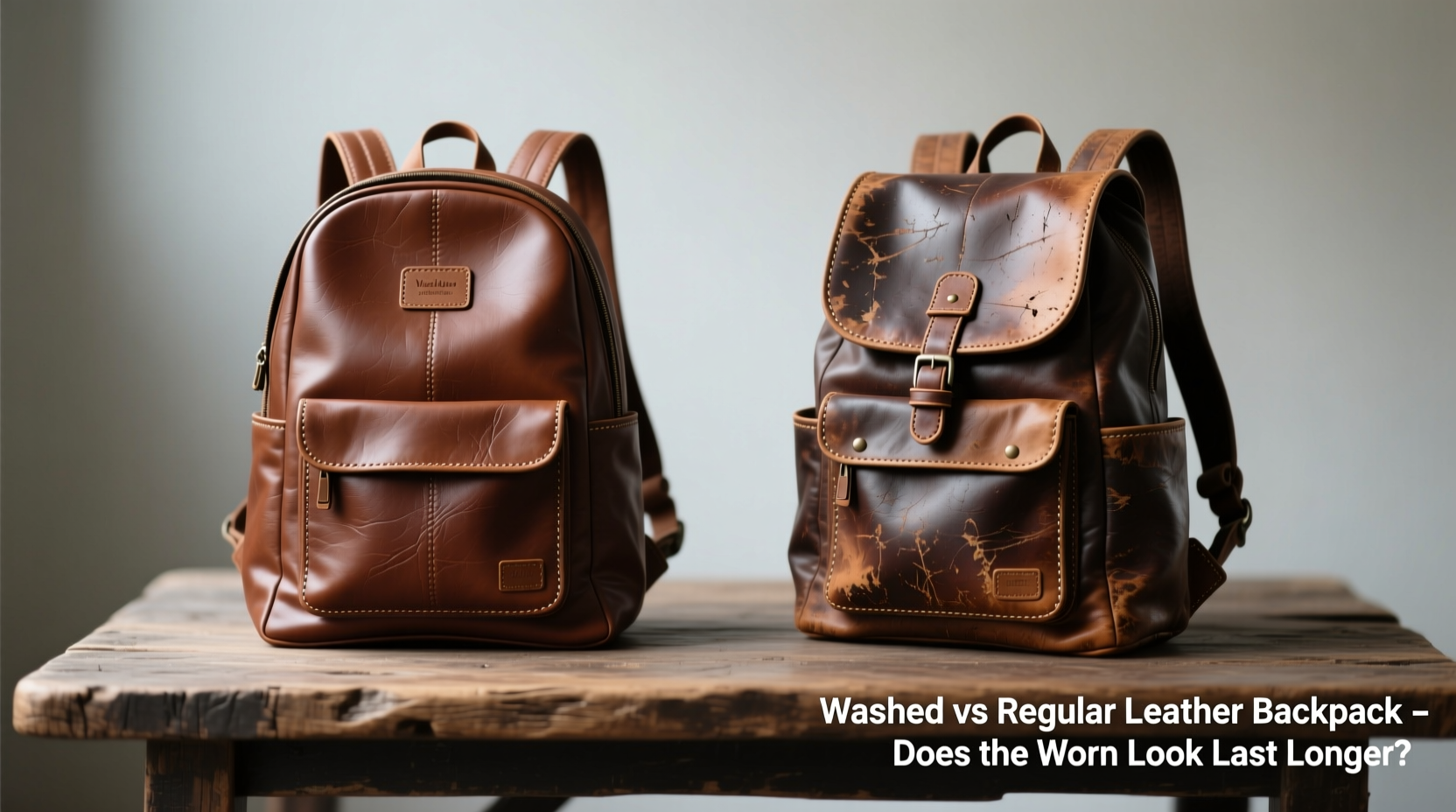
Washed leather undergoes a specialized finishing process where the hide is soaked in water-based solutions, often with dyes or softening agents, to achieve a distressed, vintage appearance right from the start. This technique removes some of the natural stiffness and gives the leather a softer hand-feel and a slightly uneven coloration that mimics years of natural wear.
The washing process also opens up the pores of the leather, making it more pliable but potentially more susceptible to moisture absorption. Because of this, washed leather typically has a broken-in feel out of the box, which many users find immediately comfortable. However, this pre-distressed state raises questions: can something already “worn” continue to age gracefully, or does it peak too soon?
Tip: Washed leather bags should be conditioned every 3–4 months to replenish lost oils from the initial processing.Regular Leather: Structure and Natural Aging
Regular leather, often referred to as full-grain or top-grain untreated leather, retains its natural surface without artificial distressing. It starts firm, smooth, and polished, developing character gradually through use. Scratches, folds, and exposure to sunlight slowly create a patina—a rich, deep sheen that collectors and purists highly value.
Because it hasn’t been chemically softened or faded during manufacturing, regular leather maintains greater tensile strength and resilience. Over time, it becomes more supple while preserving structural integrity. Unlike washed leather, which begins with a story already half-told, regular leather lets the user write their own narrative through daily wear.
This slow evolution means the \"worn look\" isn't immediate—but when it arrives, it's earned. And because the base material is stronger, this look often persists longer without signs of degradation like fraying, cracking, or excessive thinning.
Comparative Durability: Washed vs Regular Leather
To understand which type lasts longer in terms of both function and appearance, consider three key factors: material integrity, resistance to environmental stressors, and maintenance demands.
| Factor | Washed Leather | Regular Leather |
|---|---|---|
| Tensile Strength | Moderate – reduced by soaking and softening agents | High – fibers remain intact and tightly packed |
| Patina Development | Pre-aged; minimal further change in tone or texture | Gradual, deepening over years with use |
| Moisture Resistance | Lower – open pores absorb water easily | Higher – tighter grain resists penetration |
| Maintenance Frequency | Every 3–4 months (conditioning essential) | Every 6–8 months (less frequent care needed) |
| Lifespan (with care) | 8–12 years | 15+ years |
While washed leather offers instant charm, its lifespan is generally shorter due to the compromises made during processing. Regular leather may require patience, but it rewards long-term ownership with increasing beauty and resilience.
“Leather shouldn’t look old on day one. True character comes from interaction—sunlight, friction, even minor spills. That’s what creates lasting value.” — Marcus Reed, Artisan Tanner & Founder of Heritage Hide Co.
Real-World Example: Two Backpacks, Five Years Later
Consider two professionals who bought similar-style backpacks in 2019. One chose a washed brown leather model for its softness and vintage appeal. The other opted for a regular chestnut-hued full-grain version, appreciating its clean lines and promise of future patina.
By 2024, the washed leather bag had become noticeably looser in structure. The shoulder straps sagged slightly, and the corners showed micro-tears from repeated contact with surfaces. The original fade pattern remained, but new scuffs didn’t blend—they stood out as damage rather than character.
In contrast, the regular leather backpack had transformed beautifully. Light scratches near the zipper had mellowed into soft highlights. The areas most touched—like the handle and flap edges—developed a warm, glossy patina. Structurally, it held its shape perfectly, even under daily commute loads.
Both owners loved their bags, but only one felt theirs had truly improved with time. The washed leather offered early gratification; the regular leather delivered enduring elegance.
Caring for Each Type: A Step-by-Step Maintenance Guide
Proper care extends the life of any leather product. However, the needs differ significantly between washed and regular finishes.
- Clean Gently: Use a damp cloth and pH-neutral leather cleaner. Avoid soaking either type, but especially washed leather, which absorbs liquid faster.
- Dry Naturally: Never use heat sources. Air-dry away from direct sunlight to prevent warping or discoloration.
- Condition Regularly: Apply a high-quality leather conditioner. Washed leather needs this every 3–4 months; regular leather every 6–8 months.
- Protect When Needed: Use a leather protector spray if exposed to rain frequently. Reapply every 2–3 months for washed leather; once per season for regular.
- Store Properly: Keep in a breathable cotton bag, away from plastic wraps that trap moisture. Stuff lightly with acid-free paper to maintain shape.
FAQ: Common Questions About Leather Backpack Longevity
Does washed leather crack faster than regular leather?
Yes, especially if not conditioned regularly. The washing process strips natural oils, and without proper moisturizing, the leather dries out and becomes prone to fine cracks, particularly at stress points like seams and corners.
Can I make a regular leather backpack look worn quickly?
You can accelerate patina development by exposing it to moderate sunlight, handling it frequently, and applying leather conditioners with natural waxes. However, artificially distressing it (e.g., sanding or staining) risks damaging the grain and reducing longevity.
Is the worn look permanent on washed leather?
The faded, soft appearance is stable, but it doesn’t evolve meaningfully over time. New scratches won’t blend into the existing texture as they do with regular leather, so the “worn” look can appear static—or worse, tired—after several years.
Final Verdict: Which Look Lasts Longer?
If “lasting longer” means maintaining visual appeal and structural integrity over a decade or more, regular leather clearly wins. Its ability to develop a personalized patina while resisting wear makes it superior for long-term ownership. The worn look isn’t instant—it builds slowly, becoming richer with each year.
Washed leather, while attractive initially, reaches its aesthetic peak early. Its pre-aged design limits future evolution, and its compromised fiber structure makes it less durable under sustained use. It suits those who want immediate vintage charm and don’t mind replacing the bag after a decade.
Ultimately, the choice reflects lifestyle and values. For minimalist travelers, students, or urban commuters seeking timeless quality, regular leather is the smarter investment. For fashion-forward users who rotate accessories seasonally, washed leather offers expressive versatility.
💬 Ready to invest in a backpack that grows with you? Choose regular full-grain leather, commit to simple care, and enjoy a companion that looks better every year. Share your leather journey in the comments—we’d love to hear how your bag has aged.