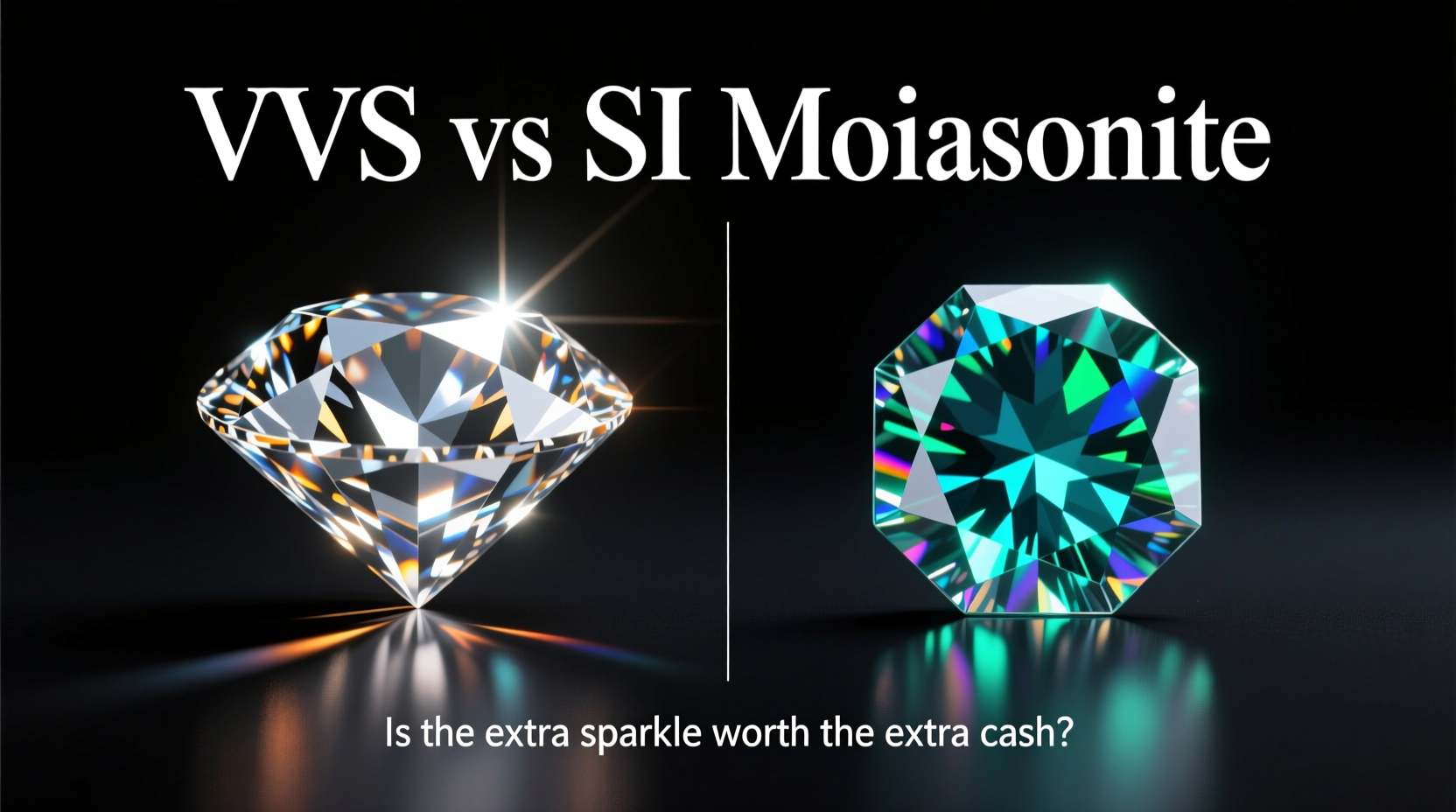
When shopping for a moissanite engagement ring or fine jewelry, one of the most common dilemmas buyers face is choosing between VVS (Very Very Slightly Included) and SI (Slightly Included) clarity grades. While both offer exceptional brilliance and fire, the difference in price can be significant. The real question isn’t just about technical specifications—it’s whether that premium for VVS translates into visible beauty and long-term satisfaction. Understanding how clarity affects appearance, durability, and value helps demystify the decision.
Understanding Moissanite Clarity Grades
Unlike diamonds, moissanite is lab-created, meaning it has fewer natural inclusions. However, microscopic imperfections can still occur during growth. Clarity grading for moissanite follows a scale similar to diamonds, with VVS and SI being two of the most popular tiers.
- VVS (Very Very Slightly Included): These stones have minute inclusions that are nearly impossible to detect under 10x magnification. They appear completely eye-clean to the naked eye and offer maximum light performance.
- SI (Slightly Included): Inclusions are slightly more noticeable under magnification but typically not visible without aid. Most SI moissanites are still eye-clean under normal lighting and daily wear conditions.
The key distinction lies not only in internal characteristics but also in how those affect sparkle, transparency, and perceived quality.
Tip: Always inspect moissanite under natural daylight and varied lighting angles—this reveals true brilliance and potential cloudiness.Visual Differences: Sparkle, Fire, and Eye-Cleanliness
Moissanite is renowned for its high refractive index—higher than even diamond—which means it disperses light into vibrant flashes of color (fire). But clarity plays a crucial role in how efficiently light travels through the stone.
In ideal conditions, VVS moissanite delivers optimal light return due to minimal internal interference. The absence of visible inclusions allows uninterrupted refraction, resulting in sharper scintillation and crisper sparkle. SI stones may contain tiny clusters or feathers that, while usually invisible to the unaided eye, can subtly scatter light.
That said, many customers report no discernible difference between VVS and SI when viewed in typical settings—especially in sizes under 6mm. Jewelry experts note that cut quality often outweighs clarity in influencing overall brilliance.
“With modern cutting techniques, even SI-grade moissanite can outperform lower-cut VVS stones. Prioritize symmetry and proportions over clarity alone.” — Dr. Lena Patel, Gemologist & Materials Scientist
Price Comparison: Is the Premium Justified?
VVS moissanite typically commands a 15% to 30% higher price than SI, depending on carat weight and vendor. For example:
| Carat Weight | Clarity Grade | Average Price (USD) | Per-Carat Cost Difference |
|---|---|---|---|
| 1.0 ct | VVS | $580 | +22% |
| 1.0 ct | SI | $475 | — |
| 1.5 ct | VVS | $920 | +27% |
| 1.5 ct | SI | $720 | — |
| 2.0 ct | VVS | $1,400 | +30% |
| 2.0 ct | SI | $1,075 | — |
This cost gap grows disproportionately with size. For budget-conscious shoppers, allocating savings toward a superior setting or larger carat weight might yield greater visual impact than upgrading clarity.
Real-World Example: Choosing Between VVS and SI
Sophie was shopping for an engagement ring with a $2,000 budget. She initially leaned toward a 2-carat VVS round moissanite ($1,400), leaving $600 for a simple solitaire band. After consulting a jeweler, she considered an SI alternative at $1,075. The extra $325 allowed her to upgrade to a vintage-inspired platinum halo setting with micro-pave accents.
She examined both stones side by side under store lighting and natural sunlight. To her surprise, she couldn’t distinguish any haze or sparkle loss in the SI stone. The final piece had significantly more presence due to the intricate design. “I thought I needed the highest clarity,” she said later, “but what really wowed people was the overall look—not just the center stone.”
This scenario illustrates how clarity upgrades don’t always deliver proportional aesthetic returns.
Step-by-Step Guide to Making Your Decision
Follow this process to determine whether VVS clarity is worth the investment for your needs:
- Set your total budget. Decide how much you’re comfortable spending on the entire piece, not just the center stone.
- Determine priority factors: Is maximum brilliance non-negotiable, or do design and size matter more?
- Compare loose stones in person or via video. Request 360° videos from reputable vendors showing both VVS and SI options under different lights.
- Evaluate eye-cleanliness. Look for cloudiness, dark spots, or hazy areas—especially in larger stones where inclusions may become visible.
- Assess cut quality. Check for consistent facet alignment, brightness, and fire. A well-cut SI stone can outshine a poorly cut VVS.
- Allocate funds strategically. Consider if redirecting clarity savings improves craftsmanship, metal quality, or accent details.
- Make a side-by-side decision. Place both options in similar settings (if possible) and choose based on holistic appeal.
Checklist: What to Verify Before Buying
- ✅ Confirm whether the moissanite is labeled as VVS or SI by a recognized lab or brand (e.g., Charles & Colvard, Harro Gem).
- ✅ Ask for magnified images or videos showing inclusions.
- ✅ Ensure the seller provides a return policy in case the stone doesn’t meet expectations.
- ✅ Review third-party customer photos to see real-world appearance.
- ✅ Compare warranty terms—some brands cover clouding or discoloration over time.
- ✅ Double-check the cut grade; avoid “ideal” claims without supporting data like AGS or ASET analysis.
Frequently Asked Questions
Can you see the difference between VVS and SI moissanite with the naked eye?
In most cases, no. Both VVS and SI moissanite are considered eye-clean under normal viewing conditions. Only under strong magnification (10x loupe or microscope) do differences become apparent. Larger stones (over 6.5mm) may show slight haziness in lower-quality SI pieces, but this varies by individual stone.
Does SI moissanite get cloudy over time?
High-quality SI moissanite does not inherently cloud with age. Cloudiness is more likely due to surface residue (like lotions or cleaning products) rather than internal structure. Regular cleaning with mild soap and water maintains clarity. Reputable brands use stable crystal structures resistant to long-term degradation.
Is VVS worth it for smaller moissanite stones?
For stones under 1 carat (approximately 6.5mm), upgrading to VVS offers diminishing visual returns. At this size, inclusions—even in SI—are virtually undetectable. You’ll likely gain more value by investing in better metal quality, prong security, or craftsmanship instead.
Final Thoughts: Balancing Value and Beauty
The allure of VVS moissanite is understandable—its near-perfect internal structure promises pristine optical performance. But in practical terms, SI clarity delivers nearly identical visual results at a notably lower cost. The “extra sparkle” associated with VVS is often marginal and overshadowed by superior cut, setting design, and personal taste.
Ultimately, the best choice depends on your priorities. If you value perfectionism and plan to examine your ring under magnification, VVS makes sense. But if you're focused on everyday beauty, size, and overall elegance, SI offers outstanding value without compromise.
🚀 Ready to make your decision? Compare VVS and SI moissanite samples today—many jewelers offer risk-free trials. See the difference for yourself before committing to the premium.








