Vodka is often called the ultimate blank canvas of spirits—not because it’s neutral in character, but because its clean, high-proof profile allows flavors to emerge without distortion or competition. Unlike whiskey or rum, which carry their own robust identities, vodka offers a transparent vessel for botanicals, fruits, and spices. That makes it ideal for infusion: a simple, low-barrier technique that transforms an ordinary bottle into something personal, seasonal, and deeply expressive. You don’t need a distillery, a chemistry degree, or even a fancy jar. Just quality vodka, fresh ingredients, time, and intention.
This isn’t about novelty shots or party gimmicks. It’s about reclaiming control over what you drink—understanding how temperature, surface area, and alcohol strength affect extraction, recognizing when a strawberry has peaked (and when it’s already fermenting), and learning why rosemary needs restraint while citrus zest demands immediacy. Done well, infusion bridges craft cocktail culture and home kitchen intuition. Done poorly, it yields murky, bitter, or flat results—and discourages further experimentation. This guide cuts through the noise with precise, field-tested principles drawn from bartenders, small-batch distillers, and years of home trials.
Why Infuse Vodka? More Than Just Flavor
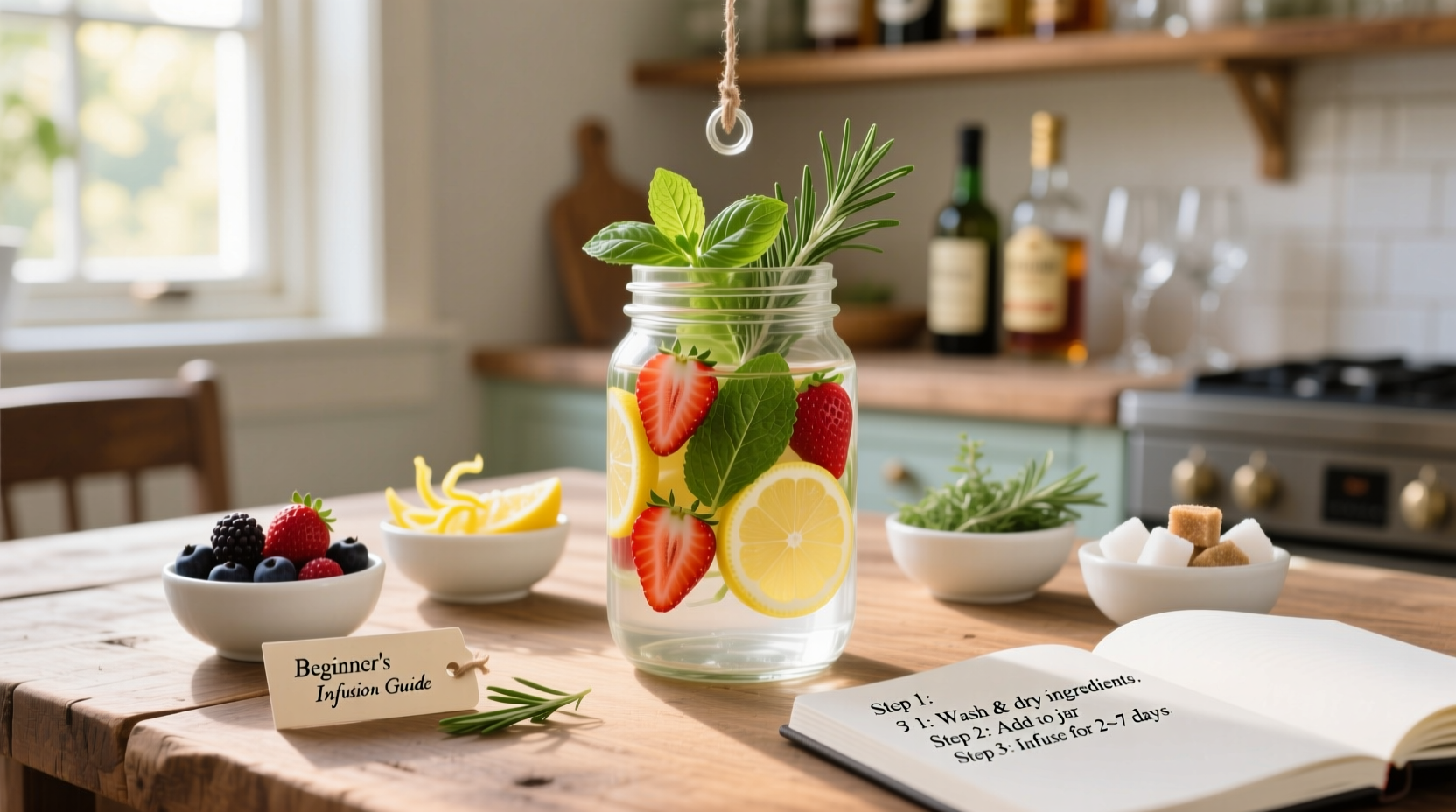
Infusing vodka serves three distinct purposes beyond mere taste enhancement. First, it extends shelf life: high-proof alcohol (ideally 40% ABV or higher) acts as a natural preservative, allowing fruit-infused batches to remain stable for months when refrigerated. Second, it enables ingredient efficiency—using bruised strawberries, herb stems, or citrus peels that might otherwise be composted. Third, and most meaningfully, it creates emotional resonance: a lavender-vanilla infusion made in late June becomes a sensory bookmark for summer; a spiced pear batch bottled in November carries the warmth of early winter gatherings.
Crucially, infusion differs from maceration, tincturing, or cold-press extraction. It relies on passive diffusion—alcohol pulling volatile oils, esters, and soluble compounds from plant matter over time. Heat accelerates extraction but also degrades delicate aromatics (think basil or mint), while cold infusion preserves brightness at the cost of patience. The sweet spot lies in room-temperature steeping with strategic agitation and careful timing—methods we’ll detail below.
Essential Equipment & Ingredient Selection
You need remarkably little: one clean, sealable glass jar (mason jars work perfectly), a fine-mesh strainer, cheesecloth or coffee filters, a funnel, and a clean bottle for storage. Avoid plastic containers—alcohol can leach chemicals over time—and skip decorative bottles until after straining; sediment settles unpredictably during infusion.
Ingredient quality is non-negotiable. Use organic fruit when possible—especially for citrus peels, where pesticides concentrate in the rind. Berries should be plump and fragrant, not mushy or mold-flecked. Herbs must be vibrant green, crisp-stemmed, and free of yellowing or wilting. Dried herbs rarely work well for vodka infusion (their oils have oxidized); always choose fresh unless specified otherwise (e.g., dried chilies or whole spices like star anise).
Tip: Wash fruit gently under cool water and pat *completely* dry before infusing. Excess moisture dilutes alcohol concentration and invites cloudiness or spoilage.Vodka choice matters more than many assume. Avoid ultra-cheap, heavily filtered vodkas—they often contain trace impurities that amplify bitterness during infusion. Conversely, avoid artisanal vodkas with pronounced grain or terroir notes unless you want them to compete with your fruit. A mid-tier, column-distilled vodka (like Tito’s, Deep Eddy, or Finlandia) strikes the ideal balance: clean, consistent, and reliably 40% ABV.
Step-by-Step Infusion Process: From Prep to Pour
- Prep Ingredients: Remove stems, pits, and cores. For citrus, use only the colored zest—avoid white pith, which contributes intense bitterness. Bruise herbs gently with the back of a spoon to rupture oil glands without shredding leaves.
- Layer Thoughtfully: Place harder ingredients first (apple slices, ginger, cinnamon sticks), then softer ones (berries, basil leaves). This prevents delicate items from being crushed and ensures even contact with alcohol.
- Pour & Seal: Fill jar ⅓ to ½ full with ingredients, then top with vodka, leaving 1–2 inches of headspace. Seal tightly.
- Store & Agitate: Keep at room temperature, away from direct sunlight. Shake gently once daily for the first 3–4 days to encourage initial extraction.
- Taste & Monitor: Begin tasting after 24 hours for citrus zest or mint; after 48–72 hours for berries; after 5–7 days for stone fruits or roots. Strain immediately once peak flavor is reached—over-infusion causes tannic astringency or vegetal off-notes.
- Strain Meticulously: First, pour through a fine-mesh strainer to remove large solids. Then line the strainer with damp cheesecloth (or 2–3 coffee filters) and let gravity do the work—do not press or squeeze, which forces out cloudy particulates and bitter compounds.
- Bottle & Rest: Transfer clarified infusion to a clean, airtight bottle. Store refrigerated. Most fruit infusions peak within 2 weeks of straining; herb-forward versions (like rosemary-lemon) improve with 3–5 days of post-strain rest.
Flavor Pairing Guide: What Works (and Why)
Successful pairing hinges on complementary chemical profiles—not just “tastes good together.” Fruits rich in esters (strawberries, peaches, pineapple) pair beautifully with aromatic herbs containing monoterpenes (basil, mint, lemon verbena), as both share bright, volatile top notes. Meanwhile, earthy or tannic ingredients (black tea, walnut, unripe pear) benefit from warming spices (cinnamon, clove, cardamom) that soften astringency through vanillin and eugenol compounds.
| Ingredient | Optimal Steep Time | Key Notes Released | Pairing Suggestions |
|---|---|---|---|
| Strawberries | 24–48 hours | Fruity esters, subtle acidity | Basil, black pepper, balsamic vinegar (for savory cocktails) |
| Lemon Zest | 12–24 hours | Limonene, citral (bright, sharp) | Rosemary, thyme, honey, elderflower |
| Blackberries | 36–72 hours | Anthocyanins, tannins (deep, jammy) | Sage, vanilla bean, cracked black pepper |
| Ginger (thinly sliced) | 5–7 days | Gingerol, shogaol (spicy, warming) | Lime, mint, coconut water, chili |
| Rosemary | 5–10 days | Camphor, pinene (resinous, piney) | Orange zest, grapefruit, honey, smoked salt |
Note the steep times: citrus zest extracts rapidly due to high surface-area-to-volume ratio and volatile oils concentrated in the peel. Berries release sugars and pigments quickly but develop complexity with short rests. Ginger and rosemary require longer contact to draw out deeper, less volatile compounds—yet extended steeping beyond 10 days introduces woody, medicinal harshness.
Real-World Example: How Maya Revived Her Winter Cocktails
Maya, a Portland-based graphic designer and home bartender, struggled each December with “brown liquor fatigue”—the seasonal exhaustion of whiskey sours and old-fashioneds. In late November, she infused 750ml of Tito’s with 1 cup of thinly sliced, peeled Bosc pears, 1 split vanilla bean, and 3 whole star anise. She shook daily for five days, then strained through cheesecloth layered over a coffee filter. The resulting infusion was golden-amber, rich with baked pear and warm spice, yet clean and spirit-forward—not cloying or syrupy.
She used it in a simple “Pear & Sparkle”: 2 oz pear-vanilla vodka, ½ oz fresh lemon juice, ¼ oz ginger syrup, topped with dry sparkling wine. Guests remarked how “seasonal but not heavy,” and Maya began gifting small 200ml bottles tied with twine and handwritten labels. Crucially, she learned to stop infusion at day five—on day six, the star anise overwhelmed the pear, lending a medicinal, licorice-heavy finish she couldn’t salvage. Her takeaway: “Timing isn’t arbitrary. It’s the difference between harmony and hijacking.”
Common Pitfalls & How to Avoid Them
- Cloudiness or Murkiness: Caused by over-agitating, squeezing solids during straining, or using under-ripe fruit high in pectin. Solution: Strain slowly, never force liquids through filters, and choose fully ripe (but not overripe) produce.
- Bitterness: Almost always from citrus pith, over-steeped herbs (especially rosemary or sage), or bruised apple cores. Solution: Use a vegetable peeler for zest, limit rosemary to 2–3 sprigs per 750ml, and remove apple cores entirely.
- Fermentation or Sour Smell: Indicates contamination or excessive sugar + warmth. Solution: Ensure all tools are sanitized (boil jars/lids for 5 minutes), keep infusions below 72°F (22°C), and avoid adding sugar pre-infusion—it feeds microbes.
- Flat or One-Dimensional Flavor: Often from using low-proof vodka (<35% ABV) or insufficient surface area. Solution: Stick to 40% ABV vodka and chop fruit into uniform ½-inch pieces to maximize exposure.
“Infusion is extraction science disguised as kitchen alchemy. The alcohol doesn’t ‘add’ flavor—it reveals what’s already there, selectively and precisely. Your job is to listen to the ingredients, not dominate them.” — Chef Lena Petrova, Beverage Director at The Botanist Collective, Chicago
FAQ
Can I reuse fruit or herbs for a second infusion?
No. After the first steep, up to 90% of soluble flavor compounds have migrated into the vodka. A second batch will be extremely weak, watery, and prone to off-flavors from degraded plant matter. Compost spent ingredients instead.
Do I need to refrigerate during infusion?
No—room temperature (65–72°F / 18–22°C) is ideal for efficient, balanced extraction. Refrigeration slows molecular movement dramatically, extending steep time by 3–4x and often yielding muted, less aromatic results. Reserve refrigeration for *after* straining to preserve freshness.
What’s the shelf life of a finished infusion?
Refrigerated and sealed, most fruit-and-herb infusions last 3–4 months. Citrus-forward versions (lemon, grapefruit) hold best—up to 5 months—due to natural acidity inhibiting microbial growth. Discard if cloudiness appears, aroma turns sour or yeasty, or visible mold forms (rare but possible with improper prep).
Conclusion: Your First Batch Starts Now
You now hold everything needed to make your first exceptional infusion—not a “good for a beginner” version, but something genuinely worth serving to friends, bottling as gifts, or building cocktails around. No special tools, no expensive ingredients, no waiting for permission. Just a jar, some fruit or herbs you trust, and vodka you respect. The magic lies in attention: noticing how strawberry scent deepens after 36 hours, how rosemary’s pine note softens into cedar by day seven, how lemon zest loses its raw edge and gains roundness overnight.
Start small. Choose one pairing from the table above—perhaps lemon zest and thyme, or strawberries and black pepper. Taste daily. Take notes. Adjust next time. Every batch teaches you more about your palate, your ingredients, and the quiet precision of alcohol as a solvent. This isn’t about replicating bar menus. It’s about cultivating a practice—one that connects you to seasonality, patience, and the quiet joy of making something wholly your own.
💬 Try your first infusion this week—and tell us what you made. Share your flavor combo, timing, and biggest surprise in the comments. Let’s build a living library of real-world results.