Choosing an engagement ring or statement piece is more than a financial decision—it’s an emotional commitment to a design that should resonate for years. With vintage-inspired rings surging in popularity, many buyers wonder: will a retro style feel dated in five years? Unlike fast fashion, fine jewelry endures, but trends still influence perception. The key lies not in avoiding vintage altogether, but in understanding what makes certain styles timeless and others fleeting.
Retro designs draw from eras like the Art Deco (1920s–30s), Victorian (1837–1901), and Mid-Century Modern (1940s–60s). These periods produced some of the most enduring motifs in jewelry history—filigree, milgrain detailing, colored gemstone accents, and intricate metalwork. But when styled too literally, they risk appearing costumey rather than classic. On the other hand, minimalist solitaires and geometric modern bands may feel fresh today but could lack character tomorrow. The real question isn’t whether vintage will age poorly, but how to select a retro style with longevity.
Understanding Vintage vs. Modern Design Language
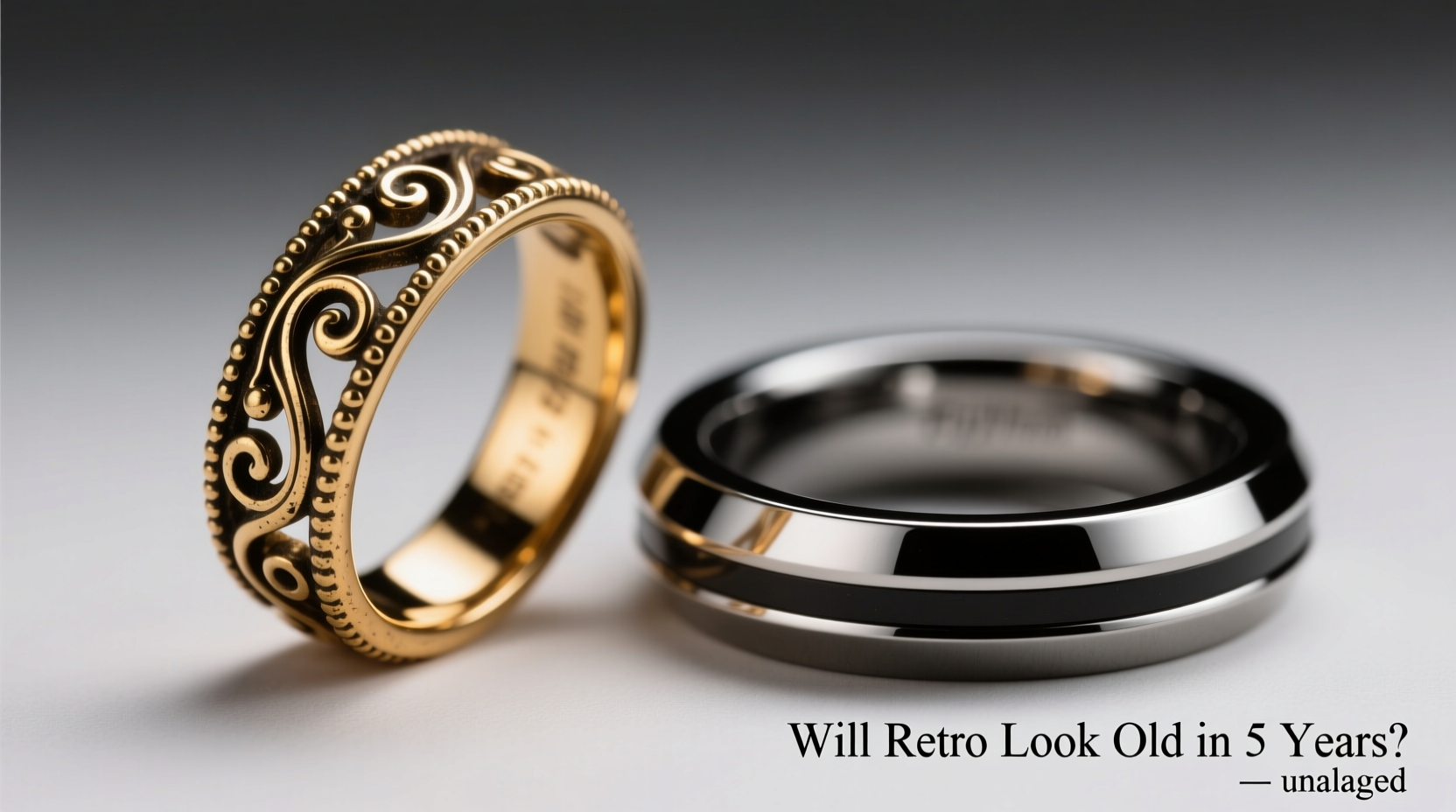
Vintage rings are defined by their historical inspiration. They often feature ornate details such as engraved shoulders, asymmetrical stone arrangements, or cluster settings that mimic floral patterns. These elements reflect craftsmanship values of earlier centuries, where each piece was hand-finished and unique. In contrast, modern rings emphasize clean lines, symmetry, and industrial precision. Think sleek platinum bands, tension settings, or bezel-encased diamonds with no prongs.
The divide isn’t just aesthetic—it’s philosophical. Vintage styles celebrate individuality and romanticism; modern designs prioritize function and minimalism. Yet both can be timeless if executed thoughtfully. A 1920s-style Art Deco ring with strong geometry and bold contrasts may feel more contemporary than a generic round solitaire from 2010. Conversely, a poorly proportioned reproduction of a Victorian ring might appear outdated quickly due to overly fussy details.
Tip: Focus on structural elegance over decorative excess—timeless vintage rings balance detail with clarity.What Makes a Retro Ring Timeless?
Not all vintage-inspired rings age gracefully. Some fail because they mimic surface-level trends without capturing the essence of the era. For example, adding lace-like engraving to a cheap band doesn’t make it Art Deco—it makes it kitsch. True timelessness comes from authenticity in proportion, material quality, and design harmony.
Consider these factors when evaluating a retro ring’s staying power:
- Era authenticity: Does the ring reflect genuine characteristics of its inspiration, or is it a pastiche of random “old-timey” details?
- Proportion and balance: Are the stones well-distributed? Is the band width appropriate to the center stone?
- Material integrity: Is it made with durable metals and ethically sourced stones that won’t degrade?
- Wearability: Can you wear it daily without snagging or discomfort?
“Timeless design transcends trend cycles. A truly great vintage-inspired ring doesn’t scream ‘I’m from the 1920s’—it simply feels inevitable.” — Clara Nguyen, Jewelry Historian & Curator at the American Gem Society
Modern Minimalism: Trendy Now, Forgotten Later?
While vintage rings face scrutiny for being “too old-fashioned,” modern styles carry their own risks. The rise of lab-grown diamonds, titanium bands, and floating center stones has introduced sleek options that align with current aesthetics. However, extreme minimalism—such as ultra-thin bands or invisible settings—can become problematic over time.
For instance, a nearly invisible prong setting may look stunning in a catalog but prove impractical after daily wear. Similarly, a flat-profile band might lose its novelty once scratches accumulate. These designs often prioritize visual impact over durability, making them susceptible to looking worn—or worse, passé—within a few years.
Moreover, modern trends tend to move faster than vintage revivals. While we’ve seen consistent appreciation for Edwardian filigree since the 1990s, micro-trends like hexagonal halos or double-band twists come and go within a decade. Choosing a modern ring requires discernment: opt for simplicity rooted in enduring taste, not momentary fashion.
Comparison: Vintage-Inspired vs. Contemporary Rings
| Feature | Vintage-Inspired Rings | Modern Rings |
|---|---|---|
| Aesthetic Focus | Romantic, ornate, detailed | Clean, geometric, understated |
| Likelihood of Looking Dated (5+ years) | Moderate—if overly literal or poorly balanced | Moderate to High—if tied to micro-trends |
| Durability | High, especially with platinum and proper craftsmanship | Variable—some materials scratch easily |
| Resale Value | Often appreciates if authentic and rare | Typically depreciates unless iconic brand |
| Emotional Resonance | Strong—often associated with heritage and storytelling | Neutral to personal preference |
How to Choose a Ring That Ages Well
The goal isn’t to avoid vintage or modern—but to select a ring that balances personality with permanence. Follow this checklist to ensure your choice remains meaningful and stylish for years to come:
Checklist: Selecting a Future-Proof Ring- ✅ Prioritize craftsmanship over ornamentation
- ✅ Choose a center stone cut that has stood the test of time (e.g., round brilliant, emerald, oval)
- ✅ Avoid gimmicky features (e.g., LED inserts, QR code engravings)
- ✅ Ensure the band thickness supports active lifestyles
- ✅ Test the ring in different lighting and outfits
- ✅ Ask about resizing and repair availability
One couple, Maya and Daniel, opted for a vintage-inspired Art Deco ring with a central emerald-cut diamond flanked by two small trapezoidal sapphires. At first, friends questioned whether it looked “too antique.” Five years later, as minimalist solitaires began to feel generic, their ring stood out for its character and sophistication. “People still ask where we got it,” Maya says. “It doesn’t look old—it looks intentional.”
FAQ: Will My Vintage-Style Ring Feel Outdated?
Won’t wearing a vintage design make me look stuck in the past?
Not if the design is balanced and well-executed. A vintage-inspired ring shows appreciation for artistry, not nostalgia. When paired with modern clothing and lifestyle, it becomes a statement of individuality—not imitation.
Are modern rings inherently more “future-proof”?
Not necessarily. Many modern designs are trend-driven. A simple solitaire in a classic setting (like six-prong platinum) is likely to endure longer than a futuristic floating diamond in titanium, which may date itself quickly.
Can I update a vintage-style ring later?
Yes—many vintage-inspired rings are designed with remounting or resetting in mind. Their sturdy construction often allows for resizing, restoration, or even repurposing into heirloom pieces.
Conclusion: Style Endures When It Speaks to You
The fear of a ring looking “old” in five years often stems from misunderstanding what true style is. Fashion changes; taste evolves. But pieces grounded in craftsmanship, proportion, and personal meaning rarely fall out of favor. A retro-style ring doesn’t become outdated because it references the past—just as a modernist chair doesn’t lose value because it reflects mid-century ideals.
What matters is intentionality. Choose a vintage-inspired ring not because it’s trendy, but because its elegance, history, and artistry speak to you. Avoid extremes—whether excessively ornate reproductions or starkly minimalist concepts—and focus instead on harmony, quality, and wearability.
💬 Your ring should tell your story—not follow a trend cycle. Whether vintage or modern, let it reflect who you are today, and trust that genuine style will remain relevant for decades to come.








