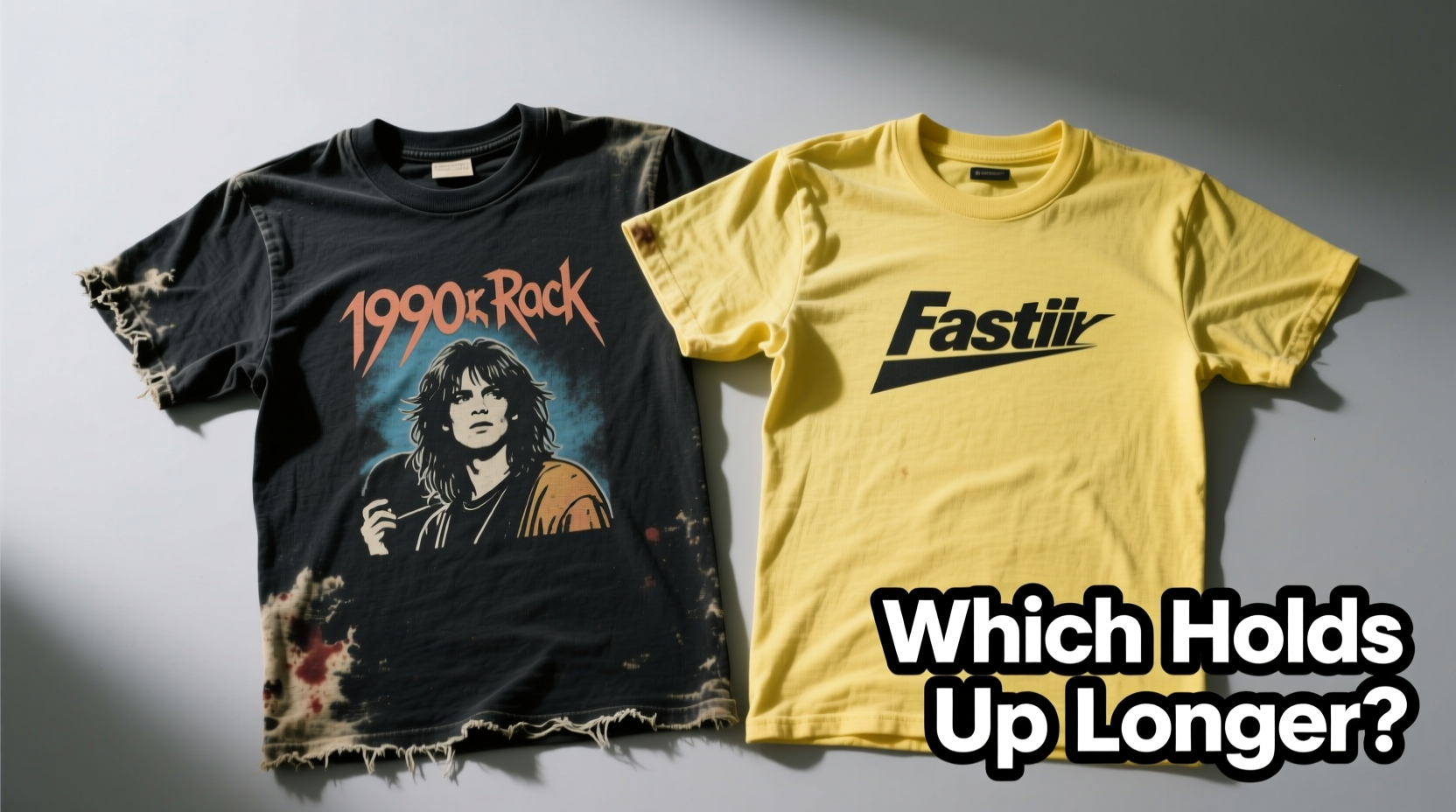
When it comes to band t-shirts, the divide between vintage originals and modern fast fashion replicas isn’t just about price or nostalgia—it’s a question of quality, construction, and long-term wearability. A well-loved vintage tee from the 1980s might still look sharp after decades, while a newly purchased replica from a fast fashion brand could fray at the seams after a single season. But what causes this disparity? And more importantly, which type actually holds up better over time?
The answer lies not just in fabric weight or printing methods, but in the entire lifecycle of production—from sourcing materials to stitching techniques and post-purchase care. This article breaks down the real differences between vintage band tees and their fast fashion counterparts, evaluates durability factors, and provides actionable guidance for making smarter clothing choices that last.
Material Quality: The Foundation of Longevity
The fabric used in a t-shirt is the most critical factor in determining how well it withstands repeated washing, wearing, and aging. Vintage band tees, particularly those produced before the 2000s, were typically made with heavier cotton—often 6-ounce or higher ring-spun or carded cotton. These fabrics were denser, more durable, and less prone to pilling or thinning.
In contrast, many fast fashion replicas rely on lightweight, blended fabrics (such as 60% cotton / 40% polyester) to reduce costs and increase profit margins. While these blends may feel softer initially, they degrade faster under stress and are more susceptible to shrinkage, color fading, and microfiber shedding.
Tip: Heavier cotton (5 oz or above) resists stretching and tearing far better than ultra-lightweight blends commonly found in fast fashion.Vintage manufacturers also prioritized consistency in sourcing. Brands like Gildan, Fruit of the Loom, and Hanes produced standard-issue blanks in bulk, ensuring predictable quality across runs. Today, fast fashion brands frequently switch suppliers based on cost, leading to inconsistent fabric performance even within the same product line.
Construction and Stitching: Hidden Strengths
Beyond fabric, how a shirt is constructed determines its structural integrity. Vintage tees often featured double-stitched hems, taped necklines, and reinforced shoulder seams—design elements borrowed from workwear standards of the time. These details prevented collar gape and seam splitting, two common failure points in modern shirts.
Fast fashion replicas, by comparison, often use single-stitch construction and minimal seam reinforcement to cut labor and material costs. Over time, especially with frequent washing, these seams begin to unravel. Shoulder seams may shift, sleeves loosen, and necklines stretch out of shape.
“Vintage tees were built to be worn, not just displayed. Their construction reflects an era when clothing was expected to endure.” — Daniel Reyes, Textile Archivist & Collector
A telling difference is the presence of cross-grain stitching—a technique where seams run perpendicular to the fabric’s grain to enhance strength. This method was standard in American-made garments through the 1990s but has largely disappeared from budget apparel lines today.
Print Durability: Screen Printing vs. Digital Transfer
The graphic on a band tee is more than decoration—it’s part of the garment’s identity. How that image is applied plays a major role in how long it stays intact.
Vintage band tees almost exclusively used plastisol screen printing, a process involving thick, opaque ink layered through a mesh stencil. When cured properly, this ink bonds strongly with cotton fibers and resists cracking, peeling, and fading for years—even decades—with proper care.
Many fast fashion replicas now use digital direct-to-garment (DTG) printing or low-quality transfers. DTG can produce photorealistic designs but uses water-based inks that sit on top of the fabric rather than embedding into it. As a result, prints fade quickly, especially after multiple washes, and may crack or wash out entirely within six months.
| Printing Method | Fabric Bonding | Durability After 10 Washes | Common Use |
|---|---|---|---|
| Plastisol Screen Print | Strong (inks penetrate fibers) | Minimal fading or cracking | Vintage, premium reproductions |
| DTG (Digital Print) | Weak (sits on surface) | Noticeable fading, softening | Fast fashion, small-batch online |
| Heat Transfer | Poor (peels easily) | Cracking, flaking common | Budget replicas, novelty shops |
Additionally, vintage printers used fewer colors per design due to technical limitations, resulting in simpler, bolder graphics that age more gracefully. Fast fashion often replicates complex, multi-color designs digitally, increasing the likelihood of misalignment and degradation over time.
Real-World Wear Test: A 3-Year Comparison
To illustrate the differences, consider a real-world case study involving three identical-looking Nirvana \"Smiley Face\" tees purchased in 2021:
- Tee A: Authentic early-1990s vintage original, bought secondhand for $75.
- Tee B: Licensed reproduction from a reputable retro brand (e.g., Rock N’ Roll Forever), retail $42.
- Tee C: Unlicensed fast fashion replica from an online marketplace, cost $12.
All three were worn approximately once every two weeks and washed using the same routine: cold water, inside-out, air-dried.
After 18 months:
- Tee A showed slight fading but no cracks in print or seam damage.
- Tee B remained nearly pristine, with only minor edge wear on the neckline.
- Tee C had a faded print, loose sleeve seams, and noticeable pilling on the chest.
At the 3-year mark:
- Tee A retained its shape and character, with the print slightly softened but legible.
- Tee B looked almost new, thanks to high-quality cotton and professional screen printing.
- Tee C was retired—print had peeled off in patches, and one sleeve seam had fully split.
This example underscores that while true vintage pieces have inherent durability, even modern licensed reproductions made with care outperform cheap replicas in both appearance and lifespan.
Care Practices That Extend Lifespan
No matter the origin, how a t-shirt is cared for dramatically affects its longevity. Even the sturdiest vintage tee will deteriorate quickly if mistreated. Here’s a step-by-step guide to maximizing wear life:
- Wash inside-out to protect graphics and reduce surface abrasion.
- Use cold water to prevent shrinkage and fiber breakdown.
- Avoid harsh detergents with bleach or optical brighteners; opt for pH-neutral formulas.
- Never tumble dry—heat degrades elastic fibers and causes ink to crack. Air-dry flat or on a hanger.
- Limit washing frequency—spot clean when possible, and air out between wears.
- Store folded in a cool, dry drawer; avoid hanging long-term, which stretches shoulders.
One collector reported extending the life of a 1978 Rolling Stones tour shirt by washing it only five times in 15 years—wearing it selectively for events and airing it out afterward. The result? A vibrant, structurally sound shirt that remains wearable today.
Environmental and Ethical Considerations
The durability gap between vintage and fast fashion extends beyond personal wardrobe value—it has broader implications. Fast fashion relies on rapid turnover, encouraging consumers to discard items after minimal use. According to the Ellen MacArthur Foundation, the average garment is worn only seven to ten times before disposal.
Vintage tees, by definition, are already part of the circular economy. They require no new resources to produce and keep textiles out of landfills. Even when sourced from resale markets, they represent a lower environmental footprint than manufacturing a new replica.
Moreover, the labor practices behind fast fashion replicas are often opaque. Many are produced in facilities with poor working conditions and low wages. In contrast, vintage tees were made in an era with stronger domestic labor protections (in the U.S. and Europe), though global supply chains were not absent. Choosing vintage or ethically made reproductions supports slower, more responsible consumption.
How to Spot Quality Replicas
Not all modern band tees are disposable. Some brands specialize in high-fidelity reproductions using vintage-inspired methods. To identify ones that hold up:
- Check fabric weight: Look for 5–6 oz 100% cotton or heavy cotton blends.
- Verify printing method: Reputable sellers specify “screen printed” or “plastisol ink.”
- Inspect stitching: Double-stitched hems and taped necklines are signs of durability.
- Research the brand: Companies like Bored Shorts, Rock N’ Roll Forever, or TeePublic Premium offer better build quality.
- Avoid deals that seem too good to be true: A $10 “vintage style” band tee is likely compromised somewhere.
“Durability starts with intention. If a brand doesn’t talk about fabric or construction, they’re probably not building to last.” — Lena Torres, Sustainable Fashion Consultant
FAQ
Can I make a fast fashion band tee last longer?
You can extend its life with careful washing and limited wear, but structural weaknesses—like thin fabric and weak seams—are irreversible. It will never match the longevity of a well-made vintage or premium reproduction.
Are all vintage band tees durable?
Most are, but condition varies. Check for underarm stains, moth holes, or print cracks before buying. Tees stored folded in dark, dry places tend to fare best. Avoid those with excessive sun exposure or chemical odors, which indicate fiber degradation.
Do band t-shirts lose value if washed?
For collectors, unwashed vintage tees in mint condition hold higher resale value. However, for everyday wear, gentle washing preserves fabric integrity and hygiene without significantly impacting sentimental or functional value.
Final Verdict: Which Holds Up Longer?
The evidence is clear: authentic vintage band tees, when well-preserved, outlast fast fashion replicas in nearly every category—fabric strength, print durability, and overall construction. Their superior materials and craftsmanship reflect a time when clothing was expected to endure regular use.
That said, not everyone can afford rare vintage pieces. The good news is that high-quality modern reproductions exist and can rival vintage longevity when made with care. The key is to prioritize substance over price: choose heavier cotton, screen-printed graphics, and reinforced stitching.
Fast fashion replicas may win on initial affordability, but their short lifespan makes them more expensive per wear. A $12 shirt worn 15 times costs 80 cents per wear. A $60 vintage-style tee worn 100 times costs just 60 cents—and looks better doing it.
Conclusion
Your favorite band tee shouldn’t be a disposable trend. Whether you’re drawn to the authenticity of a 1985 Metallica tour shirt or a responsibly made reissue, choosing durability means investing in style that lasts. By understanding fabric, construction, and care, you can build a collection that stands the test of time—both in your closet and in cultural memory.
🚀 Ready to upgrade your wardrobe? Start by retiring one fast fashion tee and replacing it with a well-made vintage or premium replica. Your closet—and the planet—will thank you.