When it comes to building a versatile wardrobe that moves seamlessly from the office to evening engagements, few pieces spark as much debate as the velvet blazer and the wool suit jacket. Both are staples in modern menswear and elevated womenswear, yet they serve different aesthetic and functional roles. The question isn’t just about style—it’s about practicality, adaptability, and how well each piece performs under shifting social contexts.
One might assume that formality is the deciding factor, but the real answer lies deeper—in texture, color retention, temperature regulation, and cultural perception. Whether you're attending a board meeting by day and a gallery opening by night or transitioning from a client lunch to a cocktail hour, choosing between a velvet blazer and a wool suit jacket can define not only your look but also your confidence across environments.
Fabric Fundamentals: Understanding Velvet and Wool
To determine which garment transitions more effectively, we must first understand the materials themselves. Each fabric brings unique properties that influence comfort, durability, and visual impact.
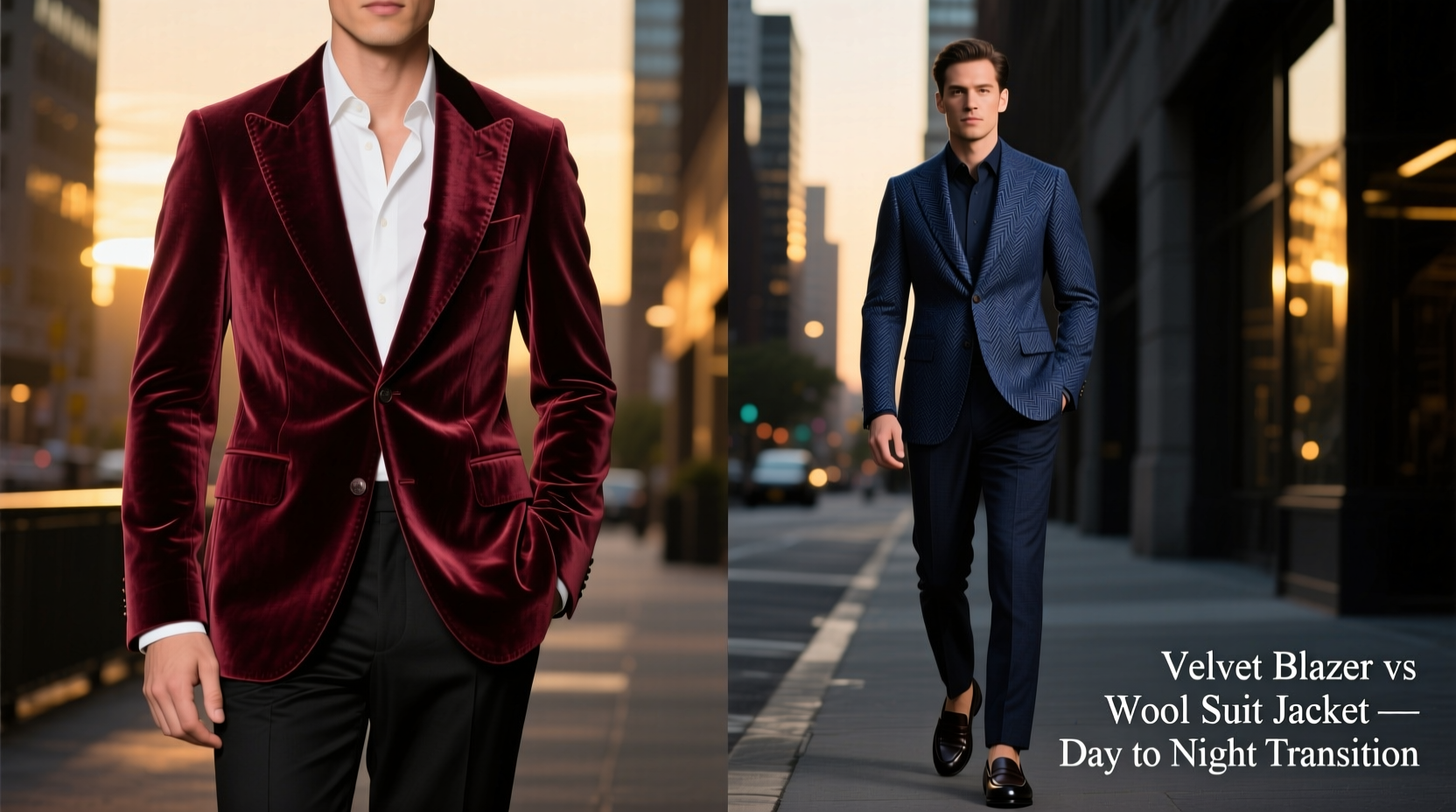
Velvet is a plush, woven fabric with a short, dense pile that gives it a soft, luxurious sheen. Traditionally made from silk, modern velvet often uses cotton, polyester, or rayon blends for affordability and resilience. Its lustrous surface reflects light dramatically, making it inherently eye-catching—ideal for evening wear but potentially overwhelming in conservative daytime settings.
Wool, particularly worsted wool used in suit jackets, is tightly woven, breathable, and naturally wrinkle-resistant. It drapes cleanly, maintains structure, and regulates body temperature efficiently. Available in various weights and finishes—from lightweight tropical wool to heavy flannel—wool adapts easily to seasonal and situational demands. Its matte finish keeps it professional during the day while remaining elegant enough for formal events at night.
Tip: When selecting fabrics for transitional wear, prioritize subtle texture over bold shine. Matte surfaces tend to read as more neutral across contexts.Day-to-Night Performance: Contextual Versatility
The ability of a garment to transition hinges on its perceived appropriateness across environments. A piece that feels out of place in either setting fails the test of versatility.
A **wool suit jacket** excels in neutrality. Paired with chinos or dress trousers, it looks polished in corporate offices, courtrooms, or academic institutions. At night, swapping the shirt for a sleek turtleneck or exchanging tie for pocket square instantly elevates the look without requiring a full outfit change. The consistency of wool’s appearance—neither too flashy nor too plain—makes it a reliable foundation for layered styling.
In contrast, a **velvet blazer** carries an inherent sense of occasion. While rich jewel tones like burgundy, emerald, or navy can work in creative industries during daylight hours (especially when paired with dark denim or charcoal trousers), the fabric's opulence often reads as evening-specific. Velvet absorbs and reflects light differently than flat textiles, drawing attention even in low-light conditions—a trait prized after sunset but potentially distracting in meetings or collaborative spaces.
“Velvet signals intentionality. You don’t wear it casually—you wear it to be seen.” — Marcus Lang, Menswear Stylist & Creative Director
Styling Flexibility: Outfit Pairing and Layering Options
Versatility isn’t solely about the jacket—it’s about what you can build around it. Let’s examine how each jacket performs across two key phases: day and night.
| Jacket Type | Daytime Pairings | Nighttime Pairings | Transition Ease |
|---|---|---|---|
| Wool Suit Jacket | Dress shirt + tie, chinos/dress pants, oxfords | Turtleneck + loafers, slim jeans, no tie | High – minimal changes needed |
| Velvet Blazer | Casual button-down, dark jeans, suede shoes | Silk shirt, black trousers, leather boots/derbies | Moderate – requires deliberate re-styling |
The wool jacket allows incremental adjustments. Removing a tie, rolling sleeves, or changing footwear transforms the mood without altering the core silhouette. This fluidity makes it ideal for professionals who move between structured and relaxed environments within the same day.
The velvet blazer demands more thoughtful coordination. During the day, it risks appearing overdressed unless balanced with rugged textures—like raw denim or textured knits. At night, it shines when integrated into a cohesive ensemble with complementary luxe elements: satin lapels, metallic accessories, or polished leather. However, this very specificity limits its spontaneity; it doesn’t “blend” as effortlessly as wool.
Real-World Example: The Client Meeting to Cocktail Event
Consider Daniel, a marketing executive based in Chicago. He has a 3 PM client presentation followed by a 7 PM awards dinner. His options:
- Option A: Navy wool suit jacket with grey trousers, white shirt, and burgundy tie.
- Option B: Deep green velvet blazer with black trousers, pale blue shirt, and brown brogues.
After the meeting, Daniel removes his tie, unbuttons his collar, swaps into black loafers, and adds a cashmere scarf. In Option A, he now appears refined yet approachable—perfect for a semi-formal event. In Option B, despite similar tweaks, the velvet remains visually dominant. Colleagues comment on his “bold choice,” and while compliments are given, the look feels less integrated into the professional narrative established earlier.
This illustrates a key principle: transitional success depends on continuity of tone. Wool supports a gradual evolution of style; velvet imposes a stylistic pivot.
Care, Longevity, and Practical Considerations
Beyond aesthetics, maintenance plays a role in whether a garment earns frequent rotation. Wool suit jackets are generally easier to care for. Most can be spot-cleaned, steamed, and stored on padded hangers without special precautions. Many are dry-clean safe, and high-quality wool resists odors and moisture thanks to its natural lanolin content.
Velvet, however, is delicate. The pile can crush if folded or compressed, leading to permanent shine marks. It requires careful hanging, protective garment bags, and professional cleaning to preserve texture. Exposure to humidity may cause mildew, and direct sunlight can fade its rich hues over time. These factors make velvet less practical for daily wear, especially in climates with variable weather or limited closet space.
Tip: Always hang velvet garments on wide, contoured hangers and avoid stacking clothes on top of them to prevent pile flattening.Seasonal Adaptability
Wool’s thermal regulation works year-round. Lightweight versions breathe in summer; heavier flannels insulate in winter. Velvet, though warm, lacks breathability and tends to trap heat. It’s best suited for cooler months and indoor settings with climate control. Wearing a velvet blazer under fluorescent office lighting can lead to overheating and visible perspiration—issues rarely encountered with breathable wool.
Step-by-Step Guide: Maximizing Transition Potential
Whether you own one or both jackets, follow this five-step process to optimize their use across day and night scenarios:
- Assess Your Daily Environment – Is your workplace traditional or creative? Conservative settings favor wool; fashion-forward industries allow room for velvet experimentation.
- Choose Neutral Colors – For maximum flexibility, select wool jackets in navy, charcoal, or mid-grey. Opt for velvet in deep tones like oxblood, forest green, or midnight blue—avoid bright reds or electric purples for daytime viability.
- Invest in Interchangeable Bottoms – Keep a pair of tailored black trousers and dark selvedge denim ready. These bridge the gap between formal and casual, working with both jacket types.
- Curate a Sleeve-Rolling Strategy – Master the art of the partial sleeve roll. On wool, this signals relaxation; on velvet, it adds nonchalance without undermining elegance.
- Swap Accessories Strategically – Replace a leather belt and tie with a silk pocket square and minimalist watch after hours. This small act shifts perception significantly.
Expert Insight: Industry Perspectives on Transitional Wear
Fashion consultants and tailors consistently emphasize context-aware dressing. As noted by Sofia Tran, a personal stylist with over a decade of experience in urban professional styling:
“The most effective transitional pieces don’t announce themselves—they adapt. Wool suits do that naturally. Velvet makes a statement, which is powerful, but only appropriate when the moment calls for it.” — Sofia Tran, Personal Stylist & Wardrobe Architect
This aligns with broader trends in contemporary dressing: the rise of \"quiet luxury\" and understated sophistication favors materials that perform without demanding attention. While velvet has its place—weddings, holiday parties, artistic gatherings—it rarely functions as a true workhorse.
Frequently Asked Questions
Can I wear a velvet blazer to the office?
You can—if your workplace culture embraces creative expression. Stick to muted colors, pair with non-reflective fabrics, and avoid peak business hours in highly formal sectors. Best reserved for Fridays or client-free days unless part of a themed event.
Is a wool suit jacket too formal for evening wear?
Not if styled correctly. Remove the tie, layer over a fine-gauge turtleneck, and choose footwear like suede loafers or Chelsea boots. A well-fitted wool jacket in a modern cut looks intentional and refined after dark.
Does velvet wrinkle easily?
Velvet doesn’t wrinkle like cotton or linen, but its pile can become crushed or matted when packed or pressed improperly. Never fold a velvet blazer—always hang it—and use steam (not direct ironing) to refresh the fabric.
Final Verdict: Which Transitions Better?
The evidence points clearly toward the **wool suit jacket** as the superior day-to-night performer. Its combination of neutral aesthetics, structural integrity, ease of care, and broad social acceptance makes it the cornerstone of adaptable dressing. It evolves with minimal effort, blending into diverse environments without drawing undue focus.
The velvet blazer, while undeniably luxurious and expressive, operates best as a specialized tool. It enhances evening ensembles, adds depth to seasonal wardrobes, and serves as a signature piece for those cultivating a distinct personal brand. But as a daily driver capable of navigating varied contexts with grace? It falls short.
That said, owning both is ideal. Use the wool jacket for seamless transitions and the velvet blazer for moments when you want to stand out. Together, they represent two ends of a spectrum—one built for function, the other for flair.
Checklist: Choosing Your Transitional Jacket
- ✅ Prioritize worsted wool in navy or charcoal for maximum versatility
- ✅ Limit velvet to seasonal or event-specific use
- ✅ Ensure proper fit—neither too boxy nor too tight—for all-day comfort
- ✅ Test combinations at home before wearing in public
- ✅ Maintain both garments with regular brushing and professional cleaning as needed
Conclusion
Selecting between a velvet blazer and a wool suit jacket isn't just about preference—it's about purpose. If your goal is effortless movement through varied social and professional landscapes, the wool suit jacket stands unmatched in reliability and adaptability. The velvet blazer earns its place in the wardrobe not through utility, but through impact.
Build your foundation on wool. Accent with velvet. Dress not just for how you want to look, but for how you need to move through the world. Start refining your capsule today—because true style isn’t about standing out every moment, but knowing exactly when to step forward and when to blend in.
🚀 Ready to upgrade your transitional wardrobe? Audit your current blazers, identify gaps, and invest in one high-quality wool suit jacket this season. Share your styling tips or ask questions in the comments below.