Designer bracelets are more than accessories—they're investments. Whether crafted from gold, silver, platinum, or adorned with precious stones, these pieces require careful maintenance to retain their luster and structural integrity. Improper cleaning can lead to scratches, tarnishing, loosened settings, or irreversible chemical damage. The key is knowing exactly what materials your bracelet is made of and applying the right method with precision. This guide delivers practical, professional-level techniques to safely restore brilliance without risking harm.
Understand Your Bracelet’s Material Composition
Before any cleaning begins, identification is crucial. Different metals and embellishments react differently to substances and handling. Common materials include:
- Gold (yellow, white, rose): Resistant to tarnish but prone to scratching and buildup from oils and lotions.
- Silver: Highly susceptible to tarnish due to sulfur exposure but responds well to gentle polishing.
- Platinum: Durable and hypoallergenic, though it can develop a patina over time.
- Precious gemstones (diamonds, sapphires, emeralds): Hard stones like diamonds tolerate mild cleaning; softer gems like opals or pearls require extreme caution.
- Leather or fabric bands: Found on luxury watches or hybrid designs—moisture-sensitive and easily stained.
“90% of jewelry damage comes from using the wrong cleaner for the material. Always check manufacturer guidelines first.” — Daniel Reyes, Master Jeweler at Atelier Fine JewelryTip: Look for hallmarks inside the clasp or band—symbols like “925” (sterling silver), “14K,” or “PT” (platinum) help identify metal type.
Step-by-Step Guide: Safe Cleaning by Material Type
A one-size-fits-all approach risks damage. Follow this detailed sequence tailored to common designer bracelet types.
For Gold, Silver, and Platinum Bracelets (Without Delicate Stones)
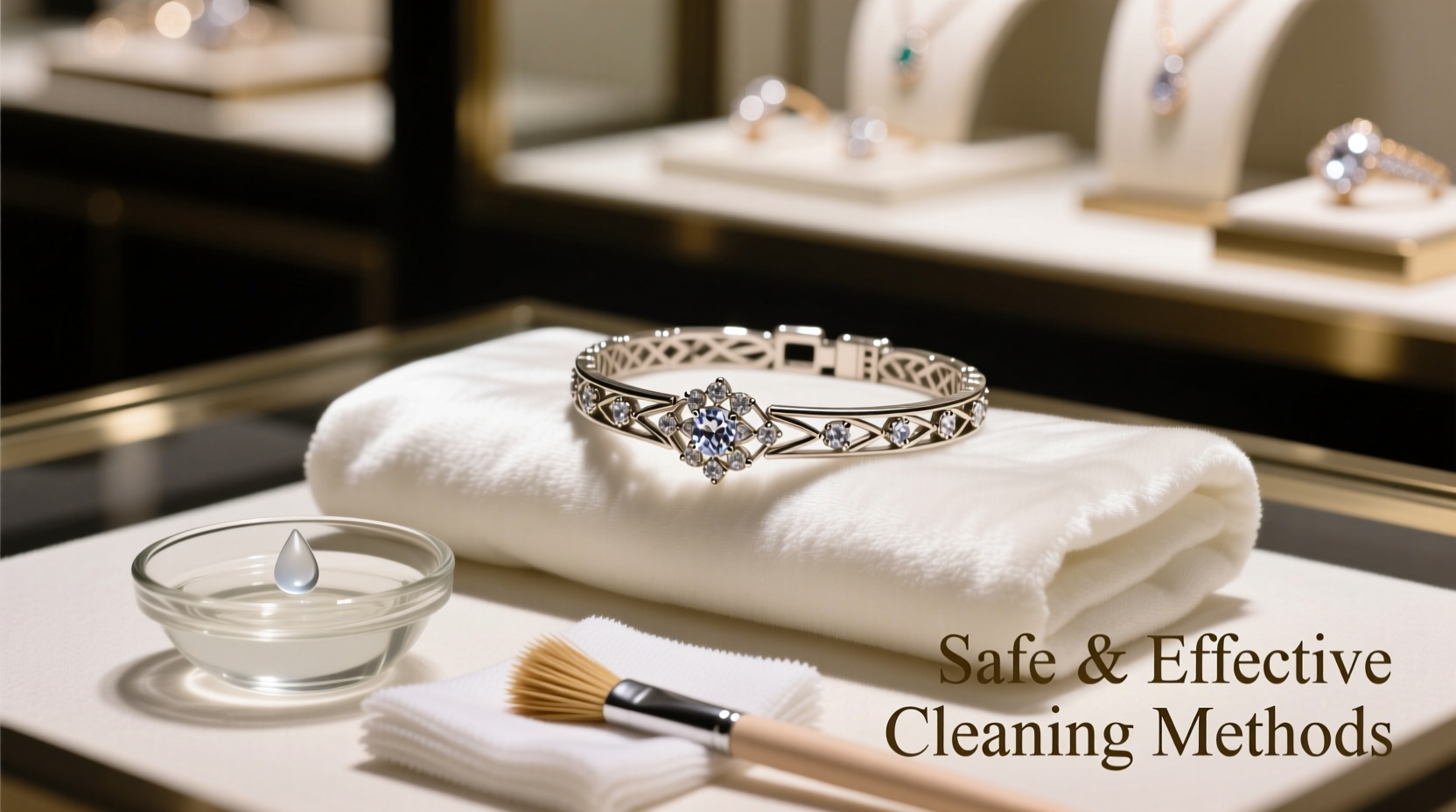
- Remove debris gently: Use a soft-bristle toothbrush (preferably unused) to dislodge dust and oils in crevices.
- Prepare cleaning solution: Mix a few drops of phosphate-free dish soap (e.g., Dawn) in warm distilled water.
- Soak for 15–20 minutes: Never exceed 30 minutes to prevent prolonged moisture exposure.
- Rinse under lukewarm running water: Hold under a gentle stream to flush out residue.
- Dry thoroughly: Pat with a lint-free microfiber cloth. Air-dry completely before storage.
- Polish if needed: Use a jeweler’s polishing cloth designed for your metal type—never paper towels or clothing.
For Bracelets with Diamonds or Hard Gemstones
Most high-hardness stones (Mohs scale 7+) can withstand mild ultrasonic cleaning—but only if settings are secure and no fractures exist.
- Clean using the same soapy water method above.
- Avoid steam cleaners unless verified safe by a jeweler.
- Never use ammonia-based cleaners on pieces with porous stones like turquoise or coral.
For Pearls, Opals, or Organic Materials
These require minimal intervention. Submersion can weaken adhesives or cause cracking.
- Wipe with a slightly damp microfiber cloth after each wear.
- Never soak or use chemical cleaners.
- Store separately to avoid scratches from harder metals.
Do’s and Don’ts: Quick Reference Table
| MATERIAL | DO | DON’T |
|---|---|---|
| Gold/Silver/Platinum | Use mild soap + soft brush; dry completely | Use bleach, chlorine, or abrasive pastes |
| Diamonds & Sapphires | Soak briefly in soapy water; professional ultrasonic cleaning | Expose to sudden temperature changes |
| Pearls & Opals | Wipe with damp cloth; wear last when dressing | Submerge in water or apply perfumes directly |
| Leather Bands | Condition with specialized cream; keep dry | Soak or expose to direct sunlight |
| All Designer Pieces | Inspect clasps and prongs monthly | Clean during activities (showering, swimming, exercising) |
Real Example: A Cautionary Tale
Sophie, a collector in Chicago, owned a vintage Cartier Love bracelet in 18K rose gold with diamond accents. Believing all gold could be cleaned the same way, she soaked it in a commercial jewelry dip containing acid to remove discoloration. Within minutes, the solution dulled the polish and weakened two prongs holding small diamonds. One stone fell out the next day. A $4,200 piece required $680 in repairs and lost resale value due to service history. Her mistake? Using an aggressive chemical without verifying compatibility. Had she used warm soapy water and a soft brush, she would have preserved both beauty and integrity.
Essential Care Checklist
Follow this monthly routine to maintain your designer bracelet in optimal condition:
- ☐ Inspect for loose stones, worn clasps, or bent links
- ☐ Clean using appropriate method based on material
- ☐ Dry completely before storing
- ☐ Store flat in a padded jewelry box or pouch
- ☐ Avoid contact with lotions, perfumes, and chlorinated water
- ☐ Schedule professional inspection every 12–18 months
Frequently Asked Questions
Can I use toothpaste to clean my silver bracelet?
No. Despite popular DIY advice, toothpaste is mildly abrasive and can create microscopic scratches that dull the finish over time. It may also leave residue in engraved areas. Use a silver polishing cloth instead, or a manufacturer-approved liquid dip specifically formulated for sterling silver.
How often should I professionally clean my designer bracelet?
Every 6 to 12 months, depending on wear frequency. Regular wearers should opt for biannual inspections. Professionals use controlled ultrasonic baths, steam cleaning, and magnification to detect issues invisible to the naked eye, such as hairline cracks or setting wear.
Is it safe to wear my designer bracelet while swimming?
No. Chlorine in pools and salt in seawater can corrode metals, especially white gold and silver. Prolonged exposure weakens solder joints and can cloud diamond surfaces. Remove your bracelet before entering water—and rinse hands thoroughly after swimming before putting it back on.
Conclusion: Preserve Beauty, Protect Value
Your designer bracelet deserves care that matches its craftsmanship. By understanding its composition and following precise, gentle cleaning protocols, you protect not just appearance but long-term value. Simple habits—like wiping after wear, avoiding harsh chemicals, and scheduling expert checkups—compound into years of radiant elegance. These pieces often carry emotional significance and financial worth; treating them with informed respect ensures they remain heirloom-quality for generations.
💬 Have a favorite cleaning method that worked for your luxury bracelet? Share your experience below and help others care for their treasures wisely.